Breakfast Bar Stools: Height, Overhang and Choosing the Right Stool

Short answer

10 in
: subtract from the bar height
26 in
Seat for 35 to 36 in bars
30 in
Seat for 39 to 40 in bars

Bar height minus about 10 in: 26 in seats for countertop-height bars.

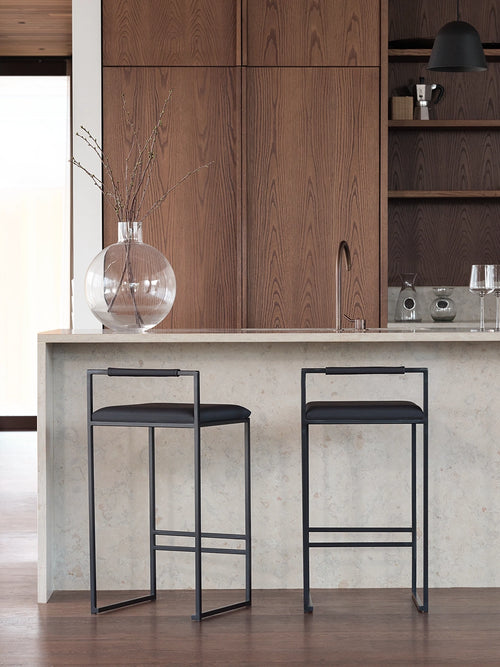
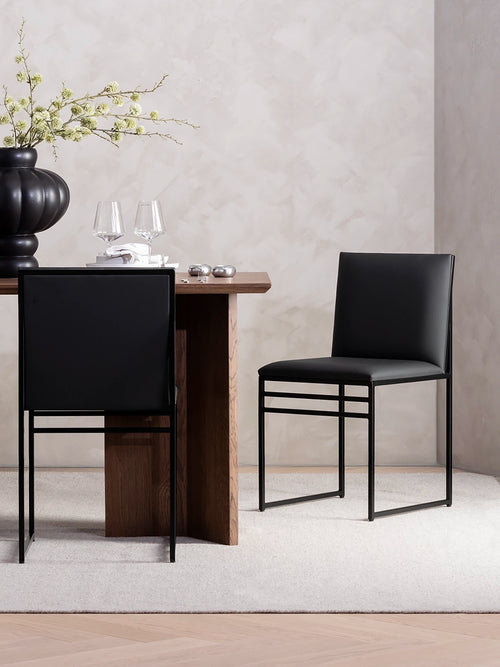
Modern kitchen interior with Philip black leather bar stools, dark wood cabinetry, stone island bench, and minimalist contemporary styling.
Philip Counter Stool · from $499

A breakfast bar is the most used seat in many British kitchens: the place for a quick coffee before work, homework after school and a glass of wine while dinner cooks. It is also the seat most often bought at the wrong height, because breakfast bars vary in height more than most counters. Some sit level with the countertop, some are raised on an upstand, and some are a shelf fixed to the wall. This guide explains which stool height fits each kind of breakfast bar, how much overhang you need for your knees, how many stools fit along it, and when a backrest is worth having. Every figure is given in inches, and every stool mentioned is made in our own factory in Malmö, Sweden.

What is a breakfast bar?

A breakfast bar is a section of countertop designed for sitting at, usually on a kitchen island or peninsula, sometimes along a wall.

It is built for short, informal meals rather than a full dinner, which is why it is narrower than a table and why the stools matter more than the chairs at a dining table would.

Breakfast bars come in three common forms. A countertop-height bar is simply the island or peninsula countertop extended on the seating side, at 35 to 36 in. A raised breakfast bar sits on an upstand above the countertop, usually at 39 to 41.7 in, and hides the washing-up from the seats. A wall-mounted bar is a deep shelf fixed to a wall or window, at whatever height it was fitted. Each takes a different stool, so identify yours before you shop.

What height stool do I need for a breakfast bar?

Measure from the floor to the underside of the breakfast bar and take off 9 to 10 in: that is the seat height we recommend.

Freja 76 dimension drawing
A 30 in seat suits a raised breakfast bar of 39 to 40 in.

A countertop-height breakfast bar of 35 to 36 in takes a 26 in counter stool; a raised breakfast bar of 39 to 40 in takes a 30 in bar stool.

Raised breakfast bars are often built outside these ranges, at 40.5 to 41.7 in, and a wall-mounted bar can be at almost any height. For those, a standard stool is usually slightly wrong, and a custom seat height fits better. Enter your breakfast bar's height below to see which seat height fits.

Breakfast bar height and the stool that fits, measured to the underside
Breakfast bar heightSeat height that fitsOur option
35 to 36 in26 inAny of our stools, 26 in
36.5 to 38.5 in27 to 29 inCustom height, steel models
39 to 40 in30 inAny of our stools, 30 in
40.5 to 41.7 in30.5 to 32.3 inCustom height, steel models

Which seat height fits your counter

26 instandard seat, every model

Shop 26 in stools

The rule: seat height = counter underside minus 9 to 10 in. A 26 in seat fits counters of 35 to 36 in, a 30 in seat fits bars of 39 to 40 in.

How much overhang does a breakfast bar need?

We recommend 12 to 16 in of overhang, the depth of countertop that projects past the cabinets, so your knees fit underneath. We would not go below 10 in, and that only for quick breakfasts.

Countertop-height bars need the deeper end of that range, because you sit lower and closer; for raised bars, our planning range is 10 to 12 in.

If your breakfast bar has little or no overhang, sitting side-on is usually the only option and a stool with a backrest will feel cramped; a backless stool that you can turn on is the better choice. Wall-mounted bars need the same depth as any other: a shelf narrower than 12 in is a place to rest a cup, not to eat. Whether an overhang or shelf needs brackets depends on the material and thickness of the countertop, and the specification of your countertop supplier applies; our guide to kitchen island overhang explains the figures in detail.

How many stools fit at a breakfast bar?

As a starting point, divide the length of the seating side by 21.5 in and round down; use 19.5 in for slim stools such as Svea, Eva, Ebba and Freja.

A 47 in (4 ft) breakfast bar seats two, 71 in (6 ft) seats three and 94 in (8 ft) seats four. Slim stools gain a seat on the lengths in between: a 59 in (5 ft) bar takes three of them.

Keep the center of the last stool at least 11 in from the end of the bar, or 15 in where a wall closes it, so nobody is sitting half off the countertop. Leave at least 35.5 in of clear floor behind the countertop edge, and 43 in if people walk behind seated guests. Our guides to how many stools fit and bar stool spacing cover every length.

Backless or with a back: which suits a breakfast bar?

Choose backless stools if the breakfast bar is mostly for coffee and quick breakfasts, if it is short, or if the kitchen is tight: they slide fully under the countertop when nobody is sitting.

Choose a backrest if the bar is where you eat full meals, work on a laptop or sit for longer than about 20 minutes.

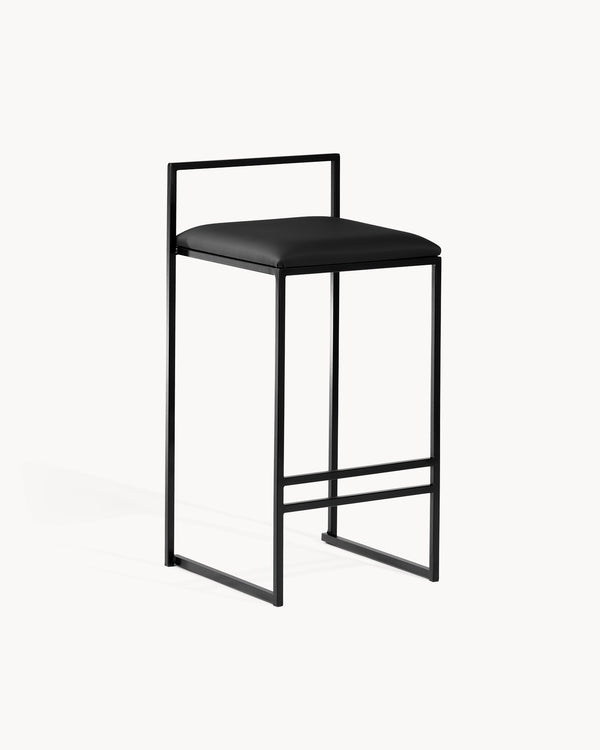
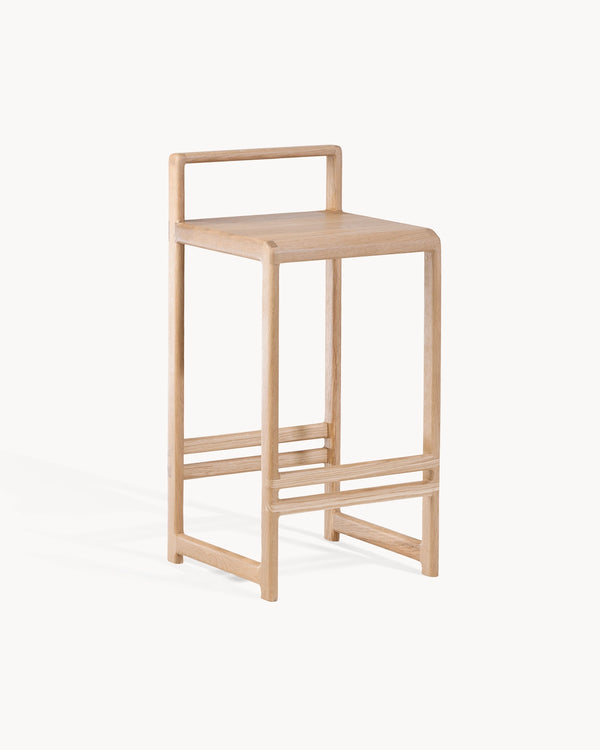
Most breakfast bars end up used for more than breakfast, so a low backrest is often the sensible middle way: it supports the lower back and still sits below the countertop edge. Eva in oak and Svea in steel are our backless stools, with 15 in seats; Ebba and Freja have low backrests. Our guide to backless vs back bar stools compares them.

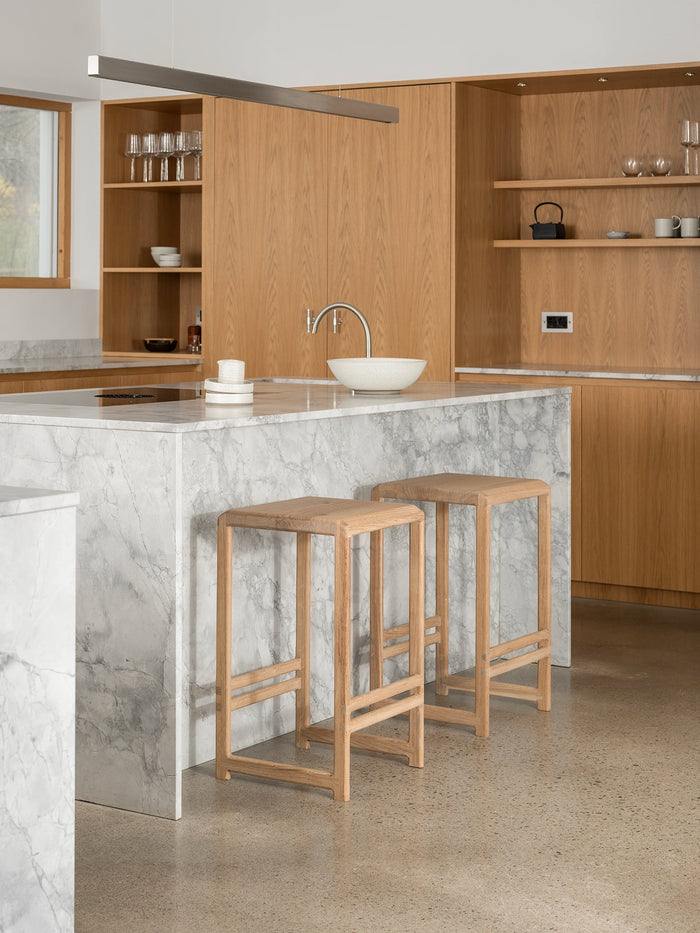
Oak Bar Stool paired with a marble kitchen island for modern dining and bar areas.
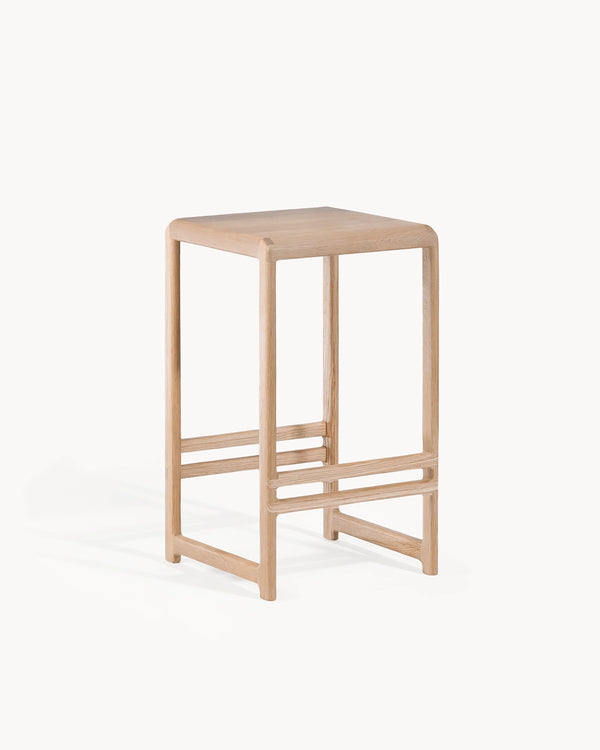
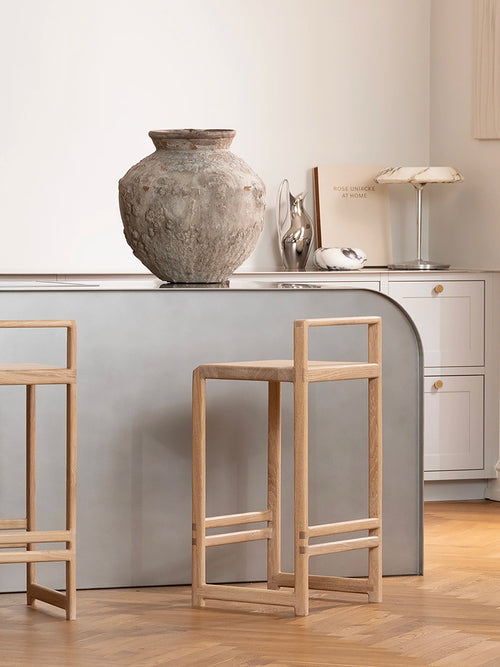
Eva: backless solid oak that slides fully under the countertop.

Which stools suit a small breakfast bar?

Choose slim, backless stools with small seats, and keep the count to what the bar really needs.

At a small breakfast bar, two backless stools that disappear under the countertop keep the kitchen open; two stools with full backs at the same bar can make it feel crowded.

A light frame helps as much as a small seat: a slim steel stool tends to read as a line, where a heavy timber stool reads as a mass. Svea in steel is our lightest-looking stool; Eva in solid oak is the warmest. Both come in 26 and 30 in seat heights and are delivered fully assembled. See bar stools for small kitchen islands for more options.

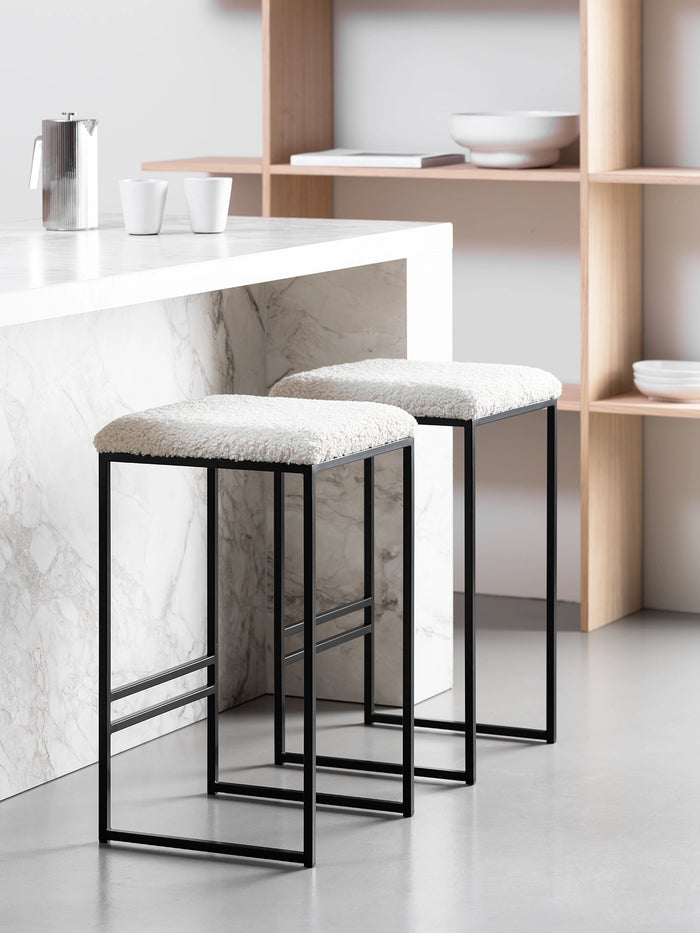
Bar Stool Svea in black with ivory bouclé upholstery, stylishly placed at a modern marble countertop.
Svea in steel: our lightest-looking stool for a small breakfast bar.

Choosing breakfast bar stools

10 in
Overhang, at the least.
21.5 in
Bar per stool.
47 in
4 ft: seats two.

Measure to the underside of your breakfast bar and take off about 10 in: 26 in stools for a countertop-height bar, 30 in for a raised bar of 39 to 40 in, and a custom height for anything in between or above. Leave 10 to 16 in of overhang, 21.5 in of bar per stool, and choose backless stools where the bar is short. Our stools are made in our own factory in Malmö, Sweden, delivered fully assembled, rated for 440 lbs and covered by a 10-year warranty.

Frequently asked questions

What height stool do I need for a breakfast bar?

Measure to the underside of the bar and take off about 10 in. 26 in stools suit bars of 35 to 36 in; 30 in stools suit raised bars of 39 to 40 in.

How high is a standard breakfast bar?

A countertop-height breakfast bar is typically 35 to 36 in. A raised breakfast bar is usually 39 to 41.7 in.

How much overhang does a breakfast bar need?

We recommend 12 to 16 in for comfortable seating, and would not go below 10 in, even for quick breakfasts.

How many stools fit at a 47 in breakfast bar?

Two, at 21.5 in each. A 71 in bar seats three and a 94 in bar seats four.

Are backless stools good for a breakfast bar?

Yes, for quick breakfasts, short bars and small kitchens, because they slide fully under the countertop. For meals over about 20 minutes, choose a backrest.

Can you make a stool for a non-standard breakfast bar?

Yes. Freja, Philip, Bruno and Svea can be made to a custom seat height in our factory in Malmö, to fit a breakfast bar outside the standard heights.

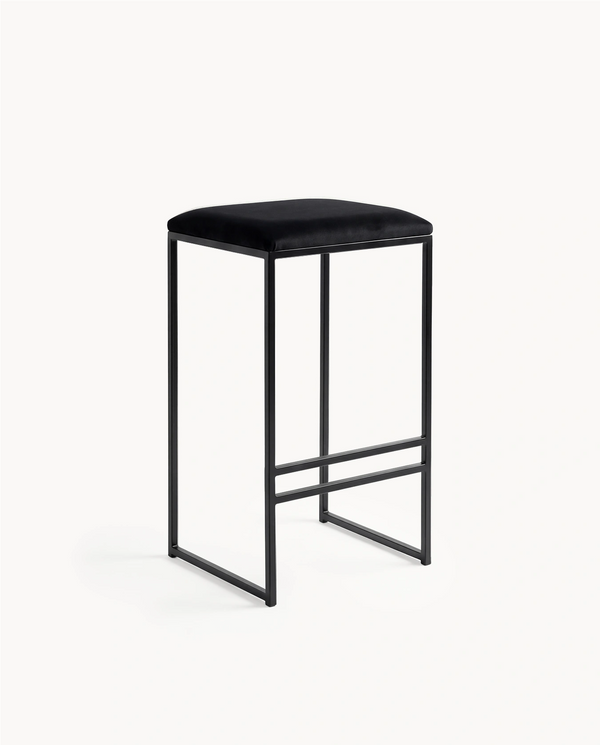
Svea Counter StoolFrom $399 Shop