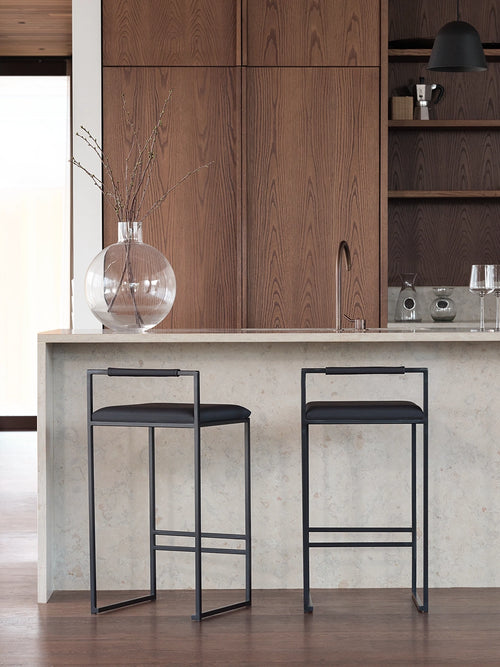
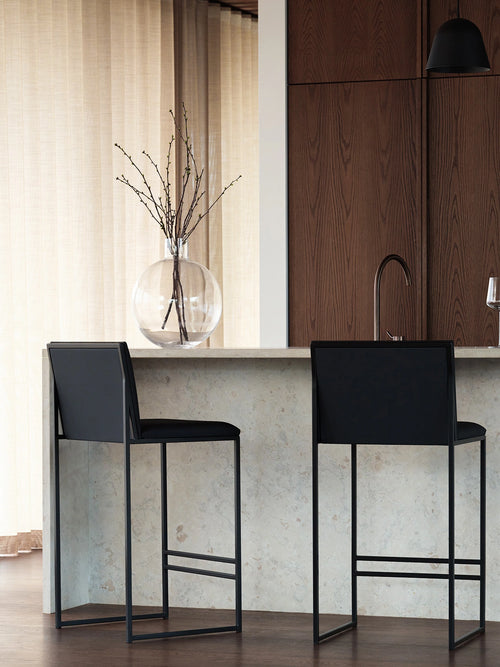
Most bar stools come in two heights because most counters come in two heights. But many kitchens are not standard: a thick stone top adds a few inches, an older kitchen sits lower, a raised breakfast bar ends up somewhere in between. At those counters a standard stool is often slightly wrong, either tight under the countertop or too far below it, and a cushion rarely fixes that. A custom seat height solves it at the source. This guide explains when a custom height is worth it, how to work out the exact seat height you need, which of our stools can be made to a custom height and why, and what stays the same when a stool is built for your counter.
What is a custom height bar stool?
It is a bar stool whose frame is made to give a seat height other than the two standards, 26 in and 30 in, so that it fits a specific counter.
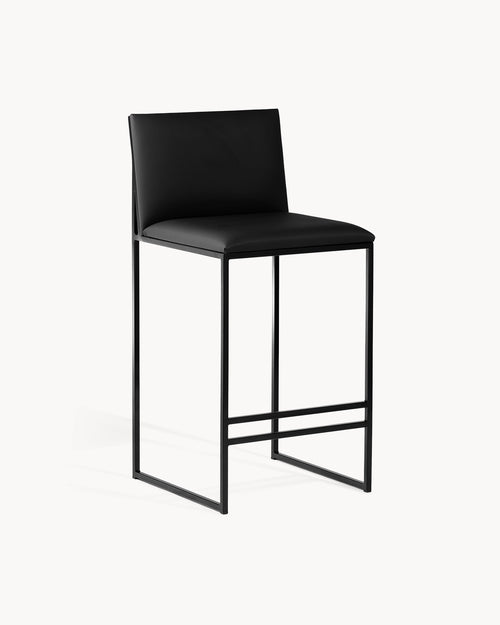
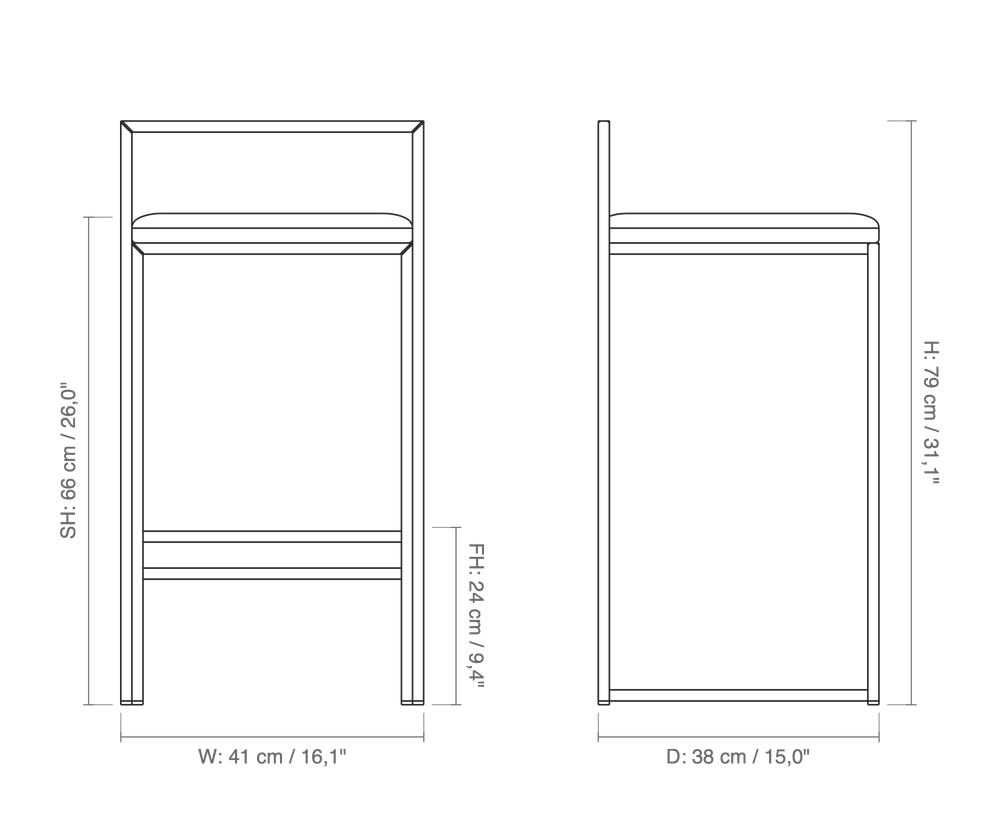
Freja's frame drawing: on a custom height, only the frame changes.
The seat, backrest, upholstery and finish are the same as on the standard stool; only the height of the frame changes.
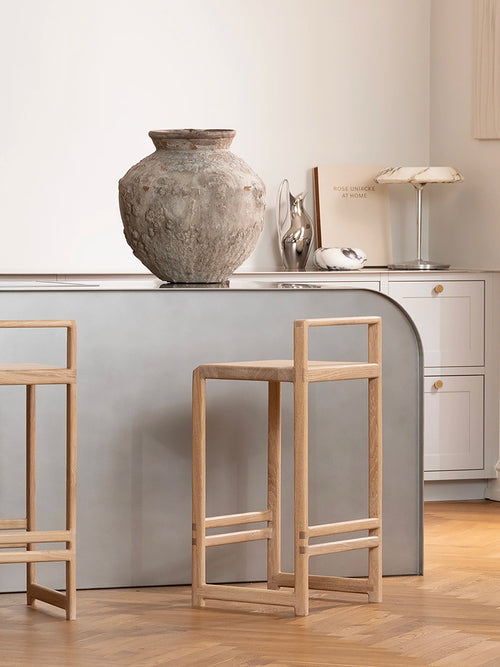
Custom heights are possible on steel stools because the frame is cut and welded from tube, so the legs can be made to the length your counter needs. Solid oak stools are machined from parts of fixed dimensions, which is why our oak range comes in the two standard heights only. Our bar stool height guide explains the standards in full.
When do I need a custom seat height?
When your counter, measured to its underside, falls outside the standard ranges of 35 to 36 in and 39 to 40 in.
At a 37.4 in counter, for example, a 26 in seat leaves 11.4 in of legroom and a 30 in seat only 7.5 in; neither sits in the 9 to 10 in range we recommend.
The table shows the counters where a custom height gives a noticeably better fit. In our experience, thick stone countertops on otherwise standard cabinets are the most common reason, followed by raised breakfast bars and older or bespoke kitchens.
Counters that call for a custom seat height, measured to the underside
Counter height
Seat height that fits
Common reason
33.5 to 34.5 in
23.5 to 25 in
Older kitchens, low countertops
36.5 to 38.5 in
27 to 29 in
Thick stone tops, raised plinths
40.5 to 41.7 in
30.5 to 32.3 in
Raised breakfast bars, home bars
42 to 43 in
32.3 to 33.9 in
Tall bars and peninsulas
How do I work out my custom seat height?
Measure from the floor to the underside of the counter where your knees will be, then subtract about 10 in.
That puts the seat in the middle of our recommended 9 to 10 in range. A 37.4 in counter needs a seat of about 27.5 in; a 41.3 in counter, about 31.5 in.
If the counter has an apron, a support rail or a drawer under the overhang, measure to the lowest of these. For an upholstered seat, the upper end of the range is fine, because the cushion compresses slightly. The calculator in our bar stool height guide does the sum for you.
Which bar stools can be made in a custom height?
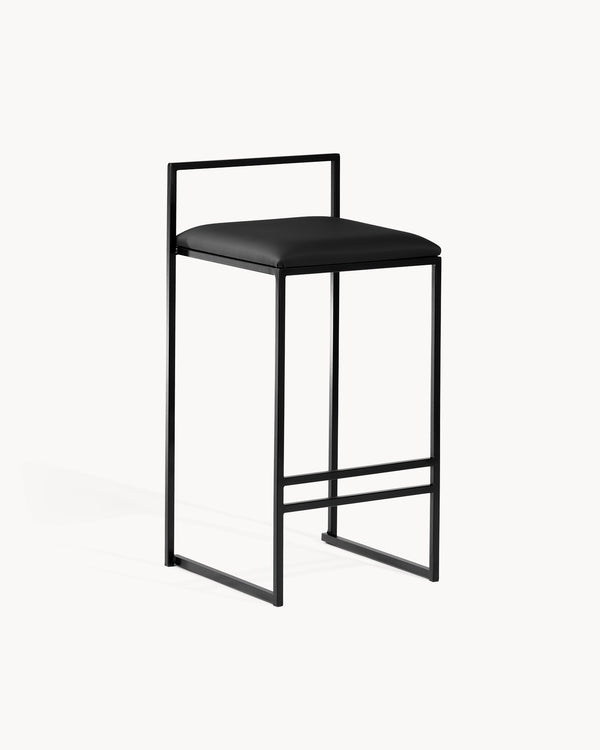
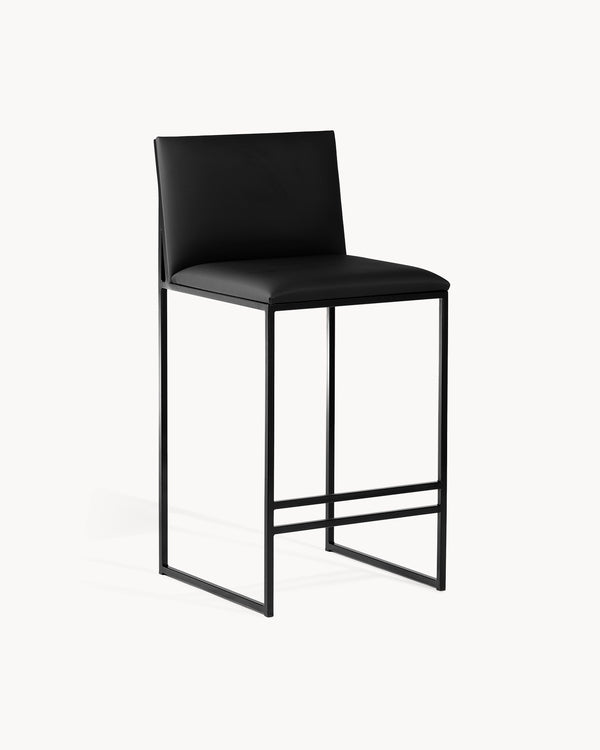
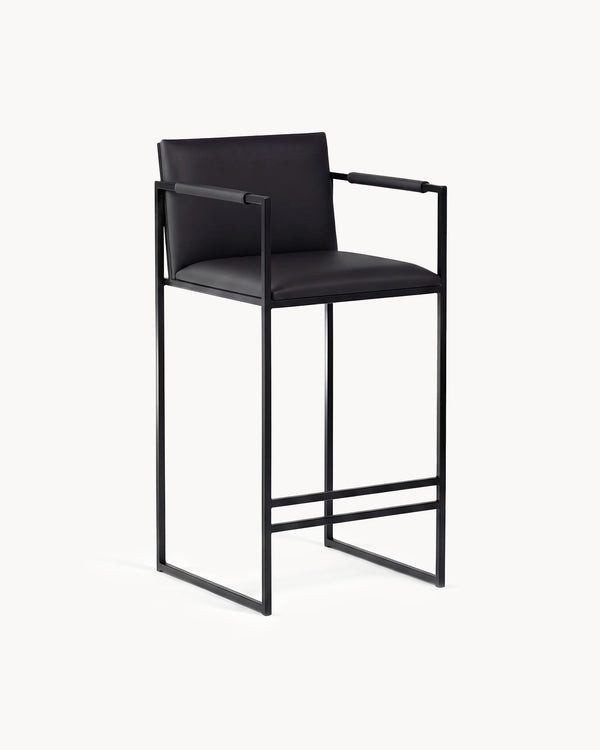
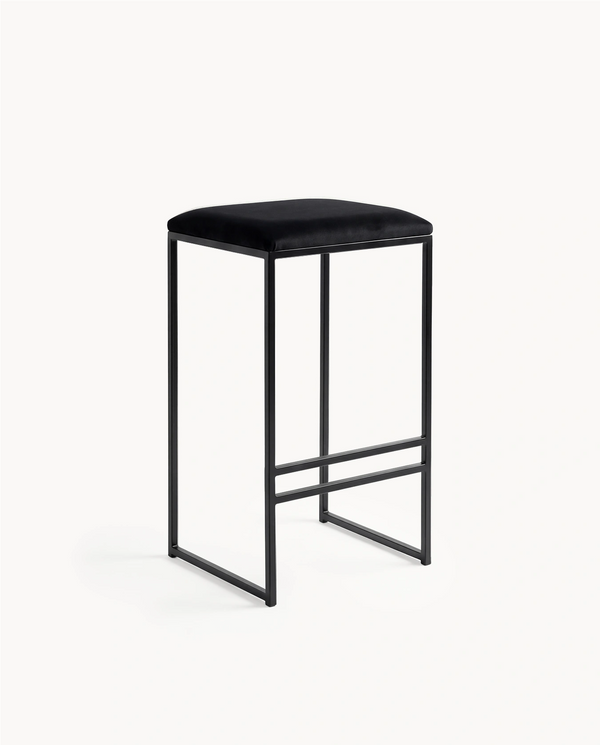
Our four steel stools: Freja, with a low backrest; Philip, with a full upholstered backrest; Bruno, with a full backrest and armrests; and Svea, backless.
All are welded from Swedish precision steel and powder-coated in our factory, so the frame can be made to the height you need.
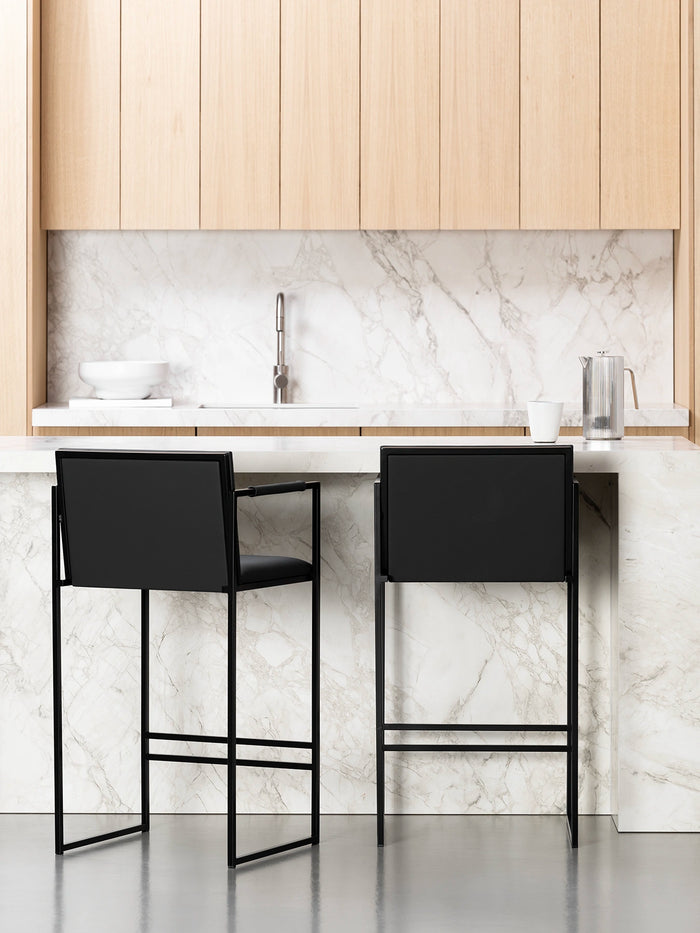
On Bruno, remember that the armrests rise with the seat and must still pass under the counter edge; tell us your counter height and we will confirm the fit. Our oak stools, Eva, Ebba, Ted and Carl, come in 26 and 30 in seat heights only. See steel bar stools for the four models in detail.
On Bruno, the armrests rise with the seat and must pass under the counter.
How is a custom height bar stool made?
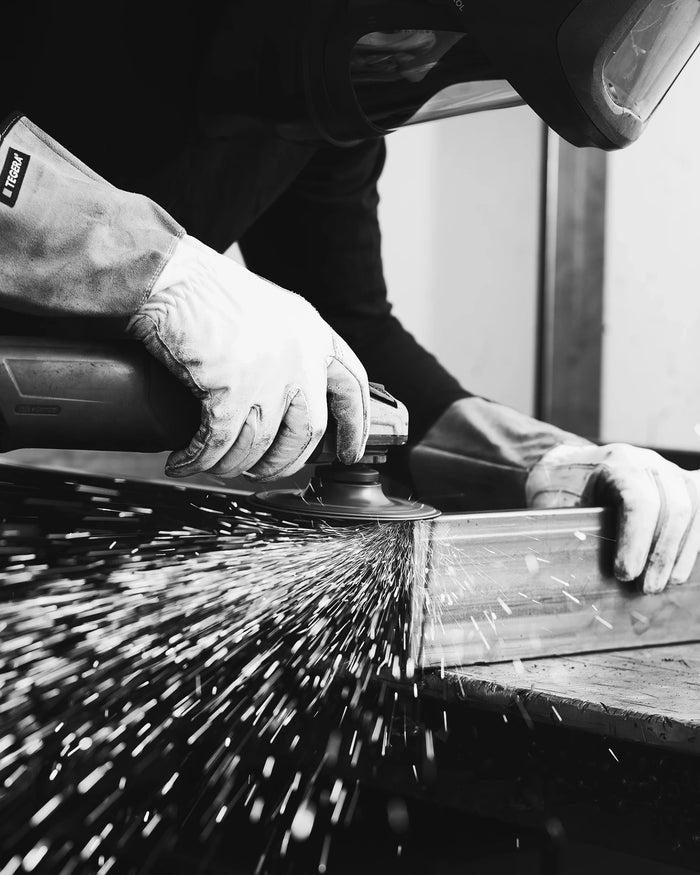
It is made to order in our own factory in Malmö: the frame is cut and welded to your height, powder-coated, upholstered by hand and checked, then delivered fully assembled like every other stool we make.
Nothing is added or bolted on to change the height; the frame is simply built taller or shorter.
That is why a custom height stool carries the same 440 lbs load rating and the same 10-year warranty as the standard sizes. Our guide to how our bar stools are made shows each step in the factory.
Custom height frames are cut and welded to order in Malmö.
How do I order a custom height?
Choose the model, measure your counter to the underside, subtract about 10 in, and order through Design Your Own on the product page, or contact us with your counter height if you are unsure.
We will confirm the seat height before the frame is made.
If you are between two sizes, tell us how you will use the stool: for long meals, sit slightly lower; for quick breakfasts, slightly higher is fine. Order fabric samples at the same time so the height and the upholstery are decided together.
Custom height, in short
35 to 36 in
: the standard 26 in seat.
39 to 40 in
: the standard 30 in seat.
Custom
Anything else, welded to order in Malmö.
If your counter is outside 35 to 36 in or 39 to 40 in to its underside, a custom seat height will usually fit better than a standard stool. Subtract about 10 in from the counter height, choose Freja, Philip, Bruno or Svea, and order through Design Your Own. Each custom stool is welded to order in our own factory in Malmö, Sweden, delivered fully assembled, rated for 440 lbs and covered by a 10-year warranty.
Frequently asked questions
Can I get a bar stool with a 31.5 in seat?
Yes, as a custom height on Freja, Philip, Bruno or Svea. A 31.5 in seat fits a counter of about 40.5 to 41.7 in.
What seat height do I need for a 37.4 in counter?
About 27.5 in. That leaves 10 in of legroom, in the middle of the range we recommend. Neither 66 nor 30 in (26 nor 30 in) fits well.
Do you make oak bar stools in custom heights?
No. Our oak stools come in 26 and 30 in seat heights. Custom heights are made on our steel models.
Do custom height stools have the same warranty?
Custom height stools carry the same 10-year warranty and 440 lbs load rating as standard sizes.
How do I measure for a custom height bar stool?
Measure from the floor to the underside of the counter, including any apron or rail, and subtract about 10 in.
Can I shorten a standard bar stool myself?
We do not recommend it: cutting a frame damages the finish and changes where the footrest sits. A stool made to the right height is the better answer.