Steel Bar Stools: A Guide to Metal Bar Stools That Last
By Alexandra PetterssonReviewed by Alexander TjernströmUpdated
Short answer
440 lbs
Load rating
RAL 9005
black, powder-coated
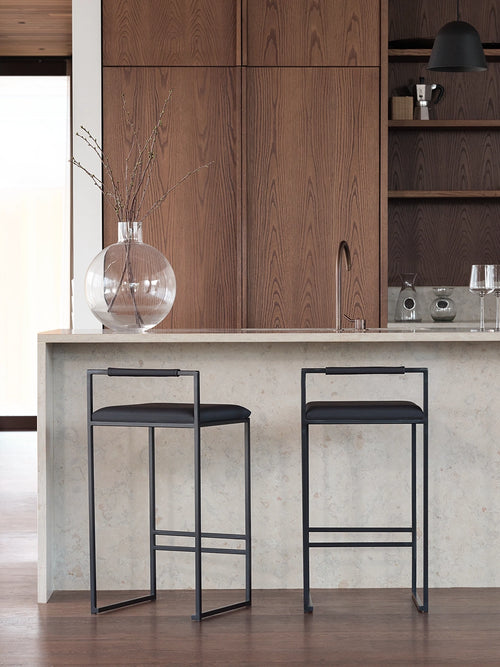
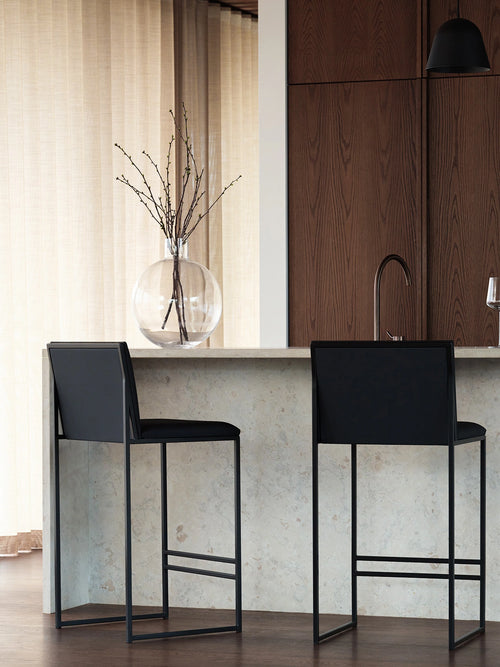
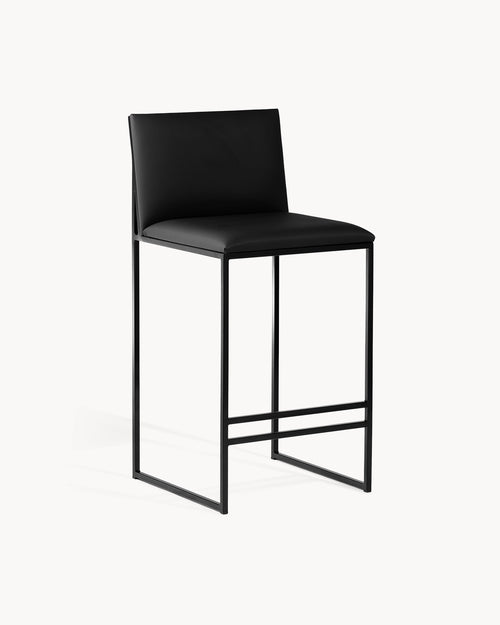
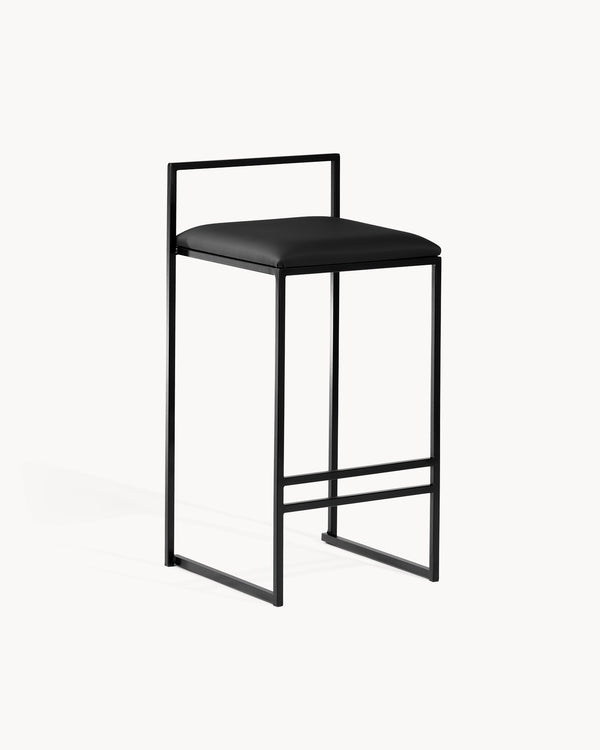
A good metal bar stool has a welded frame of precision steel tube with a powder-coated finish, an upholstered seat and a footrest. That combination is slim, strong and, in our experience, easy to live with for decades. Our steel stools, Freja, Philip, Bruno and Svea, are made from Swedish precision steel in our own factory in Malmö, rated for 440 lbs, and are the ones we make in custom seat heights.
Steel is the material behind many slim, modern bar stools, because it stays strong in thin sections: a steel frame can carry a person on a seat 30 in off the floor with tube barely thicker than a finger. That strength is also what lets steel stools come in more shapes, colors and heights than wooden ones. But metal stools vary enormously in quality, from thin tube held together with bolts and sprayed with paint to welded precision steel with a baked finish. This guide explains what to look for in a steel bar stool, how the finish is made, which frame colors and seat heights are possible, how to look after steel, and how our four steel models compare in shape and size.
Are steel bar stools a good choice?
Yes, when the frame is welded precision steel with a powder-coated finish.
Steel is strong in slim sections, so the stool looks light while carrying a heavy load; it does not swell, crack or warp with kitchen humidity; and a baked finish wipes clean and resists chips. It is also the material that allows custom seat heights.
The weak points of cheap metal stools are not the steel but what is done with it: bolted joints that loosen, thin tube that flexes and wet paint that, in our experience, can chip at the footrest within months. Check those three things, joints, tube and finish, before the look. Our guide to wood vs metal bar stools compares steel with oak.
What kind of steel should a bar stool be made of?
Look for precision steel tube, welded rather than bolted.
Precision tube is drawn to tight tolerances, so every joint fits exactly before it is welded, which in our experience is what keeps a frame square and stable for decades. Ours is Swedish precision steel to EN 10305-5, cut, bent and welded in our factory in Sweden.
Welded joints have nothing to loosen. We rate our steel stools for 440 lbs, and separately they have been tested or assessed by RISE to EN 16139, the European strength and durability standard for non-domestic seating. See bar stool weight capacity and bar stool testing and standards for what those numbers mean.
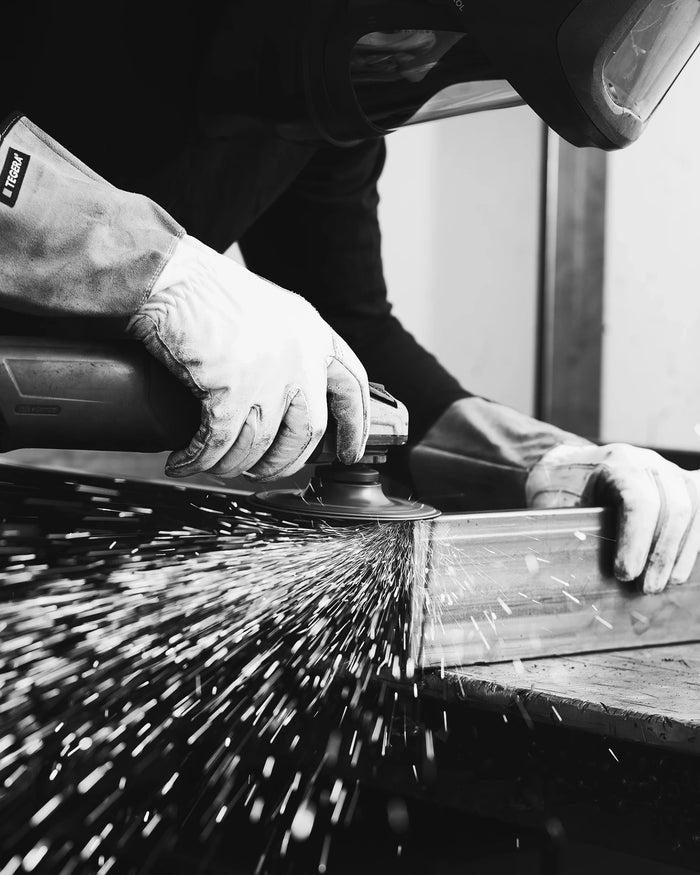
Precision steel tube is cut, welded and ground in our factory in Sweden.
Powder coating, paint or chrome: which finish is best?
Powder coating, for a kitchen bar stool. The powder is sprayed on and baked, forming a hard, even layer that, in our experience, resists chips, scratches and cleaning far better than wet paint.
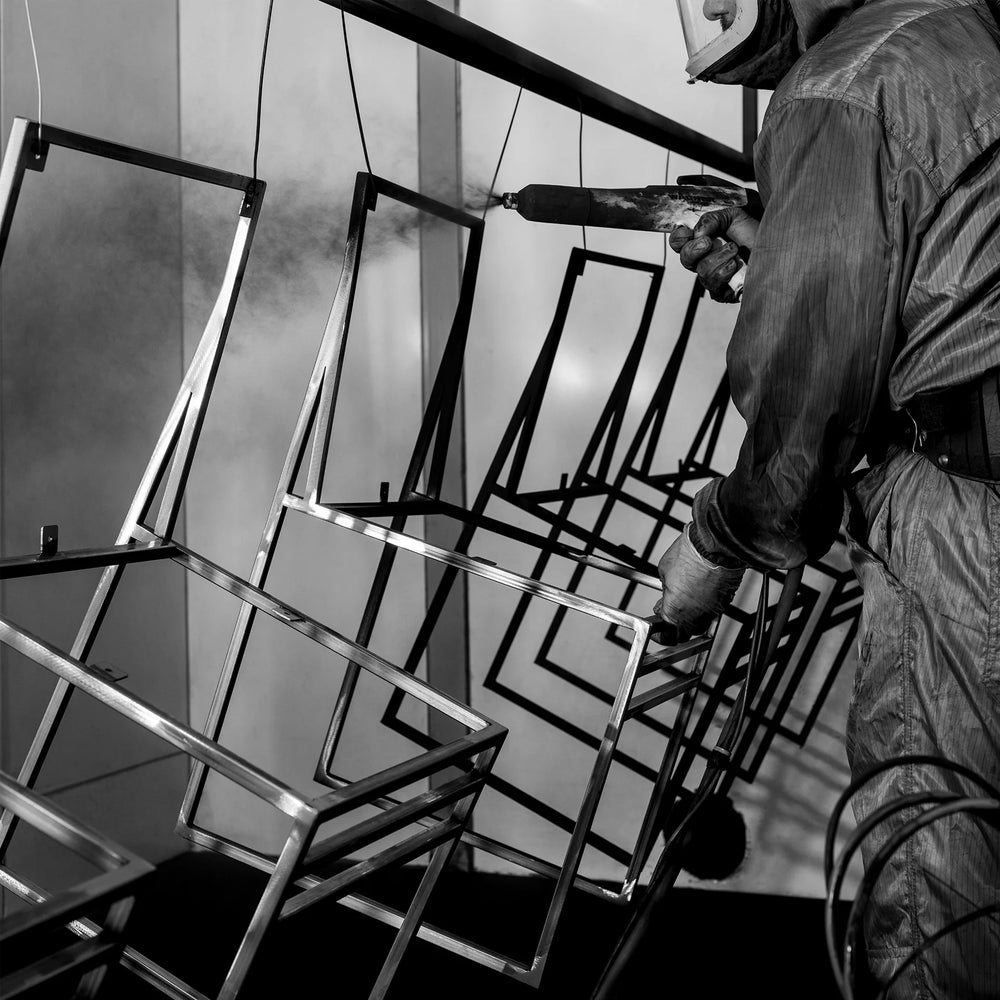
Powder is sprayed on and baked into a hard, even finish.
Chrome is hard too, but shows every fingerprint and water mark, and tends to read as retro rather than calm.
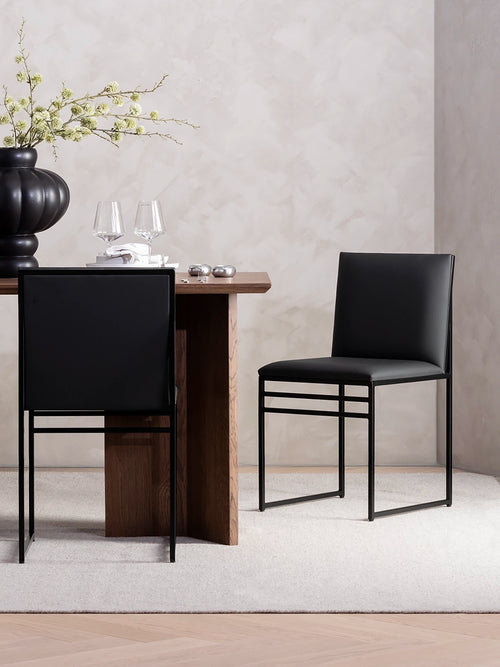
Our frames are powder-coated in our own factory; black is RAL 9005 at a low sheen, a soft satin that hides fingerprints. The footrest, the part shoes touch every day, is where the difference between powder coating and paint shows first. Our guide to powder-coated steel explains the process step by step.
Which frame colors can steel bar stools have?
Almost any, because powder coating can be made in any color.
Black is a popular frame color for kitchen stools because it outlines the island and matches black fittings; lighter frames such as white, beige or taupe tend to suit pale kitchens and soften the look.
Our steel stools come with black frames as standard, and selected models can be ordered with white, beige or taupe frames through Design Your Own, where you also choose the upholstery. Order frame and fabric samples to compare colors against your countertop. Our black bar stools guide shows black frames in real kitchens.
Can steel bar stools be made in a custom height?
Yes, and that is one of steel's biggest advantages.
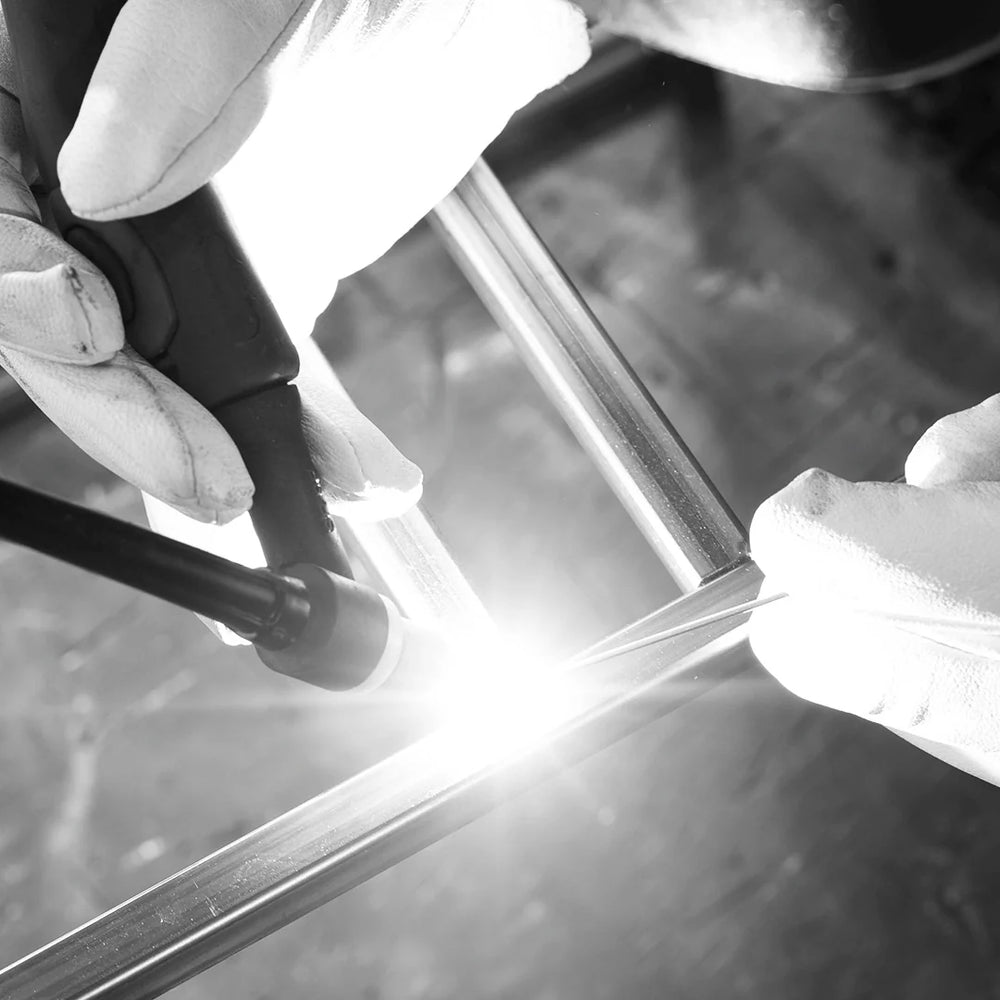
Philip's steel frame being TIG-welded by hand in our factory in Sweden.
Because the frame is cut and welded from tube, the legs can be made to any length within reason, which means the seat can be set to exactly the height your counter needs. Solid oak stools, whose parts are machined to fixed sizes, come in standard heights only.
We make custom seat heights on Freja, Philip, Bruno and Svea, for counters that fall between the standard 26 in and 30 in seats. They are welded to order in Sweden with the same 10-year warranty. See custom height bar stools for how to order one.
Which steel bar stool should I choose?
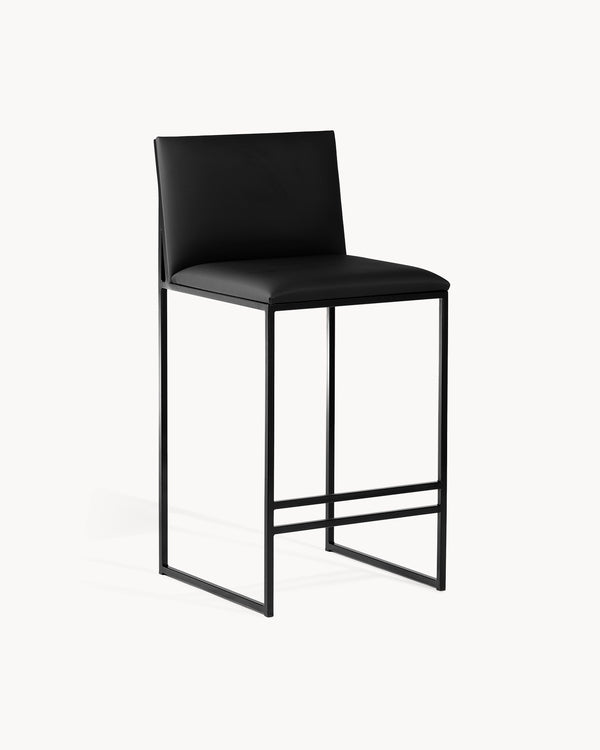
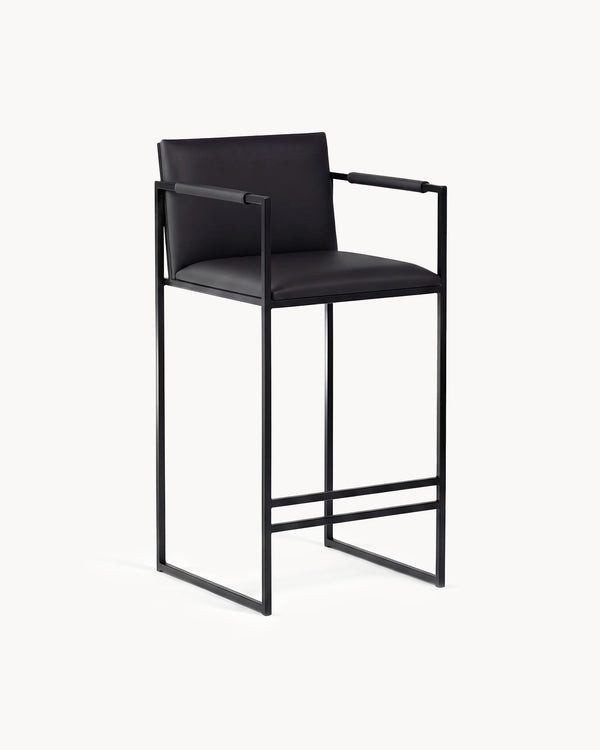
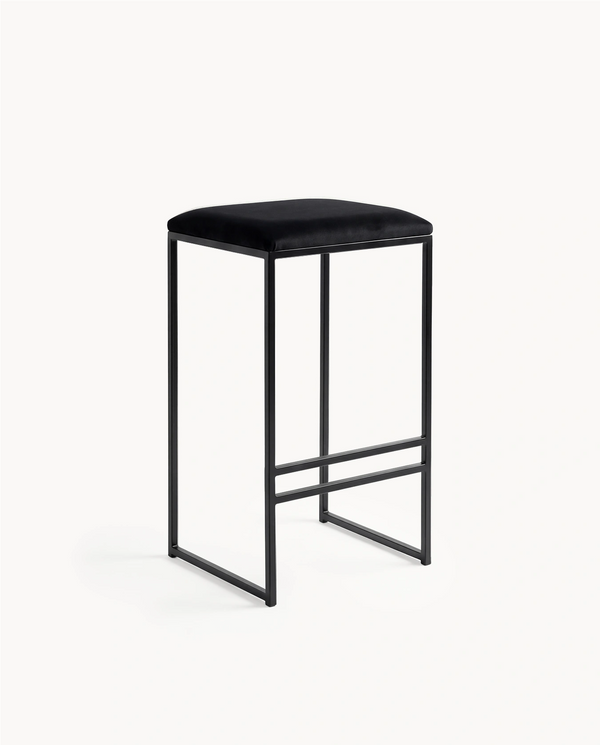
Choose Svea for a backless stool that disappears under the counter, Freja for a low backrest and everyday meals, Philip for a full upholstered backrest, and Bruno for a full backrest with armrests.
All four have upholstered seats in vegan leather, velvet or bouclé, and come in 26 and 30 in seat heights or a custom height.
The table compares the four. Freja and Svea have a cushion fixed with two screws, so it can be replaced if it ever wears; Philip and Bruno have fixed upholstery.
Bruno: a full backrest and armrests on a powder-coated steel frame.
Wipe the frame with a dry or lightly damp cloth and dry it straight away; that is all a powder-coated frame needs.
We recommend avoiding abrasive pads, metal polishes and strong solvents, which can dull the finish. Fit felt pads under the feet to protect the floor and keep the stools quiet.
Upholstery needs care suited to its fabric: vegan leather is wiped clean, velvet and bouclé are blotted and vacuumed. If a seat on Freja or Svea ever needs renewing, the cushion can be replaced rather than the stool. Our guide to cleaning bar stools covers every material.
Choosing a steel bar stool
440 lbs
Load rating.
Custom
Seat heights welded to order on steel models.
10 years
Warranty on every steel stool.
Look for welded precision steel, a powder-coated finish and an upholstered seat, then choose the backrest and frame color for your kitchen. If your counter is not a standard height, steel is the material that can be made to fit it. Our steel stools, Freja, Philip, Bruno and Svea, are made from Swedish precision steel and powder-coated in our own factory in Sweden, delivered fully assembled, rated for 440 lbs and covered by a 10-year warranty.
Frequently asked questions
Are metal bar stools good quality?
They can be excellent. Look for welded precision steel, a powder-coated finish and a stated load rating. Bolted joints and painted finishes are the usual weak points.
What steel are your bar stools made from?
Swedish precision steel tube to EN 10305-5, welded and powder-coated in our own factory in Sweden.
Are stainless steel bar stools better?
Not for a kitchen stool we would make. Stainless is for wet or outdoor metal. Ours are Swedish precision steel, powder-coated, so they do not rust indoors and do not show every fingerprint the way chrome or stainless often does.
What colors do your steel bar stools come in?
Black as standard; selected models in white, beige or taupe through Design Your Own.
Can I get a metal bar stool in a custom height?
Yes. Freja, Philip, Bruno and Svea can be made to a custom seat height, welded to order in Sweden.
Are your steel bar stools tested?
A Freja frame weighs about 22 lbs: heavy enough to stand firmly, light enough to lift with one hand.