Are Metal Bar Stools Comfortable? What Makes a Steel Stool Easy to Sit On
By Alexandra PetterssonReviewed by Alexander TjernströmUpdated
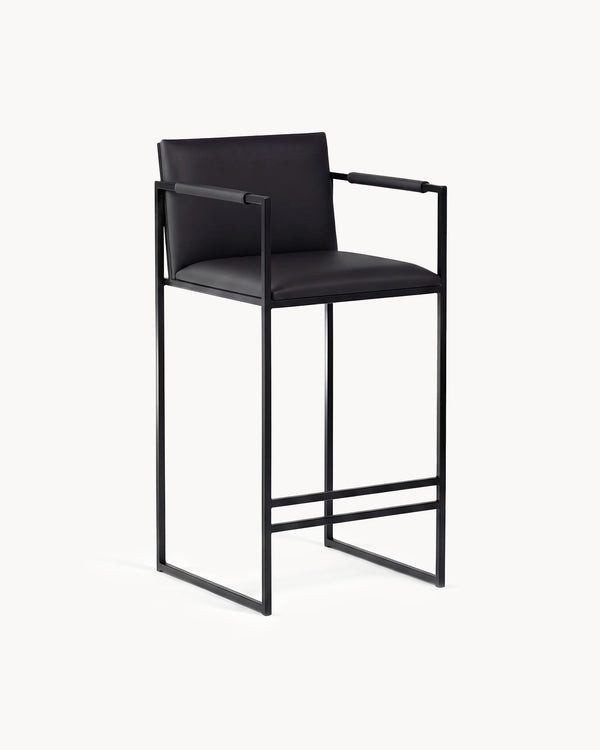
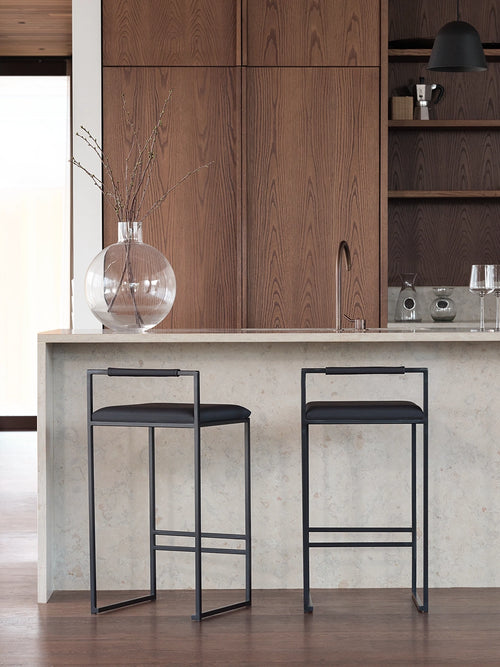
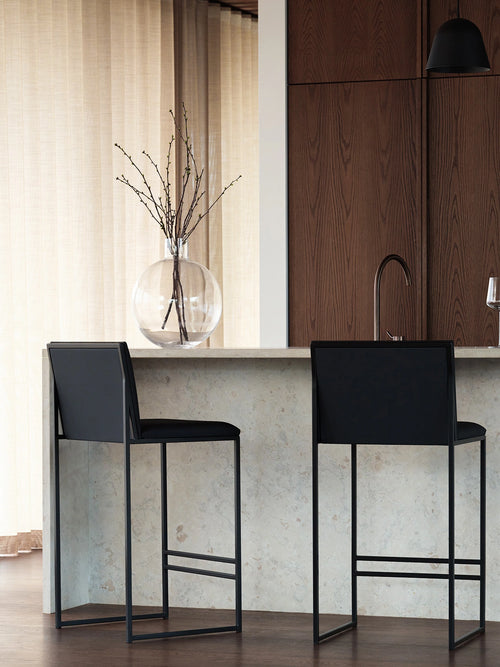
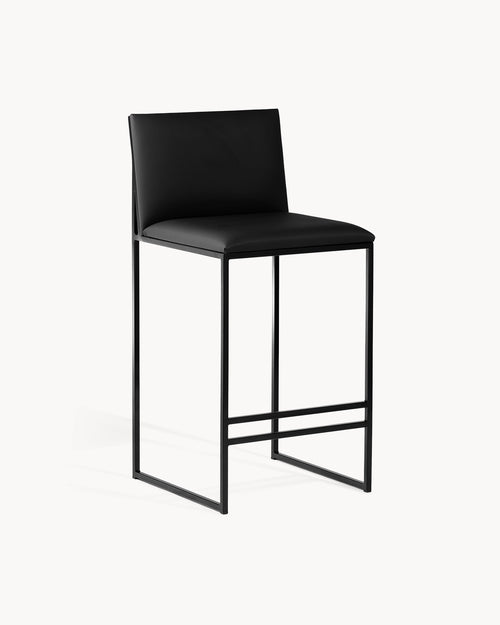
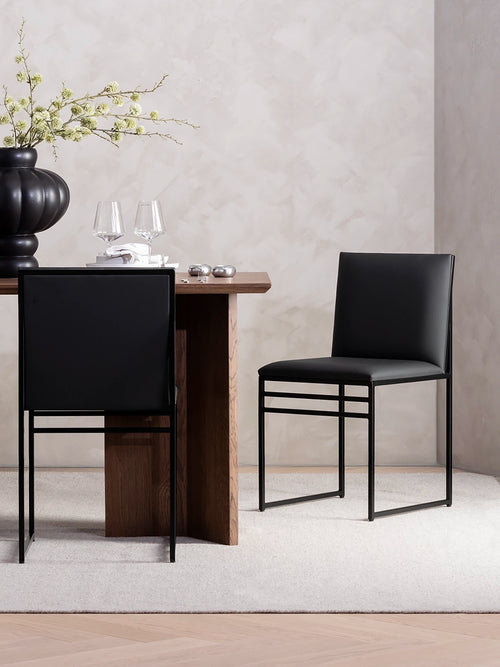
Yes, a metal bar stool is comfortable when you sit on upholstery, not metal, have a backrest for longer sits and a footrest about 40 to 45 cm (16 to 18 in) below the seat. The steel frame only decides how slim and strong the stool is. Our four steel stools, Freja, Philip, Bruno and Svea, all have upholstered seats on a cold-cut foam core.
Metal bar stools have a reputation for being cold, hard and meant for perching, and some are exactly that: a thin steel seat on four legs is not a place to spend an evening. But the metal is rarely the problem. Comfort comes from what you actually touch, the seat, the backrest and the footrest, while the steel frame carries the load and gives the stool its slim shape. This guide explains when metal stools are comfortable and when they are not, whether they feel cold, what to look for in a steel stool you plan to sit on for long meals, and how our four steel models compare. It is written from how we build them, in our own factory in Malmö, Sweden.
Are metal bar stools comfortable?
They are when the seat is upholstered, the stool has a backrest and the footrest sits at the right height. Those three decide comfort; the steel frame decides how slim, strong and stable the stool is. A bare metal seat without a back is fine for a quick coffee and tiring after twenty minutes.
Steel's real contribution to comfort is indirect: because steel is strong in thin sections, a steel stool can have a slim frame, a well-placed footrest and a backrest shaped exactly where it is needed, without looking heavy. That is why most comfortable modern bar stools with slim lines are steel underneath. Our guide to comfortable bar stools covers all five comfort factors.
Do metal bar stools feel cold or hard?
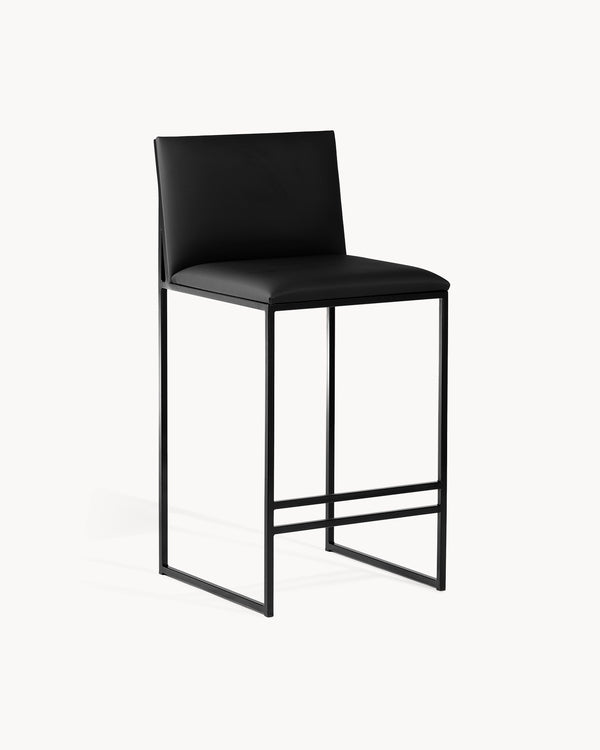
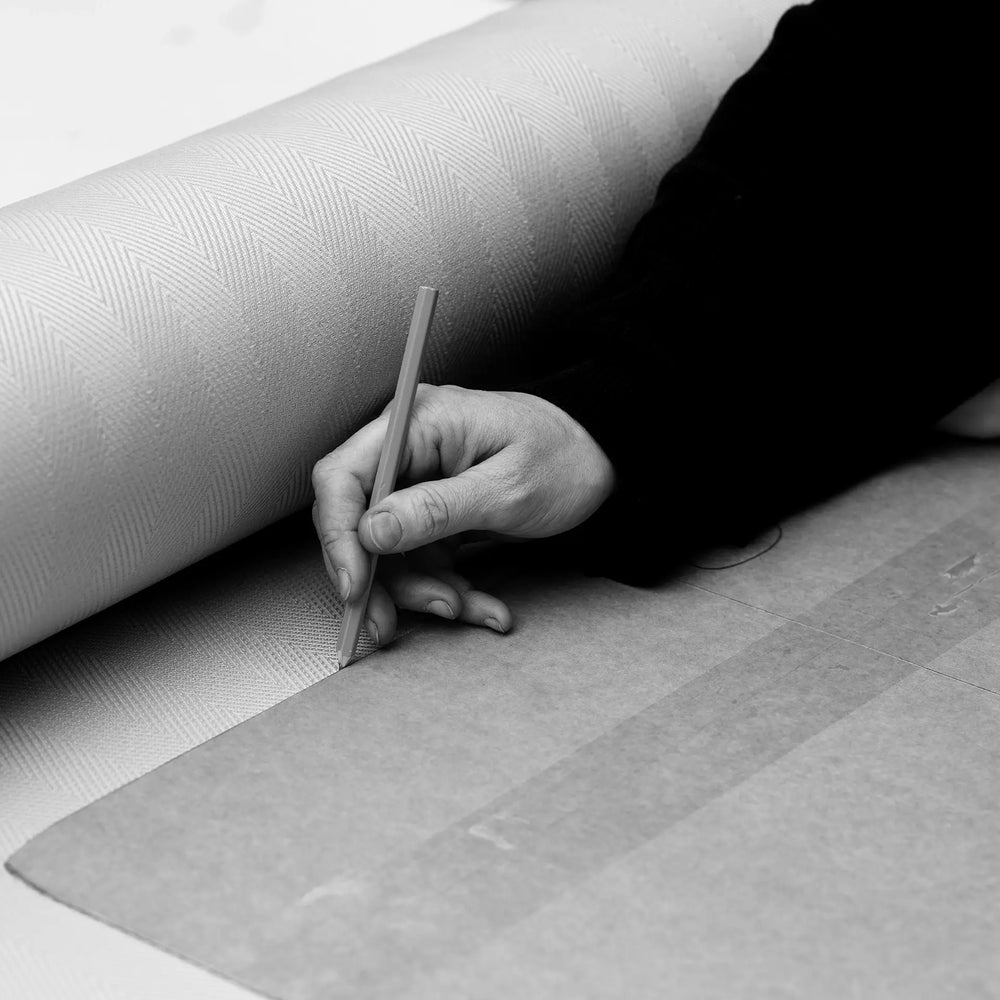
Seats are cut and upholstered by hand over cold-cut foam.
Not if the seat is upholstered, because you sit on the cushion, not the frame. The only metal you touch is the footrest, with your shoes, and on some models the armrests, with your forearms. A powder-coated finish also feels less cold than bare or chrome-plated steel.
Hardness comes from the seat, not the frame. A thin pad over a metal pan feels hard; a proper foam cushion does not. Our steel stools use cold-cut foam at 55 kg/m³ on a beech plywood core, upholstered in vegan leather, velvet or bouclé, which is firm enough to support and soft enough for a long dinner. On Bruno, the armrests carry straps in vegan leather, so your forearms rest on leather rather than steel.
What makes a steel bar stool comfortable to sit on?
Four things: a padded seat of about 41 to 47 cm (16 to 18.5 in) for long sits, a backrest that supports at least the lower back, a footrest about 40 to 45 cm (16 to 18 in) below the seat, and the right seat height for your counter. Get those right and the frame material stops mattering.
The frame's shape matters too. A seat that is slightly tilted back and a backrest angled to meet the spine let you lean without sliding forward. On Freja, the footrest sits about 24 cm (9.5 in) above the floor on the 66 cm (26 in) seat, 42 cm below it, in the middle of the comfortable range.
Are metal bar stools more or less comfortable than wooden ones?
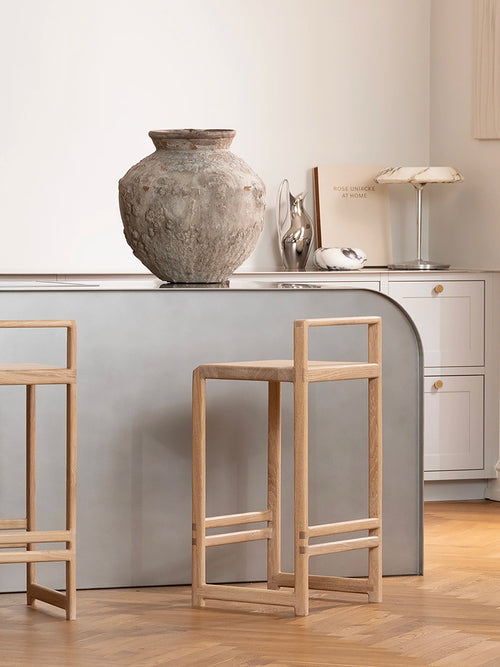
About the same, when both are upholstered and shaped well. Steel stools usually come with upholstered seats, so they tend to be the softer choice; wooden stools more often have wooden seats, which are comfortable for meals up to about an hour. Wood also feels warmer to the touch where you hold it.
The practical difference is in the look and the options: steel frames are slimmer and come in more colours and custom heights; oak brings warmth and grain. Compare them fully in wood vs metal bar stools.
Which of our steel bar stools is the most comfortable?
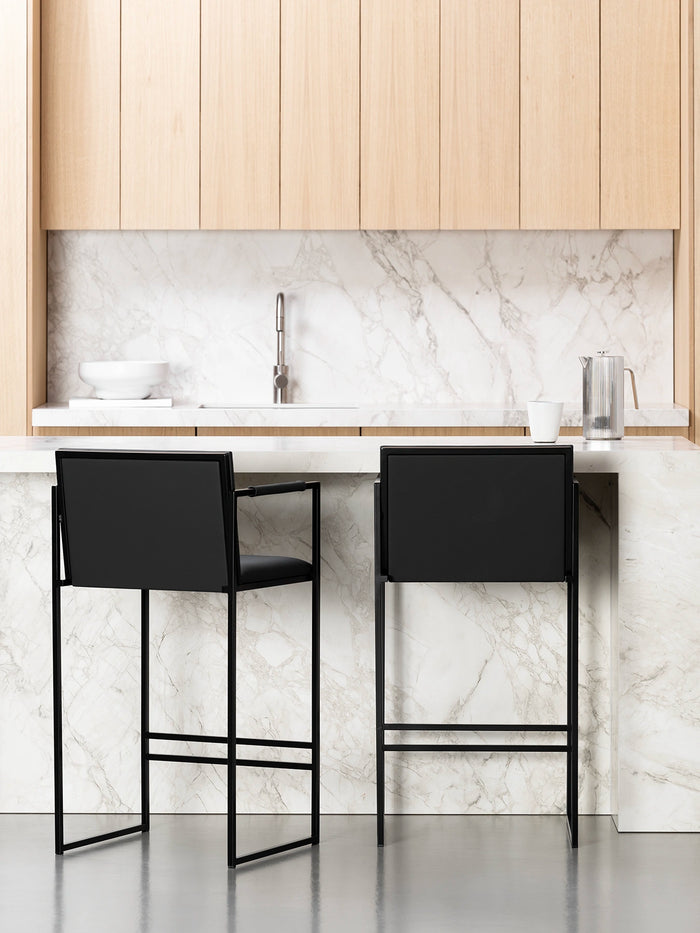
Bruno: a full backrest and armrests on a powder-coated steel frame.
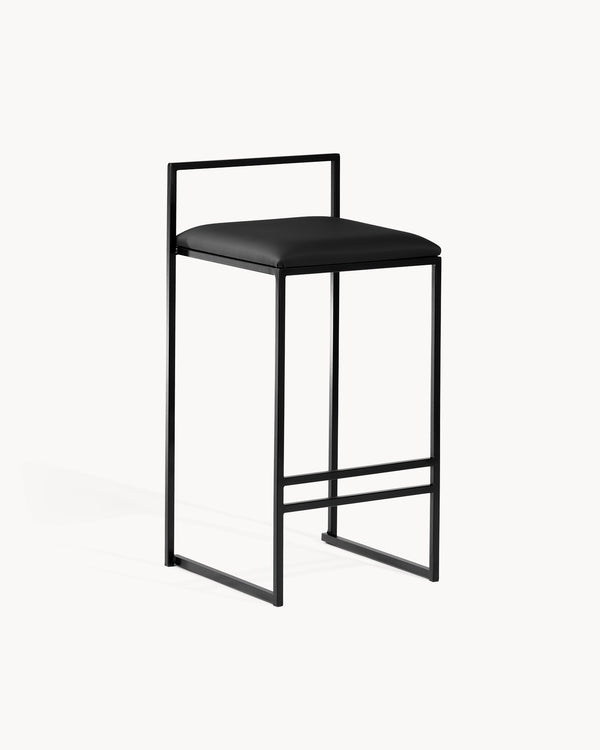
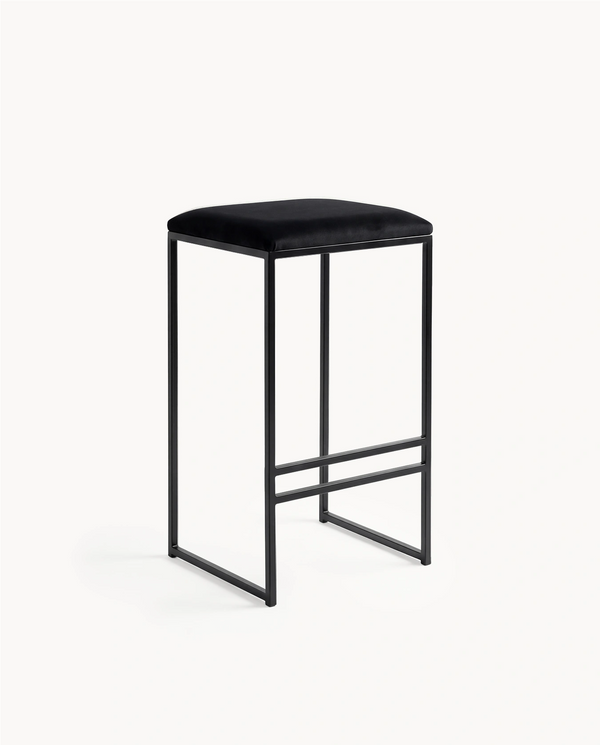
For the longest sits, Bruno, with a full backrest and armrests, or Philip, with a full upholstered backrest. For everyday meals, Freja, whose low backrest supports the lower back and stays below the counter. For short sits and small islands, Svea, backless with a padded seat.
The table compares the four. All come in 66 and 76 cm (26 and 30 in) seat heights or a custom height, are rated for 200 kg (440 lbs) and carry a 10-year warranty.
Our four steel bar stools compared for comfort
Model
Backrest
Seat width
Best for
Svea
None
38 cm (15 in)
Short sits, small islands
Freja
Low
41 cm (16.1 in)
Everyday meals
Philip
Full, upholstered
44 cm (17.3 in)
Long meals, working at the counter
Bruno
Full, with armrests
47 cm (18.5 in)
The longest sits, easy getting up
Do metal bar stools scratch floors or make noise?
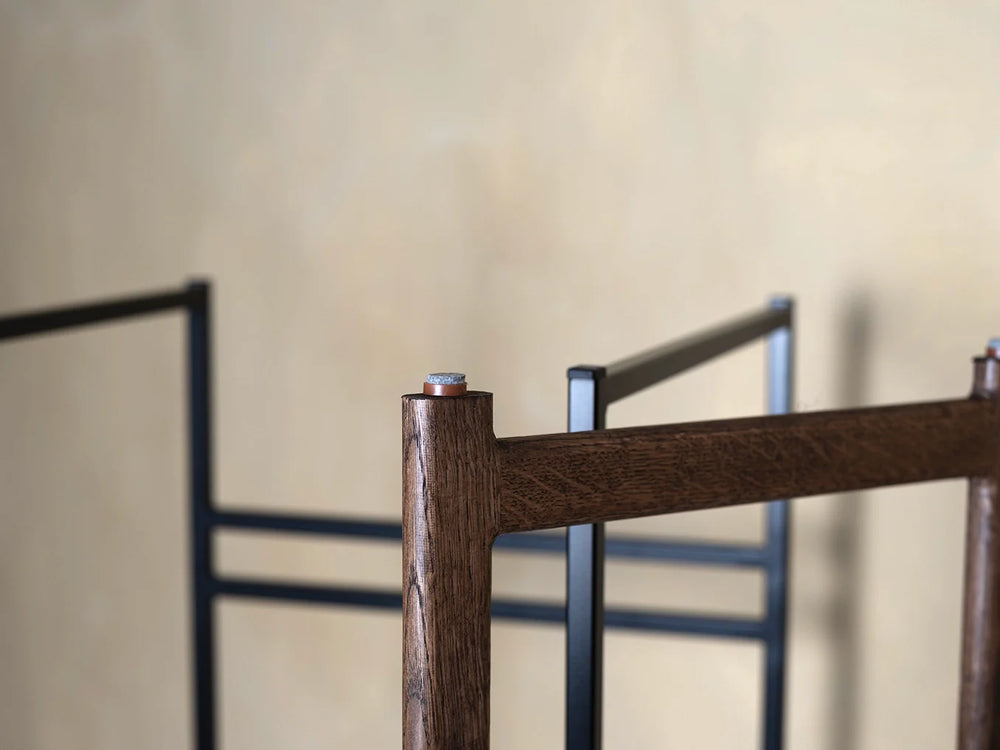
Felt pads under the feet protect the floor and stop the noise.
They can, if the feet are bare. Steel feet on a hard floor scrape and clatter; felt pads under the feet stop both and protect wooden and stone floors. Replace the pads when they wear thin, usually once or twice a year in a busy kitchen.
We sell felt furniture pads and plastic feet for exactly this, and they suit any stool with metal or wooden feet. Our guide to cleaning and caring for bar stools covers floors, frames and upholstery.
Comfortable steel, in short
A metal bar stool is as comfortable as its seat, backrest and footrest: choose an upholstered seat, a backrest for anything longer than a quick meal, a footrest about 40 to 45 cm (16 to 18 in) below the seat, and the right height for your counter. Our steel stools, Freja, Philip, Bruno and Svea, are welded and powder-coated in our own factory in Malmö, Sweden, upholstered by hand, rated for 200 kg (440 lbs) and covered by a 10-year warranty.