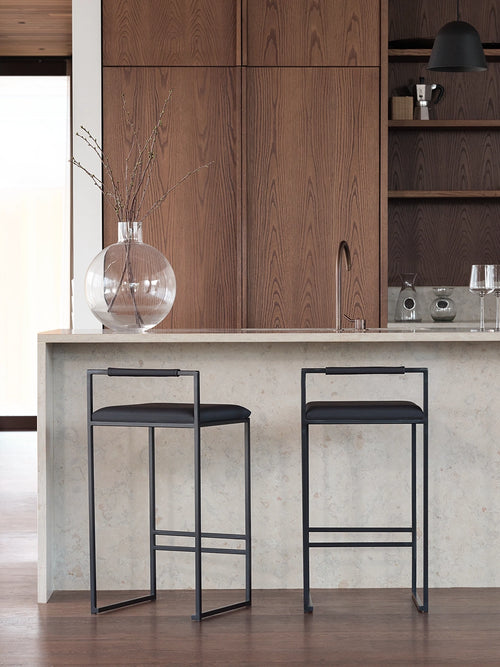
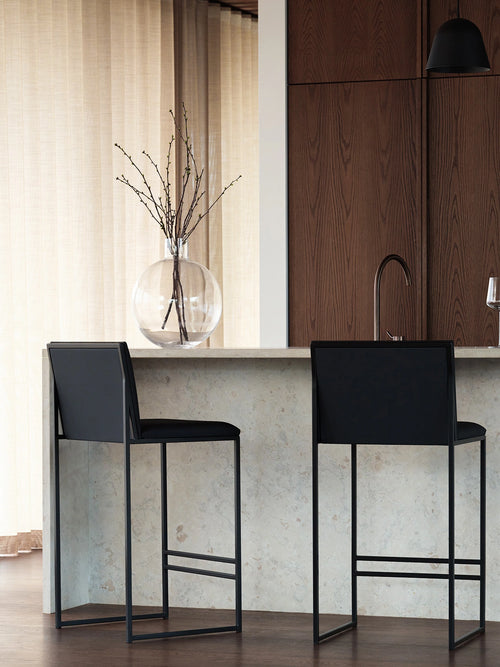
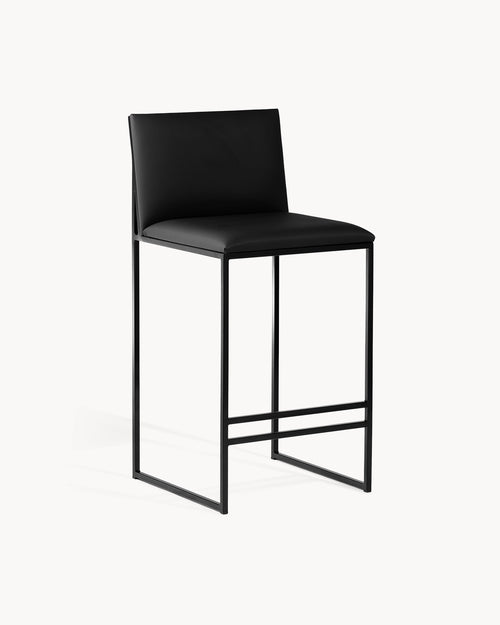
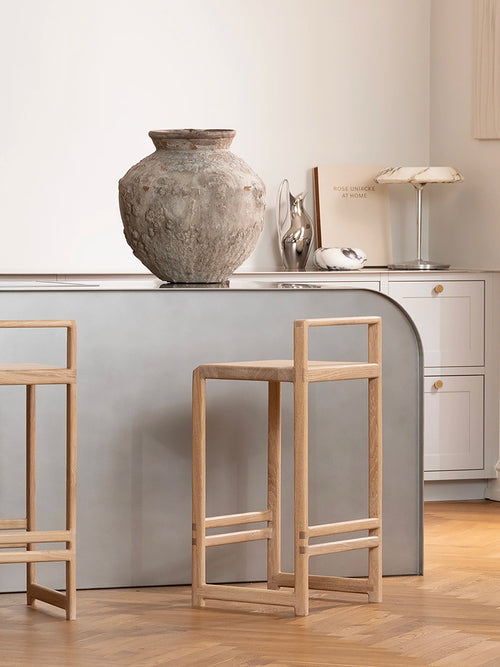
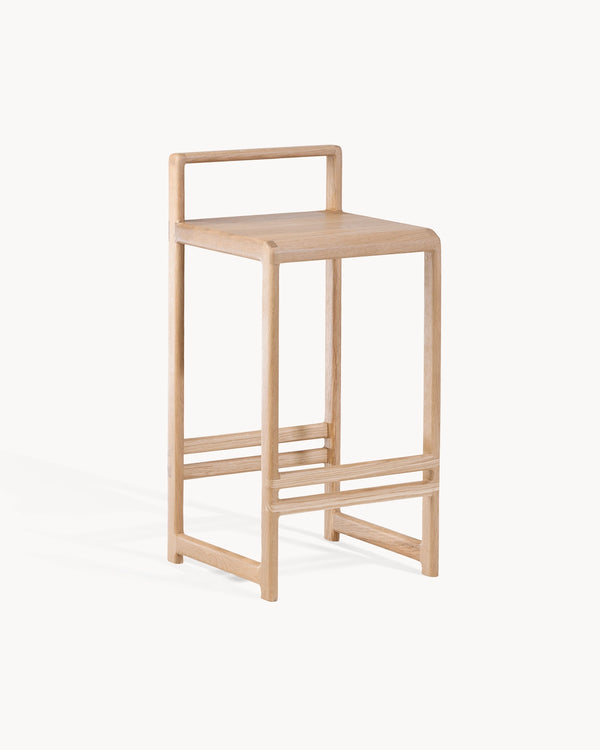
A bar stool in a restaurant, bar or hotel lives a harder life than any stool at home: hundreds of different guests a week, constant pulling in and out, spills at every service and cleaning every night. In our experience, what is fine in a kitchen can fail in months at a busy counter, and a wobbling or stained stool is visible to every guest. This guide is for architects, interior designers and owners specifying stools for hospitality. It covers the strength and fire standards to ask for, which upholstery holds up, how to plan spacing at a bar counter, what to look for in maintenance and spare parts, and how our stools, made in our own factory in Malmö, perform against each point.
What makes a bar stool suitable for commercial use?
Five things: proven strength under repeated heavy use, upholstery that meets fire regulations and resists abrasion, surfaces that survive nightly cleaning, joints that do not loosen, and parts that can be replaced without replacing the stool.
A domestic stool can look identical and fail on every one of them.
The most important is construction. In our experience, bolted joints loosen under constant use and need regular re-tightening; welded steel and glued solid-oak joints do not. After that come testing and upholstery, which the next sections cover. Our guide to whether expensive bar stools are worth it sets out the build-quality checks in more detail.
Which standards should commercial bar stools meet?
For strength, EN 16139, the European standard for non-domestic seating, which tests seat, backrest and footrest under repeated loads and checks stability; level 1 covers general use and level 2 extreme use.
For fire safety, the requirement depends on the jurisdiction: EN 1021-1 and -2 (the European cigarette and match ignitability tests) are the usual reference in Europe, BS 5852 Crib 5 applies to UK contract use, and CAL TB 117 where California rules apply.
The table shows how our steel stools and fabrics meet these. Ask any supplier for the test reports, not just the claim; our page on bar stool testing and standards lists ours.
Standards to specify, and what by Crea meets
Requirement
Standard
by Crea
Strength and durability
EN 16139, level 1 or 2
Bruno level 2; Freja, Philip and Svea level 1
Load rating
Stated by the maker
440 lbs, our own rating, every model
Fire, Europe
EN 1021-1 and -2
Vegan leather: EN 1021-1 and -2; velvet: EN 1021-1
Fire, UK contract
BS 5852 Crib 5
Not as standard on our fabrics
Fire, California
CAL TB 117
Velvet
Abrasion
Martindale (ISO 12947); we treat 30,000 or more as contract grade
Which by Crea bar stools suit restaurants, bars and hotels?
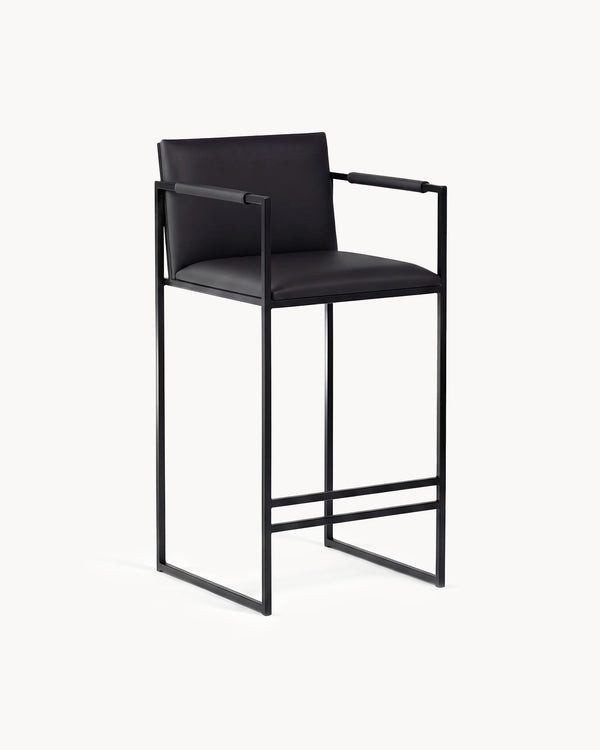
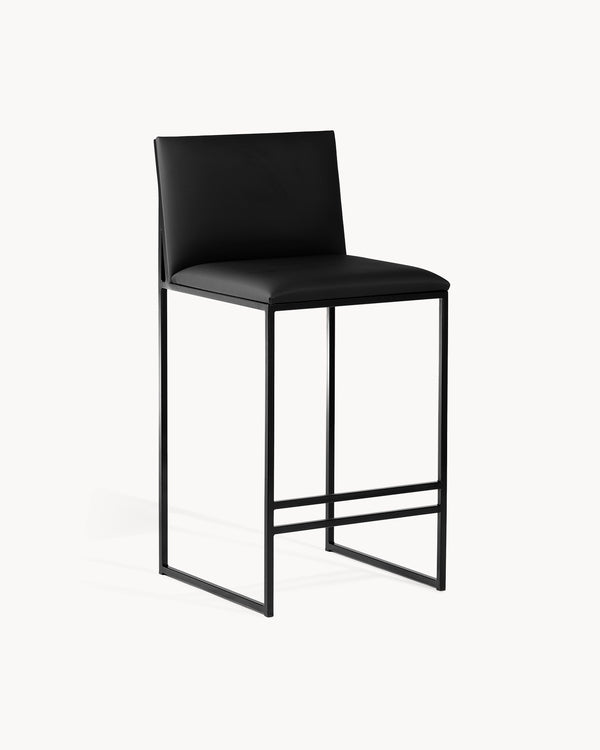
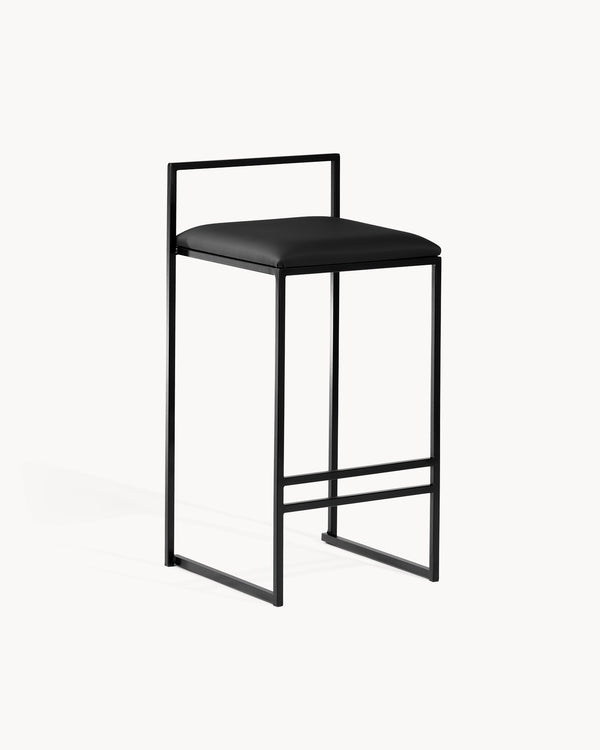
For the heaviest use, Bruno, tested to EN 16139 level 2, with a full backrest and armrests; for most bars and restaurants, Philip, tested by RISE to EN 16139 level 1, and Freja and Svea, which RISE has assessed as meeting level 1 on the basis of that testing.
In oak, Ebba stands at the bar of Norrbottens Destilleri in northern Sweden, alongside our Karin chairs at the communal table.
For busy counters, we recommend vegan leather: it is rated for 300,000 Martindale rubs, wipes clean between services and passes EN 1021-1 and -2. Dark velvet suits lounges and hotel bars where a softer look matters. See steel bar stools for the four steel models.
Ebba bar stools at the bar of Norrbottens Destilleri.
How should bar stools be spaced at a commercial counter?
As a starting point, allow 21.5 to 23.5 in per stool, center to center, at a bar or restaurant counter, and 23.5 in or more where guests stay for long meals or seats are wide.
We recommend at least 43 in of clear floor behind the stools where staff and guests pass, more on main circulation routes.
Seat height follows the same rule of thumb as at home: the seat 9 to 10 in below the underside of the counter, which means 30 in seats for most bar counters of 39 to 40 in. Counters outside the standards can be matched with custom heights on our steel models. See distance between bar stools and custom height bar stools.
What about cleaning, maintenance and spare parts?
Specify frames that need nothing more than a damp cloth, powder coating or lacquer, and upholstery that wipes clean or has a water-repellent finish.
Plan felt pads or plastic feet under every stool, and a routine to replace them, since grit under worn pads damages floors quickly in busy venues.
Replaceable parts keep a project looking new for years: on Freja and Svea the cushion is fixed with two screws and can be replaced on site, and feet and pads are standard spare parts. Because we make the frames and upholster the seats in our own factory, replacement parts come from the same place as the original stool. Our cleaning guide covers each material.
Felt pads and feet are standard spare parts.
Can we order custom heights, colors and project quantities?
Yes. Our steel stools can be made to custom seat heights for non-standard counters, and selected models come in white, beige or taupe frames as well as black.
Made to order in Malmö for restaurants, bars and hotels.
Quantities for restaurants, bars and hotels are made to order in our factory in Malmö and delivered fully assembled.
For projects, we work with architects, interior designers and owners on samples, finishes and delivery planning. Start on our page for professionals, or order frame and fabric samples to specify colors against your interior.
Specifying commercial bar stools
EN 16139
Tested or assessed by RISE; Bruno to level 2.
300,000
Martindale rubs: vegan leather.
43 in
Floor behind the stools.
Ask for EN 16139 test evidence, fire-rated upholstery for your market, abrasion-rated wipe-clean fabric, welded or glued joints and replaceable parts; plan 21.5 to 23.5 in per stool and 43 in behind. Bruno is tested by RISE to EN 16139 level 2; Philip is tested and Freja and Svea assessed by RISE to level 1. We rate every stool for 440 lbs, and all are made in our own factory in Malmö, Sweden, delivered fully assembled and covered by a 10-year warranty.
Frequently asked questions
What is EN 16139?
The European standard for the strength, durability and stability of seating in non-domestic spaces such as restaurants, bars, offices and hotels. Level 2 covers extreme use.
Are your bar stools suitable for restaurants?
Yes. Bruno is tested by RISE to EN 16139 level 2, for extreme use; Philip is tested and Freja and Svea assessed by RISE to level 1.
Which upholstery is best for a busy bar?
Vegan leather: rated for 300,000 Martindale rubs, wipe-clean and tested to EN 1021-1 and -2, the European cigarette and match tests.
How far apart should commercial bar stools be?
As a starting point, 21.5 to 23.5 in center to center, with at least 43 in of clear floor behind where people pass.
Can we get custom heights for a bar counter?
Yes, on Freja, Philip, Bruno and Svea, welded to order in Malmö for counters outside the standard heights.
Do you work with architects and designers?
Yes. Our trade team supports projects with samples, finishes and delivery planning; see our page for professionals.