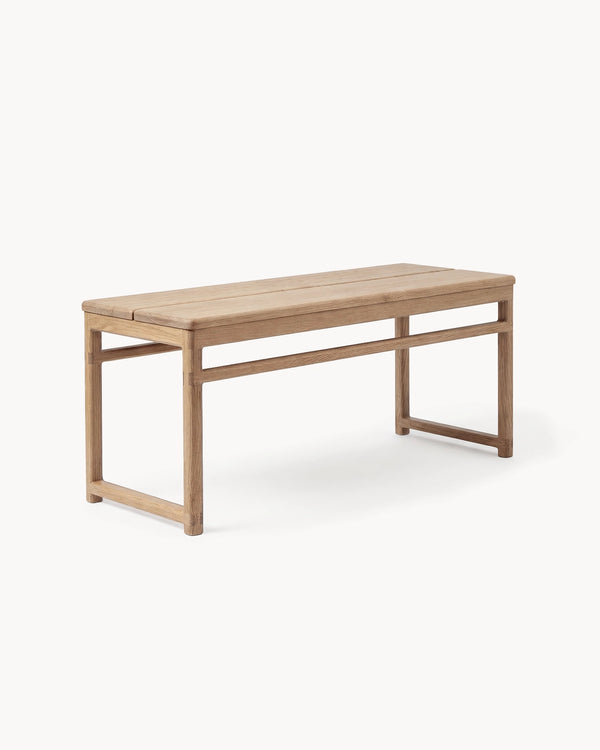
Sustainable furniture is easy to claim and hard to check. Words like green, eco and natural cost nothing to print. What decides the footprint of a chair or a table, more than any label, is how long it is used before it is thrown away. This guide covers what makes a piece last, what we can show for ours, what we leave out, and the questions to ask any furniture brand, including us.
What is sustainable furniture?
Furniture made from responsibly sourced materials, built to be used for decades and repaired rather than replaced.
The longest-lasting chair is usually the most sustainable one. A cheap piece that wobbles after three years and goes to the tip has used its materials, its making and its delivery for very little. A well-made one spreads the same cost over twenty or thirty years.
So the questions are practical. Where does the material come from, how is it joined, which parts wear out, can you replace them, and how long does the maker stand behind it?
What can we actually show?
Each point below is something we can name and you can check: a material, a certificate, a construction or a warranty.
There is no carbon or recycled-content percentage in this guide. A figure without a measurement behind it would be a guess, and a guess is exactly what this page is trying to help you see through.
What can we actually show?| What we use | What it is | Why it matters |
|---|
| Solid oak | A-grade German oak, bought as FSC-certified timber | Can be sanded and relacquered |
|---|
| Teak, outdoors | A-grade plantation teak, bought as FSC-certified timber | Weathers silver-grey with no treatment |
|---|
| Steel | Welded into one frame, then powder-coated | No joints to work loose |
|---|
| Dekton | Sintered stone tops | No sealing, no fading in sunlight |
|---|
| Fabrics | Velvet, bouclé and outdoor olefin to OEKO-TEX Standard 100 | Tested for harmful substances |
|---|
| Parts | Seats, cushions and spare glass sold separately | Replace the worn part, keep the piece |
|---|
| Warranty | 10 years | The maker stands behind it |
|---|
Why does a long life matter more than a green label?
Because the materials, the making and the delivery are spent once, whatever happens next. Every extra year of use spreads that cost thinner; a piece replaced after three years pays it again.
What wears out first on furniture is fabric and foam, long before a good frame. A sustainable piece lets you change those and keep the frame. A well-made one should outlast its warranty by a wide margin.
That is also why a long warranty says something: a maker only offers ten years on a frame it expects to last much longer.
Which materials last longest?
Solid hardwood such as oak, welded steel, sintered stone and solution-dyed outdoor fabric. Veneered board, bolted joints and printed finishes are where furniture usually fails.
Indoors, solid oak can be refinished and welded steel has no joints to loosen. Powder coating is sprayed on as a dry powder and baked, a harder layer than wet paint. Dekton tops need no sealing. Our upholstery fabrics are rated from 50,000 Martindale for bouclé to 300,000 for Valencia vegan leather, which also has a 5-year fabric warranty from its maker, Spradling.
Outdoors, most of our garden frames are stainless steel under the powder coat, the teak weathers silver-grey without treatment, and the olefin cushion fabric is solution-dyed, so the colour runs through the fibre. Our guide to weatherproof garden furniture compares them.
Can the furniture be repaired?
Yes, and that is designed in. We do not offer a re-covering service, but the parts that wear can be replaced at home.
Seats and seat cushions for our dining chairs, and the cushions on our armchairs, are sold separately through customer service. Cushions for the Freja, Ebba and Eva bar stools are products of their own, and outdoor stool cushions are sold separately. Spare glass for the Thomas and Tom candle holders is sold too, and spare parts stay available long after purchase.
The frames can be repaired as well: solid oak can be sanded and relacquered, and a small mark in powder coating can be touched up. See replacing a bar stool seat cushion and replacing a dining chair seat.
Does it matter where furniture is made?
Yes, because a maker who controls every step can check every joint and still supply parts years later.
In our own factory in Sweden we weld and powder-coat the steel, cut and lacquer the oak, upholster the seats and assemble each piece, then inspect it by hand before it ships. Our chairs and stools start as materials, not bought-in parts: steel tube, oak timber, foam and fabric. One team is responsible from the first cut to the last check.
Furniture assembled from parts bought from several suppliers is only as consistent as the weakest one, and spare parts can disappear when a supplier changes. Our guide to how our bar stools are made shows the process step by step.
How do you check a sustainability claim?
Ask for the thing behind the word. A certificate, a test, a warranty or a spare part is a claim you can check; eco, green or natural on its own is not.
- Where does the wood come from, and is it certified, FSC or PEFC?
- Is it solid wood, veneer or a printed foil?
- Is the frame welded or glued, or held by screws and bolts?
- Which parts wear out first, and can you still buy them in ten years?
- How long is the warranty, and what does it cover?
- Where is it made, and by whom?
Ask us the same questions. Our guide to solid oak furniture answers the wood ones, and our warranty page sets out what the 10 years cover.
Keep it, repair it, keep it again
- Made in
- our own factory in Sweden
- Frames
- welded steel, solid oak
- Vegan leather
- 300,000 Martindale
Sustainable furniture is furniture you do not have to replace: certified wood, welded or properly joined frames, parts you can change and a maker who stands behind it. Ours is FSC-certified oak and teak, welded steel and replaceable seats and cushions, made in our own factory in Sweden with a 10-year warranty. Ask any brand to show the proof behind the word.
Frequently asked questions
What is sustainable furniture?
Furniture made from responsibly sourced materials, built to last for decades and repaired rather than replaced. In practice: certified wood, welded or properly joined frames, replaceable parts and a long warranty.
Is solid wood furniture sustainable?
Solid wood from a certified source is a good start, because it lasts and can be sanded and refinished. Ours is solid A-grade German oak, bought as FSC-certified timber.
What does FSC-certified mean?
That the wood comes from responsibly managed forests, under the rules of the Forest Stewardship Council. We buy our oak and our garden teak as FSC-certified timber.
How long should good furniture last?
A well-made piece should outlast its warranty by a wide margin, with a frame that outlives several seats or cushions. Ours carries a 10-year warranty.
Can I buy spare parts for by Crea furniture?
Yes. Chair seats and armchair cushions are sold separately through customer service, bar stool cushions have their own products, and spare glass for Thomas and Tom is sold. Spare parts stay available long after purchase.
Is by Crea furniture sustainable?
We would rather show than say: FSC-certified oak and teak, welded steel, OEKO-TEX certified velvet, bouclé and outdoor fabric, replaceable parts, our own factory in Sweden and a 10-year warranty.