Oak Dining Chairs: Solid Oak, Three Finishes and How They Age
By Alexandra PetterssonReviewed by Alexander TjernströmUpdated
Short answer
Solid
A-grade FSC-certified oak
3
finishes: Oak, Dark Oak, Black Oak
No oil
matte lacquer, damp cloth
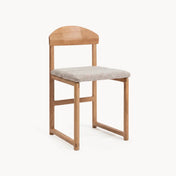
A solid oak dining chair is hard-wearing, wipes clean and can be sanded and lacquered again if it is ever badly marked, which a veneered chair cannot. Ours, Karin and Erik, are solid A-grade FSC-certified oak in Oak, Dark Oak or Black Oak, under a matte lacquer that never needs oiling. Natural oak warms slightly with light over the years, and the grain and small differences in tone are oak, not faults.
Wooden dining chairs are the classic choice for a reason: they last, they clean in a second and they look better with use. Not every wooden chair is solid wood, though, and not every finish lives the same way. This guide explains why oak suits a dining chair, how to tell solid oak from veneer, how our three finishes differ, how an oak chair ages and how to care for it, how Karin and Erik compare, and whether a wooden seat is comfortable. Every figure comes from the drawings and specifications of our own chairs.
Are oak dining chairs a good choice?
Yes: oak is a hard, dense wood that resists dents and wear, a lacquered surface wipes clean, and solid oak can be repaired rather than replaced.
A dining chair is pulled out, sat on, leaned back on and pushed in several times a day. In our experience, a solid hardwood frame with well-made joints takes that for decades, and the wood brings a warmth that steel and stone do not.
Our oak chairs are rated for 200 kg per seat and covered by a 10-year warranty. If you are still choosing between wood and fabric, our guide to wood vs upholstered dining chairs compares the two.
Solid oak or veneer: how can you tell?
Look at the end grain on a leg or under the seat: solid oak shows the same grain on every face, while veneer is a thin layer of oak glued over board.
The difference matters the day a chair takes a knock. A chipped edge on solid oak shows more oak; on veneer it shows the board underneath, and veneer can only be sanded very lightly, if at all.
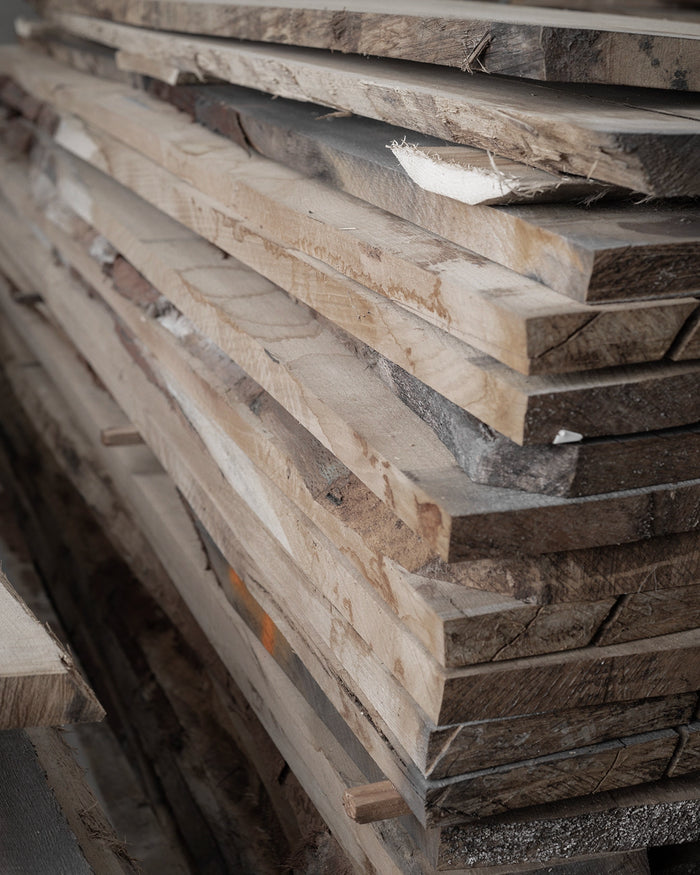
Karin and Erik are solid A-grade German oak, bought as FSC-certified timber from responsibly managed forests, and cut, shaped, lacquered and assembled in our own factory in Malmö, Sweden.
Solid oak planks in our factory, before they are cut for chairs.
Oak, Dark Oak or Black Oak: which finish?
Oak for a light, Scandinavian room, Dark Oak for warmth and depth, Black Oak for a graphic look with the grain still visible.
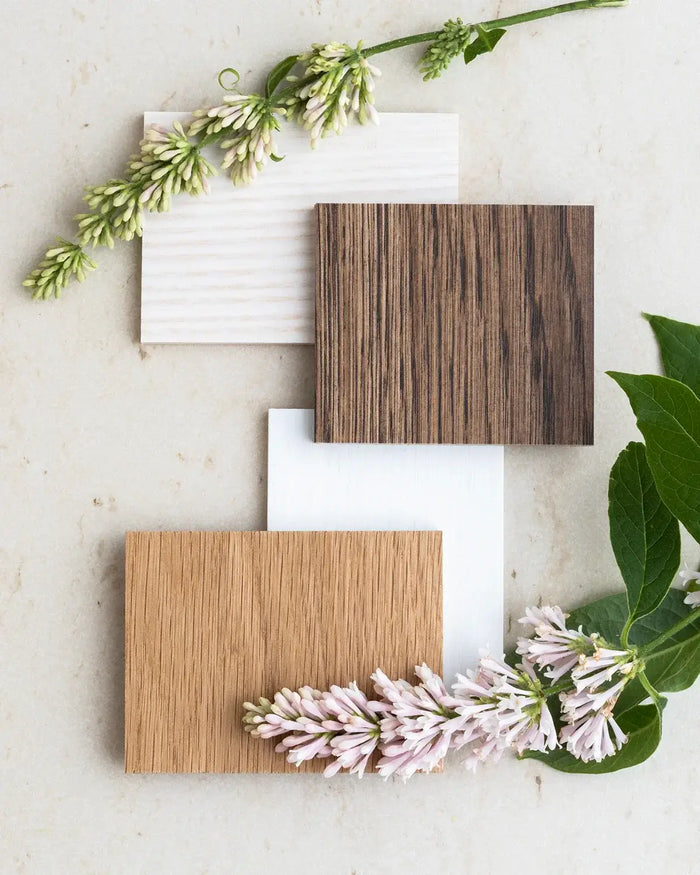
All three are the same solid oak under the same matte lacquer; only the colour changes. Dark Oak also hides everyday marks and crumbs better than the natural finish. The chart below sets out how each one looks.
Our oak dining tables are made from the same oak in the same three finishes, so a chair can match the table exactly; our guide to chairs for an oak table shows the combinations. Order wood samples to see the finishes in your own light.
Our oak in its three finishes: Oak, Dark Oak and Black Oak.View Karin
Well: natural oak warms slightly in colour as the wood reacts to light, and the lacquer keeps out the stains and water marks that would otherwise build up.
The front edge of the seat and the top of the backrest meet the most hands, so they are where the lacquer shows use first. Small differences in grain and tone from one chair to the next are the oak itself, not a fault.
To keep a set even, keep the chairs out of strong direct sun all day, or swap their places now and then. If a chair ever gets a deep mark after years of use, solid oak can be sanded and lacquered again.
How do you care for an oak dining chair?
Wipe it with a damp cloth and a little mild soap, then dry it; the matte lacquer seals the wood, so it never needs oil or wax.
Wipe up standing water rather than letting it sit, keep the chairs away from radiators and other direct heat, and avoid silicone polishes and abrasive pads, which can dull the lacquer.
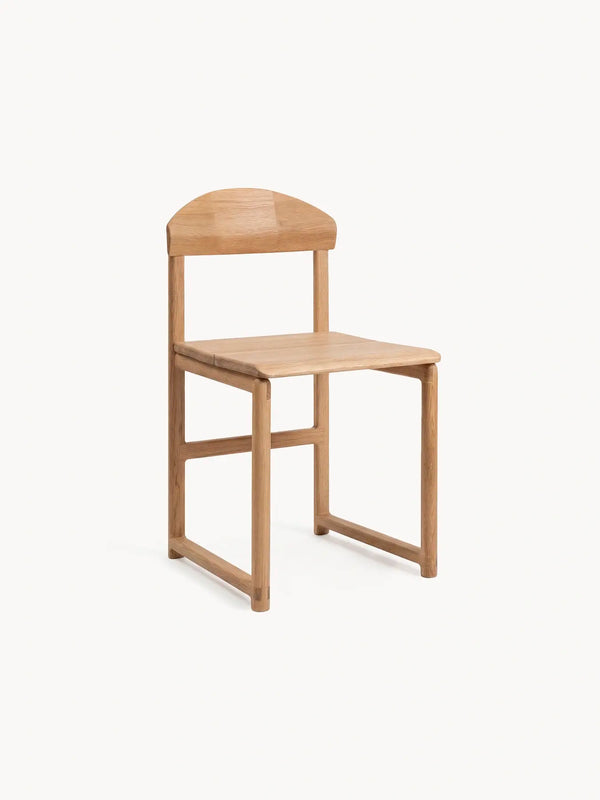
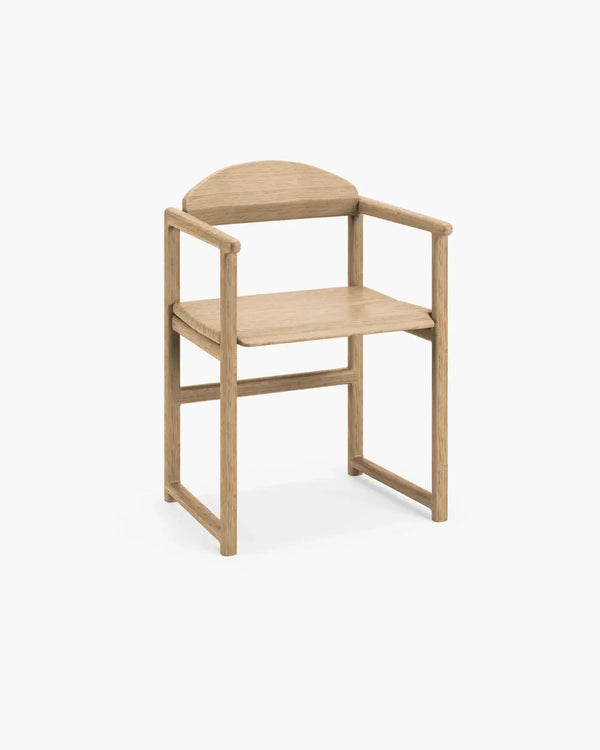
Karin for a compact chair without armrests that seats more people at a table; Erik for armrests and a wider seat for long dinners.
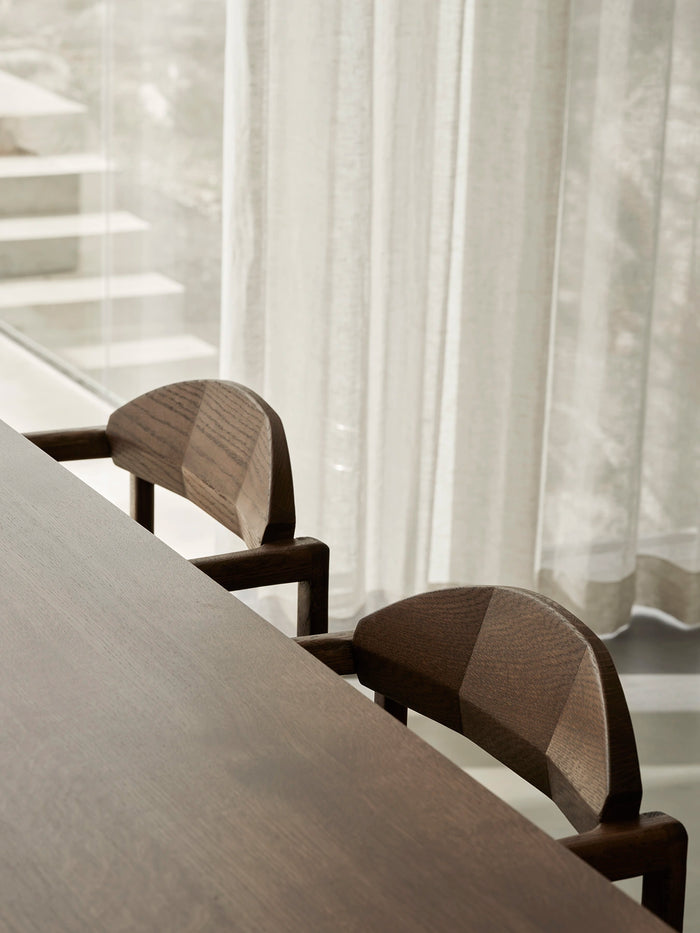
Both have a curved oak backrest, a sculpted two-piece seat in oak or bouclé and the same three finishes. The chart below gives the figures from our drawings.
Erik's armrests at 67 cm slide under a 76 cm table with a 3 cm top, but check the apron of your own table first. Our guide to dining chairs with arms covers the clearance in detail.
Erik's armrests sit at 67 cm, low enough to slide under a 76 cm table.
Karin and Erik compared
Karin
Erik
Seat height
50 cm
48 cm
Armrests
None
At 67 cm
Width x depth
45 x 44 cm
54 x 45 cm
Table width per chair
About 60 cm
65 to 70 cm
Is a wooden dining chair comfortable?
Yes, when the seat is shaped for the body: Karin's and Erik's two-piece oak seat inclines gently towards the centre to follow how you sit.
In our experience, a flat wooden board is hard work after twenty minutes; a sculpted seat spreads the weight and takes the pressure off the backs of the thighs.
If you prefer a softer seat, both chairs also come with a bouclé seat upholstered over a plywood core, in the same shape. Seats are sold separately, so you can change from oak to bouclé later, or back. Our guide to comfortable dining chairs covers the rest.
Choose solid oak, not veneer, so the chair can be repaired rather than replaced. Pick the finish by the room: Oak for light, Dark Oak for warmth, Black Oak for contrast, and match the table exactly or contrast it clearly. Wipe with a damp cloth and never oil. Karin and Erik are solid FSC-certified oak, made in our own factory in Sweden, delivered fully assembled and covered by a 10-year warranty.
Frequently asked questions
Are by Crea oak dining chairs solid wood?
Yes. Karin and Erik are solid A-grade German oak, FSC-certified, not veneer, and are cut, lacquered and assembled in our own factory in Malmö.
Do oak dining chairs need oiling?
Not ours. They are sealed with a matte lacquer, so a damp cloth and a little mild soap is all they need.
Does oak change colour over time?
Natural oak warms slightly as the wood reacts to light. Keep the chairs out of strong direct sun all day if you want a set to stay even.
What is the difference between Oak, Dark Oak and Black Oak?
Only the colour. All three are the same solid oak under the same matte lacquer; Dark Oak is stained tobacco brown and Black Oak black, with the grain still visible.
Are wooden dining chairs comfortable?
Yes, if the seat is shaped. Karin's and Erik's two-piece oak seat inclines towards the centre, and both also come with a bouclé seat.
How much weight do the oak chairs hold?
Each is rated for 200 kg per seat, our own rating, and covered by a 10-year warranty.