How Many Bar Stools Do I Need for My Kitchen Island?
By Alexandra PetterssonReviewed by Alexander TjernströmUpdated
Short answer
55 cm
Counter per stool
50 cm
For slim stools
60 cm
For the widest stools
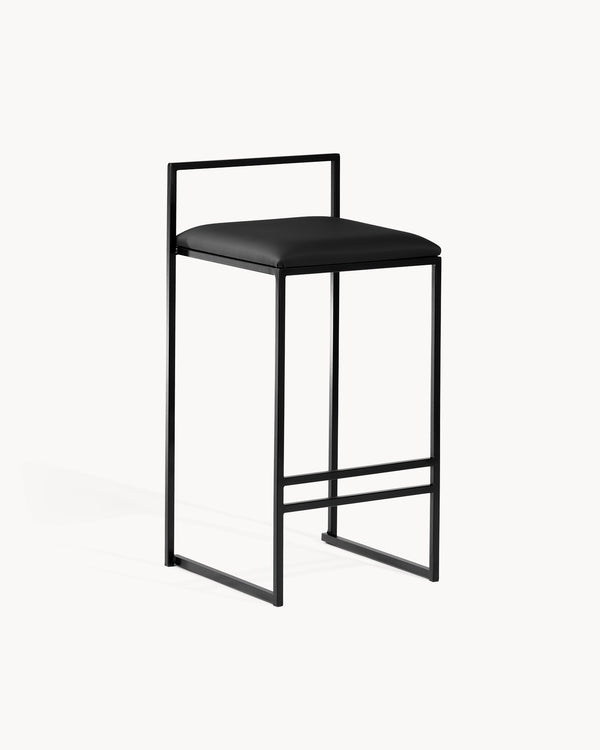
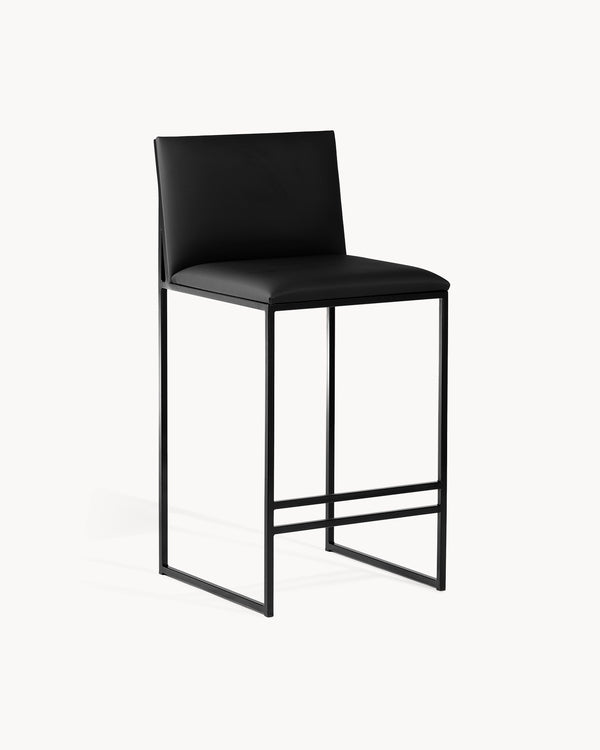
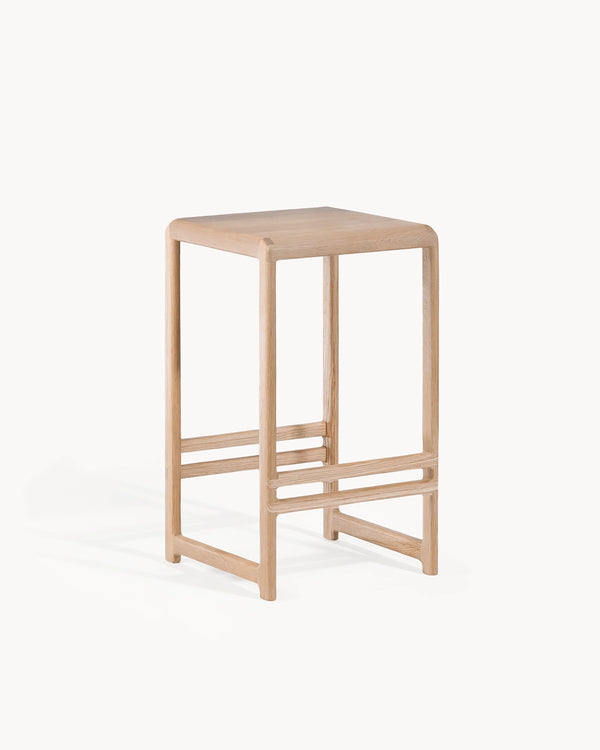
As a starting point, divide the length of the seating side by 55 cm and round down; for slim stools such as Svea, Eva, Ebba and Freja, divide by 50 cm. A 120 cm island seats two, 180 cm three, 240 cm four and 300 cm five standard stools or six slim ones.
The number of stools an island takes is the question most people ask first and measure last. Too many and every meal becomes a game of elbows; too few and the island never quite works as a place to sit. The answer depends on three things: the length of the side you sit along, the width of the stools, and whether an end is closed by a wall. This guide gives the rule, a calculator that applies it to your island, a table for the common island lengths in centimetres, the space each of our stools actually needs, and what changes at the ends and corners. It also covers the question behind the question: how many stools your household really needs, which is not always the most that will fit.
How many bar stools fit at my kitchen island?
Measure the length of the side where people will sit, divide by 55 cm and round down.
That is how many stools we recommend, with room for elbows and for getting on and off. For slim stools, with seats of about 40 cm such as Svea, Eva, Ebba and Freja, divide by 50 cm. The calculator below does the sum for you, in centimetres.
The 55 cm figure is the width of a typical seat plus the gap a person needs between stools, so it already includes the spacing: you do not add anything between or at the ends. The one exception is an end closed by a wall or a tall cabinet, where an extra 10 cm keeps the last person from sitting against it. Our guide to distance between bar stools explains where the numbers come from.
The rule: allow 55 cm of counter edge per stool, 50 cm for slim stools (Svea, Eva, Ebba, Freja), 60 cm for the wide Carl, and 10 cm more for each end closed by a wall.
How many stools for common island lengths?
With standard stools, a 120 cm island seats two, 180 cm three, 240 cm four and 300 cm five; slim stools add one more at 150, 210, 270 and 300 cm.
At 120, 180 and 240 cm the count is the same whichever stools you choose; the table shows both.
We recommend rounding down, not up: a 160 cm island takes two standard stools even though a third almost fits, or three slim stools. If an island falls just short of the next stool, choose a slim model or put one stool on the end instead.
Slim Ebba stools along a kitchen island, one per 50 cm of counter.
Stools per seating length, rounded down
Seating length
Slim stools, 50 cm
Standard stools, 55 cm
120 cm
2
2
150 cm
3
2
180 cm
3
3
210 cm
4
3
240 cm
4
4
270 cm
5
4
300 cm
6
5
How much space does each stool need?
As a starting point, allow 55 cm per stool for most bar stools, 50 cm for slim stools with seats of about 40 cm, and 60 cm for seats over 50 cm wide.
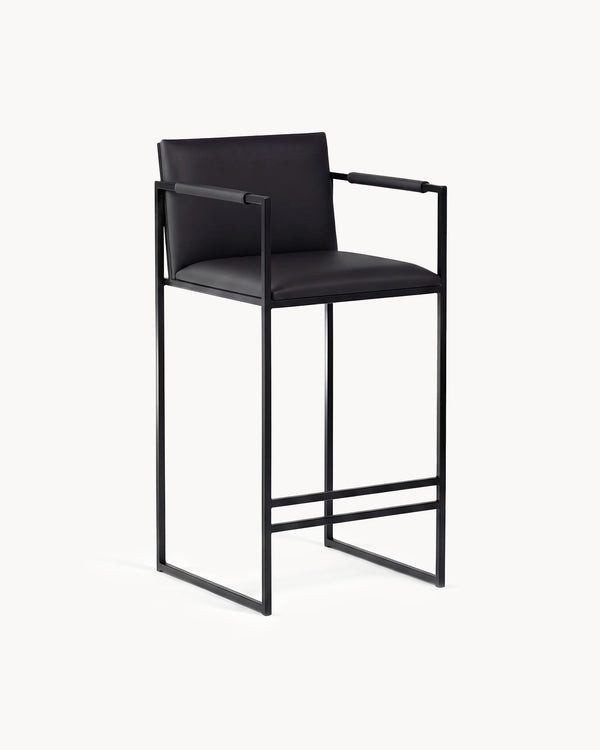
What sets the spacing is the overall width of the stool, not whether it has armrests: Bruno measures 47 cm across its armrests, so it fits at 55 cm like any standard stool.
The table lists the overall width of every by Crea model from our production drawings and the counter space we recommend for it. The width is measured at the widest point, across the armrests on Bruno and Carl, which is what touches the next stool.
Overall width and recommended counter space per stool, by Crea models
Plan one stool per person who eats at the island on a normal day, and add one only if the length allows it comfortably.
Filling every centimetre makes the island cramped every day for the sake of the one evening a year when everyone sits there. For a household of four, four stools on a 240 cm island work well; four standard stools on a 200 cm island do not.
Guests can always sit at the dining table or stand, which is how most kitchen parties work anyway. If the island is the only place to eat, prioritise comfort over count: fewer stools with backrests are usually more comfortable than more stools without. Our guide to backrest vs backless stools helps with that choice.
Can I put stools on the end or around a corner?
Yes. An island end with at least 30 cm of overhang takes one or two stools, and that is often the best way to add a seat to a short island.
On an L-shaped island, leave about 30 cm of free counter on each side of the inside corner, because knees collide there.
Seats that face each other across a corner are good for conversation, and many families prefer two stools on the long side and one on the end to three in a row. What does not work is a stool squeezed into the corner itself: nobody can pull it out without moving the stools on either side. Check the overhang on each side before planning seats there.
Eva stools at a marble island: backless stools make the most of a short island.
Do wider stools fit fewer per island?
Only the widest. Carl, our widest stool at 54 cm across the armrests, needs at least 60 cm per stool, which on the common lengths from 120 to 300 cm still gives the same count as standard stools; at a roomier 65 cm, more comfortable for daily meals, it loses one seat on most of them.
Armrests alone do not change the count: Bruno fits at 55 cm, like the other standard stools.
Armrests have a second requirement: they must pass under the counter edge when the stool is pushed in. On Bruno the armrest tops sit at 86 cm on the 66 cm seat, below a standard 89 to 92 cm counter. If your overhang has a support rail or an apron, measure its lowest point first.
Bruno: 47 cm across the armrests, 55 cm of counter per stool.
What else should I check before choosing how many stools?
Check two measurements besides length: 30 to 40 cm of overhang so knees fit under the counter, and at least 90 cm of free floor behind the seats, or 110 cm if people walk past.
A long island with too little floor behind it seats fewer people than its length suggests.
Then check the height: a 66 cm seat for a counter of 89 to 92 cm, or 76 cm for a bar of 99 to 102 cm. All of this is covered step by step in the kitchen island seating guide.
The quick count
120 cm
Seats two stools.
180 cm
Seats three.
240 cm
Seats four.
Measure the seating side, divide by 55 cm, or 50 cm for slim stools, and round down. Then choose the number your household uses every day rather than the most that will fit, and check the overhang and floor space behind. Every by Crea stool comes in 66 and 76 cm seat heights, is made in our own factory in Malmö, Sweden, and is delivered fully assembled with a 10-year warranty. If you are unsure how a row will feel, order one stool first and try it at your island.
Frequently asked questions
How many bar stools fit at a 180 cm island?
Three, whichever stools you choose: a 180 cm seating side takes three at 55 cm each, and three slim stools at 50 cm.
How many stools fit at a 240 cm island?
Four. A 240 cm island seats four standard stools at 55 cm each, and four slim stools at 50 cm.
How many stools for a 2 metre island?
Three standard stools at 55 cm each, or four slim stools at 50 cm each, which fill the 200 cm exactly.
How much space do you need per bar stool?
About 55 cm of counter per stool, 50 cm for slim stools and 60 cm for seats over 50 cm wide.
How many stools for a 120 cm island?
Two. A 120 cm island seats two stools, slim or standard, at 50 to 55 cm each.
Should bar stools fill the whole island?
Usually not. We recommend one stool per person who eats there daily, with the rest left as free counter. A cramped row is uncomfortable every day.