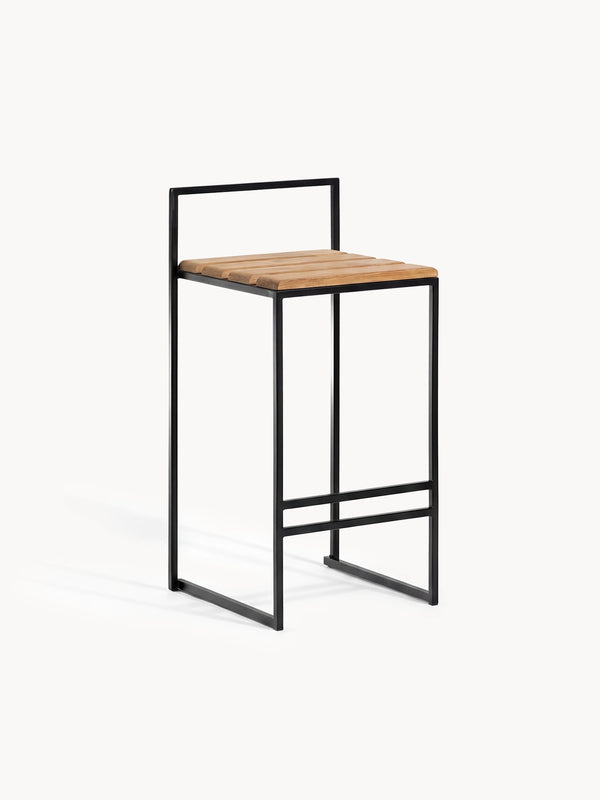
There is no single international standard, but the trade broadly sorts teak like this. Grade is a seller's claim, so ask what it means to them. Ours is A-grade plantation teak.
What is grade A teak?
Heartwood from the center of a mature teak trunk: dense, tight-grained, an even golden brown and rich in natural oil. That oil is what lets teak stay out untreated.
| Grade | Part of the tree | Color and grain | Outdoors |
|---|---|---|---|
| A | Heartwood | Even golden brown, tight grain | Lasts untreated |
| B | Outer heartwood | Lighter, less even | Lasts, weathers less evenly |
| C | Sapwood, mixed | Pale patches, knots | Needs treatment |
Plantation teak and FSC: what do they tell you?
Plantation teak is grown as a crop rather than cut from natural forest. FSC certification means the timber comes from responsibly managed forests and is traced from the forest to the buyer.
Our teak is A-grade plantation teak from South America, bought as FSC-certified timber. When you compare teak furniture, ask whether the timber is certified, not only whether the shop calls it sustainable.
Why does teak garden furniture cost more?
Three reasons. Teak grows slowly, so a tree takes many years to reach a usable trunk. Only the heartwood makes grade A, so much of each log never becomes grade A furniture. And certified timber costs more to grow and to trace.
What you get for it is furniture that needs no treatment to last outside: no stain every spring and no winter in the shed. Acacia and eucalyptus cost less up front and ask for oil every season instead. Compare them in the best wood for garden furniture.
How do I spot good teak furniture?
- Color: an even golden brown on every slat, no pale stripes of sapwood.
- Grain: tight and straight, few knots.
- Feel: slightly oily to the touch when new.
- Weight: dense; good teak feels heavier than it looks.
- Drainage: slats with gaps, so rain runs straight through.
- Fixings: stainless, so nothing bleeds rust into the wood.
- Frame: ask what is under the paint.