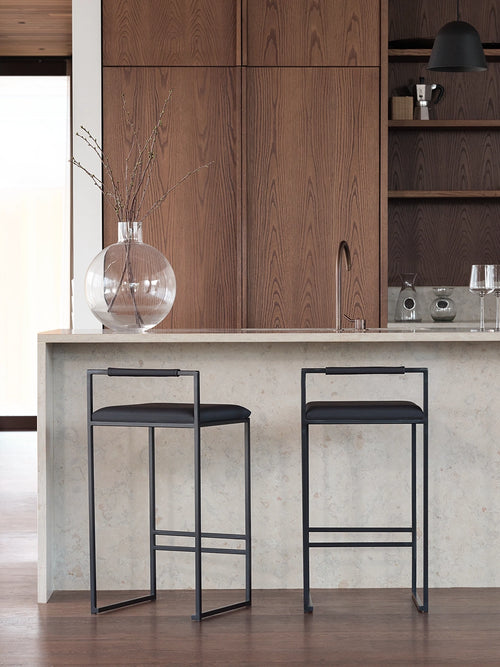
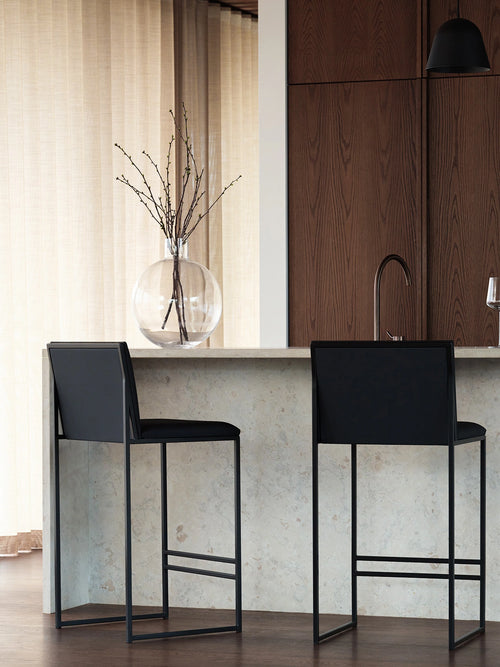
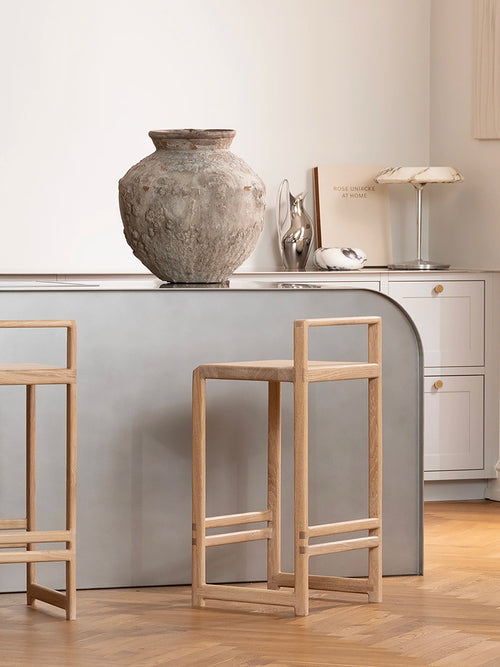
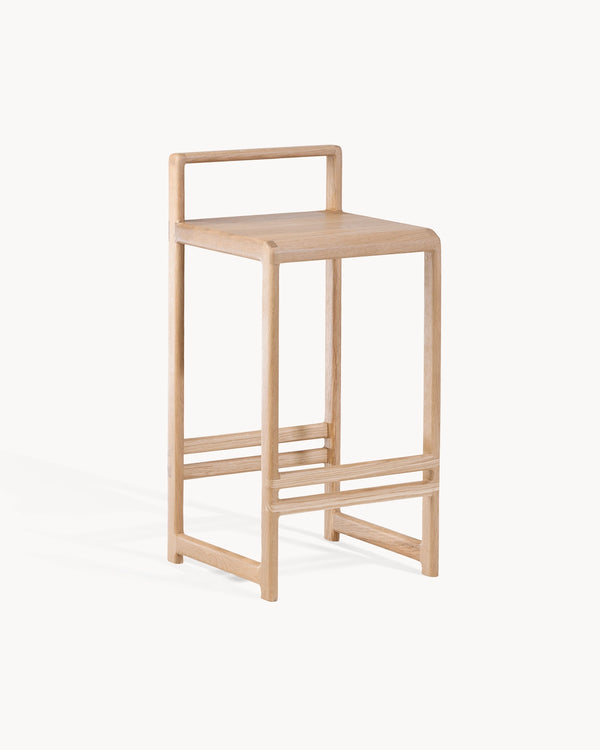
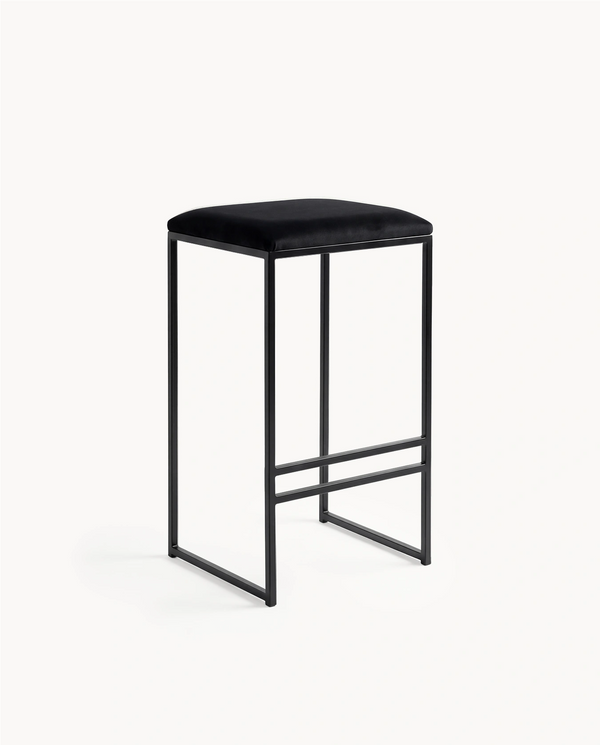
Bar stools are bought more often by eye than by measurement, which is why so many end up too tall, too wide or too uncomfortable for the way the kitchen is actually used. Getting it right takes six decisions, and the order matters: the first two are fixed by your kitchen, the next two by how you live, and only the last two are about taste. This guide goes through them one by one, with the numbers you need at each step and links to the detailed guide behind each one. It is written from what we see every day in our factory in Malmö and from the questions customers ask us before they buy.
How do I choose bar stools for my kitchen?
Work through six steps in order: seat height, number of stools, backrest, material, build quality and color.
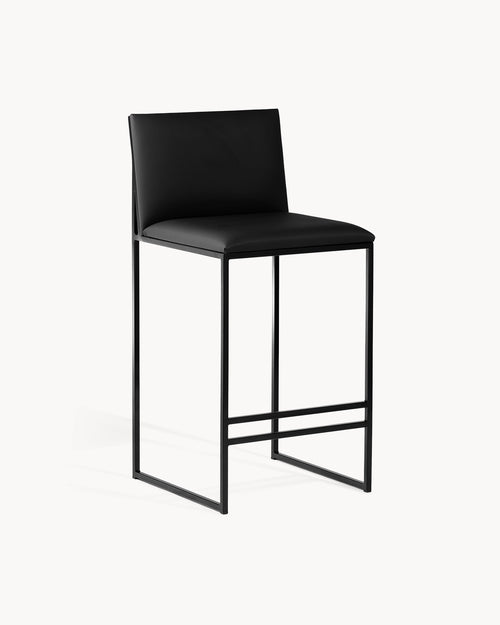
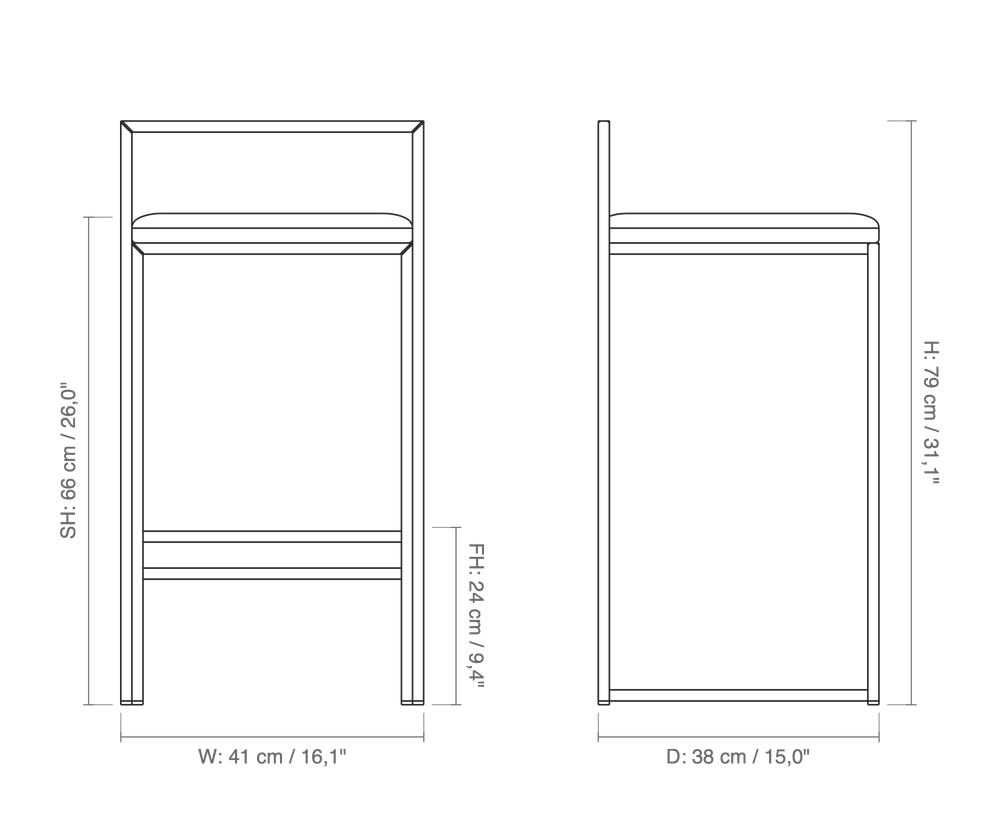
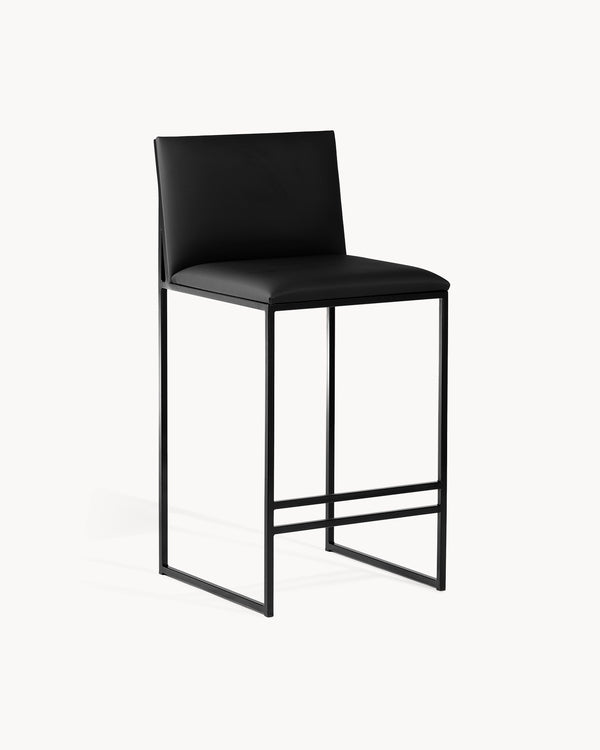
Seat height is measured from the floor to the top of the seat, here Freja at 26 in.
The first two are measurements, set largely by your kitchen; the rest are choices. Deciding in this order stops you falling for a stool that cannot work at your counter.
The table summarises each step with the rule that decides it. The sections below explain each one.
Six steps to the right bar stools
Step
Decision
Rule of thumb
1
Seat height
Counter underside minus 9 to 10 in
2
How many
Seating length divided by 21.5 in, 19.5 in for slim stools
3
Backrest
Over 20 minutes at a time: choose a back
4
Material and seat
Steel for slim and flexible, oak for warmth; upholster for long meals
5
Build quality
Welded or glued joints, a stated load rating, a real warranty
6
Color
Match the island, not the cabinets
Step 1: What seat height do I need?
Measure from the floor to the underside of the counter and, as a rule of thumb, subtract 9 to 10 in.
For a standard kitchen counter or island of 35 to 36 in that gives a 26 in seat; for a typical bar of 39 to 40 in a 30 in seat. Anything in between calls for a custom height.
This is the one step that cannot be fixed later, and the one most often got wrong, usually by measuring to the top of a thick countertop or by trusting the word bar. Use the calculator in our bar stool height guide if you want the exact figure for your counter.
Step 2: How many bar stools do I need?
As a starting point, divide the length of the seating side by 21.5 in, or by 19.5 in for slim stools, and round down.
A 71 in island seats three. Then choose the number your household uses every day rather than the most that fits.
Check two more measurements while you have the tape out: we recommend 12 to 16 in of overhang for knees, and at least 35.5 in of free floor behind the seats. Our guide to how many bar stools you need has a calculator and a table for every common island length.
Step 3: Should my bar stools have a backrest?
We recommend a backrest if you sit at the counter for more than about 20 minutes at a time: for meals, homework or work.
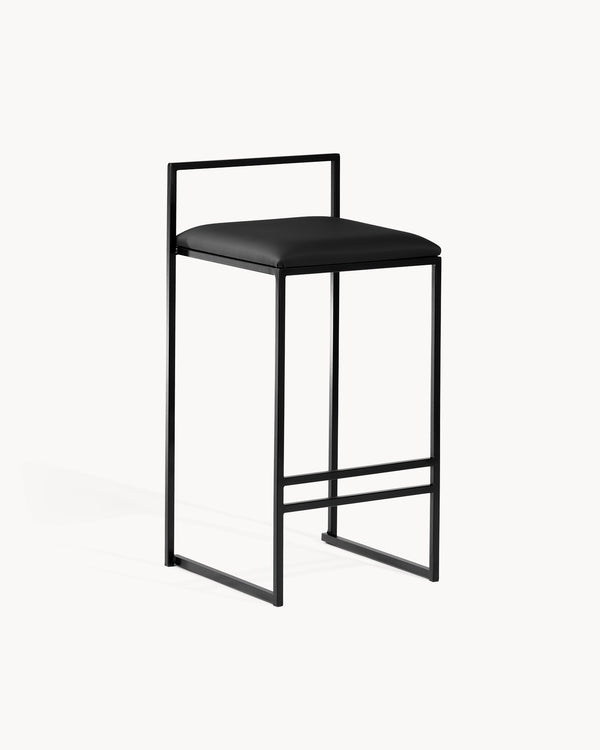
Choose backless for quick breakfasts, small kitchens, or stools that should vanish under the counter. A low backrest supports the lower back and stays below the counter edge; a full backrest gives the most support.
Armrests make getting up easier and suit long sitting; a wide stool such as Carl needs about 2 in more counter per stool. In our range, Eva and Svea are backless, Freja and Ebba have a low back, Philip and Ted a full back, and Bruno and Carl add armrests. Backrest vs backless stools goes through the choice in detail.
Step 4: Which material and seat should I choose?
Choose powder-coated steel for a slim, light frame, the widest choice of frame colors and custom seat heights; choose solid oak for warmth and a crafted look.
Fabric and wood samples show color and texture as no screen can.
Then choose the seat: as a rule of thumb, upholstered for meals longer than an hour, wood for easy cleaning and a clean look.
Upholstery comes down to how the kitchen is used. Vegan leather wipes clean and suits families; velvet feels soft and hides wear in dark colors; bouclé is the warmest to the touch and the most textured. Order free fabric samples before choosing: color and texture on a screen are rarely quite right. Compare materials in wood vs metal bar stools and fabrics in our upholstery guide.
Step 5: How do I recognize a well-made bar stool?
Look for four things: welded steel or glued solid-wood joints rather than bolts and screws, a hard finish such as powder coating or lacquer, a stated load rating, and a warranty of several years.
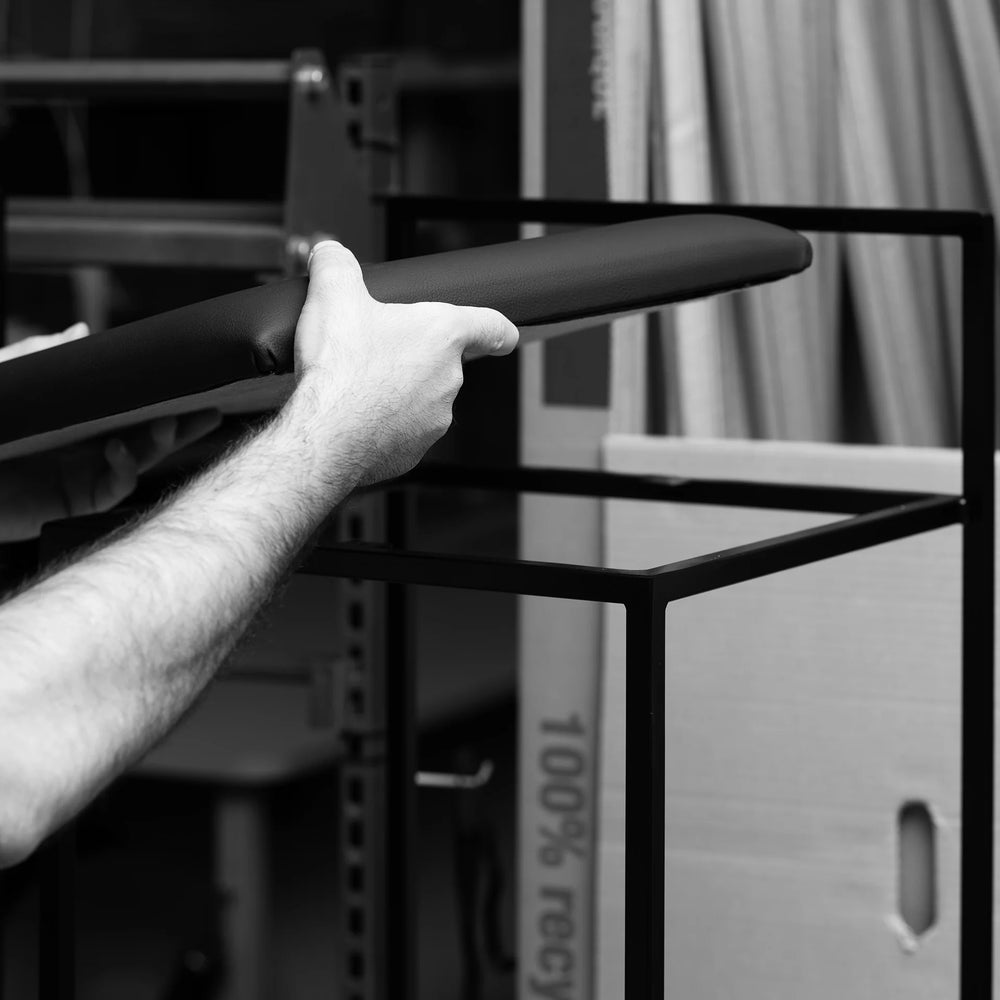
Every stool is checked in our factory in Malmö before it is delivered fully assembled.
A stool delivered fully assembled has had its joints made and checked in the factory, which self-assembly at home rarely matches.
Wobble is a common complaint about cheap stools, and it usually starts at bolted joints that loosen with daily use. Our stools are welded or glued and delivered assembled from our factory in Malmö, rated for 440 lbs and covered by a 10-year warranty. Our guide to whether expensive bar stools are worth it explains what the price difference buys.
Step 6: How do I choose the color?
A good starting point is to match the stools to the island rather than the cabinets, and to keep one frame color along one island.
Black frames suit dark stone and black fittings; natural oak suits light kitchens and wooden floors; dark oak suits marble and light cabinets. Choose the seat color last, repeating a color already in the room.
For practical colors, dark upholstery such as jade black or coffee bean forgives spills; light bouclé in ivory looks soft but shows marks faster. See real kitchens in our black bar stools guide and oak bar stools guide.
Svea in ivory bouclé: light upholstery looks soft, dark hides marks better.
Can I try bar stools before buying a full set?
Yes. Order one stool first and sit at your own counter; if its comfort or build is not what you expected, the return is free within 14 days of delivery. A wrong seat height is not covered, so measure first.
Order free fabric samples and wood samples to check colors against your countertop. Then buy the rest, knowing the height and seat are right.
Testing one stool is a reliable way to catch what no photo shows, such as a seat that feels too firm for long dinners. All our stools are delivered fully assembled within Europe, usually 3 to 5 working days after dispatch, so a test stool is quick to arrange.
The six steps in one paragraph
26 or 30 in
From the counter underside.
21.5 in
Per stool; 19.5 in for slim stools.
20 min
Sit longer than this and choose a backrest.
Measure the counter to its underside and choose a 26 in or 30 in seat. Divide the seating length by roughly 21.5 in and pick the number you use daily. Choose a backrest if you sit longer than about 20 minutes. Choose steel or oak, and upholstery for long meals. Check for welded or glued joints, a load rating and a warranty. Match the color to the island. Every by Crea stool is made in our own factory in Malmö, Sweden, delivered fully assembled, rated for 440 lbs and covered by a 10-year warranty.
Frequently asked questions
What is the most important thing when choosing bar stools?
Seat height. Measure the counter to its underside and, as a rule of thumb, subtract 9 to 10 in. A 35.5 in counter suits a 26 in seat; a 39 in bar suits 30 in.
How do I know if bar stools will be comfortable?
Check the seat height against your counter, choose a backrest for sitting longer than about 20 minutes, an upholstered or shaped seat, and a footrest. A good test is ordering one stool to try at home.
Should bar stools match the kitchen cabinets?
Not necessarily. Match them to the island top and the fittings, and keep one frame color along one island. Stools that echo the island tend to look planned.
How far apart should bar stools be?
As a starting point, allow 21.5 in of counter per stool, measured center to center, or 19.5 in for slim stools such as Svea and Freja.
What should I look for in a quality bar stool?
Welded or glued joints, a hard finish such as powder coating, a stated load rating and a warranty of several years. Ours are rated for 440 lbs with a 10-year warranty.
Can I order fabric samples before buying?
Yes. Fabric and wood samples are free, so you can check colors against your countertop before choosing.