Best Bar Stools for Small Kitchen Islands: Save Space Without Losing Comfort
By Alexandra PetterssonReviewed by Alexander TjernströmUpdated
For a small kitchen island, choose backless stools with slim frames that slide completely under the counter, such as Eva in oak or Svea in steel, both with 38 cm (15 in) seats. If you want a backrest, choose a low back that stays below the counter edge, such as Freja or Ebba. Allow 50 to 55 cm (19.5 to 21.5 in) per stool: a 110 cm (43 in) island seats two.
A small kitchen island can still be a good place to sit, as long as the stools work with the space rather than against it. The problems are always the same: stools that stick out into the walkway, backrests that make a compact island look crowded, and one stool too many squeezed along the edge. The solutions are simple: stools that disappear under the counter, frames that let light through, and a realistic count. This guide explains which kinds of bar stools suit small islands, how many fit on islands from 100 to 150 cm (39 to 59 in), how to keep the floor clear, and how to add a seat on the end. Every stool mentioned is made in our own factory in Malmö, Sweden.
What are the best bar stools for a small kitchen island?
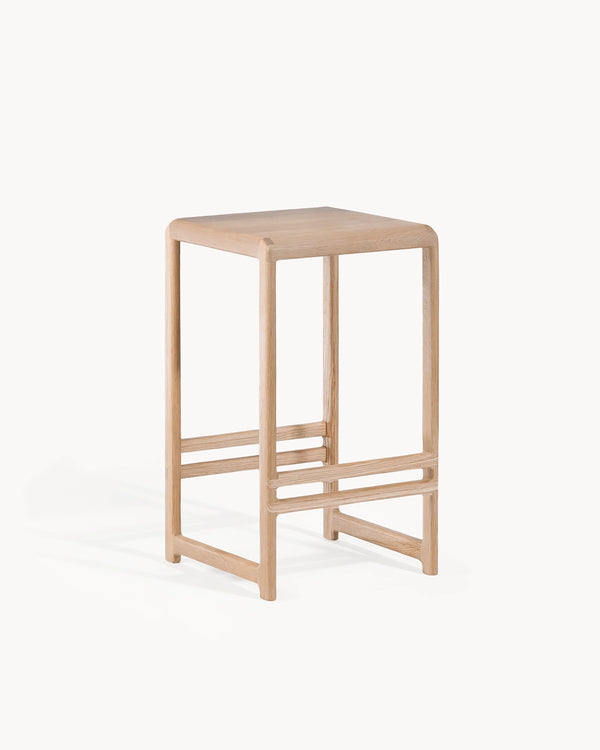
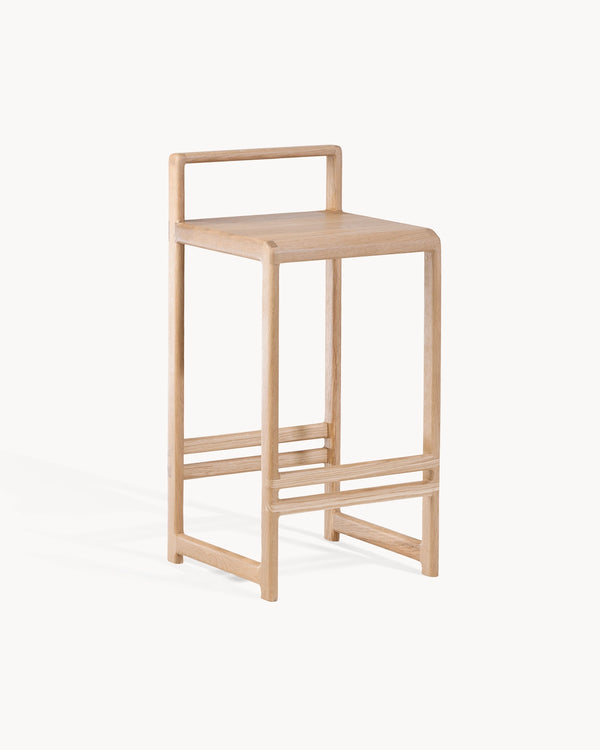
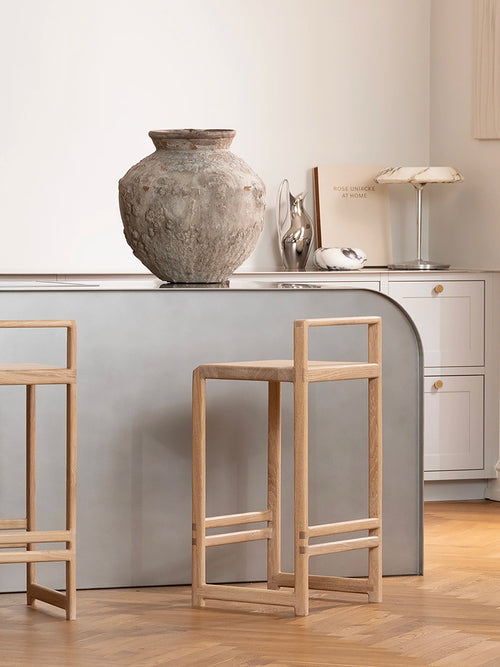
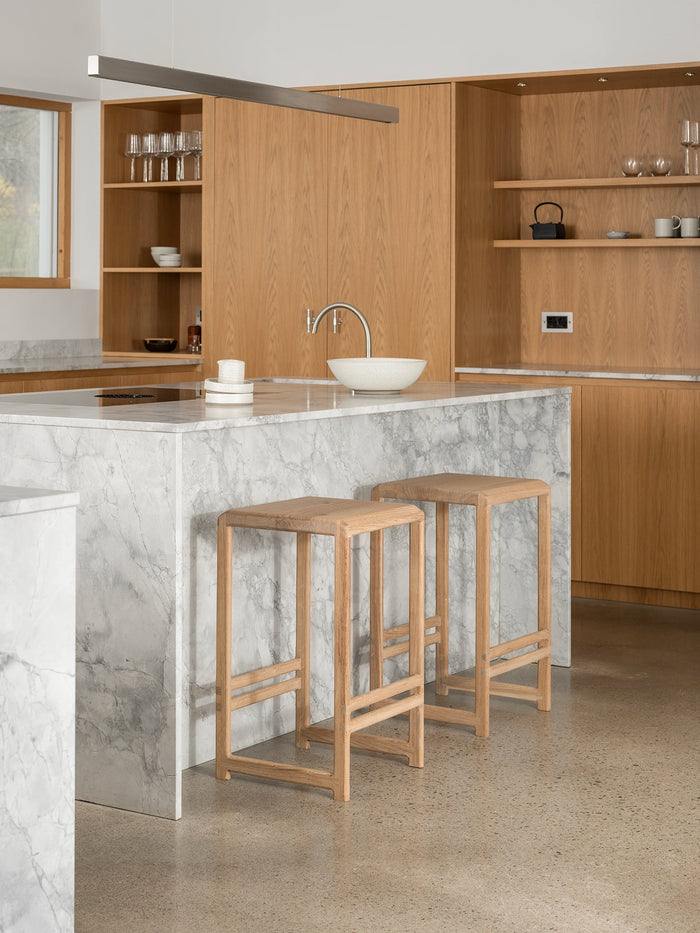
Eva in solid oak: a backless stool that disappears under the worktop.
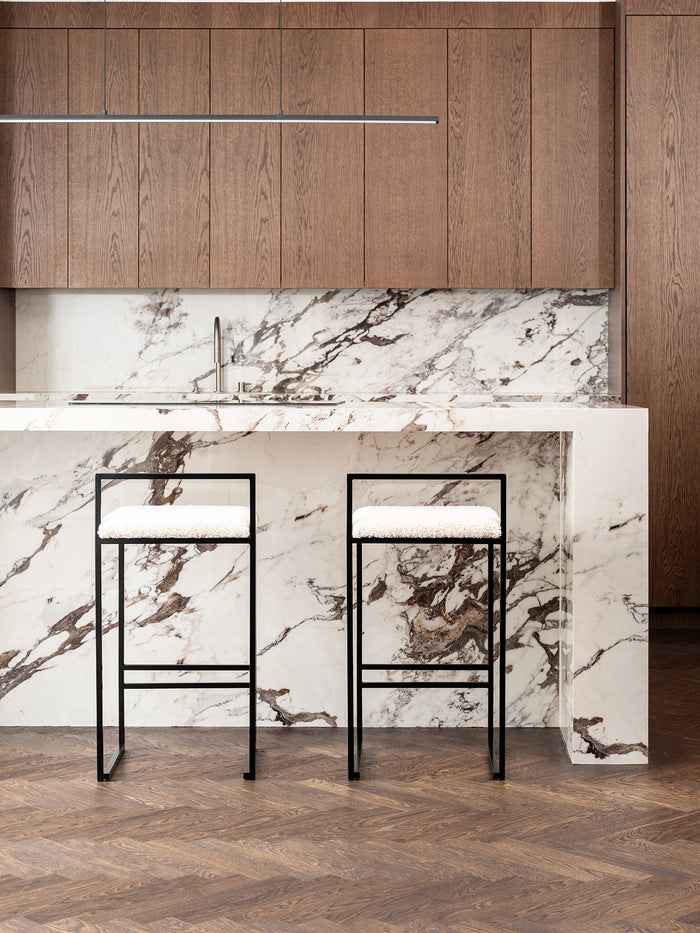
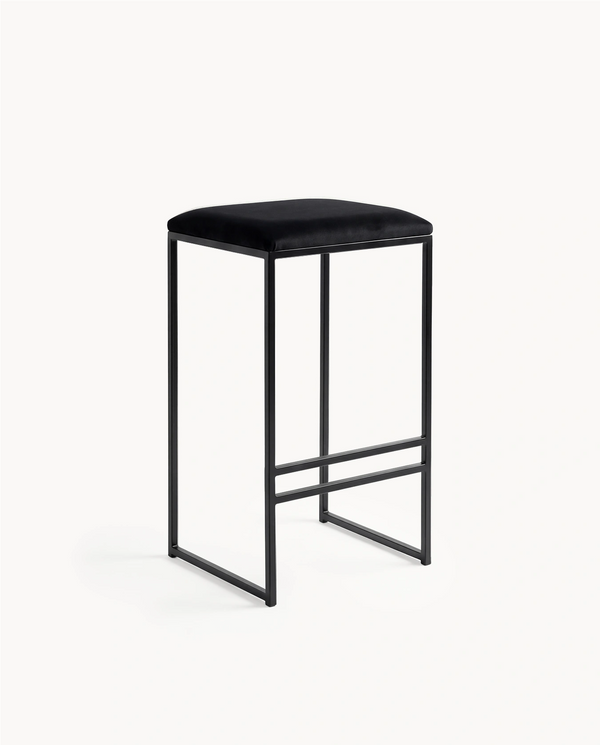
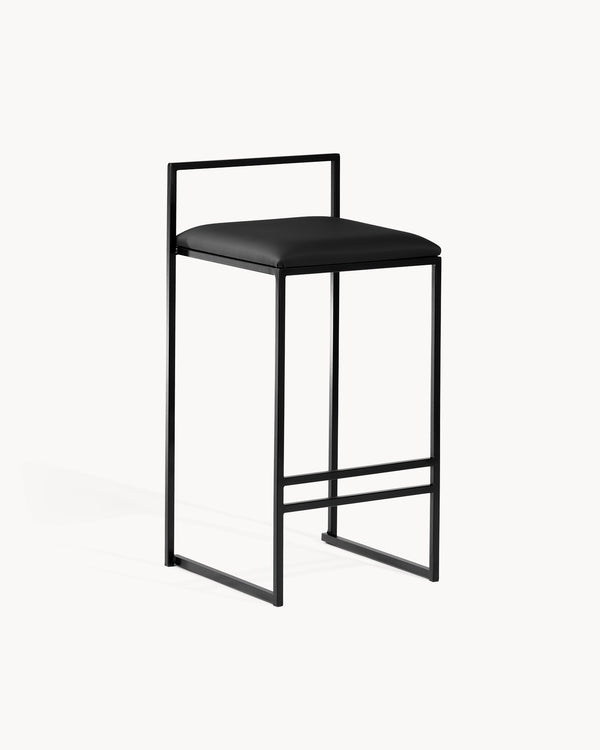
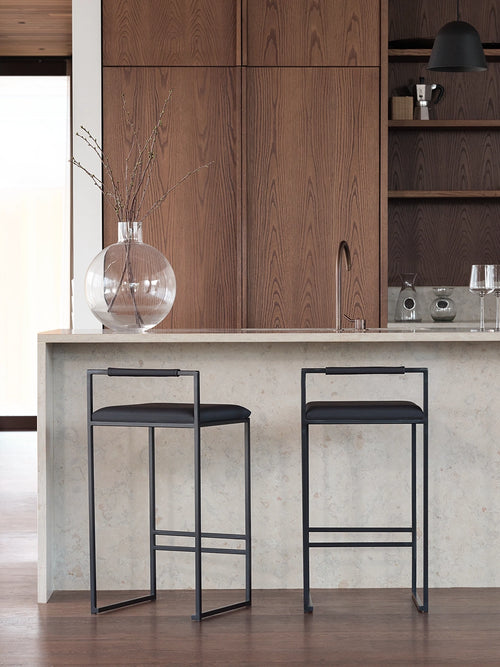
Backless stools with slim frames are the best fit: they slide completely under the counter when nobody is sitting, take up the least visual space and can be approached from any side. Eva, in solid oak, and Svea, with an upholstered seat on a powder-coated steel frame, both have 38 cm (15 in) seats designed for exactly this.
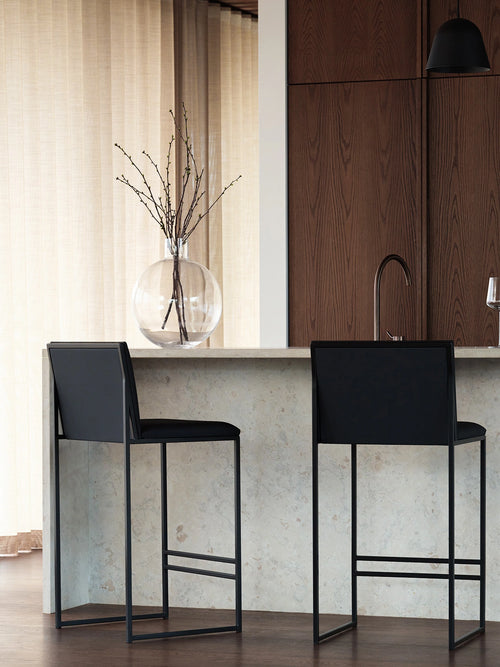
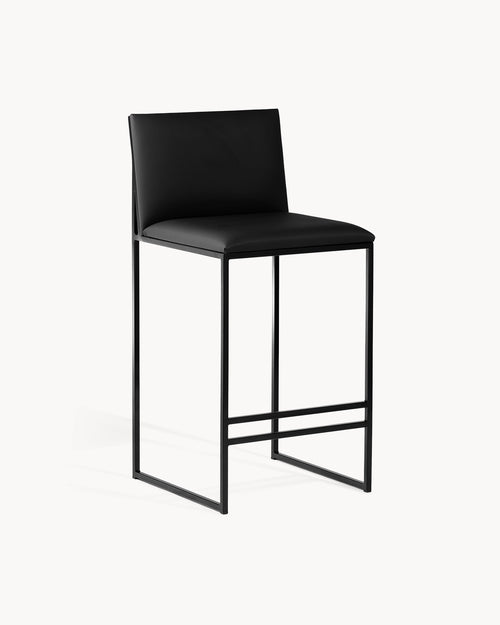
If the island is also where you eat proper meals, a low backrest is the best compromise: Freja and Ebba support the lower back but end at 79 cm (31.1 in) with a 66 cm seat, below a standard counter edge, so the island still looks clean from the room. Full backrests are the one thing to avoid at a small island seen from a living room.
How many bar stools fit at a small kitchen island?
Allow 55 cm (21.5 in) per stool for comfort, or 50 cm (19.5 in) for slim backless stools used for short sits. A 100 cm (39 in) island seats one comfortably, or two slim stools at a squeeze; 110 to 140 cm (43 to 55 in) seats two; 150 cm (59 in) seats two comfortably or three slim stools tightly.
The table covers the lengths common in small kitchens. Always round down: a cramped row makes a small island feel smaller, while two well-spaced stools make it feel generous.
Stools on a small island, by seating length
Seating length
Comfortable, 55 cm
Slim stools, 50 cm
100 cm (39 in)
1
2
110 cm (43 in)
2
2
120 cm (47 in)
2
2
130 cm (51 in)
2
2
140 cm (55 in)
2
2
150 cm (59 in)
2
3
Backless or low back: which is better for a small island?
Freja's low backrest stays below the counter edge.
Backless if floor space is tight or the island is used for quick breakfasts; low back if you eat full meals there. A backless stool tucks away completely and keeps a narrow walkway clear; a low backrest adds lower-back support while staying below the counter, so the stools still read as part of the island.
In both cases, the seat height must be right: 66 cm (26 in) for a counter of 89 to 92 cm. On a small island every centimetre counts, and a stool that is too tall sits proud of the worktop even when pushed in. Compare the options in backrest vs backless stools.
How do I keep a small kitchen open with bar stools?
Choose stools that tuck fully under the counter, plan an overhang of about 30 to 40 cm (12 to 16 in) so they can, and keep at least 90 cm (35.5 in) of clear floor behind the island. With backless stools pushed in, that clearance becomes a full walkway when nobody is sitting.
Frame and colour help too. Slim steel frames let light and sightlines pass through, while chunky frames block them. A frame colour close to the floor or cabinets recedes; a contrasting one draws the eye. Our guide to island overhang covers how deep the counter needs to be.
Which materials look lightest at a small island?
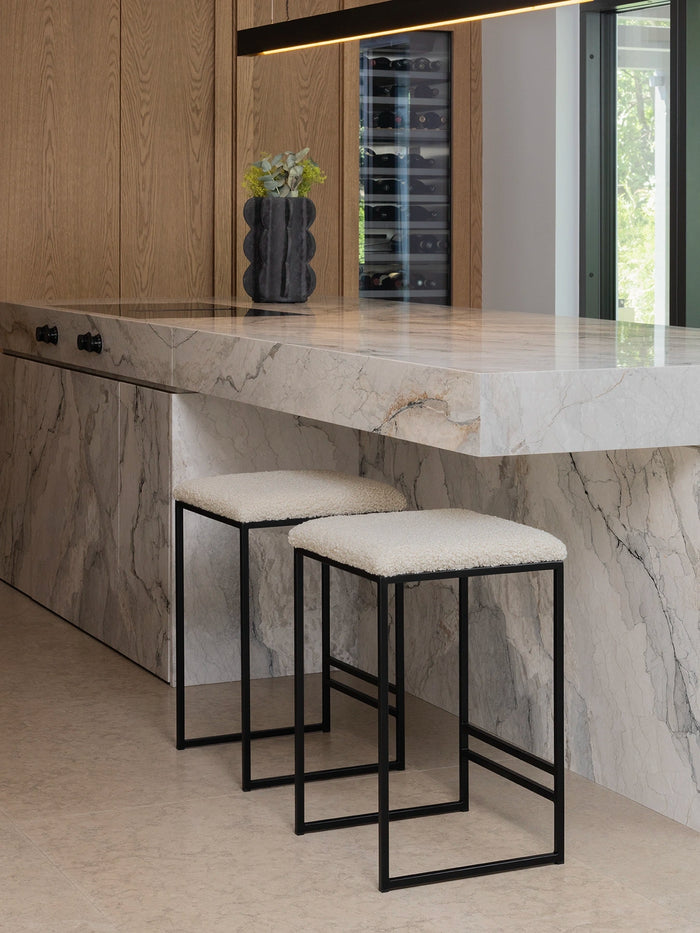
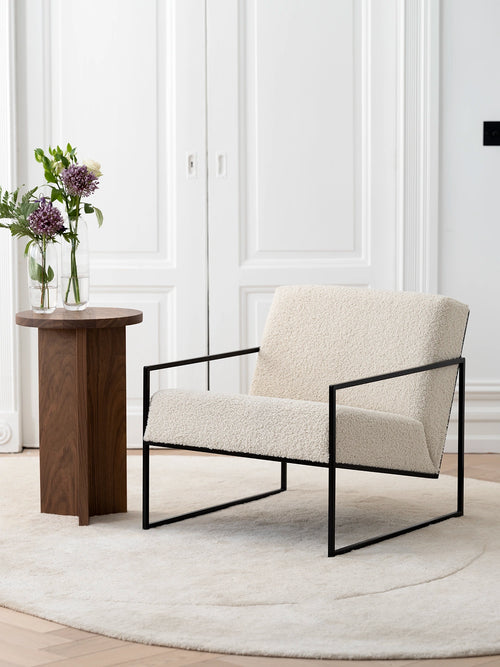
Svea in ivory bouclé: a pale seat on a slim frame reads lightest.
Slim powder-coated steel looks lightest, because the frame is a thin line rather than a mass. Light natural oak is the next best, especially with a backless design. Dark, heavy frames with full backrests look the heaviest, even at the same size.
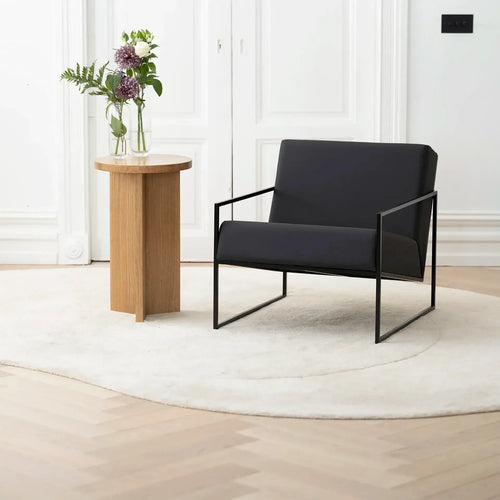
Upholstery also changes the weight of the look: a pale seat such as ivory bouclé on a black frame reads lighter than an all-black stool, while jade black upholstery makes the stool recede against a dark island. If the island is small and the room is bright, a light seat is often the best choice. Our guide to wood vs metal bar stools compares the two materials.
Can I add a seat on the end of a small island?
Yes, often the best way to add one. An island end with at least 30 cm (12 in) of overhang and 90 cm (35.5 in) of floor behind takes one stool, which turns a two-seat island into three without cramping the long side. Seats that face each other across a corner are also better for conversation.
On a very small island, one stool on the long side and one on the end can feel more generous than two side by side. Check the end overhang before planning it; see how many bar stools fit your island for the full counting rules.
Small island, the right stools
Choose backless stools with slim frames, such as Eva or Svea, or a low back, such as Freja or Ebba, if you eat full meals at the island. Allow 50 to 55 cm (19.5 to 21.5 in) per stool, plan 30 to 40 cm (12 to 16 in) of overhang so the stools tuck in, and keep 90 cm (35.5 in) of floor behind. Every by Crea stool comes in 66 and 76 cm seat heights, is made in our own factory in Malmö, Sweden, and is covered by a 10-year warranty.