Wood vs Metal Bar Stools: Which Is Right for Your Kitchen?

Wood and metal are the two dominant bar stool frame materials, and the right one depends on your kitchen, your household, and how the surface behaves over time.

Solid oak stools develop a natural patina and suit kitchens built around natural materials. Powder-coated steel is more resistant to spills and knocks, holds its surface quality with minimal maintenance, and adapts to a wider range of kitchen styles through upholstery and finish.

Both last decades when made to a proper standard. The difference is how they look after ten years of daily use.

Browse the full range of bar stools, read our guide on wooden bar stool comfort, or see how metal stools compare for comfort over longer sitting periods.

Wood and metal are the two dominant bar stool frame materials, and the right one depends on your kitchen, your household, and how the surface behaves over time.

Solid oak stools develop a natural patina and suit kitchens built around natural materials. Powder-coated steel is more resistant to spills and knocks, holds its surface quality with minimal maintenance, and adapts to a wider range of kitchen styles through upholstery and finish.

Both last decades when made to a proper standard. The difference is how they look after ten years of daily use.

Browse the full range of bar stools, read our guide on wooden bar stool comfort, or see how metal stools compare for comfort over longer sitting periods.

Illustration of our Freja counter stools of 66cm in a 90cm kitchen isle Illustration of our Freja counter stools of 66cm in a 90cm kitchen isle

Freja steel bar stools at a marble kitchen island, illustrating the uniform powder-coated finish and consistent surface quality of a metal frame in daily kitchen use.

Freja steel bar stools at a marble kitchen island, illustrating the uniform powder-coated finish and consistent surface quality of a metal frame in daily kitchen use.

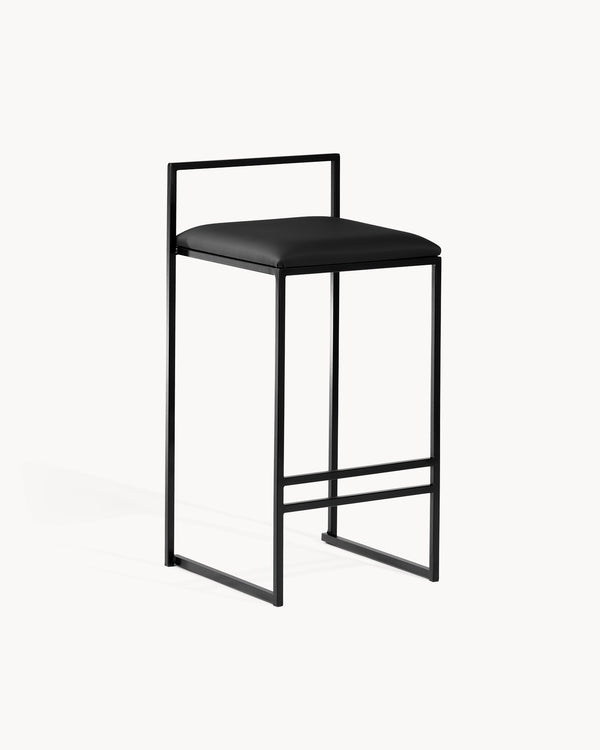
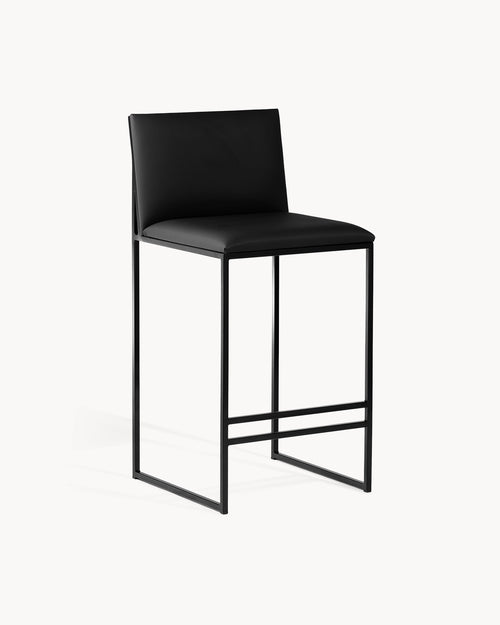
Philip bar stool in black leather featuring a sleek design, paired with a marble kitchen island for modern elegance. Philip bar stool in black leather featuring a sleek design, paired with a marble kitchen island for modern elegance.

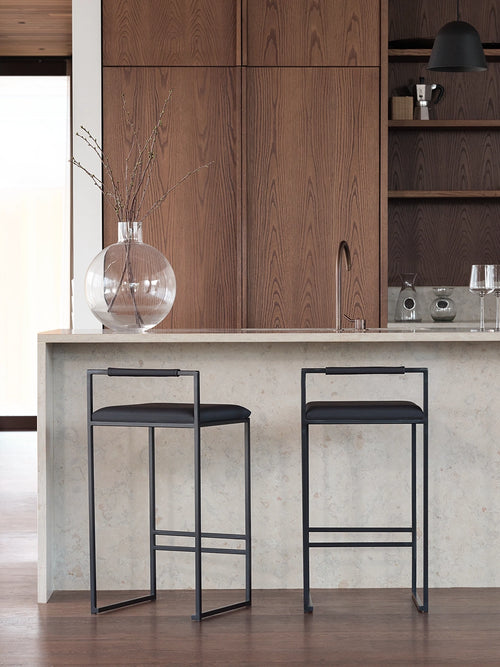
Philip bar stool in powder-coated steel in a warm wood interior, showing how a steel frame holds its finish consistently across years of daily use.

Philip bar stool in powder-coated steel in a warm wood interior, showing how a steel frame holds its finish consistently across years of daily use.

What Is the Difference Between Wood and Metal Bar Stools?

Wood and metal bar stools differ in material, surface, weight, and how they age. Solid oak stools have natural grain variation, a warm tactile surface, and a weight of roughly 6 to 9 kg. Steel stools have a uniform powder-coated finish, a harder surface, and a comparable weight.

The structural difference lies in the joint. Steel frames are welded into a single unit and will not loosen over time. Solid wood joints can flex under sustained daily load and may require occasional tightening after years of heavy use.

Neither is inherently superior. They solve different problems depending on the kitchen and the household.

Wood and metal bar stools differ in material, surface, weight, and how they age. Solid oak stools have natural grain variation, a warm tactile surface, and a weight of roughly 6 to 9 kg. Steel stools have a uniform powder-coated finish, a harder surface, and a comparable weight.

The structural difference lies in the joint. Steel frames are welded into a single unit and will not loosen over time. Solid wood joints can flex under sustained daily load and may require occasional tightening after years of heavy use.

Neither is inherently superior. They solve different problems depending on the kitchen and the household.

How Durable Is Solid Oak Compared to Powder-Coated Steel?

Solid FSC-certified oak is one of the hardest timbers used in furniture. It resists denting under normal daily use. Minor surface scratches can be lightly sanded and re-oiled without structural consequence, which extends the life of the finish without replacing the piece.

Powder-coated steel is impact-resistant under household conditions. The coating can chip under sustained hard impact, but this is a cosmetic issue rather than a structural one. Steel has a higher tolerance for moisture and temperature variation, which matters in kitchens where spills are frequent.

For most households, both materials last well beyond ten years. The durability gap only opens under hard commercial use, where steel has a clear advantage.

Read our guide on metal bar stool comfort for more on how steel performs in daily use.

Solid FSC-certified oak is one of the hardest timbers used in furniture. It resists denting under normal daily use. Minor surface scratches can be lightly sanded and re-oiled without structural consequence, which extends the life of the finish without replacing the piece.

Powder-coated steel is impact-resistant under household conditions. The coating can chip under sustained hard impact, but this is a cosmetic issue rather than a structural one. Steel has a higher tolerance for moisture and temperature variation, which matters in kitchens where spills are frequent.

For most households, both materials last well beyond ten years. The durability gap only opens under hard commercial use, where steel has a clear advantage.

Read our guide on metal bar stool comfort for more on how steel performs in daily use.

Philip bar stool in black frame with black velvet seat, ideal for modern interiors and comfort. Philip bar stool in black frame with black velvet seat, ideal for modern interiors and comfort.

Philip bar stool with padded backrest and upholstered seat at a kitchen island, showing how seat construction determines comfort regardless of whether the frame is steel or oak.

Philip bar stool with padded backrest and upholstered seat at a kitchen island, showing how seat construction determines comfort regardless of whether the frame is steel or oak.

Freja bar stool by by Crea, black frame and black leather seat, Scandinavian kitchen island seating in a minimalist home. Freja bar stool by by Crea, black frame and black leather seat, Scandinavian kitchen island seating in a minimalist home.

Freja bar stools in black leather at a wide marble kitchen island, showing a surface that wipes clean quickly and suits high-use family kitchens.

Freja bar stools in black leather at a wide marble kitchen island, showing a surface that wipes clean quickly and suits high-use family kitchens.

Bar Stool Freja in black frame, black leather cushion, and brown backrest at a modern kitchen island. Bar Stool Freja in black frame, black leather cushion, and brown backrest at a modern kitchen island.

Freja bar stool in jade leather with black steel frame in a kitchen with warm wood shelving, showing how a metal frame integrates naturally into warm-toned spaces through upholstery choice.

Freja bar stool in jade leather with black steel frame in a kitchen with warm wood shelving, showing how a metal frame integrates naturally into warm-toned spaces through upholstery choice.

Which Material Feels More Comfortable to Sit On?

Comfort in a bar stool comes from the seat construction, the backrest height, and whether there is a footrest. The frame material is a secondary factor.

The one practical difference is thermal feel. Solid oak conducts less heat and cold than steel, which can feel noticeably cool against bare skin in winter. An upholstered seat eliminates this difference entirely, and both materials are available with padded seats in leather, vegan leather, velvet, or bouclé.

Seat depth on by Crea stools is 38 to 42 cm (15 to 16.5 in). For an ergonomic breakdown of what actually drives long-term comfort, see our guide on wooden bar stool comfort and our guide on backrest height.

Comfort in a bar stool comes from the seat construction, the backrest height, and whether there is a footrest. The frame material is a secondary factor.

The one practical difference is thermal feel. Solid oak conducts less heat and cold than steel, which can feel noticeably cool against bare skin in winter. An upholstered seat eliminates this difference entirely, and both materials are available with padded seats in leather, vegan leather, velvet, or bouclé.

Seat depth on by Crea stools is 38 to 42 cm (15 to 16.5 in). For an ergonomic breakdown of what actually drives long-term comfort, see our guide on wooden bar stool comfort and our guide on backrest height.

Which Is Easier to Clean: Wood or Metal?

Powder-coated steel wipes clean with a damp cloth and resists most household spills without staining. It is the more practical choice in kitchens with children, frequent cooking, or where the stool sees sustained daily use.

Solid oak requires more deliberate care. Spills should be wiped immediately with a dry cloth to prevent water absorption. Avoid harsh cleaning products that can strip the oil finish. Re-oiling once or twice a year maintains the surface and extends the life of the wood.

For upholstered stools, the fabric determines cleanability more than the frame. Vegan leather (Valencia by Spradling) wipes clean completely and carries an antimicrobial rating. Velvet and bouclé require more attention. See our full care and maintenance guide for material-specific instructions.

Powder-coated steel wipes clean with a damp cloth and resists most household spills without staining. It is the more practical choice in kitchens with children, frequent cooking, or where the stool sees sustained daily use.

Solid oak requires more deliberate care. Spills should be wiped immediately with a dry cloth to prevent water absorption. Avoid harsh cleaning products that can strip the oil finish. Re-oiling once or twice a year maintains the surface and extends the life of the wood.

For upholstered stools, the fabric determines cleanability more than the frame. Vegan leather (Valencia by Spradling) wipes clean completely and carries an antimicrobial rating. Velvet and bouclé require more attention. See our full care and maintenance guide for material-specific instructions.

Which Material Suits More Kitchen Styles?

Solid oak suits kitchens built around natural materials: stone worktops, wood cabinetry, linen, and warm neutral palettes. The grain and natural variation in oak add texture and visual warmth. In an all-white or very minimal kitchen, oak reads as the dominant material element, which is either an asset or a design problem depending on intent.

Steel suits modern, industrial, and Scandinavian kitchens, but also adapts to warmer spaces depending on the upholstery and finish colour. A black steel frame with a natural linen cushion works comfortably in a warm kitchen. A steel stool in stone or white upholstery integrates into pale Nordic interiors without effort.

The frame material sets the structure. The cushion colour and fabric determine how the stool fits the rest of the space. Both materials are versatile when upholstered.

Solid oak suits kitchens built around natural materials: stone worktops, wood cabinetry, linen, and warm neutral palettes. The grain and natural variation in oak add texture and visual warmth. In an all-white or very minimal kitchen, oak reads as the dominant material element, which is either an asset or a design problem depending on intent.

Steel suits modern, industrial, and Scandinavian kitchens, but also adapts to warmer spaces depending on the upholstery and finish colour. A black steel frame with a natural linen cushion works comfortably in a warm kitchen. A steel stool in stone or white upholstery integrates into pale Nordic interiors without effort.

The frame material sets the structure. The cushion colour and fabric determine how the stool fits the rest of the space. Both materials are versatile when upholstered.

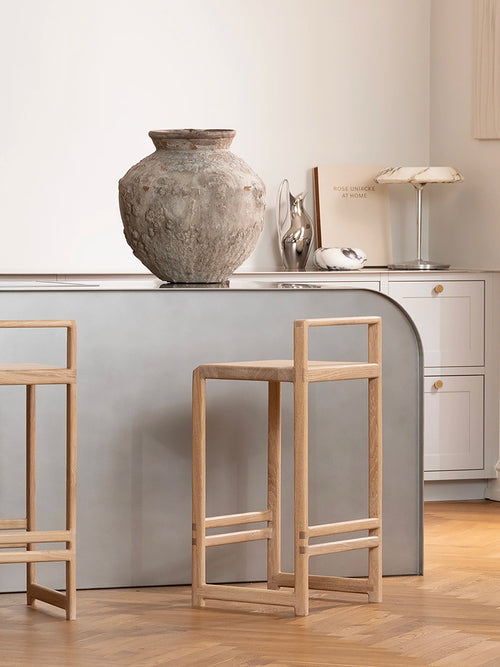
Ebba bar stools in dark oak placed at a dramatic marble kitchen island with bold veining, styled in a sophisticated Scandinavian kitchen with dark wood cabinetry and warm integrated lighting. Ebba bar stools in dark oak placed at a dramatic marble kitchen island with bold veining, styled in a sophisticated Scandinavian kitchen with dark wood cabinetry and warm integrated lighting.

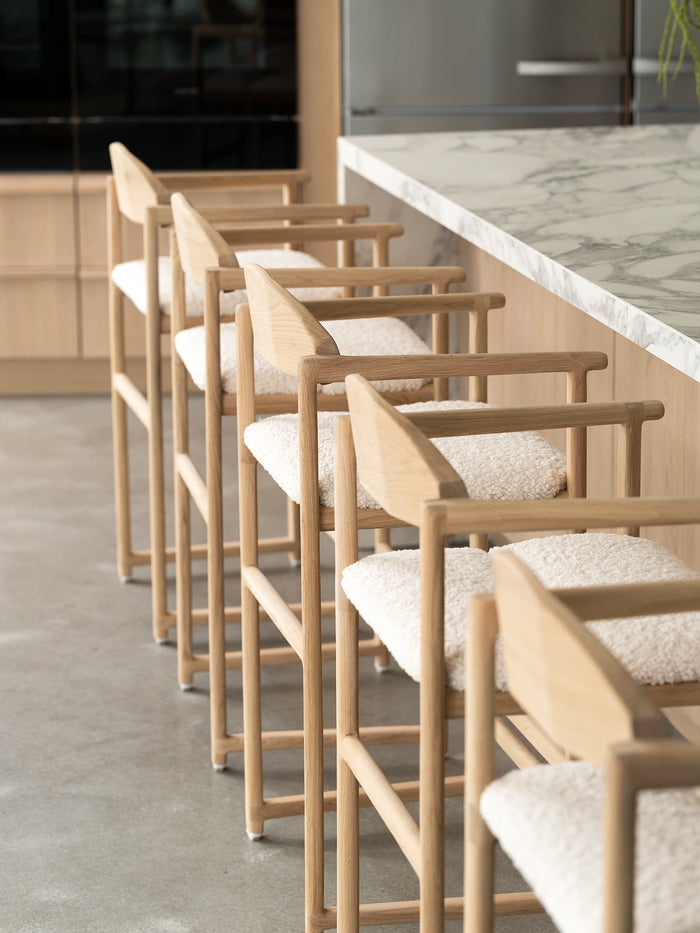
Ebba solid oak bar stools in a pale kitchen setting, showing natural grain variation and the warm tone that develops in solid oak furniture across years of daily use.

Ebba solid oak bar stools in a pale kitchen setting, showing natural grain variation and the warm tone that develops in solid oak furniture across years of daily use.

Freja bar stools with black steel frames and black upholstered seats placed at a concrete kitchen island, styled in a Scandinavian kitchen with light oak cabinetry and open shelving. Freja bar stools with black steel frames and black upholstered seats placed at a concrete kitchen island, styled in a Scandinavian kitchen with light oak cabinetry and open shelving.

Freja jade leather bar stools at a concrete kitchen island, showing mid-premium steel stools positioned for daily long-term use in a functional, high-use kitchen.

Freja jade leather bar stools at a concrete kitchen island, showing mid-premium steel stools positioned for daily long-term use in a functional, high-use kitchen.

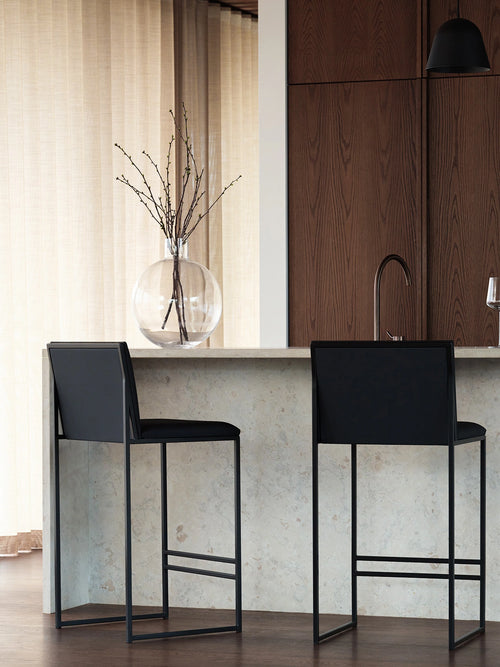
Philip black bar stools with high backs at a modern kitchen island with marble countertop. Philip black bar stools with high backs at a modern kitchen island with marble countertop.

Philip bar stools in a dark wood bar setting, showing how a steel frame performs in an upscale environment where consistent surface quality matters over years of use.

Philip bar stools in a dark wood bar setting, showing how a steel frame performs in an upscale environment where consistent surface quality matters over years of use.

How Do Wood and Metal Bar Stools Age Over Time?

Solid oak develops a patina with age. The surface deepens in tone, the grain becomes more pronounced, and small marks integrate into the character of the piece rather than reading as damage. This is the expected behaviour of a natural material and one reason solid wood furniture holds aesthetic value over decades.

Powder-coated steel changes very little with age. The finish holds its colour and surface quality for years under normal household use. If the coating chips, the affected area can be touched up, but steel does not develop patina in the way oak does.

Both are long-term choices. The question is whether you want a surface that stays consistent or one that develops character. For households committed to a natural material aesthetic, oak's aging behaviour is a feature. For those who prefer predictability, steel is the better option.

Solid oak develops a patina with age. The surface deepens in tone, the grain becomes more pronounced, and small marks integrate into the character of the piece rather than reading as damage. This is the expected behaviour of a natural material and one reason solid wood furniture holds aesthetic value over decades.

Powder-coated steel changes very little with age. The finish holds its colour and surface quality for years under normal household use. If the coating chips, the affected area can be touched up, but steel does not develop patina in the way oak does.

Both are long-term choices. The question is whether you want a surface that stays consistent or one that develops character. For households committed to a natural material aesthetic, oak's aging behaviour is a feature. For those who prefer predictability, steel is the better option.

Are Wood or Metal Bar Stools Better Value for Money?

Value depends on what is being compared. A solid oak stool built to a furniture standard costs more upfront than a steel stool at the same standard, because the raw material cost for quality oak is higher. At the lower end of the market, steel stools are cheaper because they use thinner gauge steel and lower-grade finishes, not because steel is inherently less expensive.

At the mid-premium level, a well-made oak stool and a well-made steel stool cost roughly the same. The value question then becomes longevity and repairability. Oak can be sanded, re-oiled, and repaired by a furniture maker. Steel stools designed with replaceable cushions, like the Freja and Svea, allow the seat to be replaced when the fabric wears without replacing the frame.

The worst value is a cheap stool in either material that needs replacing in three to five years.

Value depends on what is being compared. A solid oak stool built to a furniture standard costs more upfront than a steel stool at the same standard, because the raw material cost for quality oak is higher. At the lower end of the market, steel stools are cheaper because they use thinner gauge steel and lower-grade finishes, not because steel is inherently less expensive.

At the mid-premium level, a well-made oak stool and a well-made steel stool cost roughly the same. The value question then becomes longevity and repairability. Oak can be sanded, re-oiled, and repaired by a furniture maker. Steel stools designed with replaceable cushions, like the Freja and Svea, allow the seat to be replaced when the fabric wears without replacing the frame.

The worst value is a cheap stool in either material that needs replacing in three to five years.

Which Bar Stool Material Should You Choose?

Choose solid oak if your kitchen uses natural materials, you want the stool to develop character over time, you are comfortable with occasional re-oiling, and you prefer a surface with visible grain and warmth.

Choose powder-coated steel if your kitchen is modern or industrial, maintenance needs to be minimal, spills are frequent, or you want a frame that holds its surface quality without attention. Steel is also the better choice if the stools may be moved between indoor and outdoor use occasionally.

In both cases, the upholstery decision matters more for day-to-day comfort than the frame material. Both oak and steel stools are available with replaceable cushions, full upholstery, or no seat at all. See our guide on footrest height and ergonomics for more on what affects long-term seating comfort.

Choose solid oak if your kitchen uses natural materials, you want the stool to develop character over time, you are comfortable with occasional re-oiling, and you prefer a surface with visible grain and warmth.

Choose powder-coated steel if your kitchen is modern or industrial, maintenance needs to be minimal, spills are frequent, or you want a frame that holds its surface quality without attention. Steel is also the better choice if the stools may be moved between indoor and outdoor use occasionally.

In both cases, the upholstery decision matters more for day-to-day comfort than the frame material. Both oak and steel stools are available with replaceable cushions, full upholstery, or no seat at all. See our guide on footrest height and ergonomics for more on what affects long-term seating comfort.

Leather Bar Stool Freja with black frame and latte leather cushion in modern kitchen setting. Leather Bar Stool Freja with black frame and latte leather cushion in modern kitchen setting.

Freja steel bar stools in black leather at a marble island, representing the daily kitchen use that both wood and metal bar stools are built to handle over many years.

Freja steel bar stools in black leather at a marble island, representing the daily kitchen use that both wood and metal bar stools are built to handle over many years.

Bar Stool Freja in black frame, black leather cushion, and brown backrest at a modern kitchen island. Bar Stool Freja in black frame, black leather cushion, and brown backrest at a modern kitchen island.

Freja steel bar stools in black leather at a marble island, representing the daily kitchen use that both wood and metal bar stools are built to handle over many years.

Wood vs Metal: Both Last. The Difference Is What You Live With.

Solid oak and powder-coated steel are both long-term bar stool materials when produced to a proper standard. The choice is not about which one lasts longer. It is about which one suits your kitchen, your household routine, and your preference for how a material changes over time.

Oak develops patina and character. Steel stays consistent. For high-spill or high-use kitchens, steel is more forgiving. For kitchens built around natural materials, oak fits without compromise. If your counter height is standard, both options serve well for a decade or more.

All by Crea bar stools are handmade in our factory in Malmö, Sweden. Both oak and steel models are available at 66 cm (26 in) and 76 cm (30 in). Custom heights are available through Design Your Own for non-standard counter heights.

Related guides

Are Wooden Bar Stools Comfortable Long Term?

Are Metal Bar Stools Comfortable?

How Much Legroom Do Bar Stools Need?

Browse bar stools

Wooden bar stools

Steel bar stools

Full bar stool guide library

Solid oak and powder-coated steel are both long-term bar stool materials when produced to a proper standard. The choice is not about which one lasts longer. It is about which one suits your kitchen, your household routine, and your preference for how a material changes over time.

Oak develops patina and character. Steel stays consistent. For high-spill or high-use kitchens, steel is more forgiving. For kitchens built around natural materials, oak fits without compromise. If your counter height is standard, both options serve well for a decade or more.

All by Crea bar stools are handmade in our factory in Malmö, Sweden. Both oak and steel models are available at 66 cm (26 in) and 76 cm (30 in). Custom heights are available through Design Your Own for non-standard counter heights.

Related guides

Are Wooden Bar Stools Comfortable Long Term?

Are Metal Bar Stools Comfortable?

How Much Legroom Do Bar Stools Need?

Browse bar stools

Wooden bar stools

Steel bar stools

Full bar stool guide library

FAQ

What is the difference between wood and metal bar stools?

Wood bar stools are typically made from solid oak or beech, with natural grain variation and a warm tactile surface. Metal bar stools use steel frames with a powder-coated finish, giving a uniform surface and a harder feel.

Wood develops patina over time and requires occasional re-oiling. Steel holds its surface quality with minimal maintenance and is more resistant to spills and moisture. Both are durable materials when produced to a furniture standard.

Are wood bar stools more comfortable than metal?

Neither material is inherently more comfortable. Comfort depends on seat depth, backrest height, and whether the stool is upholstered. Both wood and steel bar stools are available with padded seats.

The one practical difference is thermal conductivity. Steel can feel cool to the touch in winter. An upholstered seat eliminates this difference entirely. For most people, an upholstered steel stool and an upholstered oak stool feel identical after the first few minutes of sitting.

Do metal bar stools scratch hardwood floors?

Metal bar stools with rubber feet or protective floor glides do not scratch floors under normal use. Bare metal feet in direct contact with hardwood can cause scratching over time, particularly if the stool is moved frequently. All by Crea steel stools include floor protection on the legs as standard.

How long do solid oak bar stools last?

Solid oak bar stools built to a furniture standard last decades with appropriate care. The surface should be re-oiled once or twice a year. Minor scratches can be lightly sanded and re-oiled without affecting the structure.

Oak that has been kept dry and maintained regularly shows no structural degradation after ten to twenty years of daily use. The surface develops patina rather than deteriorating.

Which bar stool material is easiest to clean?

Powder-coated steel wipes clean with a damp cloth and resists most household spills without staining. Solid oak requires immediate wiping of spills and is more sensitive to standing water.

For upholstered stools, the fabric determines cleanability more than the frame. Vegan leather (Valencia by Spradling) wipes clean completely and carries an antimicrobial rating. Velvet and bouclé require more care and are less forgiving on spills.

Can metal bar stools be used outdoors?

Powder-coated steel bar stools can be used outdoors occasionally, but are not designed for permanent outdoor installation unless specified as outdoor-rated. Prolonged exposure to rain and moisture will eventually degrade the coating and promote rust at uncoated edges.

Solid oak is not suitable for outdoor use. For permanent outdoor seating, see our dedicated outdoor bar stools, which are designed and tested specifically for external conditions.