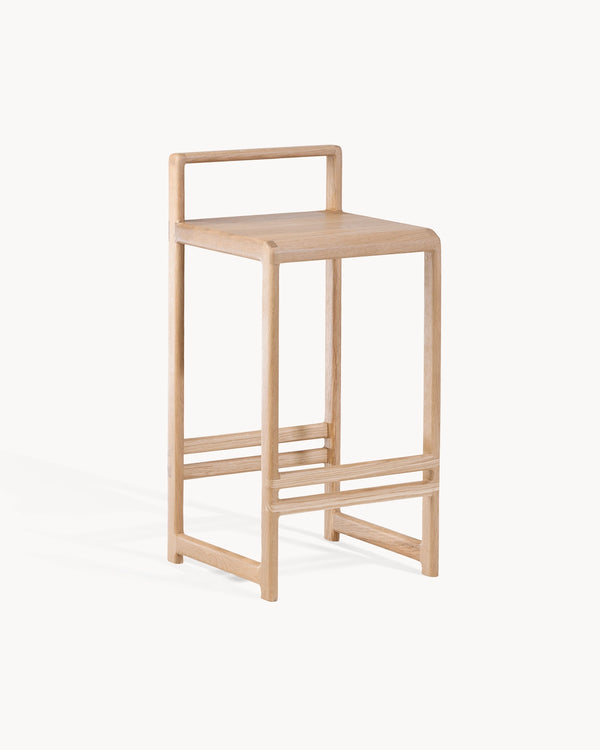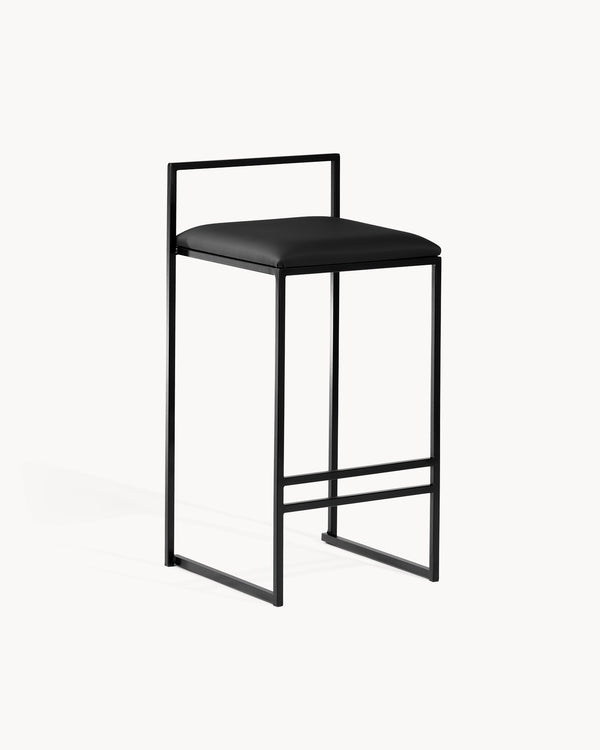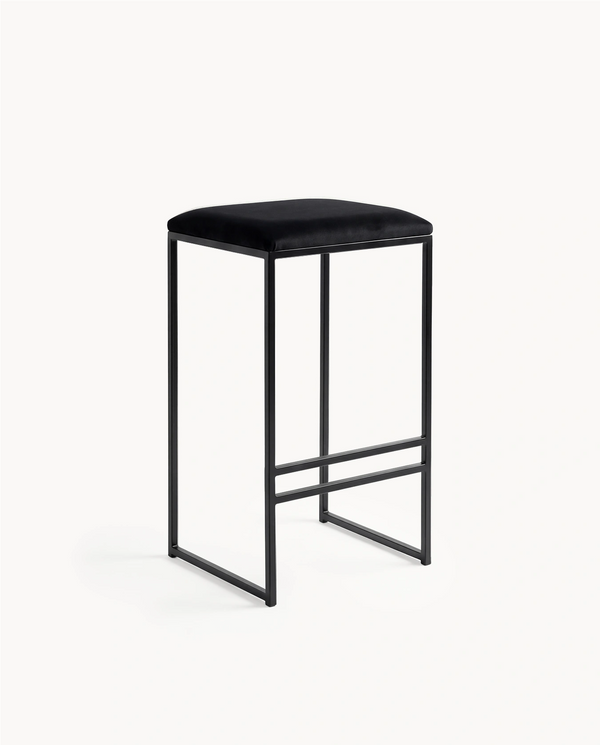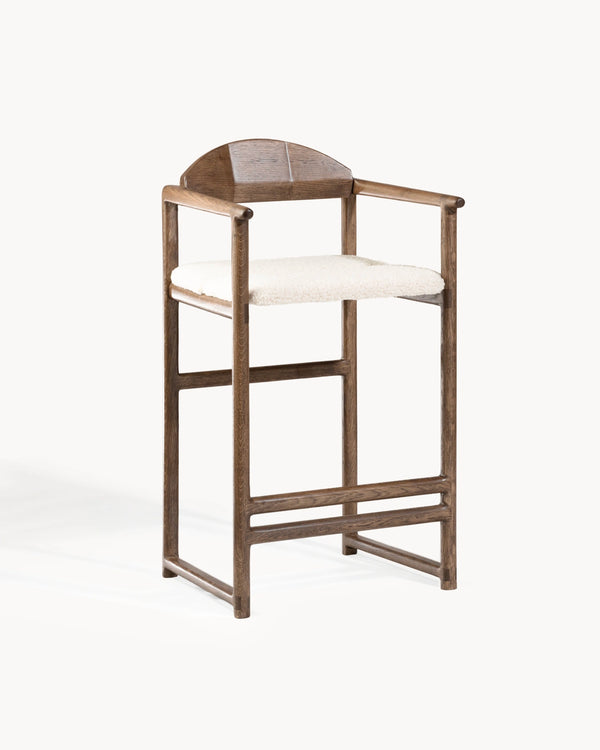
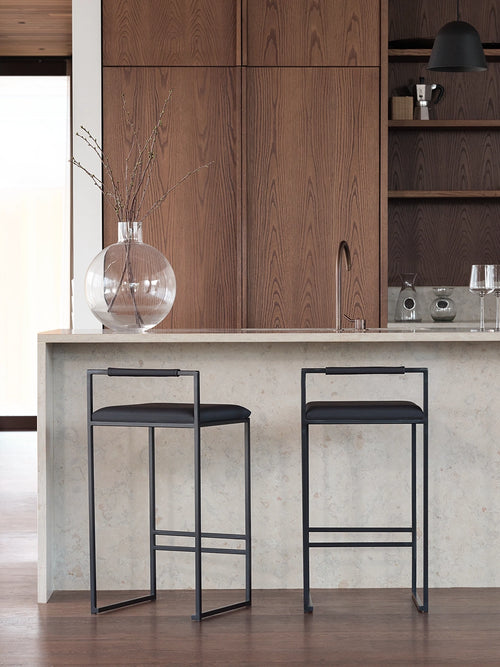
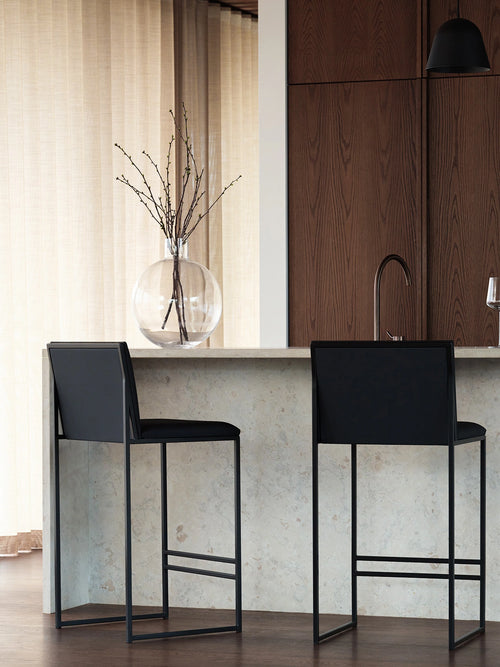
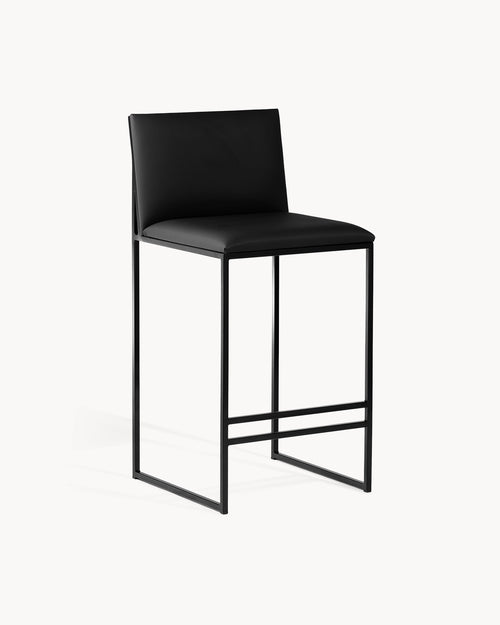
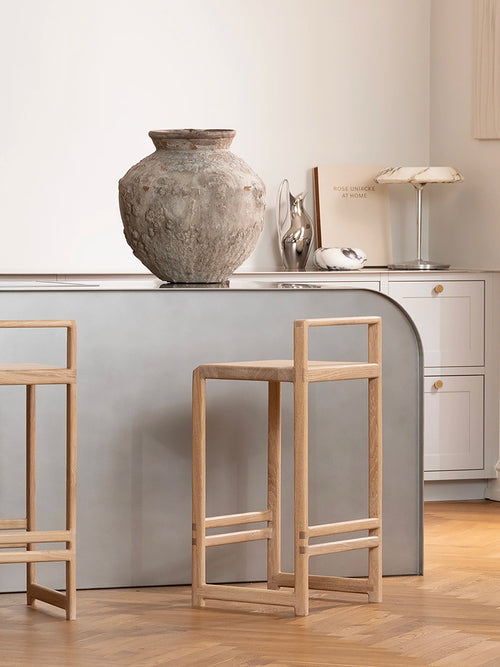
This image shows 10 Ebba barstools from by Crea in dark stained oak in a Dark oak minimalistic kitchen with contemporary light stone marble top.
Image Link

This page explains how much space to leave between bar stools using fixed measurements.

It is written to prevent overcrowding, discomfort, and layout mistakes.

The guidance applies to kitchen islands, counters, and hospitality seating.

This page explains how much space to leave between bar stools using fixed measurements.

It is written to prevent overcrowding, discomfort, and layout mistakes.

The guidance applies to kitchen islands, counters, and hospitality seating.

1. What distance between bar stools means

Distance between bar stools is the horizontal space allocated per stool along a counter or island.

This space allows arm movement, stable seating, and easy entry.

If stools are placed too close together, comfort drops even when seat height is correct.

Correct spacing is an ergonomic requirement.

Distance between bar stools is the horizontal space allocated per stool along a counter or island.

This space allows arm movement, stable seating, and easy entry.

If stools are placed too close together, comfort drops even when seat height is correct.

Correct spacing is an ergonomic requirement.

See more See more
Bar Stool Svea in black with ivory bouclé fabric beside a modern marble kitchen island. Bar Stool Svea in black with ivory bouclé fabric beside a modern marble kitchen island.

2. Standard spacing between bar stools

There is a clear baseline for usable stool spacing.

This applies to both bar stools and counter stools.

Recommended spacing per stool

✓ Minimum spacing per stool: 50 cm (19.5 in)✓ Comfortable spacing per stool: 55–60 cm (21.5–23.5 in)

50 cm (19.5 in) allows basic use.

55–60 cm (21.5–23.5 in) allows relaxed seating and easier access.

There is a clear baseline for usable stool spacing.

This applies to both bar stools and counter stools.

Recommended spacing per stool

✓ Minimum spacing per stool: 50 cm (19.5 in)✓ Comfortable spacing per stool: 55–60 cm (21.5–23.5 in)

50 cm (19.5 in) allows basic use.

55–60 cm (21.5–23.5 in) allows relaxed seating and easier access.

See furniture See furniture

3. Bar stools vs counter stools spacing

Bar stools and counter stools use the same horizontal spacing rules.

Seat height affects vertical fit, not body width.

Spacing comparison

✓ Counter stools: 50–60 cm per stool (19.5–23.5 in)✓ Bar stools: 50–60 cm per stool (19.5–23.5 in)

The difference between stool types is height, not spacing.

Bar stools and counter stools use the same horizontal spacing rules.

Seat height affects vertical fit, not body width.

Spacing comparison

✓ Counter stools: 50–60 cm per stool (19.5–23.5 in)✓ Bar stools: 50–60 cm per stool (19.5–23.5 in)

The difference between stool types is height, not spacing.

Explore Counter Stools Explore Counter Stools
Freja bar stool by by Crea, black frame and black leather seat, Scandinavian kitchen island seating in a minimalist home. Ebba Bar Stools in dark oak with minimal Scandinavian design, placed at a statement kitchen island in dramatic veined marble, complemented by rich wood cabinetry and herringbone oak flooring.

4. How many stools fit along a kitchen island

The number of stools is determined by island length and spacing rules.

It is not determined by visual symmetry.

Planning method

✓ Measure total usable island length✓ Divide by 55 cm (21.5 in) for comfortable spacing✓ Round down to the nearest whole number

Rounding down avoids crowding.

Forcing an extra stool reduces usability for all seats.

The number of stools is determined by island length and spacing rules.

It is not determined by visual symmetry.

Planning method

✓ Measure total usable island length✓ Divide by 55 cm (21.5 in) for comfortable spacing✓ Round down to the nearest whole number

Rounding down avoids crowding.

Forcing an extra stool reduces usability for all seats.

Explore Bar Stools Explore Bar Stools
Eva Bar stools in black oak at a modern kitchen island with marble countertop, showcasing clean lines and a slim profile. Svea bar stools with black frame and latte leather seat, minimalistic design for modern kitchen or dining area.

5. Distance between bar stools in small kitchens

Small kitchens are often over-seated.

This creates daily friction instead of convenience.

Rules for small kitchens

✓ Never go below 50 cm (19.5 in) per stool✓ Prefer fewer stools over tighter spacing✓ Backless stools reduce visual bulk, not spacing needs

Human body width does not change with room size.

Small kitchens are often over-seated.

This creates daily friction instead of convenience.

Rules for small kitchens

✓ Never go below 50 cm (19.5 in) per stool✓ Prefer fewer stools over tighter spacing✓ Backless stools reduce visual bulk, not spacing needs

Human body width does not change with room size.

Explore Freja Counter Stool Explore Freja Counter Stool

6. Spacing differences by stool design

Stool design affects perceived space.

It does not change the minimum spacing requirement.

Spacing by design

✓ Backless stools: best at 50 cm (19.5 in)✓ Stools with backrest: best at 55–60 cm (21.5–23.5 in)✓ Stools with armrests: require more than 60 cm (23.5 in)

Backrests and armrests increase elbow movement.

Stool design affects perceived space.

It does not change the minimum spacing requirement.

Spacing by design

✓ Backless stools: best at 50 cm (19.5 in)✓ Stools with backrest: best at 55–60 cm (21.5–23.5 in)✓ Stools with armrests: require more than 60 cm (23.5 in)

Backrests and armrests increase elbow movement.

Bar Stool Freja in black frame, black leather cushion, and brown backrest at a modern kitchen island. Bar Stool Freja in black frame, black leather cushion, and brown backrest at a modern kitchen island.

7. Common spacing mistakes

Most spacing mistakes happen during planning.

They are difficult to fix afterward.

Common mistakes

✓ Forcing one extra stool into the layout✓ Using symmetry instead of measurements✓ Mixing wide stools with minimum spacing✓ Ignoring entry and exit movement

If stools touch or require turning sideways to sit, spacing is insufficient.

Most spacing mistakes happen during planning.

They are difficult to fix afterward.

Common mistakes

✓ Forcing one extra stool into the layout✓ Using symmetry instead of measurements✓ Mixing wide stools with minimum spacing✓ Ignoring entry and exit movement

If stools touch or require turning sideways to sit, spacing is insufficient.

Learn about our materials Learn about our materials

8. The governing rule for spacing

This rule resolves most spacing questions.

It applies universally.

Rule

Allocate at least 50 cm (19.5 in) per bar stool, and 55–60 cm (21.5–23.5 in) for comfortable daily use.

If this spacing cannot be met, reduce the number of stools.

This rule resolves most spacing questions.

It applies universally.

Rule

Allocate at least 50 cm (19.5 in) per bar stool, and 55–60 cm (21.5–23.5 in) for comfortable daily use.

If this spacing cannot be met, reduce the number of stools.

About us About us
Oak Bar Stool Carl in dark oak with ivory bouclé in a modern kitchen setting with marble countertops. Oak Bar Stool Carl in dark oak with ivory bouclé in a modern kitchen setting with marble countertops.

9. Distance between bar stools checklist

Use this checklist before finalising a layout.

✓ Spacing per stool is at least 50 cm (19.5 in)✓ Comfortable layouts use 55–60 cm (21.5–23.5 in)✓ Stool count is rounded down, not up✓ Stool width matches spacing used✓ Entry and exit movement is unobstructed

Use this checklist before finalising a layout.

✓ Spacing per stool is at least 50 cm (19.5 in)✓ Comfortable layouts use 55–60 cm (21.5–23.5 in)✓ Stool count is rounded down, not up✓ Stool width matches spacing used✓ Entry and exit movement is unobstructed

Explore Counter Stools Explore Counter Stools

Conclusion

Correct distance between bar stools is defined by human movement.

The stable rule is 55–60 cm (21.5–23.5 in) per stool.

This spacing works for kitchen islands, counters, and commercial environments.

Planning fewer stools with correct spacing improves daily usability.

After spacing is confirmed, see the bar stool collection.

View bar stools

Correct distance between bar stools is defined by human movement.

The stable rule is 55–60 cm (21.5–23.5 in) per stool.

This spacing works for kitchen islands, counters, and commercial environments.

Planning fewer stools with correct spacing improves daily usability.

After spacing is confirmed, see the bar stool collection.

View bar stools

Counter stools & Bar stools FAQ

What is the minimum distance between bar stools?

The minimum distance is 50 cm (19.5 in) per stool.

This allows basic use without constant contact.

How do I calculate how many stools fit my island?

Divide usable island length by 55 cm (21.5 in).

Round down to determine the correct number of stools.

If unsure, fewer stools always perform better.

Can I space stools closer in a small kitchen?

No.

Reducing spacing below 50 cm (19.5 in) causes discomfort regardless of room size.

Do metal stools need more spacing than wooden stools?

No.

Material does not change spacing requirements.

Design features like backrests and armrests do.

See material comparisons here.

Steel bar stoolsWooden bar stools

Does stool height affect spacing?

No.

Seat height affects vertical fit, not horizontal body width.

Spacing rules remain the same.

What is the ideal distance between bar stools?

The ideal distance is 55–60 cm (21.5–23.5 in).

This allows relaxed seating and easier movement.