Reference

Bar Stool Glossary: Heights, Materials and Standards Explained

By Alexandra PetterssonReviewed by Alexander TjernströmUpdated

The two measurements that matter most are seat height and counter height: a counter stool has a 66 cm (26 in) seat for a counter of 89 to 92 cm (35 to 36 in), and a bar stool has a 76 cm (30 in) seat for a counter of 99 to 102 cm (39 to 40 in). Between seat and counter, leave 23 to 26 cm (9 to 10 in) of legroom. This glossary explains every other term you will meet when choosing a bar stool, grouped by topic, with a link to the guide that covers each one in depth.

Part of the guide to Bar Stools
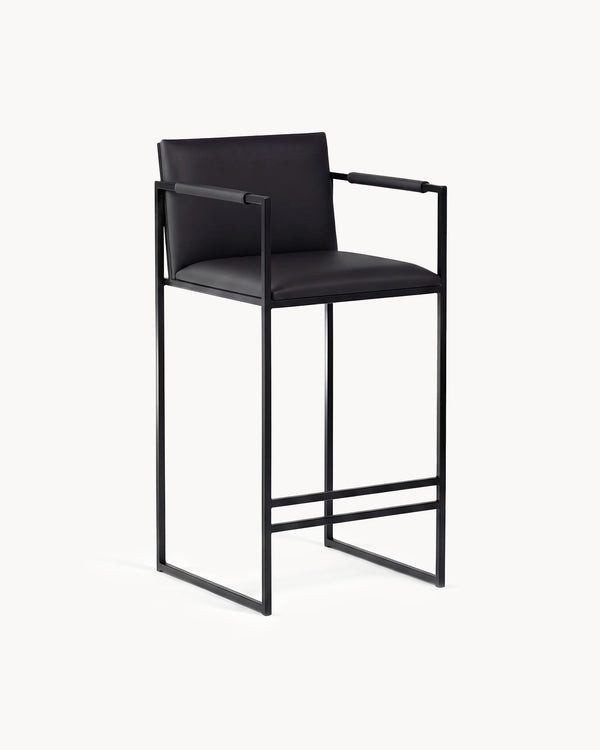
Freja 66 dimension drawing

Buying a bar stool comes with its own vocabulary: counter height and bar height, overhang and knee clearance, bouclé and Martindale, powder coating and EN 16139. Retailers use the words loosely, and some mean different things in the UK and the US. This glossary gives each term a plain definition and, where it is a measurement, the figure in centimetres and inches. Terms are grouped by topic: heights and sizes, seats and shapes, wood and steel, upholstery, standards, and care. Where a term deserves more than a line, we link to the guide that explains it in full. Every figure here matches the rest of our guides and the specifications of the stools we make in our own factory in Malmö, Sweden.

What do the bar stool height and size terms mean?

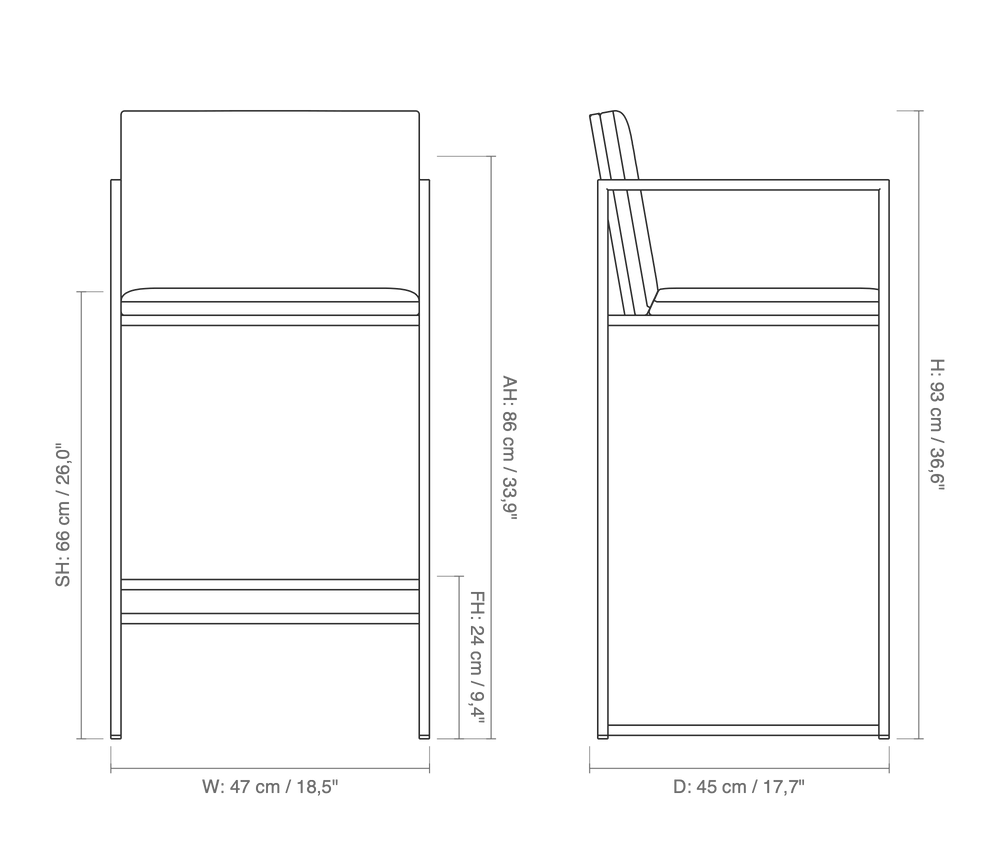
Bruno 66 dimension drawing
A dimension drawing of Bruno.

Height terms describe two things that must match: the height of the counter and the height of the seat. The gap between them, the legroom, decides whether a stool is comfortable, and the overhang decides whether your knees fit. Get these four right and everything else is a matter of taste.

Our bar stool height guide explains how to measure your counter, and the guide to counter vs bar stools explains the two standard heights.

Height and size terms
TermWhat it means
Seat heightFrom the floor to the top of the seat: 66 cm (26 in) for counter stools, 76 cm (30 in) for bar stools
Counter heightA kitchen worktop or island of 89 to 92 cm (35 to 36 in)
Bar heightA raised bar counter of 99 to 102 cm (39 to 40 in)
LegroomThe gap from seat to the underside of the counter: 23 to 26 cm (9 to 10 in)
OverhangHow far the worktop projects past the cabinets: 30 to 40 cm (12 to 16 in), 25 cm (10 in) minimum
SpacingDistance between stools, centre to centre: 55 cm (21.5 in), 60 cm (23.5 in) with armrests
Custom heightA seat height made to order for a non-standard counter; on our steel models only

What are the words for bar stool seats and shapes?

Shape terms describe how much support a stool gives. A backless stool is the lightest and slides under the counter; a low backrest supports the lower back; a full backrest and armrests turn a stool into something close to a dining chair. The more support, the longer you can comfortably sit.

Our guides to backless vs back bar stools, seat size and swivel vs fixed stools cover each choice.

Seat and shape terms
TermWhat it means
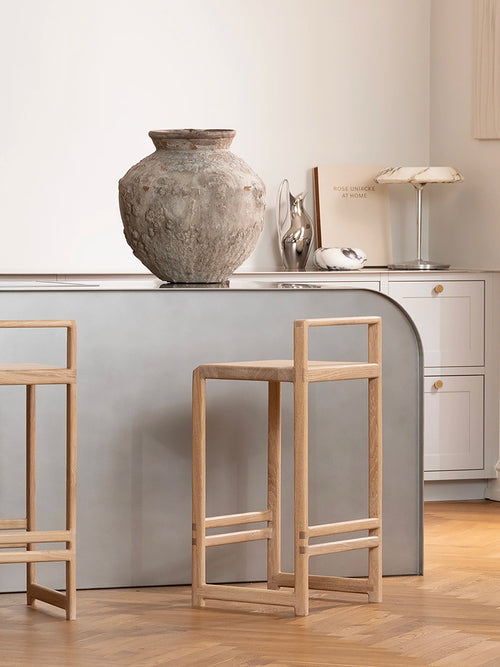
Counter stoolA stool with a seat of about 66 cm (26 in), for kitchen counters and islands
Bar stoolStrictly, a stool with a seat of about 76 cm (30 in); also used for any tall stool
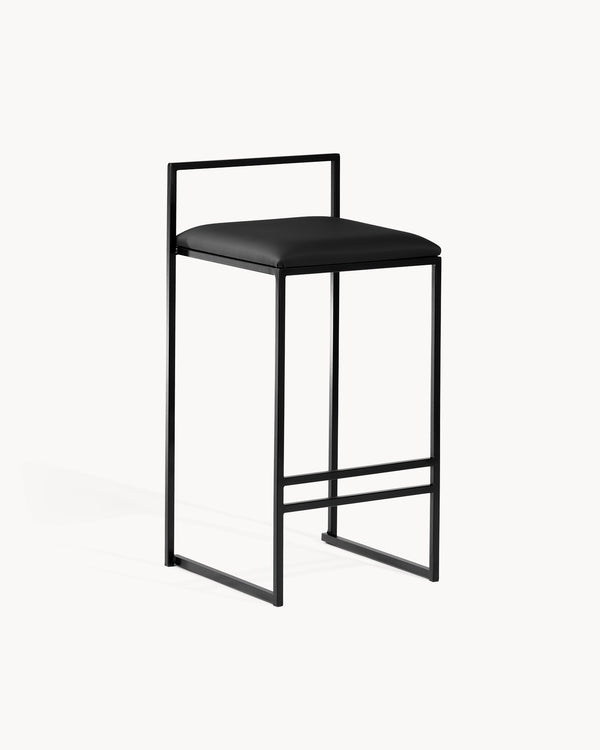
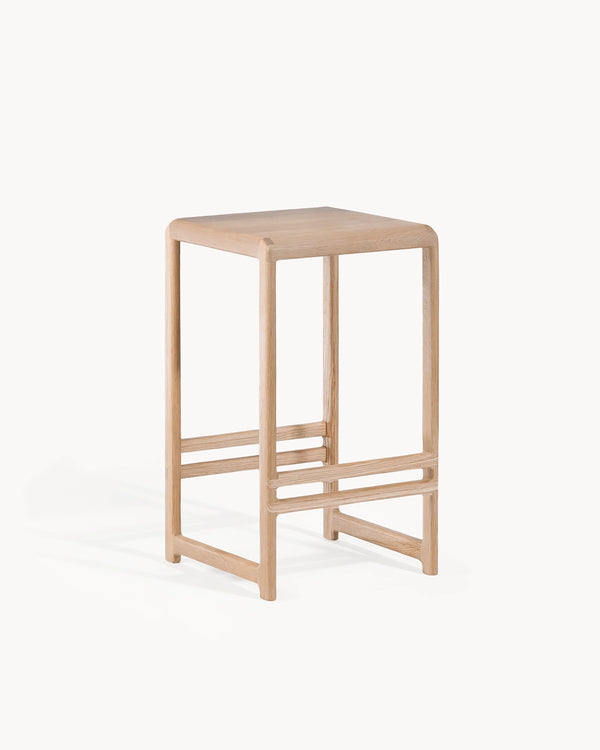
Backless stoolA stool with no backrest, such as Eva and Svea; slides fully under the counter
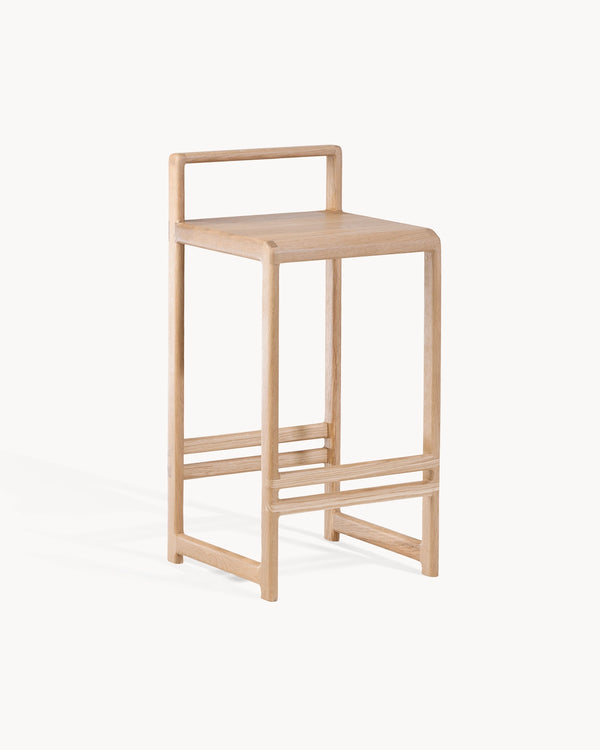
Low backrestA backrest that supports the lower back only, such as Ebba
ArmrestsArm supports for long meals, on Bruno and Carl; allow 60 cm (23.5 in) per stool
FootrestThe bar your feet rest on, about 40 to 45 cm (16 to 18 in) below the seat
Swivel stoolA seat that turns on a mechanism; all by Crea stools are fixed

What do the wood and steel terms mean?

Powder coating in our factory in Malmö.

Frame terms describe what a stool is made of and how it is held together, which decides how long it lasts. Solid wood can be repaired and refinished; veneer cannot. Welded and glued joints stay tight; bolted joints loosen with use.

Our guides to oak bar stools, powder-coated steel and how our bar stools are made go into detail.

Wood and steel terms
TermWhat it means
Solid oakOak all the way through, which can be sanded and refinished
VeneerA thin layer of wood glued over another material, usually particleboard or plywood
FSC-certifiedWood from forests managed to the Forest Stewardship Council's standards
Dark oakSolid oak stained before lacquering, so the grain still shows
Powder coatingPowder sprayed onto steel with an electrostatic charge and baked into a hard layer
RAL 9005The standard code for jet black; our black frames, at gloss level 30
Welded jointSteel parts fused into one piece, with no screws to loosen
Flat-packDelivered in parts for home assembly; our stools are delivered fully assembled

What do bouclé, Martindale and other upholstery terms mean?

Fabric samples from by Crea - Sample.
Samples of our upholstery fabrics.

Upholstery terms describe the seat fabric and how well it wears. The key figure is the Martindale rating, the number of rubs a fabric survives in a standard abrasion test: the higher, the longer it keeps its surface.

Our guides to bar stool upholstery, bouclé bar stools and velvet bar stools compare the fabrics.

Upholstery terms
TermWhat it means
BoucléA fabric woven from looped yarn, with a soft, textured surface; ours is rated for 50,000 rubs
VelvetA fabric with a short, dense pile that changes with the light; ours is rated for 130,000 rubs
Vegan leatherA leather-look material with no animal content that wipes clean; ours is rated for 300,000 rubs
MartindaleAn abrasion test that counts the rubs a fabric survives; 40,000 or more suits commercial use
PillingSmall balls of fibre that form on a worn fabric surface
Cold-cut foamFoam cut to shape from a block, used under our seats

What do EN 16139, EN 1021 and other standards mean?

Standards are independent tests that prove what a stool can take. For strength, EN 16139 is the one to ask for; for fire safety, the test depends on the market. A load rating tells you the weight a stool is designed for, but only a test tells you it has been proven.

Our guides to bar stool weight capacity and commercial bar stools explain how to use them.

Standards and ratings
TermWhat it means
EN 16139The European strength and stability standard for non-domestic seating; level 2 is for extreme use
EN 1021-1 and -2European fire tests for upholstery against a smouldering cigarette and a match flame
CRIB 5A British fire test for upholstery in commercial and public spaces
TB117The Californian flammability standard for upholstered furniture
Load ratingThe weight a stool is designed to carry; 200 kg (440 lbs) on every by Crea stool
RISEResearch Institutes of Sweden, which has tested our steel stools to EN 16139

What do the care and spare-part terms mean?

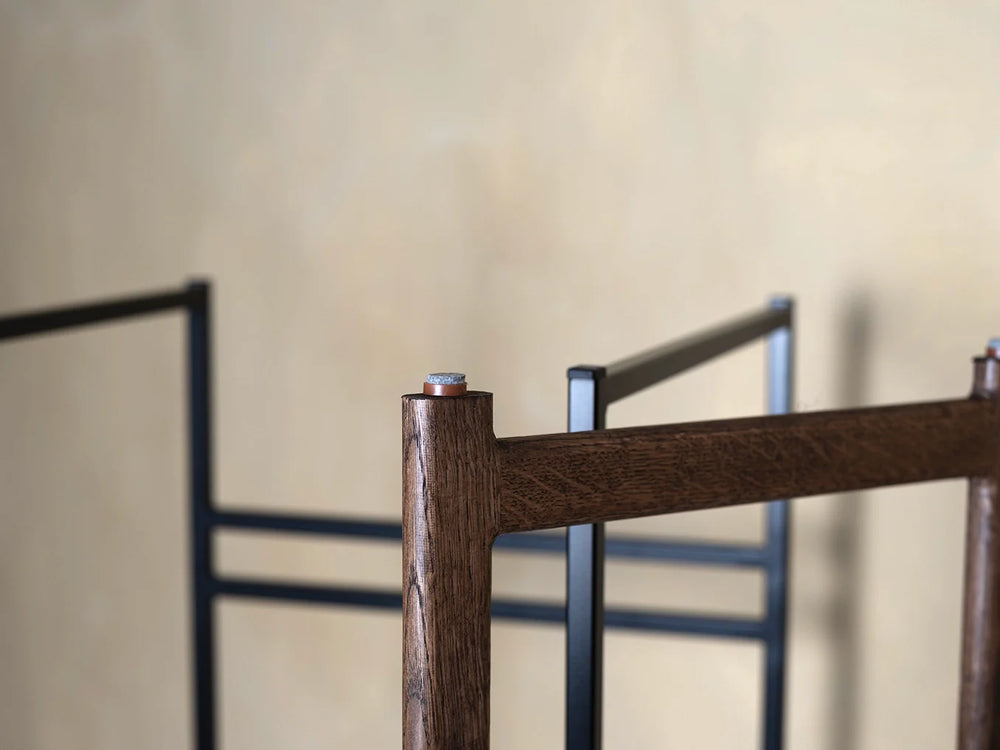
Close-up of Crea furniture pads installed on a wooden barstool leg for floor protection and stability.
Felt pads protect the floor and keep the stool level.

Care terms describe what keeps a stool looking new and standing still. Most problems, from a wobble to a scratched floor, start at the feet, which is why felt pads matter more than any cleaning product.

Our guides to cleaning bar stools and fixing a wobbly bar stool cover the details.

Care and spare-part terms
TermWhat it means
Felt padsFelt glides under each foot that protect the floor and keep the stool level
Plastic feetHard caps for the feet, for heavier use
Replaceable cushionA seat cushion fixed with screws that can be swapped; on Freja and Svea, two screws
Matt lacquerThe clear finish on our oak, which seals the wood and needs no oiling
ThreadlockerA removable liquid that stops screws on bolted stools working loose
WarrantyEvery by Crea stool comes with a 10-year warranty

The terms that matter most

If you remember only four terms, make them seat height, counter height, legroom and overhang: a 66 cm (26 in) seat for an 89 to 92 cm counter, a 76 cm (30 in) seat for a 99 to 102 cm bar, 23 to 26 cm (9 to 10 in) of legroom and 30 to 40 cm (12 to 16 in) of overhang. After that, look for solid wood or welded steel, a Martindale rating that suits your use and a stated load rating. Our stools are made in our own factory in Malmö, Sweden, rated for 200 kg (440 lbs) and covered by a 10-year warranty.

Shop the stools in this guide

Frequently asked questions

What is the difference between a counter stool and a bar stool?

Height. A counter stool has a seat of about 66 cm (26 in) for an 89 to 92 cm counter; a bar stool has a seat of about 76 cm (30 in) for a 99 to 102 cm bar.

What does overhang mean on a kitchen island?

How far the worktop projects past the cabinets on the seating side. Allow 30 to 40 cm (12 to 16 in) for comfortable seating, and at least 25 cm (10 in).

What is a Martindale rating?

The number of rubs a fabric survives in a standard abrasion test. 40,000 or more suits commercial use; our vegan leather is rated for 300,000.

What is EN 16139?

The European standard for the strength and stability of seating in non-domestic use. Level 2 covers extreme use.

What does RAL 9005 mean?

The standard colour code for jet black. Our black frames are powder-coated in RAL 9005 at gloss level 30, a soft satin.

What is legroom on a bar stool?

The gap between the top of the seat and the underside of the counter. 23 to 26 cm (9 to 10 in) is comfortable.