Bar stools have a reputation for being something you perch on rather than sit on, and many deserve it. That is not a law of nature. A high seat is uncomfortable for specific, fixable reasons: your feet hang, your back has nothing to lean on, the seat edge presses into your thighs, or the stool is simply the wrong height for the counter. Put those right and a bar stool can be as comfortable over a long dinner as a dining chair. This guide explains each of the five factors, how they work together, which kinds of stool are the most comfortable for long sitting, and how to test comfort before buying. The model figures come from the dimensions of our own stools, made in our factory in Malmö; the ranges are our design guidance for most adults, so adjust them if you are much taller or shorter than average.
What makes a bar stool comfortable?
Five things: the right seat height for the counter, a padded or shaped seat, a backrest, a footrest at the right height, and a seat wide enough to move on.
Each one removes a specific source of fatigue, and they work together: a backrest helps most when your feet are supported, and a good cushion helps most at the right height.
The table sets out what each factor does and what to look for. If a stool you own feels tiring, it is worth checking these one by one; the cause is usually a single missing factor rather than the stool as a whole.
The five comfort factors and what to look for
Factor
What it does
What to look for
Seat height
Keeps thighs level and the counter within reach
23 to 26 cm below the counter underside
Seat
Spreads your weight
Padding or a shaped seat with a rounded front edge
Backrest
Gives you something to lean against
Support at the lower back at least
Footrest
Carries the weight of the legs
Low enough that knees bend comfortably, around 40 to 45 cm below the seat
Seat width
Room to shift position
About 41 to 47 cm for long sitting
Which bar stools are most comfortable for long sitting?
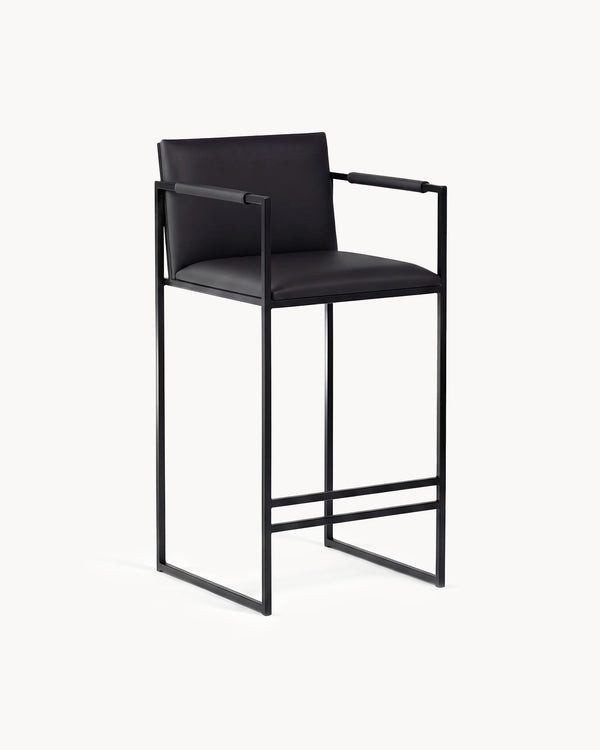
Upholstered stools with a full backrest, and with armrests if you sit for hours.
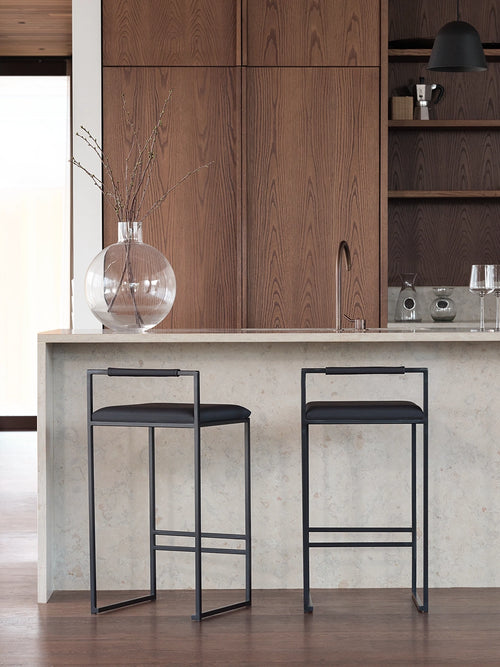
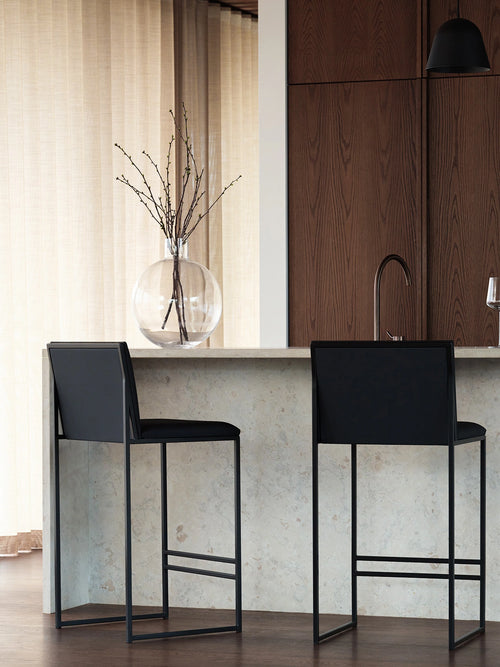
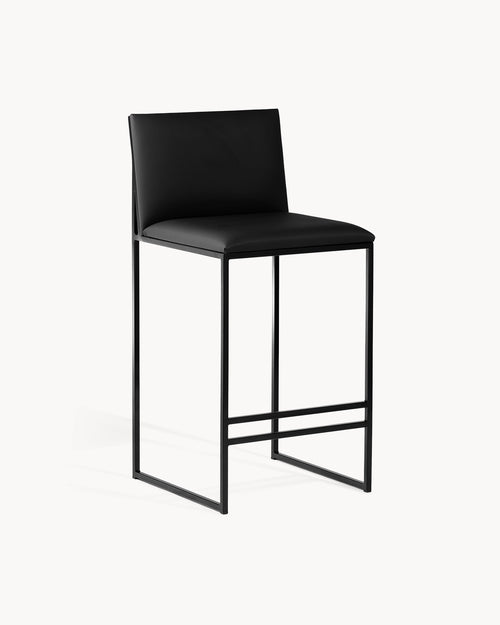
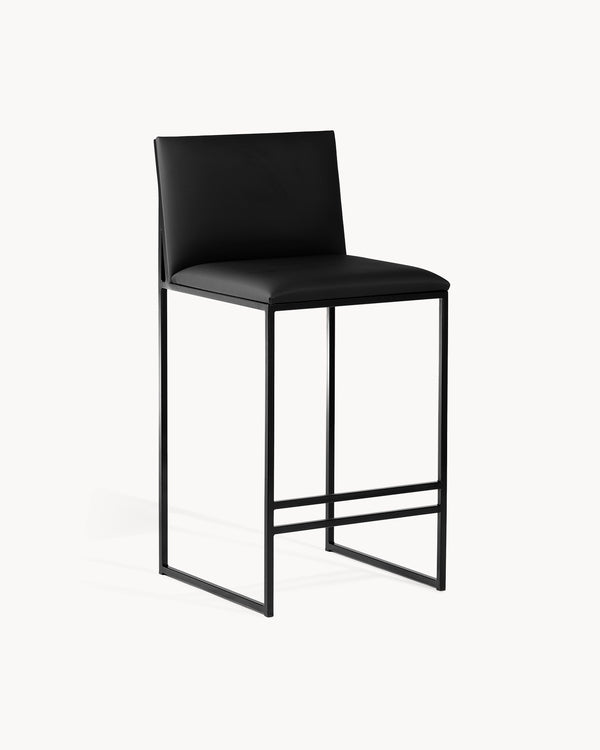
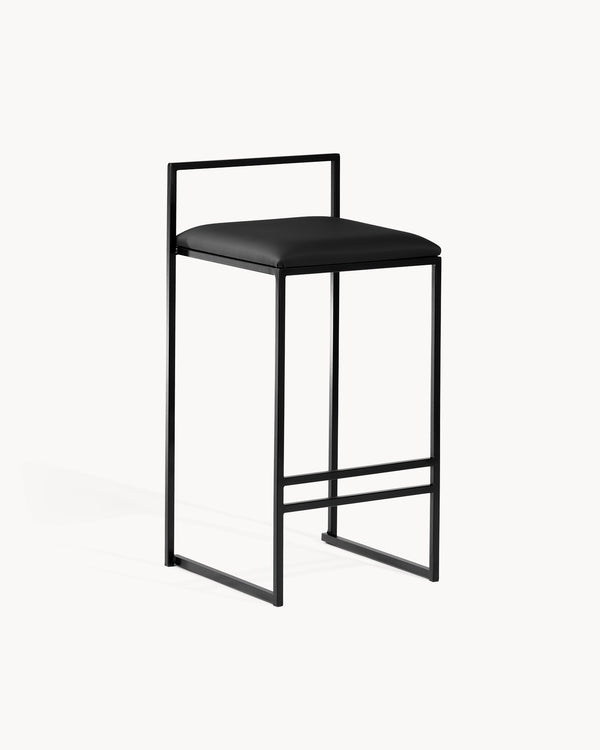
They support the back, spread your weight and give your arms somewhere to rest. In our range that means Philip, Bruno and Carl. Freja, with a low backrest and upholstered seat, is comfortable for everyday meals and keeps the island visually lighter.
Backless stools are comfortable for shorter sits, and a padded one such as Svea is usually kinder than a hard seat. For most people, what makes the biggest difference for long sitting is being able to lean back, so if the island is where you eat most meals, a backrest is worth more than any other feature. See backrest vs backless stools for the full comparison.
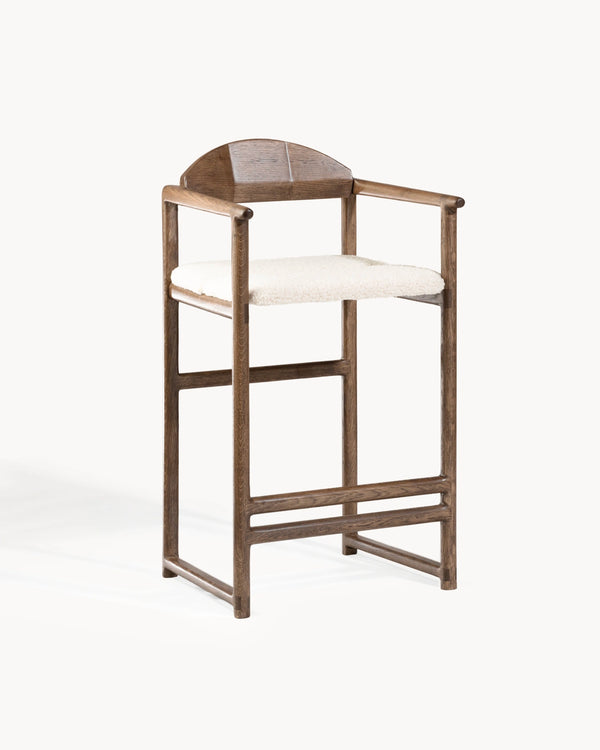
Bruno: a full backrest and armrests for the longest sits.
How important is the footrest?
Very. Without a footrest, the weight of your legs hangs from the front edge of the seat and presses into the backs of your thighs, which is the ache people feel after half an hour on a bar stool.
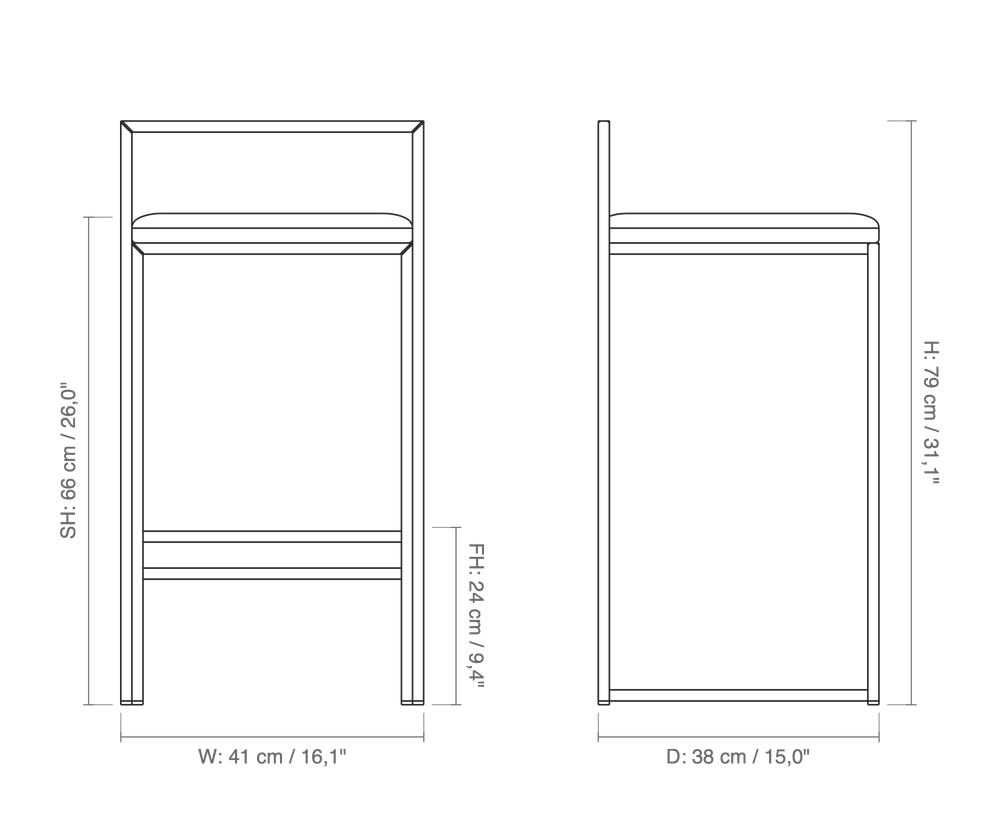
Freja with a 66 cm seat: the footrest carries the weight of the legs.
A footrest takes that weight and lets you sit with your knees bent at a comfortable angle.
Height matters: a footrest that is too high folds your knees up, one that is too low leaves your feet dangling. Our planning range is around 40 to 45 cm below the seat; on Freja with a 66 cm seat, the footrest sits about 24 cm above the floor. A counter's own footrail can do the same job. Our guide to footrest height goes into the numbers.
Is a padded seat more comfortable than a wooden one?
For sitting longer than about an hour, yes. Padding spreads your weight over a larger area, so no single point takes the pressure.
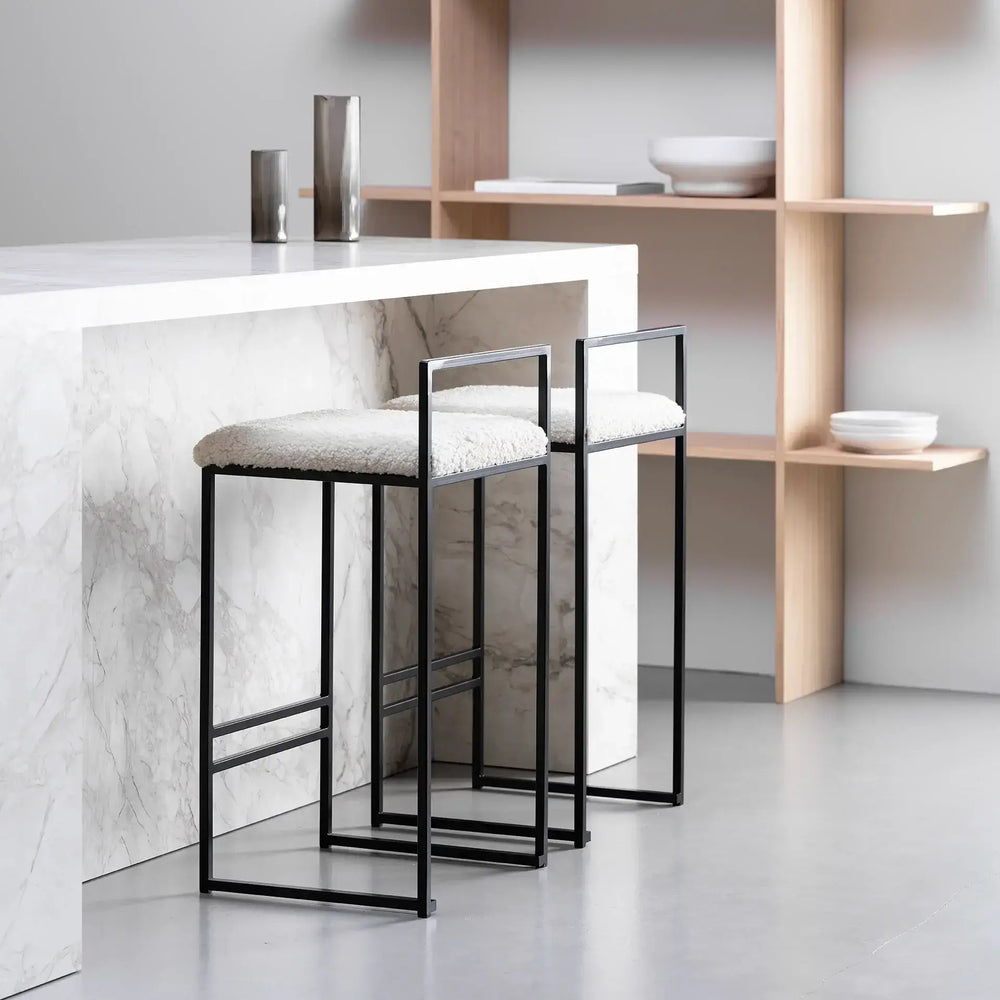
Seats are upholstered by hand over cold-cure foam in our factory.
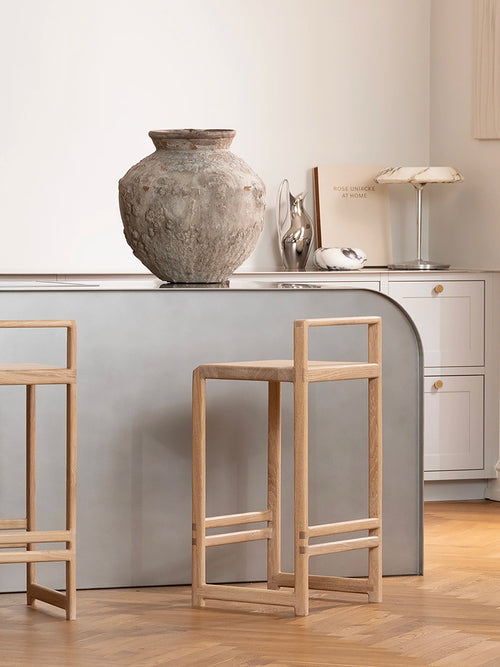
A shaped wooden seat is comfortable for normal meals, and easier to keep clean, but it cannot adapt to your shape the way foam can.
Not all padding is equal. Soft, low-density foam feels generous in the showroom and can flatten within months. Our seats use cold-cure foam at 55 kg/m³ on a beech plywood core. We chose it because it is firm enough to support and, in our experience, keeps that firmness far longer than soft foam. If you prefer the look of wood, Ted and Carl combine an oak frame with a bouclé seat, and Carl also comes with a wood seat. Our upholstery guide compares the fabrics.
What seat width is comfortable?
For long sitting, we recommend a seat about 41 to 47 cm wide, which gives most adults room to shift position.
Narrower seats of around 38 cm are fine for shorter sits and fit more stools along an island. Wider seats of 50 cm and more feel like a chair.
Seat depth matters too: we recommend about 37 to 43 cm, which supports the thighs without pressing the seat edge into the back of the knees. Overall, our stools range from 38 cm wide on Eva and Svea to 54 cm across the armrests on Carl, the widest in the range. Our guide to seat width and depth lists every model.
Does the backrest height matter?
Yes. A low backrest supports the lower back and, in our experience, is enough for everyday meals.
Freja's low backrest supports the lower back during everyday meals.
A full backrest supports the upper back as well and is the more comfortable choice for sitting for hours or working at the counter.
A slight backward angle often helps more than height alone: it lets you lean without sliding forward. Upholstered backrests, as on Philip, add comfort where your back touches. If you are choosing for a household with different needs, a mix of low and full backrests along the same island usually works well, as long as the seat height and frame colour match.
How can I test bar stool comfort before buying?
We recommend sitting on the stool at your own counter for at least twenty minutes, doing what you normally do there: eating, reading, working.
Short sits in a showroom can hide discomfort, which often appears after a quarter of an hour. Check that your thighs clear the counter, your feet rest on the footrest and your back reaches the backrest.
The simplest way is to order one stool first. If the comfort or build is not what you expected, the return is free. Every by Crea stool arrives fully assembled, so you can sit on it the day it arrives.
Comfort, factor by factor
23 to 26 cm
Between the seat and the counter underside.
41 to 47 cm
Seat width to shift position.
40 to 45 cm
From the seat down to the footrest.
Get the seat height right first, then choose a padded or shaped seat, a backrest for anything longer than a quick meal, a footrest about 40 to 45 cm below the seat, and a seat wide enough to move on. For the longest sits, choose a full backrest and armrests. Every by Crea stool is made in our own factory in Malmö, Sweden, with 66 and 76 cm seat heights, a 200 kg load rating and a 10-year warranty.
Frequently asked questions
Are bar stools comfortable for long periods?
They can be, if the seat height is right, the seat is padded, and there is a backrest and a footrest. Upholstered stools with a full back, such as Philip, are comfortable for long meals and work.
What is the most comfortable type of bar stool?
For most people, an upholstered stool with a full backrest, a footrest and, for the longest sits, armrests. In our range: Philip, Bruno and Carl.
Why do my legs hurt on a bar stool?
Usually because there is no footrest, or it is too low, so the seat edge presses into the backs of your thighs. A stool that is too high for the counter causes the same problem.
Are backless bar stools bad for your back?
Not for short sits. Over a long meal, most people find a backless stool more tiring because there is nothing to lean against, so we recommend a backrest for meals and work.
How wide should a comfortable bar stool seat be?
We recommend about 41 to 47 cm for long sitting. Narrower seats of about 38 cm are fine for shorter sits.
Is a wooden bar stool seat uncomfortable?
For most people, a shaped wooden seat is comfortable for meals up to about an hour. For longer sitting, a padded seat is more comfortable.