Vegan Leather vs Real Leather: How It Wears, Cleans and Ages

Short answer

Coated
fabric, no animal hide
300,000
Martindale, our Valencia vegan leather
5 years
fabric warranty from Spradling

Vegan leather is a coated fabric that looks and feels like leather but contains no animal hide; faux leather, leatherette and PU leather are other names for the same family. It wipes clean, needs no conditioner and keeps its look, while real leather softens and takes on a patina but needs regular care. On chairs, stools and benches used every day, we use vegan leather only: our Valencia is rated at 300,000 Martindale.

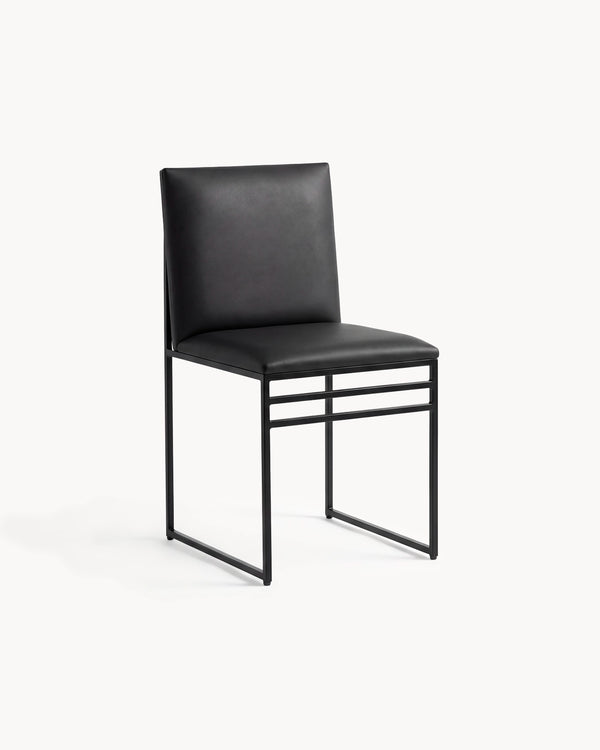
Elegant dining room featuring Sella dining chair in black leather with a modern wooden table setup.
Sella in Jade Black vegan leather at a dark oak Ann table.Sella Dining Chair · from €409

Leather dining chairs are one of the most searched upholstery choices, and the first question is usually which leather. Real leather, faux leather, leatherette, PU leather and vegan leather are sold side by side, often without saying what they are. This guide explains what vegan leather is made of, how it differs from real leather, how each wears, cleans and ages, which suits children and pets, and where we use it. We make no real leather furniture: our chairs, stools, armchairs and benches are upholstered in one vegan leather, and every figure here comes from its maker's data.

What is vegan leather?

A fabric with a leather-like surface that contains no animal hide: usually a layer of polyurethane (PU) or vinyl on a woven or knitted backing.

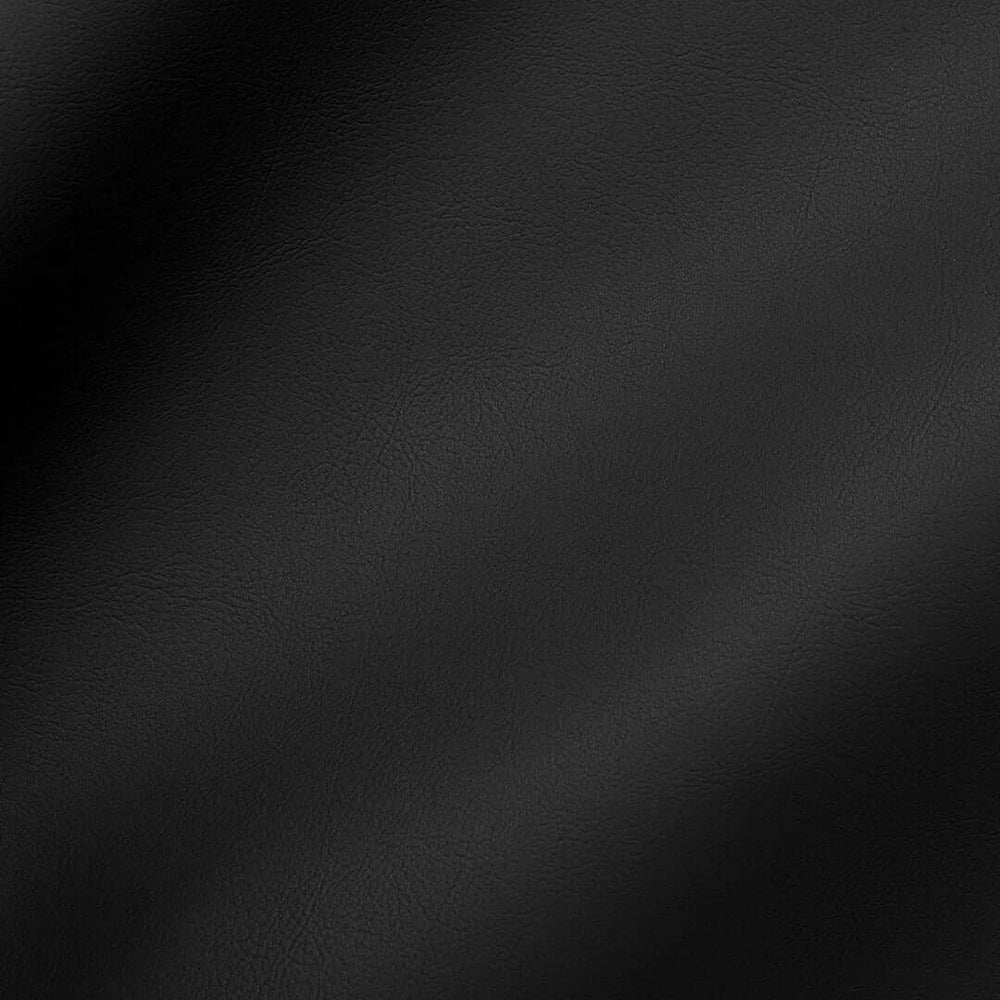
Close-up of the jade black vegan leather upholstery used on the Anton bench
Valencia vegan leather in Jade Black: a vinyl surface on a polyester backing.

Faux leather, leatherette, PU leather and synthetic leather are names for the same family; vegan leather is the name that says what it is not. Versions made partly from plant fibres exist too, but most vegan leather on furniture is a coated fabric.

Ours is Valencia from Spradling: a vinyl topcoat on a 100% polyester backing, 650 g/m², with the PERMABLOK3 protective finish. It is rated at 300,000 Martindale and meets EN 1021-1 and EN 1021-2, the European ignitability tests for upholstered seating (smouldering cigarette and match flame).
Is vegan leather real leather?

No: real leather is tanned animal hide, and vegan leather is a coated fabric made to look and feel like it.

The difference shows more over the years than on the first day. Real leather is a natural material that softens and changes colour with use; vegan leather keeps the surface it left the factory with.

Bonded leather is a third thing again: leather fibres bonded to a backing and coated, so it says leather on the label but behaves like a coated fabric, and its surface can peel with wear. The chart below compares real leather with our vegan leather point by point.

Real leather and our vegan leather compared
Real leatherOur vegan leather
What it isTanned animal hideVinyl surface on a polyester backing
Over the yearsSoftens, darkens and takes on a patinaKeeps its colour and surface; no patina
SpillsCan soak in unless the hide has a protective finishSit on the surface and wipe off
CareDamp cloth, and a leather conditioner from time to timeLukewarm water and mild soap; no conditioner
Wear ratingRarely given in Martindale300,000 Martindale
Animal hideYesNo

How does vegan leather wear compared with real leather?

A good vegan leather resists spills and rubbing and looks the same for years; real leather often marks more easily, but wears more gracefully, because scuffs become part of its patina.

On a dining chair the front of the seat, where you slide in and out, takes the most wear. Our Valencia vegan leather is rated at 300,000 Martindale, around ten times the 30,000 rubs usually specified for commercial seating, so everyday sitting does not wear through it.

The honest weak point of any coated fabric is a cut or a deep scratch: it cannot be polished out or re-dyed the way hide often can. That is why the seat is the part we make replaceable: seats and seat cushions for our dining chairs are sold separately. Our guide to replacing a dining chair seat explains how.

How do you clean vegan leather?

Wipe it with a soft cloth, lukewarm water and a little mild soap, then dry it with a clean cloth; it never needs conditioner, oil or wax.

Because the surface is sealed, most spills, from red wine to yoghurt, come off with water alone, even once they have dried. Avoid alcohol-based cleaners, solvents and abrasive sponges, which can dull the finish.

Real leather is cleaned in the same gentle way, but it usually also needs a conditioner now and then to stay supple, and a spill should be blotted before it soaks in. Our guide to cleaning upholstered dining chairs has the routine for every fabric we use.

How does vegan leather age?

It barely changes: the colour and grain stay as they were, where real leather darkens, softens and takes on a patina over the years.

Whether that is a strength depends on what you want. If you like a chair that looks lived-in, real leather does that by itself. If you want a set of chairs that still match each other after years of meals, a stable surface is the better choice.

Both do best away from radiators and out of strong sun all day. Vegan leather feels cool when you first sit down and warms to the touch. Our Valencia carries a 5-year fabric warranty from Spradling, on top of the 10-year warranty on our furniture.

Isabell Dining ChairIvory vegan leather · keeps its colour · from €319View Isabell

Which is better with children and pets?

Vegan leather, with children: spills sit on the surface and wipe off. With pets, both have limits, because no smooth surface is claw-proof.

Pet hair does not cling to a coated surface; it wipes straight off. Claws are another matter: a cat that kneads or a dog that jumps up can mark real leather and vegan leather alike.

If a cat or a dog uses the chairs every day, our Dolly bouclé is the fabric tested for it, to BS 8479, grade 4-5. Our guide to the best fabric for dining chairs compares all three of our fabrics, and what bouclé is explains how bouclé wears.

Which by Crea furniture comes in vegan leather?

Our steel dining chairs, our steel bar stools, both our armchairs and two of our benches; we make nothing in real leather.

Close-up of the latte vegan leather upholstery used on the Anton bench
Valencia vegan leather in Latte.

The chart below shows the models and colours. Order fabric samples to see the colours in your own light before you choose.

For the details per piece, see our bar stool upholstery guide, our guide to the best fabric for an armchair and our upholstered bench guide.

Our furniture in Valencia vegan leather
FurnitureModelsColours
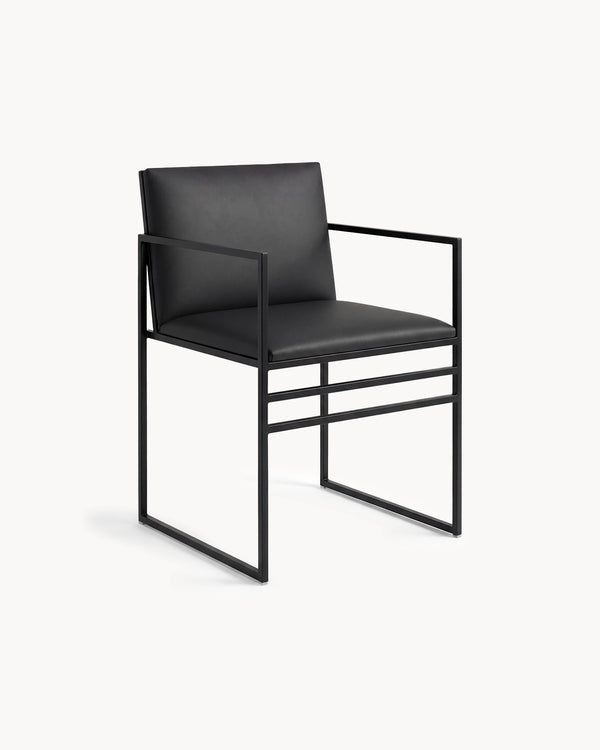
Dining chairsSella, Bella, IsabellJade Black, Ivory, Sand, Latte
Bar stoolsFreja, Philip, Bruno, SveaJade Black, Latte, Coffee Bean, Sand
ArmchairsKent, EinarJade Black; Ivory on Kent
BenchesWilma, Anton benchJade Black, Latte

Vegan or real leather in three points

Vegan leather
wipes clean and keeps its look.
Real leather
takes on a patina and needs conditioning.
Replaceable
seats, so wear never means a new chair.

Vegan leather is a coated fabric, not hide: it wipes clean, needs no conditioner and keeps its colour. Real leather softens and takes on a patina, but needs care and often marks more easily. On furniture used every day, we use vegan leather only, rated at 300,000 Martindale, and make the seat the replaceable part. Every by Crea piece is made in our own factory in Sweden, delivered fully assembled and covered by a 10-year warranty.

Frequently asked questions

What is vegan leather made of?

Usually a polyurethane (PU) or vinyl layer on a fabric backing. Ours, Valencia from Spradling, is a vinyl topcoat on a 100% polyester backing with an easy-clean protective finish.

Is vegan leather real leather?

No. It contains no animal hide. Faux leather, leatherette and PU leather are other names for the same kind of coated fabric.

Is vegan leather durable?

A good one is. Our Valencia vegan leather is rated at 300,000 Martindale, around ten times the 30,000 rubs usually specified for commercial seating, and carries a 5-year fabric warranty from its maker.

How do you clean vegan leather chairs?

Wipe them with lukewarm water, a little mild soap and a soft cloth, then dry. No conditioner is needed; avoid solvents and alcohol-based cleaners.

Does vegan leather peel?

Peeling is the classic problem of bonded leather and thin coatings. Ours is a heavy vinyl fabric, 650 g/m², rated at 300,000 Martindale and covered by a 5-year fabric warranty from Spradling. Keep it away from radiators.

Do you make real leather chairs?

No. We upholster in vegan leather, velvet and bouclé only. Vegan leather wipes clean and needs no conditioning, which suits chairs and stools used every day.

Bella Dining ChairFrom €319 Shop