Testing and Standards: How Our Bar Stools Are Tested

Short answer

Level 2
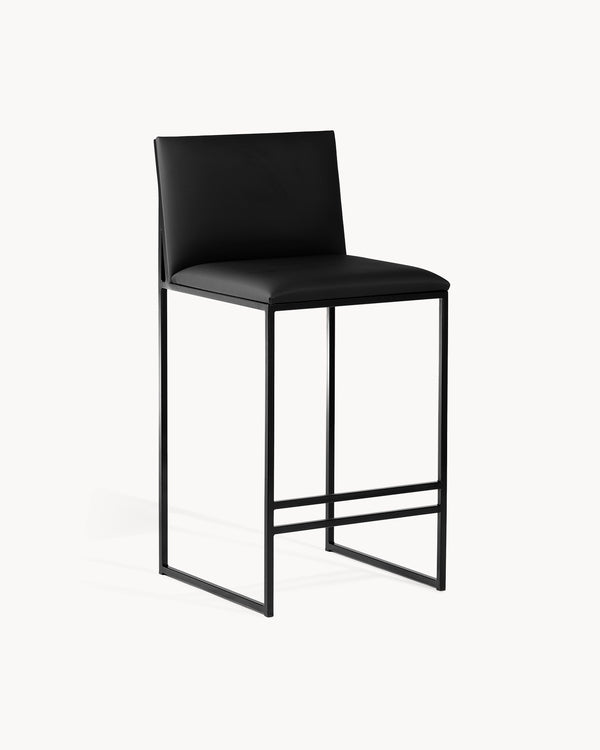
Bruno, EN 16139:2025, tested by RISE
Level 1
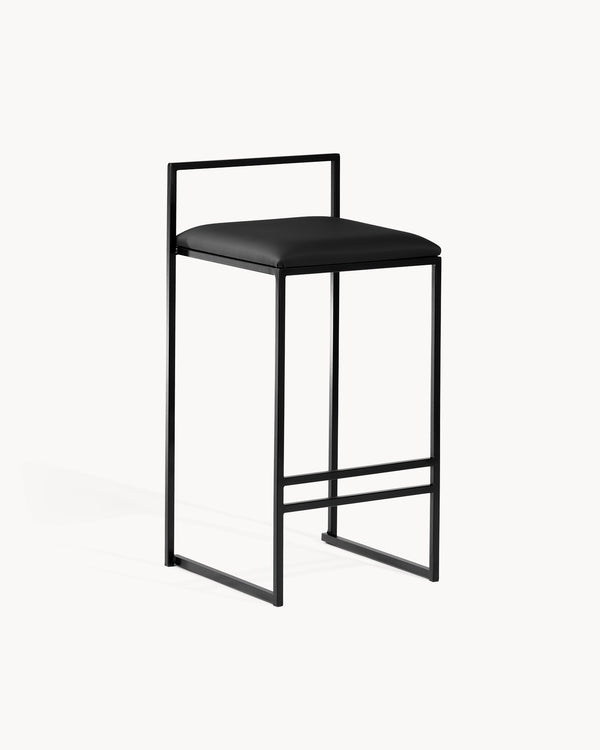
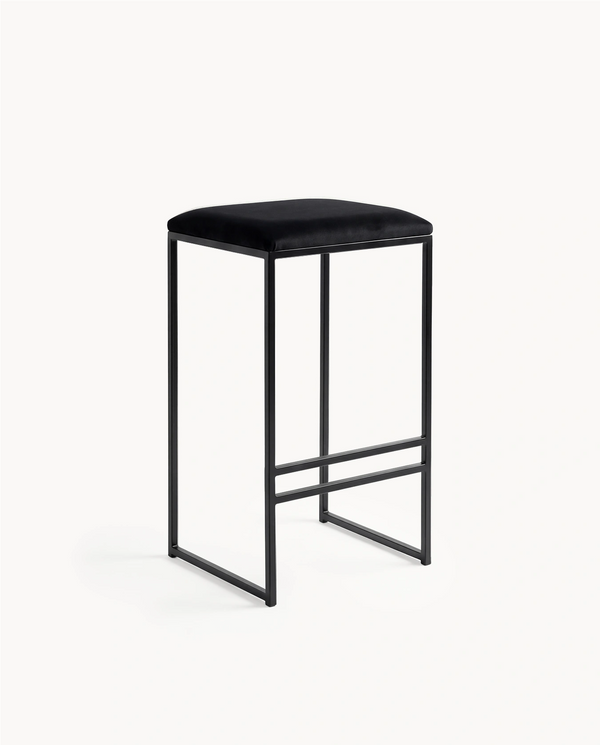
Philip tested; Freja and Svea assessed

RISE, the Research Institutes of Sweden, has tested and assessed our steel bar stools to EN 16139:2025, the European standard for the safety, strength and durability of non-domestic seating: Bruno to level 2, and Philip, Freja and Svea to level 1. Bruno's black powder coating also meets Möbelfakta category 2 for surface wear. Our oak stools have not been tested to EN 16139. The 200 kg load rating on every stool is our own rating, not a RISE result.

Part of the guide to Bar Stools

Close-up, black and white shot of hands in protective gloves performing TIG welding on metal pipes, with a bright arc illuminating the joint. Ideal for industrial manufacturing, fabrication, and precision welding content.
Bruno Bar Stool · from ¥148,300

This page is a reference, not a sales page. It sets out which by Crea bar stools have been tested, by whom, to which standard and at which level, with the number and date of every document, so that an architect, a buyer for a restaurant or a careful home owner can check each claim we make. It explains what EN 16139 levels 1 and 2 actually test, what the surface test on Bruno measured, what the data sheets for our three upholstery fabrics state about abrasion and fire, and how our own 200 kg load rating differs from a laboratory result. It also lists, plainly, what we have not tested. Every figure here comes from the RISE documents, the fabric suppliers' data sheets or our own product data; where a document does not say something, neither do we.

What is EN 16139?

EN 16139:2025 is the European standard for the safety, strength and durability of seating for non-domestic use.

It checks that a chair or stool has no sharp edges or finger traps, that it does not tip over, and that its seat, back, legs, footrest and armrests survive set loads applied first as a few heavy pushes and then as tens of thousands of repeated ones. Stability is tested to EN 1022 and strength and durability to the methods in EN 1728.

The standard has two test levels. Level 1 is general use: offices, showrooms, cafés, restaurants, canteens and bars. Level 2 is extreme use: places where seating is occasionally or repeatedly overloaded, such as night-clubs, transport terminals, sports changing rooms and police stations. A stool passes a level only if nothing fractures, no rigid joint loosens and it still works and stands stably after every test.
What do 1,600 N and 2,000 N mean?

They are the seat static loads for level 1 and level 2: a force pressed onto the seat 10 times.

1,600 N is roughly the weight of a 163 kg mass and 2,000 N of a 204 kg mass. They are short test forces that check the frame does not break or bend; they are not a statement of how heavy a person may be.

Level 2 raises the loads and cycles across the strength and durability tests, not only on the seat. The table compares the main strength and durability tests at each level, taken from the RISE reports on Philip (level 1) and Bruno (level 2).

Main EN 16139:2025 strength and durability tests, level 1 and level 2
TestLevel 1Level 2
Seat static load, 10 times1,600 N2,000 N
Back static load, 10 times560 N700 N
Seat and back durability100,000 cycles200,000 cycles
Seat front edge durability40,000 cycles80,000 cycles
Footrest static load, 10 times1,300 N1,600 N
Footrest durability30,000 cycles60,000 cycles
Seat impact, drop height24 cm30 cm

Which by Crea bar stools are tested to EN 16139?

Our four steel bar stools: Bruno at level 2, and Philip, Freja and Svea at level 1.

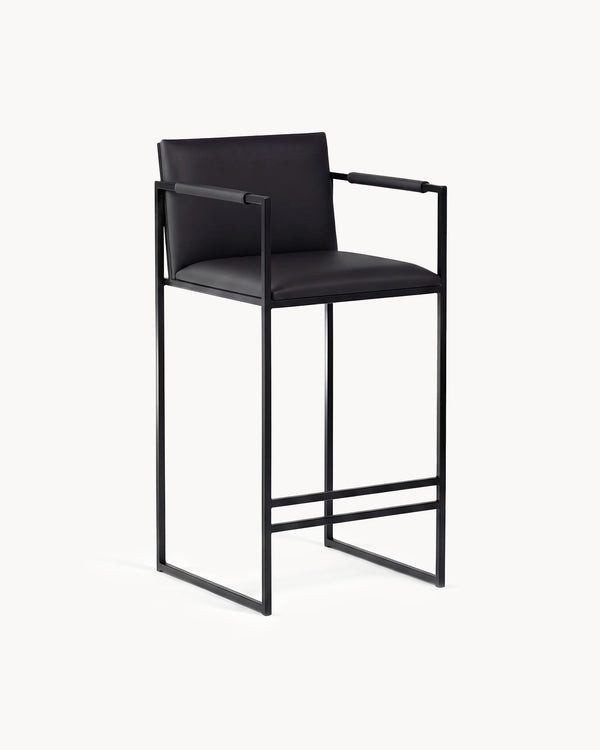
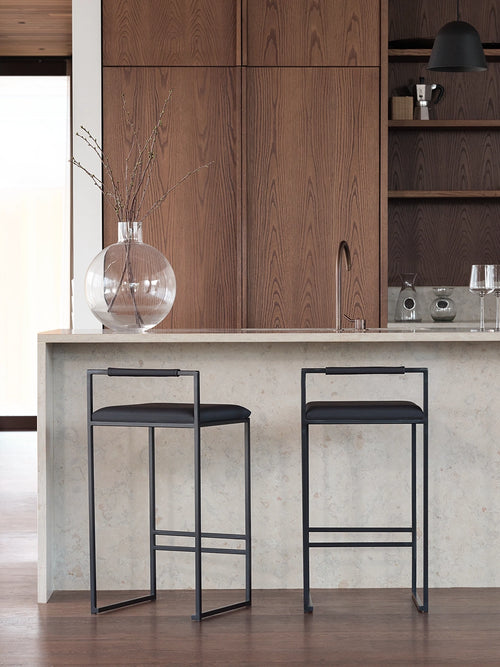
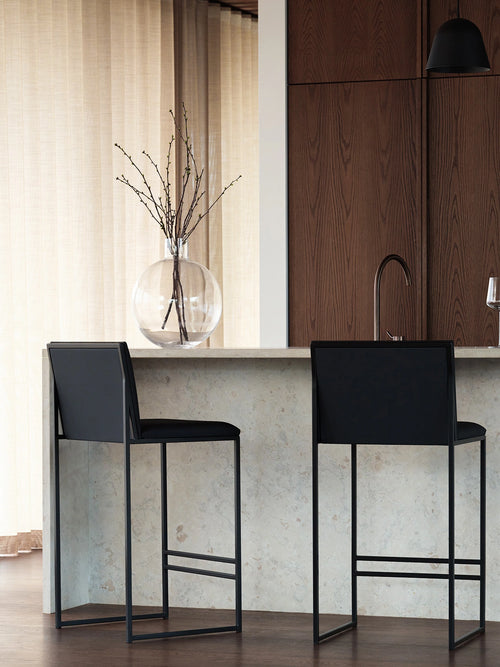
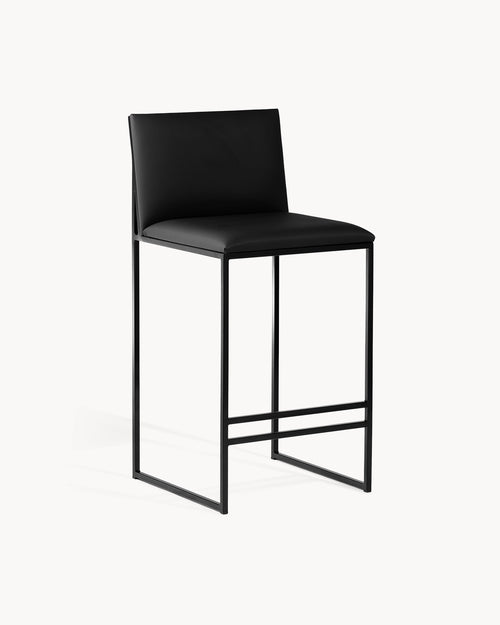
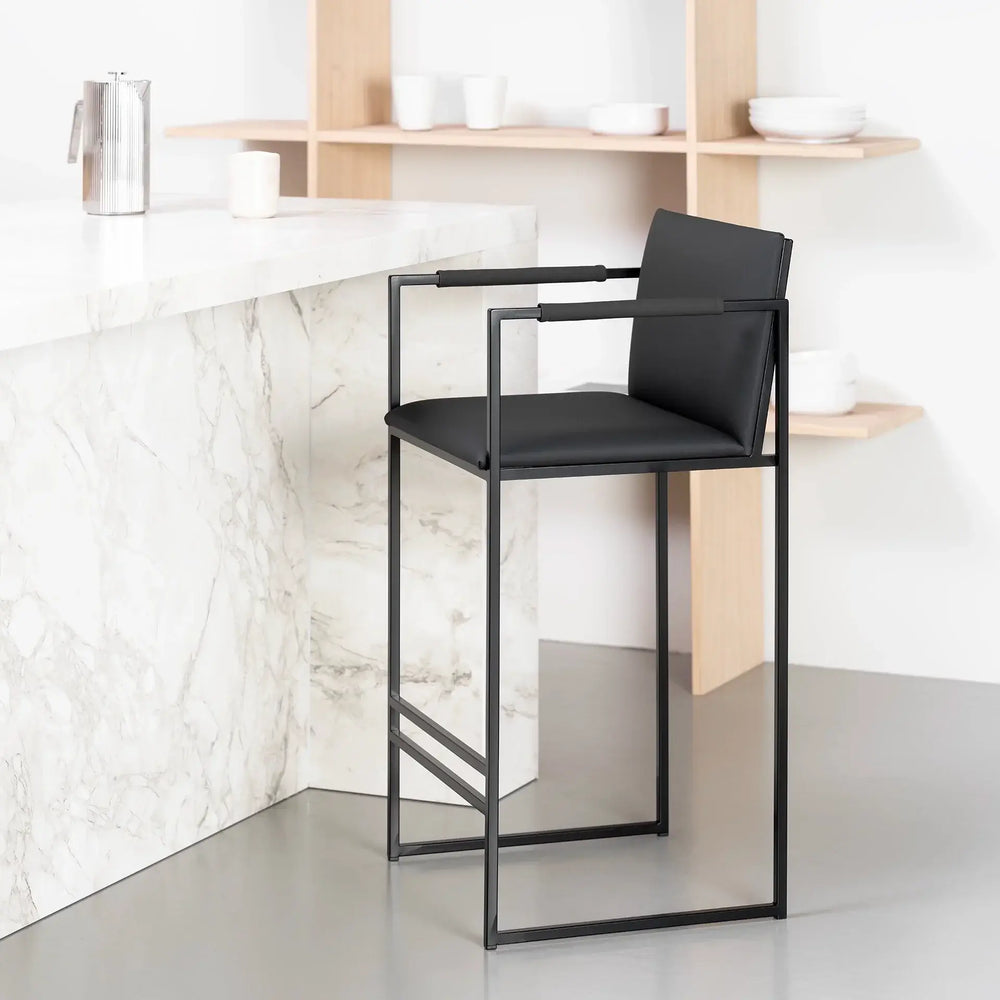
Bar Stool Bruno – Black – Jade Black Leather with sleek design and black armrests in modern kitchen setting.
Bruno is tested by RISE to EN 16139:2025 level 2.

RISE tested a Bruno and a Philip, each with a seat of about 76 cm, and both passed at the level stated. It then issued two assessments. Assessment 1365977D confirms Bruno at level 2. Assessment 1365975C confirms Philip at level 1 and extends that result to Freja and Svea, on the basis of the Philip test and a stability test of our Isabell chair; Freja and Svea were assessed, not tested as separate samples.

Bruno was too tall for the test machine used for armrest durability, so that one test was run on our Sella armchair, which has the same armrest construction (report 1365977C). The table lists every document by number and date.

EN 16139:2025 results by model, with RISE document numbers
ModelEN 16139:2025RISE documentsDate
Bruno Level 2, testedTest report 1365977A; armrest report 1365977C; assessment 1365977D24 July 2026
Philip Level 1, testedTest report 1365975A; assessment 1365975C24 July 2026
Freja Level 1, assessedAssessment 1365975C, based on 1365975A and 1365975B24 July 2026
Svea Level 1, assessedAssessment 1365975C, based on 1365975A and 1365975B24 July 2026
Eva Not tested to EN 16139NoneNo report
Ebba Not tested to EN 16139NoneNo report
Ted Not tested to EN 16139NoneNo report
Carl Not tested to EN 16139NoneNo report

How is the finish tested for wear?

Bruno's black powder-coated frame was tested by RISE against the Möbelfakta requirements for surface wear, category 2, and passed (report 1366016A, 24 July 2026).

Bruno's black powder coating met Möbelfakta category 2 for surface wear.

Liquids and synthetic sweat were left on the surface to EN 12720 and rated from 5, no visible change, down to 1; Möbelfakta requires at least 4. A scratch test to SS 839122 allows a scratch no wider than 0.5 mm and no penetration of the coating.

Every liquid test scored 5, the best rating, and the scratch stayed under 0.5 mm. Our other steel stools are powder-coated in the same black, RAL 9005, but only Bruno's frame was tested. Read more about the finish in our guide to powder-coated steel.

Surface wear, Bruno, black powder coating (RISE 1366016A)
TestMethodResult
Water, 16 hoursEN 127205 of 5, pass
Paraffin oil, 24 hoursEN 127205 of 5, pass
Synthetic sweat, acid, 1 hour (armrests)EN 127205 of 5, pass
Synthetic sweat, basic, 1 hour (armrests)EN 127205 of 5, pass
Scratch, 3 NSS 839122Under 0.5 mm, pass

How is the upholstery tested?

Each fabric is tested by its maker, and the results are stated on its data sheet; the table repeats them as written.

Abrasion is measured with the Martindale method of EN ISO 12947: the number of rubbing cycles before the fabric shows wear. Fire tests are listed exactly as each data sheet lists them, including where a result needs an optional treatment.

Our velvet and bouclé are certified to OEKO-TEX Standard 100, and our bouclé is tested for resistance to pet claws to BS 8479, grade 4-5, category G. These are tests of the fabric, not of a finished stool. Our upholstery guide compares the fabrics in daily use.

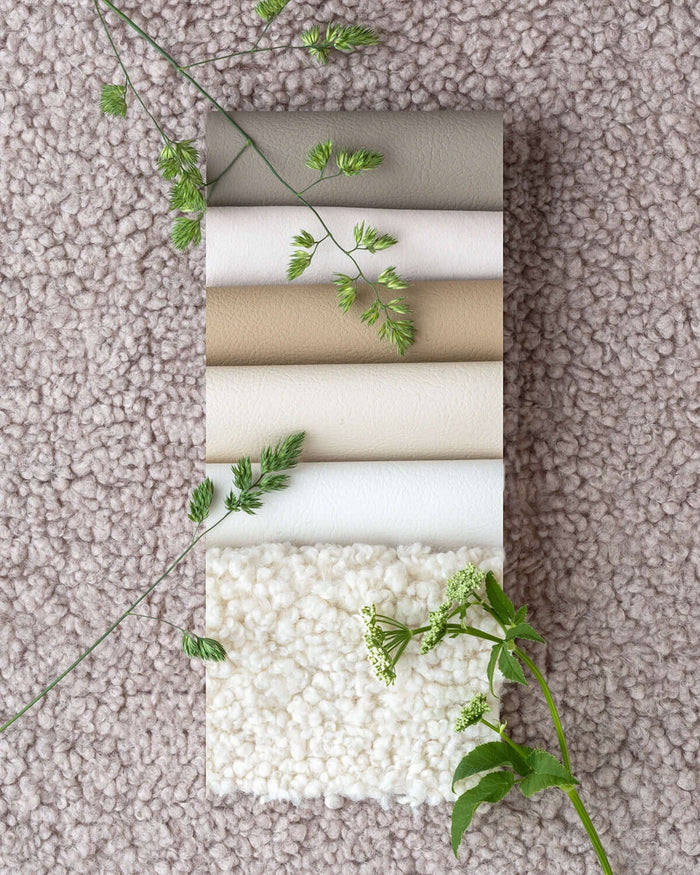
Close-up of the by Crea fabric chart with the upholstery swatches
Each fabric's abrasion and fire results come from its maker's data sheet.
Our upholstery fabrics: abrasion and fire tests as stated on the data sheets
FabricMartindaleFire tests on the data sheetOther
Vegan leather (Valencia, Spradling)Over 300,000 cyclesEN 1021 parts 1 and 2; NF P 92-503 M2; DIN 4102 B2; FMVSS 302PERMABLOK3 finish; 5-year fabric warranty from Spradling
Velvet (Matteo)130,000 cyclesPass: EN 1021-1; BS 5852 Part 1 ignition source 0 (cigarette); CAL TB 117. With optional flame-retardant treatment only: EN 1021-2 (match); BS 5852 ignition source 1OEKO-TEX Standard 100; water-repellent
Bouclé (Dolly)50,000 cyclesNone statedOEKO-TEX Standard 100; BS 8479 pet test, grade 4-5, category G

What does our 200 kg load rating mean?

It is our own rating: we rate every by Crea bar stool, steel and oak, for 200 kg in normal use.

It is not a RISE result. The RISE reports record test forces and cycles; they do not state a maximum user weight. The 200 kg figure is ours, and it applies equally to our oak stools, which have not been tested to EN 16139.

We stand behind it with our 10-year warranty against manufacturing defects in materials and workmanship. Normal use means sitting, leaning on the backrest and using the footrest; standing on the seat or rocking on two legs is outside any rating. Our guide to bar stool weight capacity explains load ratings in more depth.

What are the stools made from, and how are they checked?

Steel frames are made from Swedish precision steel tube to EN 10305-5, and oak frames from solid European oak bought as FSC-certified timber; everything else happens in our own factory in Malmö.

Every stool is checked in Malmö before it is packed fully assembled.

The FSC certification belongs to the oak timber we buy; we do not claim FSC certification for the finished stool. Seats are built on a beech plywood core with cold-cure foam at 55 kg/m³ and upholstered by hand.

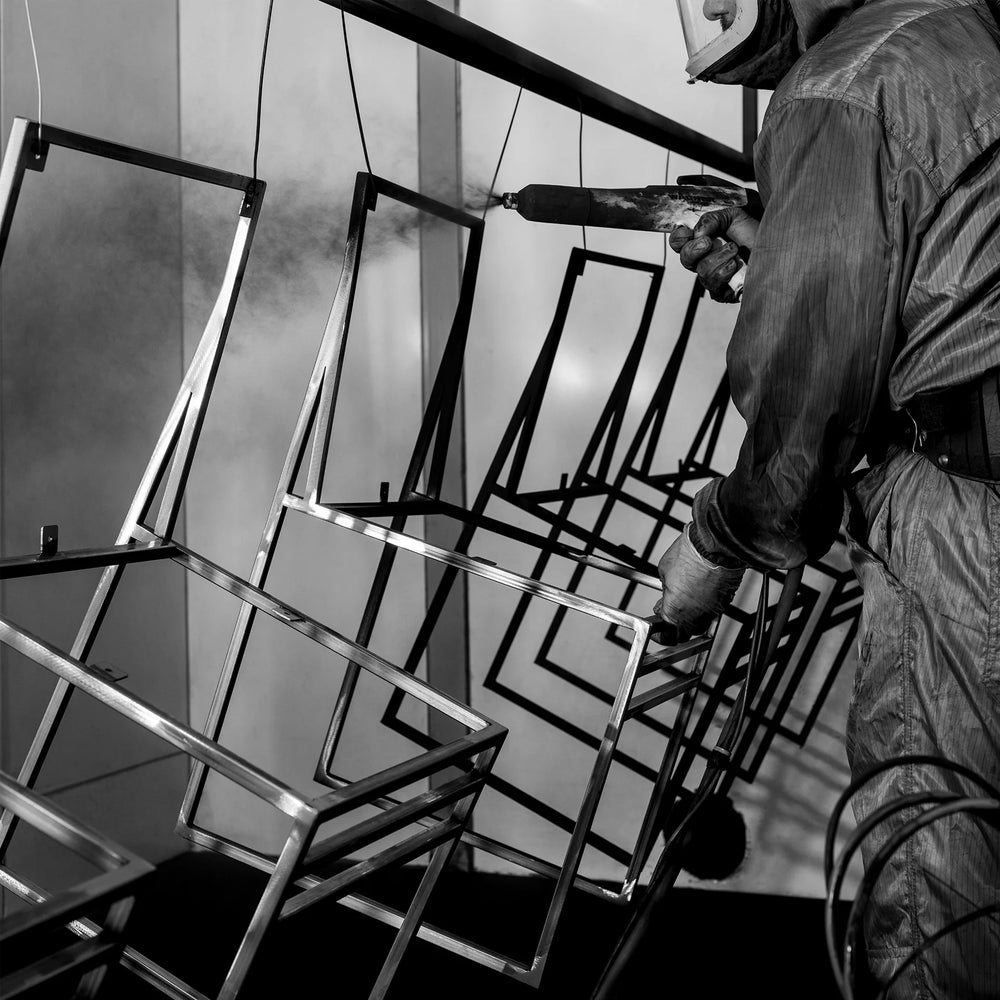
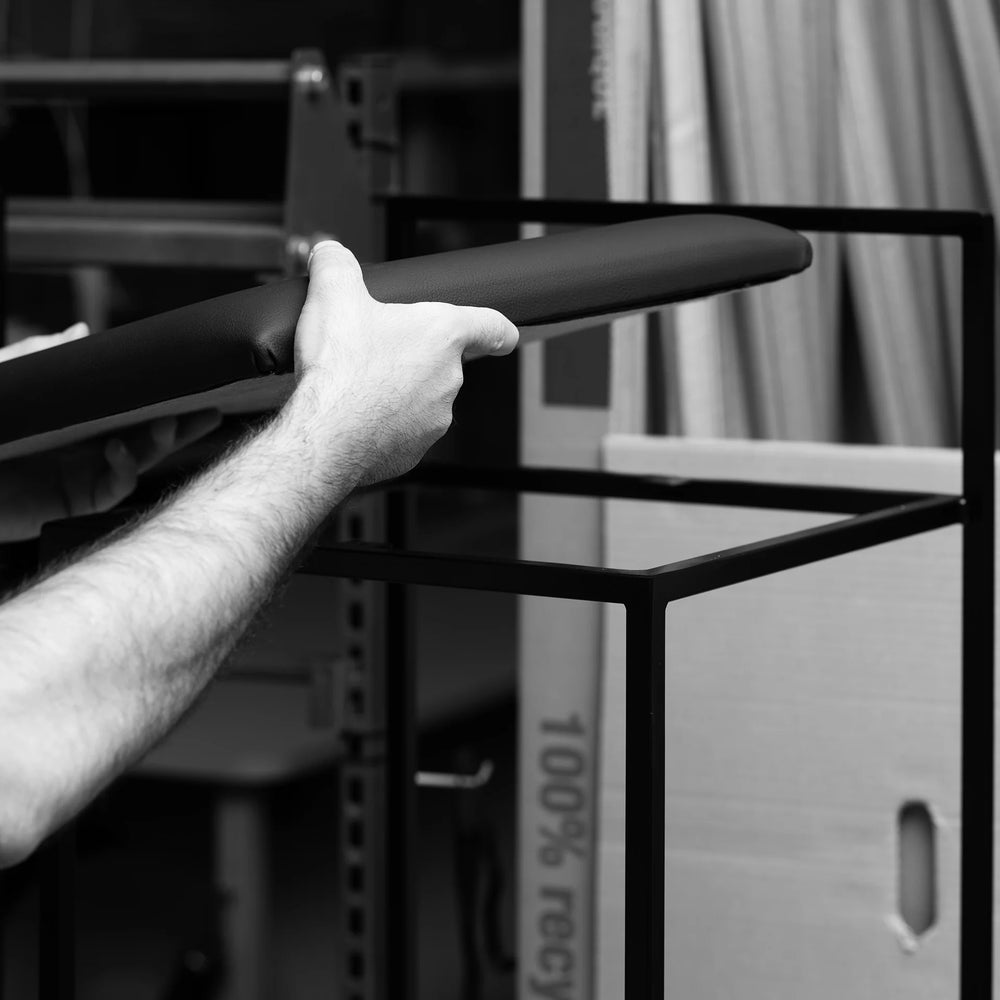
Steel is cut, bent, welded, ground and powder-coated; oak is machined, joined, glued, sanded and lacquered. Every stool is assembled, checked and packed in the factory: we check that it stands level, that joints and welds are clean, that the finish is even and undamaged and that the upholstery is tight. A stool that does not pass is corrected before it is packed, and it is delivered fully assembled. See how our bar stools are made, steel bar stools and oak bar stools.

What have we not tested?

Several things, and we would rather say so than let a test on one stool speak for another.

Our oak stools, Eva, Ebba, Ted and Carl, have not been tested to EN 16139. Freja and Svea were assessed by RISE, not tested as separate samples. Philip meets level 1, not level 2. Only Bruno has been tested for surface wear. RISE's results apply only to the samples it tested, which had a seat of about 76 cm; the 66 cm versions and custom heights have not been tested separately. RISE did not assess the information for use, such as care instructions.

The fabric figures are the suppliers' tests of the fabric, not fire tests of a complete stool. Our bouclé has no fire test on its data sheet, our velvet meets EN 1021-2 only with an optional treatment, and none of our fabrics is supplied to BS 5852 Crib 5 as standard. For contract projects with these requirements, see commercial bar stools.

How can I get the test documents?

Email info@by-crea.com and tell us which model and which document you need; we send the complete document.

RISE documents may not be reproduced other than in full without written approval from RISE, so we do not publish extracts, and we ask you not to share parts of them either.

RISE issues test reports and assessments, not certificates. The test reports come from RISE as an accredited testing laboratory under ISO/IEC 17025, accreditation number 1002. The fabric data sheets come from the fabric makers, and we can send those on request too.

Testing and standards in brief

EN 16139
Steel stools tested or assessed by RISE; oak not tested.
Category 2
Möbelfakta surface wear, Bruno powder coating.
200 kg
Our own load rating, not a RISE result.

Bruno is tested by RISE to EN 16139:2025 level 2 and its powder coating to Möbelfakta category 2; Philip is tested to level 1, and Freja and Svea are assessed to level 1 on the basis of that test. Our oak stools are not tested to EN 16139. Our fabrics carry the abrasion and fire results stated on their makers' data sheets. The 200 kg load rating on every stool is our own rating, backed by a 10-year warranty, and every stool is made and checked in our own factory in Malmö, Sweden. For the full documents, email info@by-crea.com.

Frequently asked questions

Are by Crea bar stools tested?

Our steel stools are. RISE tested Bruno to EN 16139:2025 level 2 and Philip to level 1, and assessed Freja and Svea to level 1. Our oak stools, Eva, Ebba, Ted and Carl, have not been tested to EN 16139.

What does EN 16139 level 2 mean?

Level 2 is for extreme use, such as night-clubs and transport terminals. It uses higher loads and twice the durability cycles of level 1, for example 2,000 N instead of 1,600 N on the seat and 200,000 seat and back cycles instead of 100,000.

Does Philip meet EN 16139 level 2?

No. Philip is tested by RISE to level 1, for general use such as cafés, restaurants and bars (report 1365975A, assessment 1365975C). Bruno is the stool we offer at level 2.

Are your oak bar stools tested?

Not to EN 16139. Eva, Ebba, Ted and Carl carry our own 200 kg load rating and our 10-year warranty, but no RISE test report.

Is the 200 kg load rating tested by RISE?

No. 200 kg is our own rating for every stool. RISE tested to the fixed forces and cycles of EN 16139, and its reports do not state a maximum user weight.

Can I get the test reports?

Yes. Email info@by-crea.com with the model and the document you need. RISE documents may only be reproduced in full, so we send the complete document.

Bruno Bar StoolFrom ¥148,300 Shop