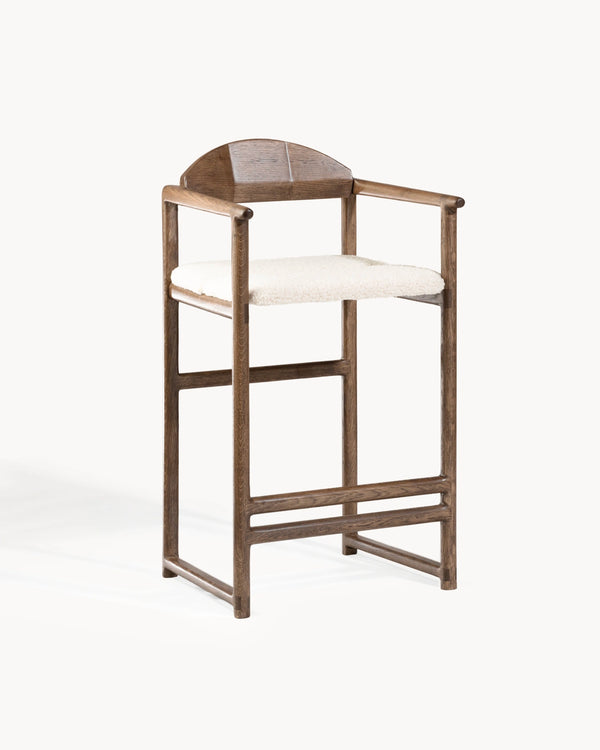
Oak Bar Stools for Modern Kitchens: Materials, Style, and Daily Use
Solid oak bar stools work in modern kitchens because the material sits between warmth and restraint: it brings natural texture without the visual weight of painted wood or the coldness of metal. In kitchens with stone, concrete, or white surfaces, an oak stool introduces organic tone without disrupting the clean lines.
The structural properties of solid oak also suit daily kitchen use. It does not deform under load, resists surface damage better than veneered alternatives, and develops a natural patina over time rather than degrading. FSC-certified oak confirms sustainable sourcing.
Browse solid oak bar stools from the by Crea range, or explore the full bar stool collection.
Solid oak bar stools work in modern kitchens because the material sits between warmth and restraint: it brings natural texture without the visual weight of painted wood or the coldness of metal. In kitchens with stone, concrete, or white surfaces, an oak stool introduces organic tone without disrupting the clean lines.
The structural properties of solid oak also suit daily kitchen use. It does not deform under load, resists surface damage better than veneered alternatives, and develops a natural patina over time rather than degrading. FSC-certified oak confirms sustainable sourcing.
Browse solid oak bar stools from the by Crea range, or explore the full bar stool collection.
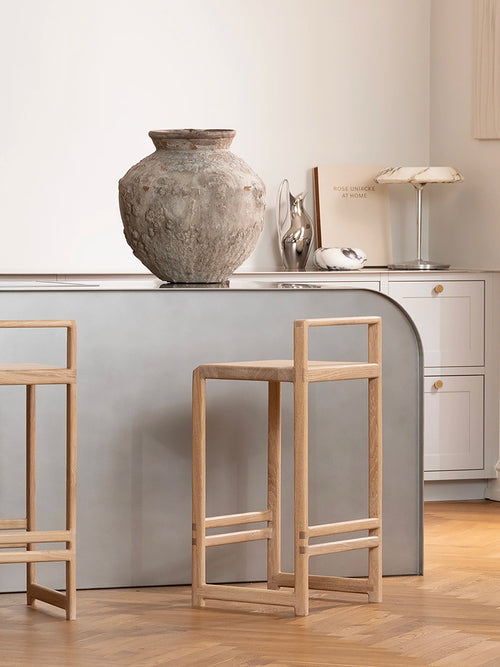
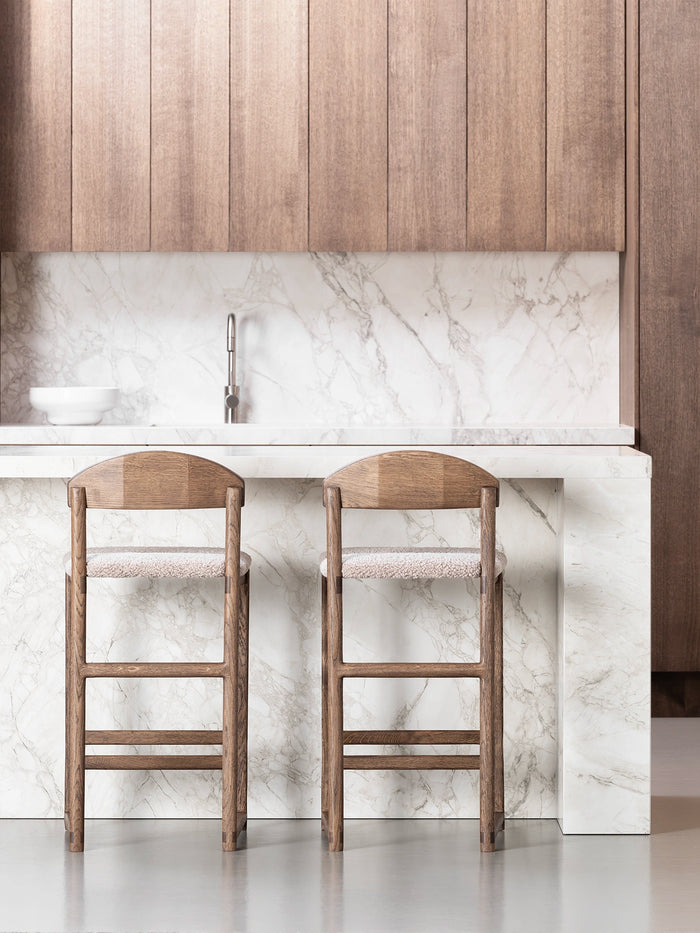
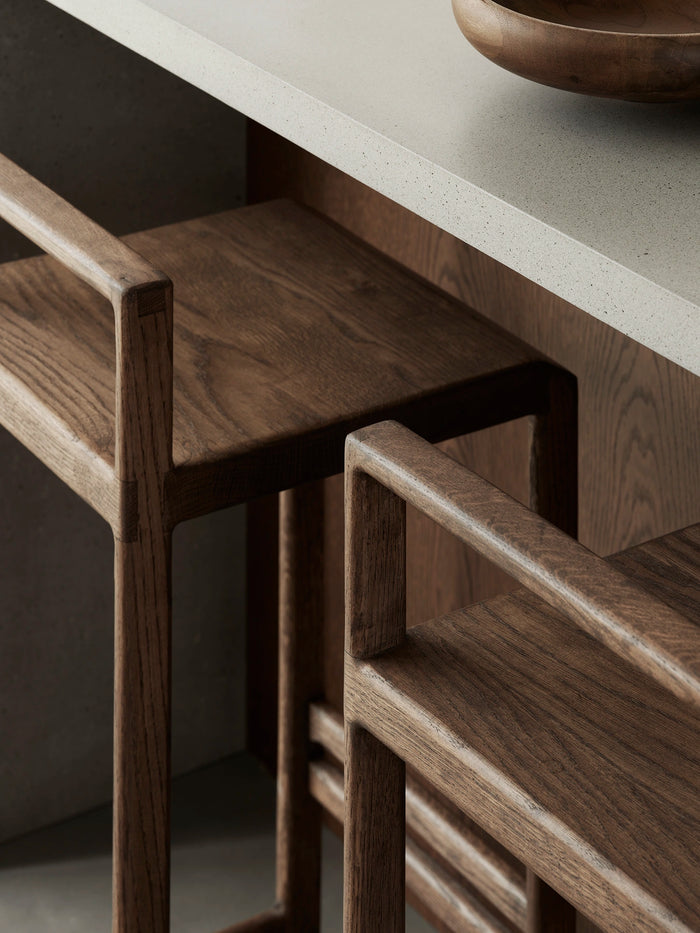
Ebba solid oak bar stool at a pale kitchen island showing the natural grain and warm tone of FSC-certified oak against a clean white kitchen.
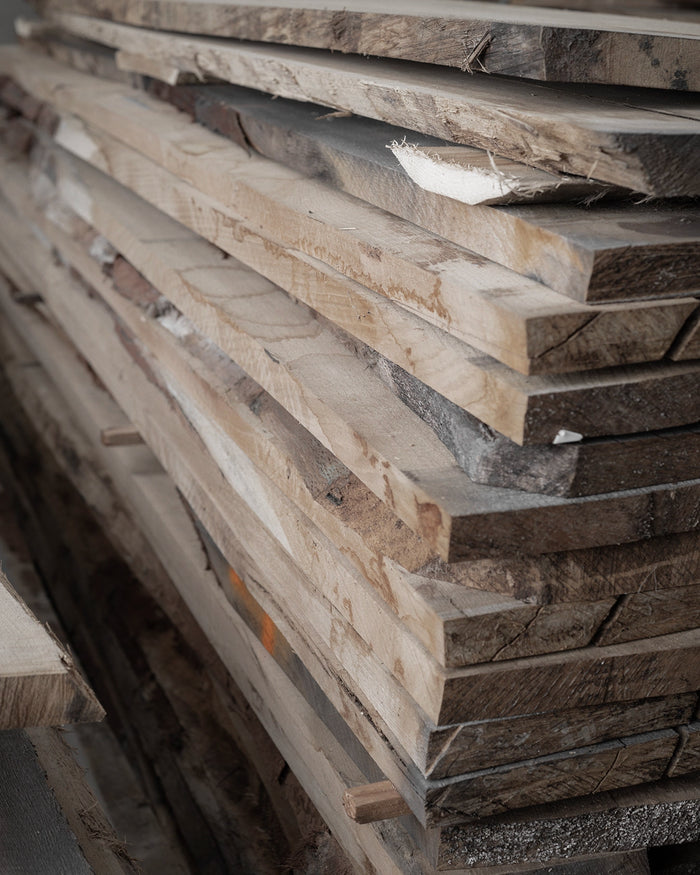
Ebba bar stool close-up showing the solid oak seat surface grain and natural edge detail that characterises genuine solid timber versus veneered alternatives.
What Makes Solid Oak a Good Material for Bar Stools?
Quick reference: solid oak structural properties
Density: approximately 720 kg/m³
Janka hardness: approximately 1,260 lbf — scratch and dent resistant
Common finishes: natural oil, white-pigmented oil, lacquer
Expected lifespan with maintenance: 20–40 years under daily kitchen use
Solid oak has three properties that make it well suited to bar stool construction: structural density, surface hardness, and dimensional stability. At roughly 720 kg per cubic metre, oak is dense enough to provide a solid base for everyday seating without excessive weight in the final piece. The surface hardness, rated at approximately 1,260 lbf on the Janka scale, resists minor scratches and dents from kitchen daily use.
Dimensional stability means the timber does not warp, split, or move significantly in response to normal indoor humidity changes. This matters for furniture that is moved, pushed, and scraped along kitchen floors multiple times per day. A well-constructed solid oak stool maintains its joint integrity for decades under this kind of regular use.
Quick reference: solid oak structural properties
Density: approximately 720 kg/m³
Janka hardness: approximately 1,260 lbf — scratch and dent resistant
Common finishes: natural oil, white-pigmented oil, lacquer
Expected lifespan with maintenance: 20–40 years under daily kitchen use
Solid oak has three properties that make it well suited to bar stool construction: structural density, surface hardness, and dimensional stability. At roughly 720 kg per cubic metre, oak is dense enough to provide a solid base for everyday seating without excessive weight in the final piece. The surface hardness, rated at approximately 1,260 lbf on the Janka scale, resists minor scratches and dents from kitchen daily use.
Dimensional stability means the timber does not warp, split, or move significantly in response to normal indoor humidity changes. This matters for furniture that is moved, pushed, and scraped along kitchen floors multiple times per day. A well-constructed solid oak stool maintains its joint integrity for decades under this kind of regular use.
How Does Solid Oak Behave and Age Over Time?
Solid oak does not degrade structurally over time under normal indoor conditions. The seat surface remains consistent year after year without compression or sagging. This contrasts with veneered furniture, where the thin surface layer can chip or lift at edges after sustained use, and with foam-filled upholstery, which compresses and loses support density over three to five years.
Oak also develops a patina: the surface colour deepens and warms over time, particularly in areas of regular contact. This is not a sign of wear. It is the natural behaviour of the material and is considered an aesthetic improvement in Scandinavian furniture tradition. A well-used oak stool looks more characterful after five years than it does on day one.
Solid oak does not degrade structurally over time under normal indoor conditions. The seat surface remains consistent year after year without compression or sagging. This contrasts with veneered furniture, where the thin surface layer can chip or lift at edges after sustained use, and with foam-filled upholstery, which compresses and loses support density over three to five years.
Oak also develops a patina: the surface colour deepens and warms over time, particularly in areas of regular contact. This is not a sign of wear. It is the natural behaviour of the material and is considered an aesthetic improvement in Scandinavian furniture tradition. A well-used oak stool looks more characterful after five years than it does on day one.
Ebba oak bar stools in a modern kitchen with white cabinetry showing how natural oak introduces warmth without disrupting clean contemporary lines.
How Do Oak Bar Stools Work in a Modern Kitchen?
In contemporary kitchens with stone counters, polished concrete floors, or flat-front cabinetry, oak stools introduce a material contrast that prevents the space from feeling clinical. The grain and natural variation of oak creates visual interest at a surface level without introducing pattern or colour that competes with the kitchen architecture.
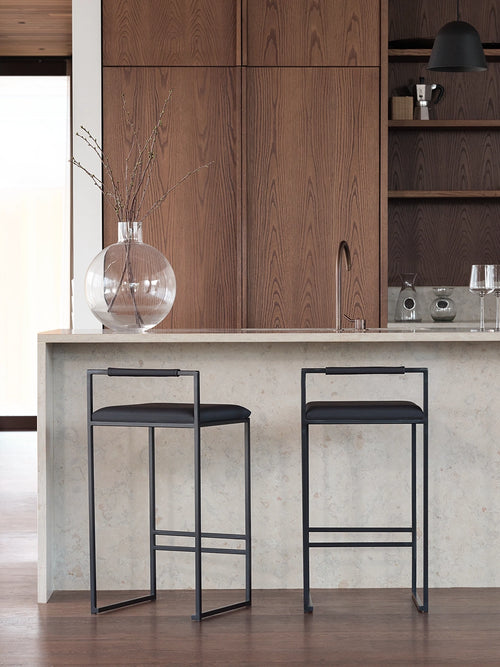
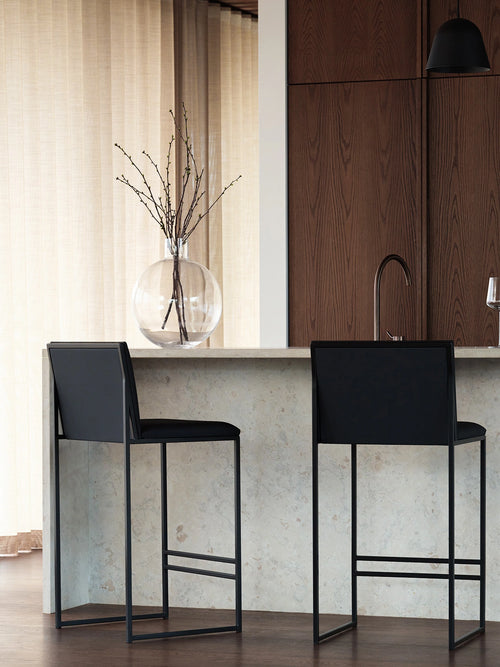
The key principle is material dialogue: a white handleless kitchen with a quartz counter benefits from the warmth of oak at the island. An industrial kitchen with exposed concrete needs the softness of natural wood grain. A timber-heavy kitchen risks a monolithic feel, which a steel-framed stool with an oak seat, like the by Crea Carl, resolves by introducing a contrasting structural material.
In contemporary kitchens with stone counters, polished concrete floors, or flat-front cabinetry, oak stools introduce a material contrast that prevents the space from feeling clinical. The grain and natural variation of oak creates visual interest at a surface level without introducing pattern or colour that competes with the kitchen architecture.
The key principle is material dialogue: a white handleless kitchen with a quartz counter benefits from the warmth of oak at the island. An industrial kitchen with exposed concrete needs the softness of natural wood grain. A timber-heavy kitchen risks a monolithic feel, which a steel-framed stool with an oak seat, like the by Crea Carl, resolves by introducing a contrasting structural material.
How Do You Match Oak Stools to Different Kitchen Colours?
Pale oak tones suit white, grey, and sage green kitchen cabinets well. The light, warm grain complements soft kitchen colour palettes without competing. Dark oak or oiled oak with deeper amber tones works in kitchens with navy, charcoal, or dark walnut cabinetry, where a pale oak would look out of place.
With black kitchens, natural pale oak creates high contrast at the island, making the seating the warmest element in the space. With terracotta or clay tones, oak and the wall colour share a warm undertone that creates a cohesive palette. The only pairing that requires care is oak stools in kitchens with a strong yellow-toned warm wood: the similarity can flatten the contrast and make the kitchen feel one-dimensional.
Pale oak tones suit white, grey, and sage green kitchen cabinets well. The light, warm grain complements soft kitchen colour palettes without competing. Dark oak or oiled oak with deeper amber tones works in kitchens with navy, charcoal, or dark walnut cabinetry, where a pale oak would look out of place.
With black kitchens, natural pale oak creates high contrast at the island, making the seating the warmest element in the space. With terracotta or clay tones, oak and the wall colour share a warm undertone that creates a cohesive palette. The only pairing that requires care is oak stools in kitchens with a strong yellow-toned warm wood: the similarity can flatten the contrast and make the kitchen feel one-dimensional.
Solid Oak vs Steel: Which Performs Better in a Kitchen?
Solid oak and steel each have strengths in a kitchen context. Oak provides warmth, natural variation, and an aesthetic that improves with age. Steel offers precision in form, consistent colour across production, and frame profiles that can be made significantly thinner than wood at equivalent structural strength.
In terms of durability, both materials perform well over a decade of daily kitchen use when the construction quality is high. Powder-coated steel is marginally easier to wipe down than an oiled oak surface, but solid oak with a natural oil finish is straightforward to maintain. For households that want the warmth of wood, solid oak outperforms steel aesthetically over time. For those who prefer minimal, thin-profile furniture, steel frames achieve proportions that wood structurally cannot.
Solid oak and steel each have strengths in a kitchen context. Oak provides warmth, natural variation, and an aesthetic that improves with age. Steel offers precision in form, consistent colour across production, and frame profiles that can be made significantly thinner than wood at equivalent structural strength.
In terms of durability, both materials perform well over a decade of daily kitchen use when the construction quality is high. Powder-coated steel is marginally easier to wipe down than an oiled oak surface, but solid oak with a natural oil finish is straightforward to maintain. For households that want the warmth of wood, solid oak outperforms steel aesthetically over time. For those who prefer minimal, thin-profile furniture, steel frames achieve proportions that wood structurally cannot.
Ebba bar stool being wiped with a damp cloth showing the easy-care maintenance of a naturally oiled solid oak seat surface.
How Do You Care for Solid Oak Bar Stools?
Solid oak bar stools require occasional care to maintain their surface finish. For stools finished with a natural oil or wax, re-oiling once every 12-24 months keeps the surface conditioned and resistant to moisture absorption. A small amount of furniture oil applied with a cloth and buffed in is sufficient.
For daily cleaning, a damp cloth is adequate for most spills. Avoid leaving water standing on the surface for extended periods, as this can raise the grain slightly. For deeper cleaning, a mild soap solution followed by a dry wipe is appropriate. Avoid abrasive cleaners on the oak surface. Minor scratches can be lightly sanded with fine-grain sandpaper and re-oiled to blend the repair.
Solid oak bar stools require occasional care to maintain their surface finish. For stools finished with a natural oil or wax, re-oiling once every 12-24 months keeps the surface conditioned and resistant to moisture absorption. A small amount of furniture oil applied with a cloth and buffed in is sufficient.
For daily cleaning, a damp cloth is adequate for most spills. Avoid leaving water standing on the surface for extended periods, as this can raise the grain slightly. For deeper cleaning, a mild soap solution followed by a dry wipe is appropriate. Avoid abrasive cleaners on the oak surface. Minor scratches can be lightly sanded with fine-grain sandpaper and re-oiled to blend the repair.
Why FSC Certification Matters for Solid Oak Furniture
FSC certification, from the Forest Stewardship Council, confirms that the timber used in a piece of furniture comes from forests managed to environmental, social, and economic standards. For a buyer, it provides documented assurance that the wood was not sourced from illegal logging or unsustainable practices.
By Crea uses FSC-certified oak across its wooden bar stool range, including the Ebba, Carl, Eva, and Ted stools. This is not a marketing claim: it is a third-party verified standard. For buyers who consider material provenance part of the purchase decision, FSC certification makes the sourcing of the furniture traceable and verifiable.
FSC certification, from the Forest Stewardship Council, confirms that the timber used in a piece of furniture comes from forests managed to environmental, social, and economic standards. For a buyer, it provides documented assurance that the wood was not sourced from illegal logging or unsustainable practices.
By Crea uses FSC-certified oak across its wooden bar stool range, including the Ebba, Carl, Eva, and Ted stools. This is not a marketing claim: it is a third-party verified standard. For buyers who consider material provenance part of the purchase decision, FSC certification makes the sourcing of the furniture traceable and verifiable.
What to Check When Buying Solid Oak Bar Stools
When assessing a solid oak stool, check that the seat is made from solid timber, not MDF or particleboard with an oak veneer. Solid timber has continuous grain visible on the seat edge. Veneered boards show a thin surface layer on the edge with a different material core.
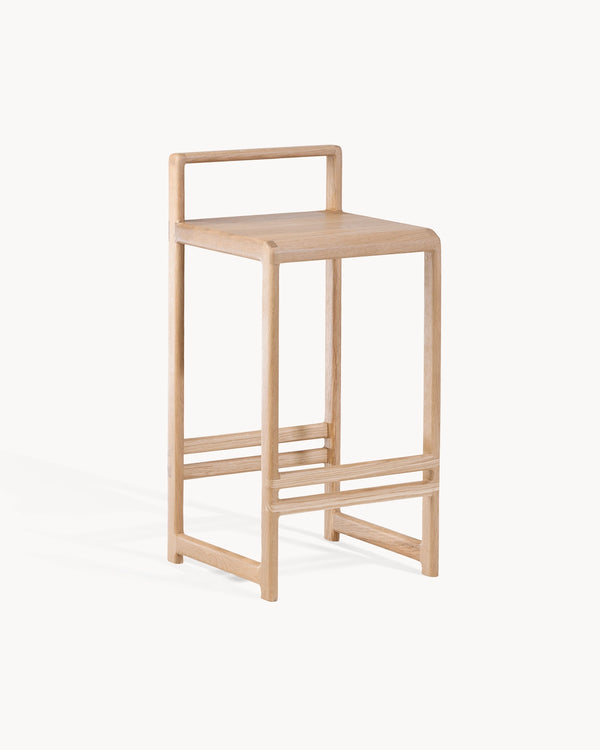
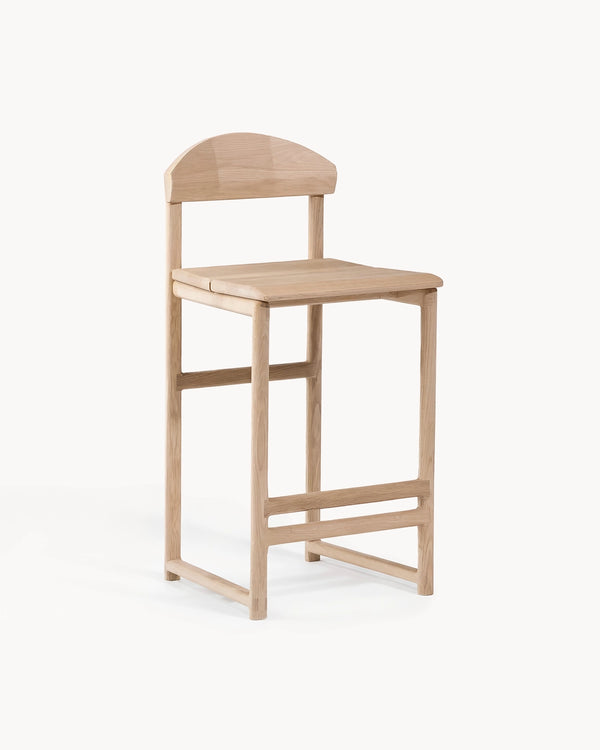
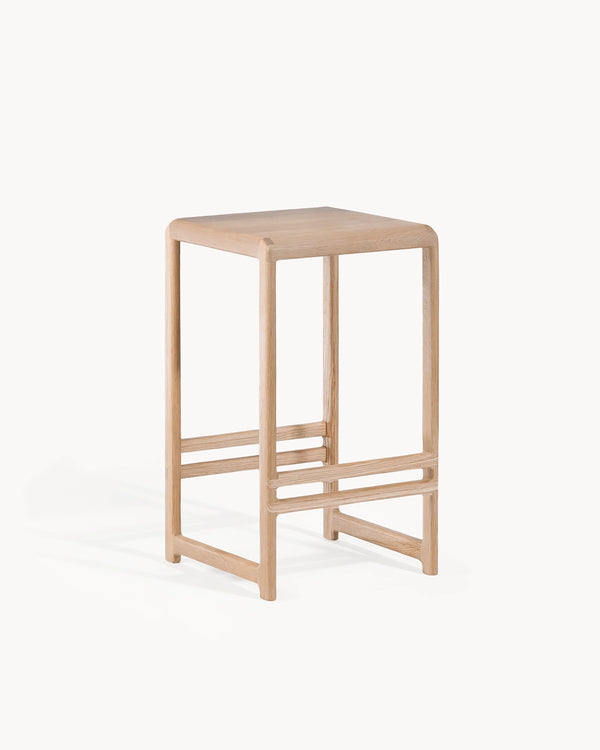
Check the joint construction where the seat meets the legs or frame. Properly fitted mortise and tenon or dowel joints with good glue adhesion hold together through years of daily loading. Stools with visible gaps at joints or movement in the frame when loaded are a sign of insufficient joinery. At by Crea, the Ebba, Carl, and Eva stools use solid FSC oak throughout with factory-assembled joinery, arriving fully ready for daily use.
When assessing a solid oak stool, check that the seat is made from solid timber, not MDF or particleboard with an oak veneer. Solid timber has continuous grain visible on the seat edge. Veneered boards show a thin surface layer on the edge with a different material core.
Check the joint construction where the seat meets the legs or frame. Properly fitted mortise and tenon or dowel joints with good glue adhesion hold together through years of daily loading. Stools with visible gaps at joints or movement in the frame when loaded are a sign of insufficient joinery. At by Crea, the Ebba, Carl, and Eva stools use solid FSC oak throughout with factory-assembled joinery, arriving fully ready for daily use.
Solid Oak Bar Stools Built to Improve With Use
Solid oak is one of the few furniture materials that rewards long-term ownership. The structural support does not degrade, the surface develops character rather than deteriorating, and the material never goes out of style in contemporary kitchen design. These properties make it a sound choice for kitchen island seating that needs to perform daily over a decade or more.
The considerations are real: oak requires occasional care, costs more than veneered alternatives, and has a visual warmth that suits some kitchen aesthetics more than others. When the fit is right, a solid oak bar stool earns its place in a kitchen and looks better for having been used.
At by Crea, the Ebba, Carl, Eva, and Ted stools are made from FSC-certified solid oak, handmade in Malmö. Heights of 66 cm (26") and 76 cm (30") are standard. Custom heights are available.
Related guides
Wood vs metal bar stools: which is right for your kitchen?: full material comparison
Are wooden bar stools comfortable long-term?: comfort and daily use guide
How to choose bar stools for your kitchen: step-by-step decision guide
Browse solid oak bar stools
Wooden bar stools: Ebba, Carl, Eva, and Ted in solid FSC oak
Oak collection: full range of by Crea oak furniture
Solid oak is one of the few furniture materials that rewards long-term ownership. The structural support does not degrade, the surface develops character rather than deteriorating, and the material never goes out of style in contemporary kitchen design. These properties make it a sound choice for kitchen island seating that needs to perform daily over a decade or more.
The considerations are real: oak requires occasional care, costs more than veneered alternatives, and has a visual warmth that suits some kitchen aesthetics more than others. When the fit is right, a solid oak bar stool earns its place in a kitchen and looks better for having been used.
At by Crea, the Ebba, Carl, Eva, and Ted stools are made from FSC-certified solid oak, handmade in Malmö. Heights of 66 cm (26") and 76 cm (30") are standard. Custom heights are available.
Related guides
Wood vs metal bar stools: which is right for your kitchen?: full material comparison
Are wooden bar stools comfortable long-term?: comfort and daily use guide
How to choose bar stools for your kitchen: step-by-step decision guide
Browse solid oak bar stools
Wooden bar stools: Ebba, Carl, Eva, and Ted in solid FSC oak
Oak collection: full range of by Crea oak furniture
FAQ
Are solid oak bar stools durable for daily use? +
Yes. Solid oak is structurally stable under repeated daily use and does not degrade in support or surface quality over time. The timber surface hardens slightly with age and develops a patina that improves its appearance. Properly constructed solid oak stools regularly last 15-20 years or more with normal kitchen use and occasional surface maintenance.
How does solid oak compare to veneered oak bar stools? +
Solid oak has continuous grain through the full thickness of the seat and legs. Veneered oak has a thin surface layer of oak over a different core material such as MDF or plywood. Solid oak is more resistant to edge chipping, corner damage, and surface wear. Veneered stools can look identical initially but show wear at edges and joints faster under daily kitchen use.
Do oak bar stools need oiling? +
Oak bar stools with a natural oil or wax finish benefit from re-oiling every 12-24 months to keep the surface conditioned. For daily cleaning, a damp cloth is sufficient. Stools with a lacquered finish require less maintenance but cannot be sanded and re-oiled if damaged. By Crea oak stools use a natural oil finish.
What kitchen styles suit oak bar stools? +
Oak bar stools work particularly well in contemporary, Scandinavian, and natural-material kitchens. They suit white, grey, sage, and terracotta cabinet colours. They create a warm contrast in kitchens with stone or concrete surfaces. They work less well in highly industrial kitchens where the warmth of wood feels out of character.
Are oak bar stools heavy? +
Solid oak bar stools weigh approximately 6-9 kg depending on design. This is slightly heavier than equivalent steel-frame stools at 4-7 kg. The weight provides stability on the floor and prevents accidental tipping, but is light enough to move and reposition daily without effort.
What is FSC certification for bar stools? +
FSC, Forest Stewardship Council, certification confirms that the timber in a piece of furniture comes from forests managed to verified environmental and social standards. It is a third-party certification, not a self-declared claim. By Crea uses FSC-certified oak across all wooden bar stool models.