Swivel vs Fixed Bar Stools: Which Is Better for Your Kitchen?

Short answer

55 cm
Per fixed stool
60 to 65 cm
Per swivel stool

Swivel needs 60 to 65 cm a seat; fixed 55 cm, with no bearing to loosen.

Bar Stool Svea in black with ivory bouclé, placed by a marble countertop, highlighting the stylish Bar Stool design.
Svea Bar Stool · from £319

Swivel stools are one of the most searched-for bar stool features, and they have a real advantage: you can turn to talk to someone behind you, or to get off, without dragging the stool. They also have real costs: a mechanism that can loosen, a seat that turns into the neighbour's space, and a stool that is harder to keep still for small children. We make only fixed stools, and we explain why below, but this guide sets out both sides fairly so you can decide what suits your kitchen. It covers comfort, stability, space, durability and families, with the spacing each type needs in centimetres.

Swivel or fixed bar stools: which is better?

Neither is better in every kitchen. Swivel stools are usually better for open-plan rooms where people turn between the counter and a living area, and for bars where guests come and go.

Fixed stools are usually better for stability, for tighter rows, for families with small children and for anyone who wants a stool with nothing that can wear out.

The table sets out the trade-offs. The most practical difference at home is space: a swivel seat needs about 5 to 10 cm more per person, which on a long island can mean one fewer seat.
Swivel and fixed bar stools compared
PointSwivelFixed
Turning to the roomTurns without moving the stoolTurn by shifting or pulling out
Space per seat60 to 65 cm55 cm
StabilitySeat can turn under youSeat stays put
ChildrenTempting to spinCalmer, easier to climb onto
WearBearing can loosen or squeakNo moving parts
LookUsually a central column or visible mechanismClean four-leg frame

Are swivel bar stools good for a kitchen island?

They can be, in an open-plan kitchen where the island faces a living room and people turn between the two. They also help where a stool is hard to pull out, such as in a tight corner, and for anyone who finds twisting on a fixed seat awkward.

At an island used mainly for meals, homework and conversation across the counter, the advantage is smaller, because everyone faces the same way anyway.

What matters more at an island is the right seat height, a backrest for long sits and enough space per seat. If you like the idea of turning, a fixed stool with a low backrest and a footrest lets you shift sideways to get off easily, though not quite as easily as a swivel seat. Our kitchen island seating guide covers the other measurements.

Why are by Crea bar stools fixed?

Because a fixed frame can be welded or glued in one piece, with no joint that moves.

That helps keep a stool tight for many years and is part of what lets us give it a 10-year warranty and a 200 kg load rating. A swivel mechanism adds a bearing, a moving joint that carries the full load every time someone turns.

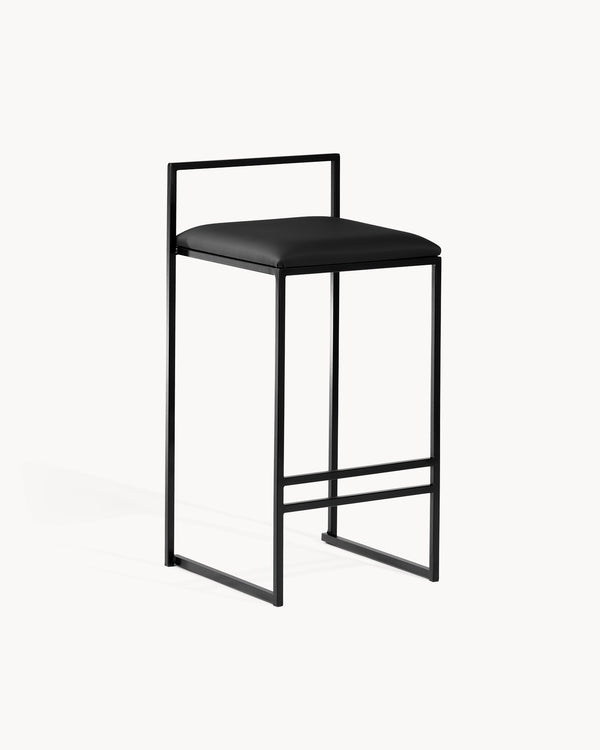
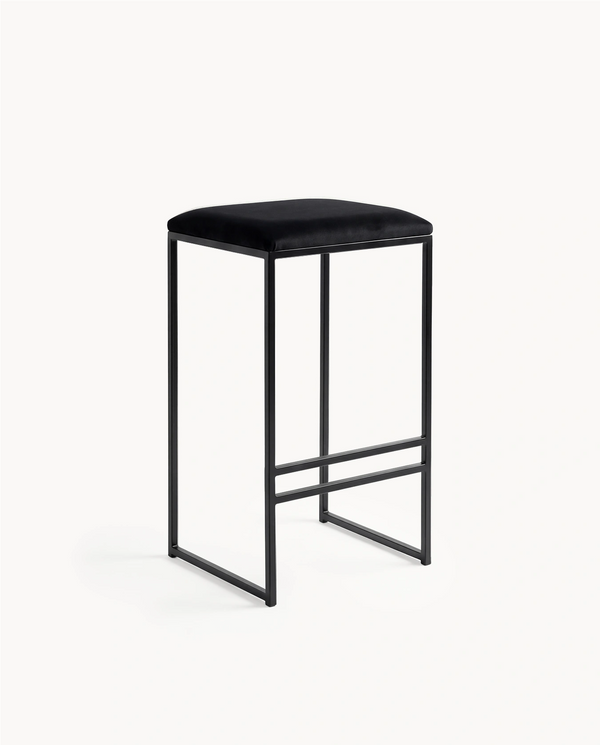
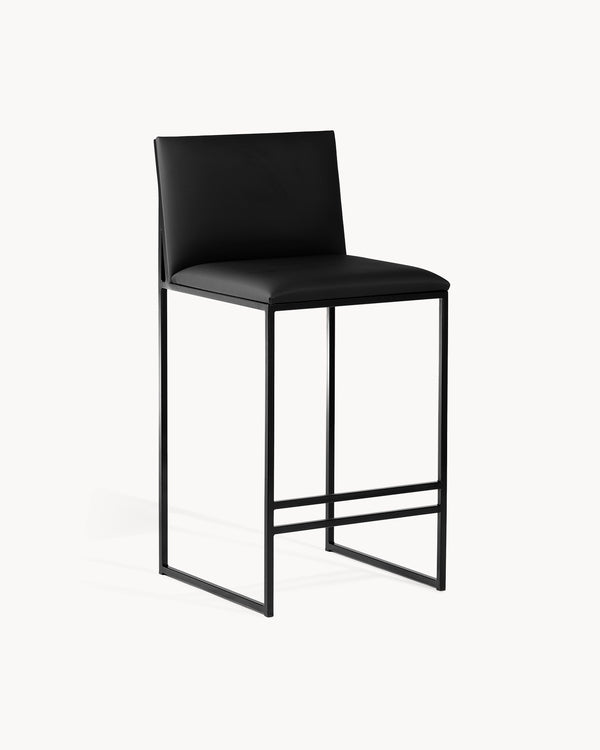
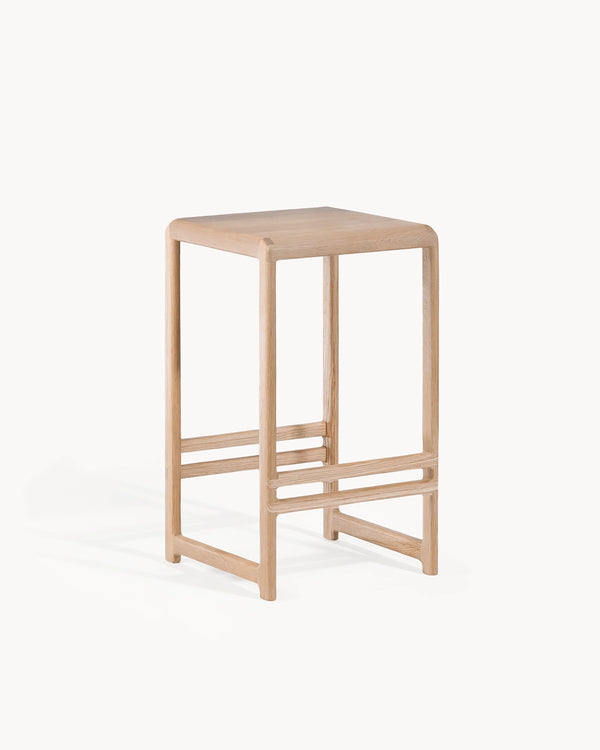
It also shapes the design. A fixed stool can stand on four slim legs with a footrest joining them, which in our view is lighter to the eye and more stable than the central column many swivel stools use. That is our choice as makers, not a verdict on every kitchen: we would rather make a stool that stays solid than one that turns. Read more in how our bar stools are made.

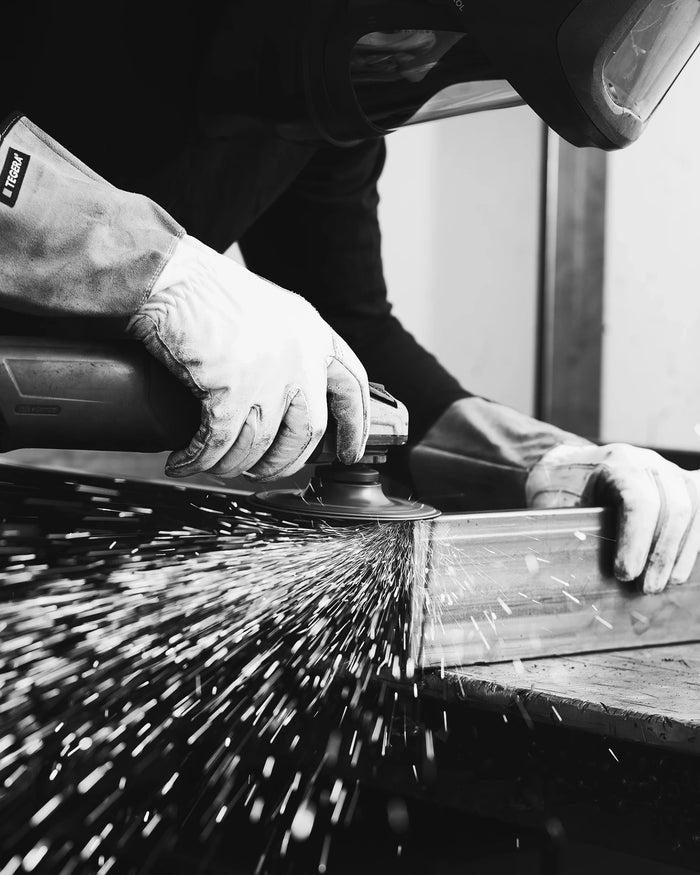
Person using a grinder with sparks flying, wearing protective gloves and a helmet.
Our steel frames are welded in one piece, with no joint that moves.

Do swivel bar stools wobble over time?

Some do. The swivel bearing takes the full load every time someone sits, turns or leans, and in cheaper mechanisms it can loosen, develop play or start to squeak within a few years.

Good mechanisms last longer, but they remain a moving part, and moving parts wear.

Fixed stools can wobble too, if their joints are bolted rather than welded or glued: the same daily loads work the bolts loose. That is why the construction often matters more than the type. Our guide to fixing a wobbly bar stool explains the causes and what can be done.

How much space do swivel bar stools need?

As a starting point, allow 60 to 65 cm per swivel stool, centre to centre, compared with 55 cm for fixed stools.

The extra space is needed because the seat turns into the space of its neighbour, and a swivel stool with armrests turns wider still.

On a 240 cm island, that can be the difference between four fixed stools and three swivel ones. Plan the same 90 cm of free floor behind either type. See distance between bar stools for the full spacing rules.

How do you get on and off a fixed bar stool easily?

Pull it out a little, step onto the footrest and sit, then pull it in with your feet on the footrest.

With 55 cm between stool centres and 90 cm of floor behind, a fixed stool is quick to use, if not quite as quick as a swivel one, and it stays where you put it.

A low backrest, as on Freja and Ebba, or no backrest, as on Eva and Svea, makes sliding on and off from the side easier still. For the longest meals, a full backrest and armrests, as on Philip, Bruno and Carl, give support that many people value more than turning. Compare them in backrest vs backless stools.

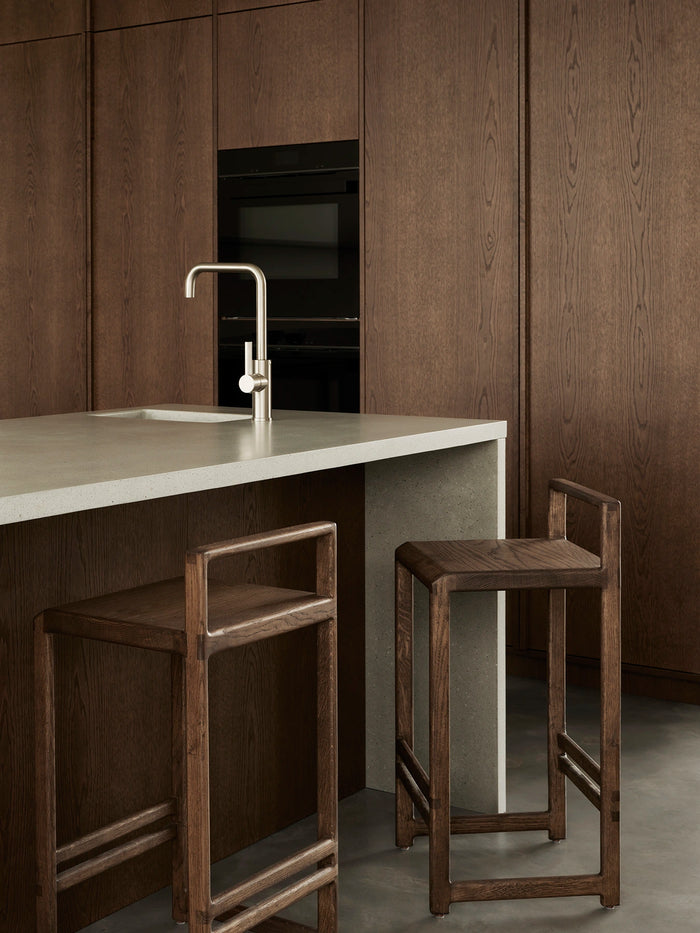
Ebba bar stools in dark-stained solid oak placed by a minimalist kitchen island in a Stockholm archipelago villa.
Ebba's low backrest makes it easy to slide on and off from the side.

Swivel or fixed: the short answer

55 cm
Per fixed stool.
60 to 65 cm
Per swivel stool.
200 kg
The load rating of every fixed by Crea stool.

Choose swivel if turning to the room matters most and you can give each seat 60 to 65 cm. Choose fixed for stability, a closer row at 55 cm, calm with children and a frame with nothing to wear out. Every by Crea stool is fixed, welded or glued in our own factory in Malmö, Sweden, delivered fully assembled, rated for 200 kg and covered by a 10-year warranty.

Frequently asked questions

Are swivel bar stools a good idea?

They are useful in open-plan rooms where people turn between the counter and the living area. For stability, tight rows and families, fixed stools are usually the simpler choice.

Do swivel stools take up more space?

Yes. As a rule of thumb, allow 60 to 65 cm per swivel stool, compared with 55 cm for fixed stools.

Are fixed bar stools better for children?

Usually. A fixed seat does not spin, which makes it calmer and easier for children to climb onto safely.

Do swivel bar stools break more easily?

Not necessarily, but they have a moving bearing that can loosen or squeak over time; good mechanisms last longer. Fixed stools with welded or glued joints have no moving parts.

Do you sell swivel bar stools?

No. All by Crea bar stools are fixed, with welded steel or glued oak frames, a 200 kg load rating and a 10-year warranty.

Can you turn on a fixed bar stool?

You turn by shifting in the seat or pulling the stool out slightly. A low or no backrest makes getting on and off from the side easy.

Freja Bar StoolFrom £319 Shop