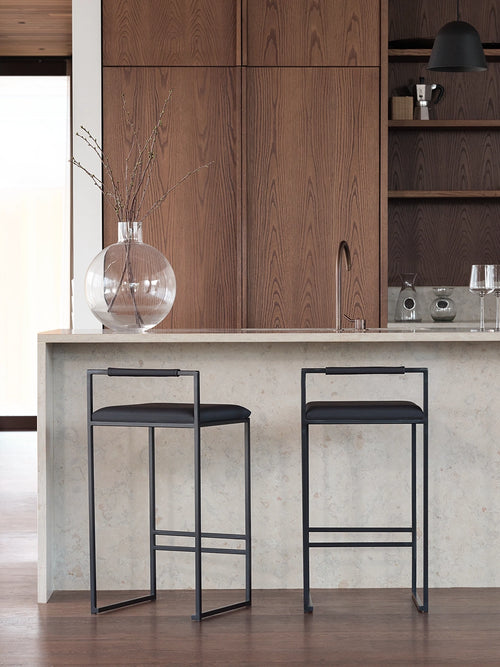
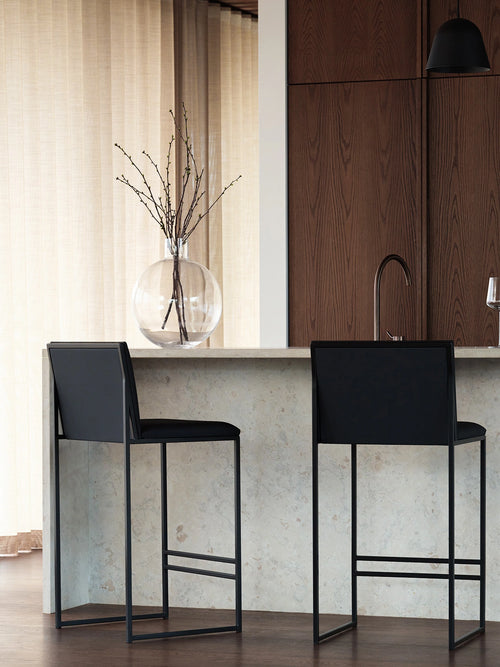
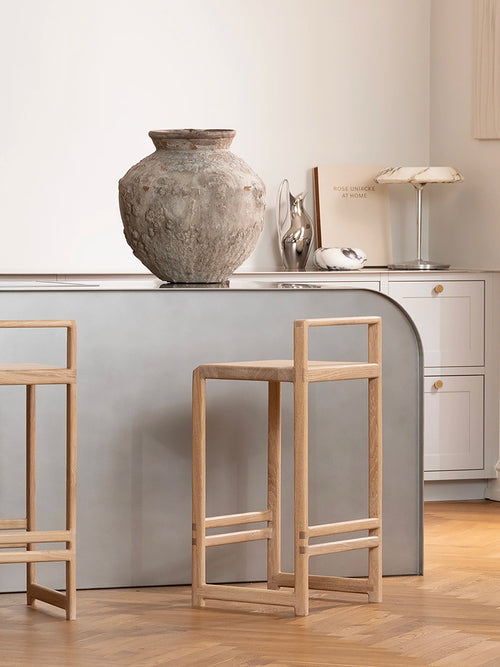
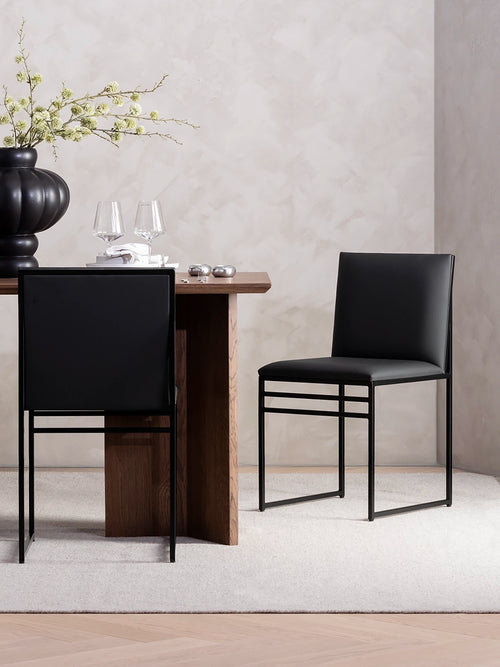
This image shows 10 Ebba barstools from by Crea in dark stained oak in a Dark oak minimalistic kitchen with contemporary light stone marble top.
Image Link

This page explains kitchen island overhang requirements using exact measurements.

It covers legroom, stool fit, spacing, and common planning mistakes for homes and hospitality.

Use it to confirm whether your island can support comfortable seating before choosing stools.

This page explains kitchen island overhang requirements using exact measurements.

It covers legroom, stool fit, spacing, and common planning mistakes for homes and hospitality.

Use it to confirm whether your island can support comfortable seating before choosing stools.

1. What a kitchen island overhang is and why it matters

A kitchen island overhang is the horizontal distance that the countertop extends beyond the base cabinets.

The overhang creates legroom for seated users.

If the overhang is too shallow, knees cannot move under the counter.

This forces the user to sit away from the worktop.

Overhang depth is an ergonomic requirement for any island designed for seating.

A kitchen island overhang is the horizontal distance that the countertop extends beyond the base cabinets.

The overhang creates legroom for seated users.

If the overhang is too shallow, knees cannot move under the counter.

This forces the user to sit away from the worktop.

Overhang depth is an ergonomic requirement for any island designed for seating.

See more See more
Bar Stool Svea in black with ivory bouclé fabric beside a modern marble kitchen island. Bar Stool Svea in black with ivory bouclé fabric beside a modern marble kitchen island.

2. Standard kitchen island overhang requirements for seating

These are the overhang depths that support seated use.

They apply to kitchen islands in homes, cafés, and restaurants.

Recommended overhang depth for kitchen island seating

✓ Minimum functional overhang: 25 cm (10 in)✓ Comfortable overhang for daily use: 30 cm (12 in)✓ Generous overhang for long seating: 35 cm (14 in)

Below 25 cm (10 in), comfort drops quickly because the knee angle becomes restricted.

Above 35 cm (14 in), additional countertop support is often required.

These are the overhang depths that support seated use.

They apply to kitchen islands in homes, cafés, and restaurants.

Recommended overhang depth for kitchen island seating

✓ Minimum functional overhang: 25 cm (10 in)✓ Comfortable overhang for daily use: 30 cm (12 in)✓ Generous overhang for long seating: 35 cm (14 in)

Below 25 cm (10 in), comfort drops quickly because the knee angle becomes restricted.

Above 35 cm (14 in), additional countertop support is often required.

See furniture See furniture

3. Overhang vs stool type

Different stool types place the body at different depths under the counter.

The required overhang changes with backrest and seat geometry.

Overhang requirements by stool type

✓ Backless counter stools: 25–30 cm (10–12 in)✓ Counter stools with backrest: 30–35 cm (12–14 in)✓ Bar stools with higher seat and backrest: 30–35 cm (12–14 in)

Backrests usually move the seated position slightly backward.

This increases the knee clearance requirement even when seat height is correct.

Different stool types place the body at different depths under the counter.

The required overhang changes with backrest and seat geometry.

Overhang requirements by stool type

✓ Backless counter stools: 25–30 cm (10–12 in)✓ Counter stools with backrest: 30–35 cm (12–14 in)✓ Bar stools with higher seat and backrest: 30–35 cm (12–14 in)

Backrests usually move the seated position slightly backward.

This increases the knee clearance requirement even when seat height is correct.

Explore Counter Stools Explore Counter Stools
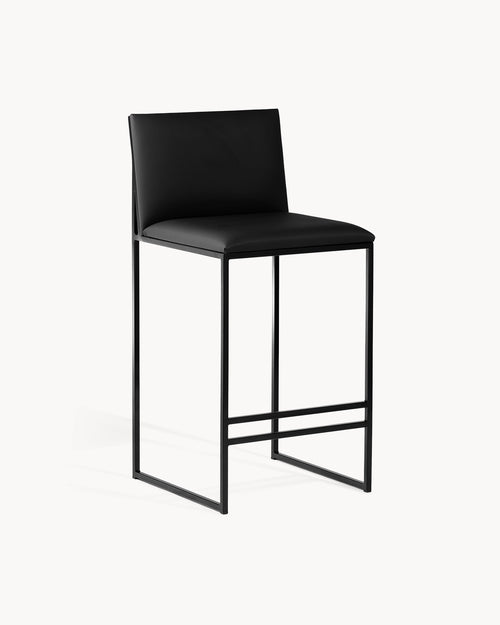
Freja bar stool by by Crea, black frame and black leather seat, Scandinavian kitchen island seating in a minimalist home. Ebba Bar Stools in dark oak with minimal Scandinavian design, placed at a statement kitchen island in dramatic veined marble, complemented by rich wood cabinetry and herringbone oak flooring.

4. Overhang requirements for a 90 cm kitchen counter

A 90 cm kitchen counter is a counter-height surface.

It should be paired with counter stools, not bar stools.

Correct setup for a 90 cm counter

✓ Counter height: 90 cm (35.5 in)✓ Recommended seat height: 65–66 cm (25.5–26 in)✓ Required overhang: 30 cm (12 in)

This combination creates a practical sitting posture and usable legroom.

It is a reliable baseline for both daily home use and commercial settings.

A 90 cm kitchen counter is a counter-height surface.

It should be paired with counter stools, not bar stools.

Correct setup for a 90 cm counter

✓ Counter height: 90 cm (35.5 in)✓ Recommended seat height: 65–66 cm (25.5–26 in)✓ Required overhang: 30 cm (12 in)

This combination creates a practical sitting posture and usable legroom.

It is a reliable baseline for both daily home use and commercial settings.

Explore Bar Stools Explore Bar Stools
Eva Bar stools in black oak at a modern kitchen island with marble countertop, showcasing clean lines and a slim profile. Svea bar stools with black frame and latte leather seat, minimalistic design for modern kitchen or dining area.

5. How overhang affects comfort over time

Overhang controls posture more than upholstery does.

It determines where the knees and hips can sit relative to the counter edge.

When the overhang is too shallow, the user sits further back to protect the knees.

This increases forward reach and shifts load to the lower back.

What correct overhang enables

✓ Knees can move under the counter without contact✓ Feet can rest evenly on a footrest✓ The torso stays upright without leaning forward

Comfort is primarily a geometry problem.

Cushions cannot compensate for missing clearance.

Overhang controls posture more than upholstery does.

It determines where the knees and hips can sit relative to the counter edge.

When the overhang is too shallow, the user sits further back to protect the knees.

This increases forward reach and shifts load to the lower back.

What correct overhang enables

✓ Knees can move under the counter without contact✓ Feet can rest evenly on a footrest✓ The torso stays upright without leaning forward

Comfort is primarily a geometry problem.

Cushions cannot compensate for missing clearance.
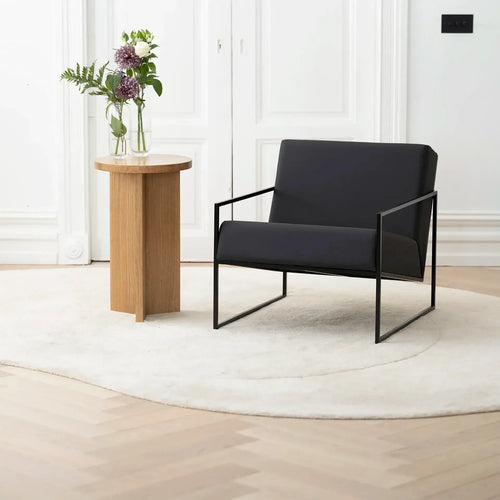
Explore Freja Counter Stool Explore Freja Counter Stool

6. Common kitchen island overhang mistakes

Overhang mistakes usually show up after the kitchen is finished.

They lead to seating that looks right but is rarely used.

Common overhang mistakes

✓ Overhang under 20 cm (8 in) used with stools✓ Using bar stools at a counter-height island✓ Choosing deep seats without increasing overhang✓ Ignoring backrest depth when planning clearance

If the island is already built with limited overhang, backless stools are the most forgiving option.

Deep seats and backrests amplify clearance problems.

Overhang mistakes usually show up after the kitchen is finished.

They lead to seating that looks right but is rarely used.

Common overhang mistakes

✓ Overhang under 20 cm (8 in) used with stools✓ Using bar stools at a counter-height island✓ Choosing deep seats without increasing overhang✓ Ignoring backrest depth when planning clearance

If the island is already built with limited overhang, backless stools are the most forgiving option.

Deep seats and backrests amplify clearance problems.

Bar Stool Freja in black frame, black leather cushion, and brown backrest at a modern kitchen island. Bar Stool Freja in black frame, black leather cushion, and brown backrest at a modern kitchen island.

7. How many stools fit under a kitchen island

Stool quantity is limited by lateral space, not only island length.

Overcrowding reduces comfort and increases wear on finishes.

Recommended spacing per stool

✓ Minimum width per stool: 50 cm (19.5 in)✓ Comfortable spacing per stool: 55–60 cm (21.5–23.5 in)

If you are between two quantities, choose fewer stools.

You can add another stool later if the island proves spacious in daily use.

Stool quantity is limited by lateral space, not only island length.

Overcrowding reduces comfort and increases wear on finishes.

Recommended spacing per stool

✓ Minimum width per stool: 50 cm (19.5 in)✓ Comfortable spacing per stool: 55–60 cm (21.5–23.5 in)

If you are between two quantities, choose fewer stools.

You can add another stool later if the island proves spacious in daily use.

Learn about our materials Learn about our materials

8. The governing rule for kitchen island overhang

This rule resolves most planning questions.

It applies to home kitchens and hospitality counters.

Rule

For seated kitchen island use, the countertop must overhang the base cabinets by at least 30 cm (12 in) when paired with counter stools of 65–66 cm (25.5–26 in) seat height.

If this condition is not met, seating comfort cannot be achieved through stool choice alone.

This rule resolves most planning questions.

It applies to home kitchens and hospitality counters.

Rule

For seated kitchen island use, the countertop must overhang the base cabinets by at least 30 cm (12 in) when paired with counter stools of 65–66 cm (25.5–26 in) seat height.

If this condition is not met, seating comfort cannot be achieved through stool choice alone.

About us About us
Oak Bar Stool Carl in dark oak with ivory bouclé in a modern kitchen setting with marble countertops. Oak Bar Stool Carl in dark oak with ivory bouclé in a modern kitchen setting with marble countertops.

9. Kitchen island overhang checklist

Use this checklist before ordering stools or finalising cabinetry.

Each item is a pass or fail.

✓ Island is intended for seating, not only prep✓ Overhang is at least 25 cm (10 in)✓ Overhang is ideally 30 cm (12 in)✓ Stool type matches overhang depth✓ Seat height matches counter height✓ There is enough lateral space per stool

If any item fails, adjust the island design or choose a more suitable stool type before purchase.

Use this checklist before ordering stools or finalising cabinetry.

Each item is a pass or fail.

✓ Island is intended for seating, not only prep✓ Overhang is at least 25 cm (10 in)✓ Overhang is ideally 30 cm (12 in)✓ Stool type matches overhang depth✓ Seat height matches counter height✓ There is enough lateral space per stool

If any item fails, adjust the island design or choose a more suitable stool type before purchase.

Explore Counter Stools Explore Counter Stools

Conclusion

Kitchen island overhang is the key requirement for comfortable seating.

It cannot be solved by changing materials, styling, or cushion thickness.

For a 90 cm (35.5 in) counter-height island, an overhang of 30 cm (12 in) paired with a 65–66 cm (25.5–26 in) seat height is the stable baseline.

This reduces uncertainty and prevents buying stools that cannot work with the built geometry.

To compare stool types after confirming your measurements, see the bar stool collection.

View bar stools

If you need help interpreting a specific island drawing or measurement, use contact.

Contact

Kitchen island overhang is the key requirement for comfortable seating.

It cannot be solved by changing materials, styling, or cushion thickness.

For a 90 cm (35.5 in) counter-height island, an overhang of 30 cm (12 in) paired with a 65–66 cm (25.5–26 in) seat height is the stable baseline.

This reduces uncertainty and prevents buying stools that cannot work with the built geometry.

To compare stool types after confirming your measurements, see the bar stool collection.

View bar stools

If you need help interpreting a specific island drawing or measurement, use contact.

Contact

Counter stools & Bar stools FAQ

What is the minimum kitchen island overhang for stools?

The minimum functional overhang is 25 cm (10 in).

This allows basic knee clearance for backless seating.

For daily use, 30 cm (12 in) is the recommended overhang.

What stools work best if my overhang is only 25 cm?

Backless counter stools with slim seat profiles.

Avoid deep seats and backrests because they reduce knee clearance.

To browse suitable categories, start here.

View bar stools

Does a small kitchen require less overhang?

No.

Human body dimensions do not change with room size.

Small kitchens still need the same overhang for usable seating.

Do metal stools require different overhang than wooden stools?

No.

Material does not change clearance requirements.

Seat depth and backrest geometry are what change the required overhang.

To compare materials after confirming your overhang, see these collections.

View steel bar stoolsView wooden bar stools

Is overhang more important than stool padding?

Yes.

Overhang determines knee clearance and posture.

A padded seat cannot compensate for missing legroom.

Can I use stools if my island has no overhang?

No.

Without overhang, knees cannot move under the counter edge.

This forces the user to sit too far from the worktop and reduces comfort quickly.