How Our Bar Stools Are Made: Inside the Factory in Malmö

Short answer

Malmö
our own factory, start to finish
By hand
every seat upholstered

Made start to finish in our own factory in Malmö, Sweden.

How Our Bar Stools Are Made: Inside the Factory in Malmö

A lot of furniture sold online is designed in one country, made in another and assembled by the customer in a third. Ours is not. We buy precision steel tube, FSC-certified oak, foam and fabric, and everything else happens under one roof in Malmö: cutting, bending, welding, grinding, powder coating, joinery, lacquering, upholstery and the final check. That is not nostalgia; it is how we control the things that decide whether a bar stool lasts, from the quality of a weld to the density of the foam. This page walks through how a steel stool and an oak stool are made, how the seats are upholstered, how each stool is checked, and why we think making everything in one place is worth it.

Where are by Crea bar stools made?

In our own factory in Malmö, in southern Sweden.

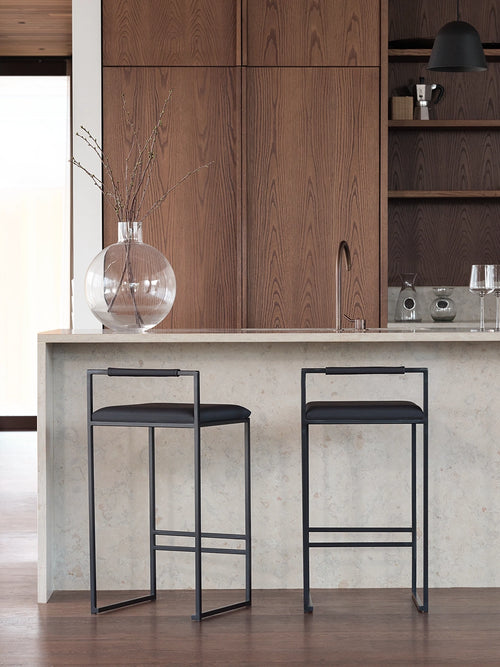
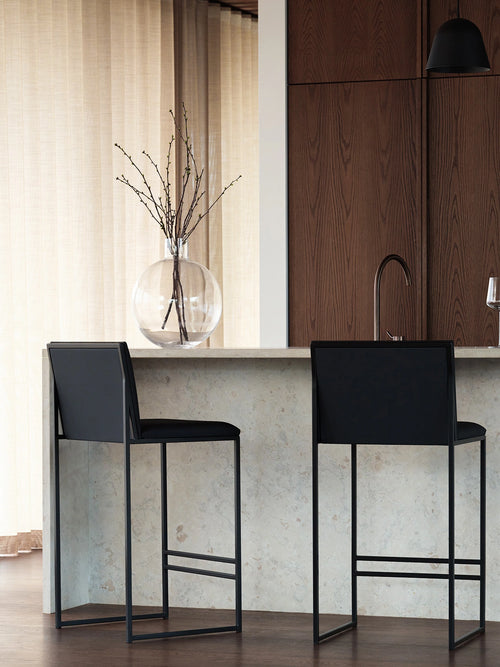
Every stage after the raw materials arrive happens there: the steel is cut, bent and welded, the frames are powder-coated, the oak is machined, joined and lacquered, the seats are upholstered by hand, and every stool is checked and packed fully assembled.

We buy materials, not parts: Swedish precision steel tube, solid FSC-certified European oak, cold-cure foam, beech plywood and upholstery fabrics. Keeping everything else in-house means one team is responsible for each stool from the first cut to the last check, and it is also what makes custom heights, replaceable cushions and spare parts possible. Read more on our production page.
How is a steel bar stool frame made?

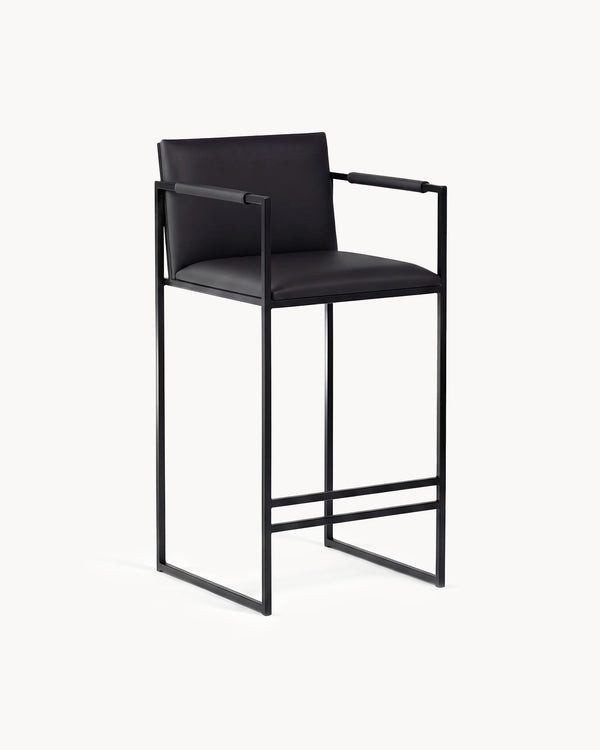
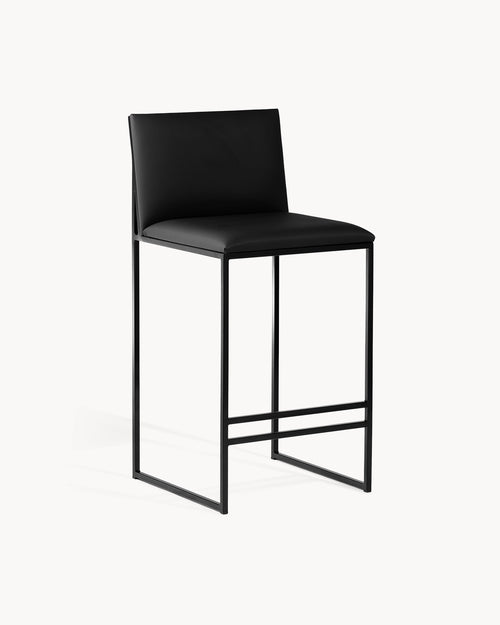
In five stages: the precision steel tube is cut to length, bent where the design curves, welded into a frame, ground smooth at the joints, and powder-coated.

Accurate cutting and welding are what make every frame identical and square, so the stool stands level on all four feet.

We use Swedish precision steel tube to EN 10305-5, the European standard for precision steel tubes; it is drawn to tight tolerances so that joints fit before they are welded. The table sets out each stage and what it controls.

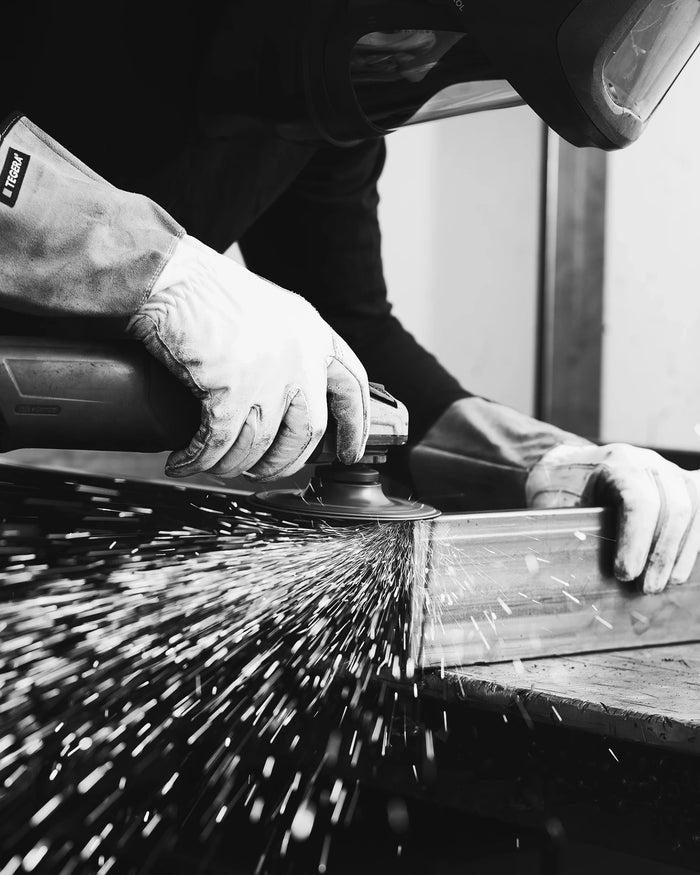
Person using a grinder with sparks flying, wearing protective gloves and a helmet.
Steel tube is cut, welded and ground by hand in Malmö.
From steel tube to finished frame
StageWhat happensWhat it controls
1. CuttingTube cut to exact lengthsSeat height and proportions
2. BendingTube bent where the design curvesThe shape of backrest and footrest
3. WeldingParts welded into one frameA square frame that stands level
4. GrindingWelds ground smoothA clean joint under the finish
5. Powder coatingPowder sprayed on and bakedA hard finish that resists chips

How is an oak bar stool made?

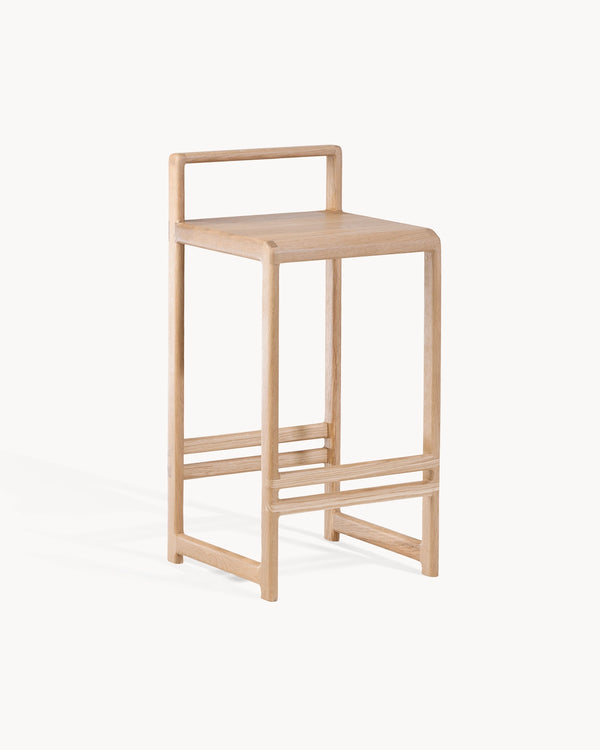
From solid FSC-certified European oak, machined into legs, rails, seat and backrest, then joined and glued into a frame that is checked for square.

The frame is sanded, stained if it is dark oak, and sealed with a matt lacquer that protects the wood without making it glossy.

Glued joints in solid hardwood have nothing to work loose. We rate our oak stools, like our steel ones, for 200 kg, and cover them with a 10-year warranty. Our oak bar stools guide explains the finishes.

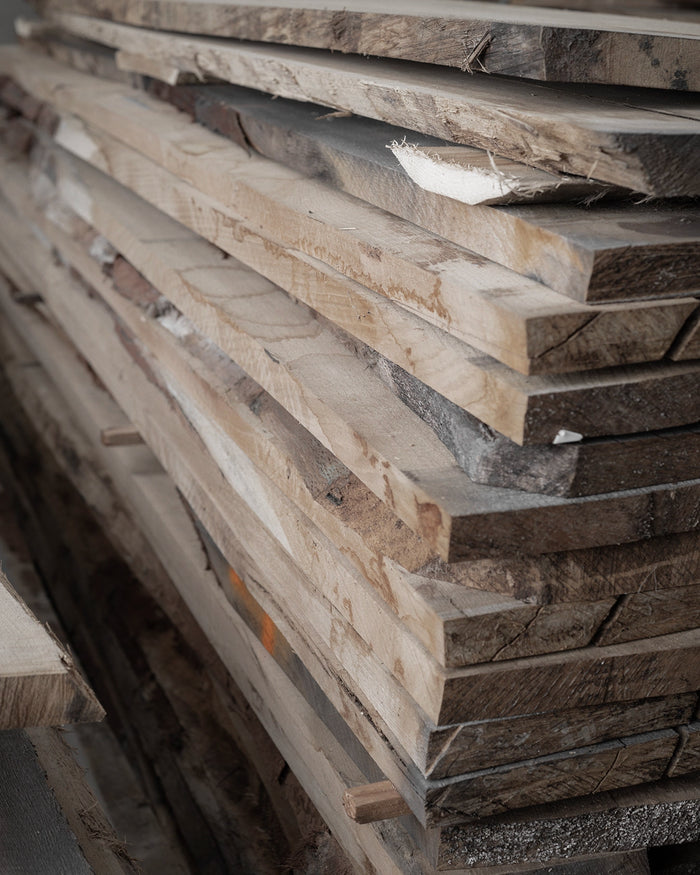
Solid European oak in the factory before it is machined.

How are the seats upholstered?

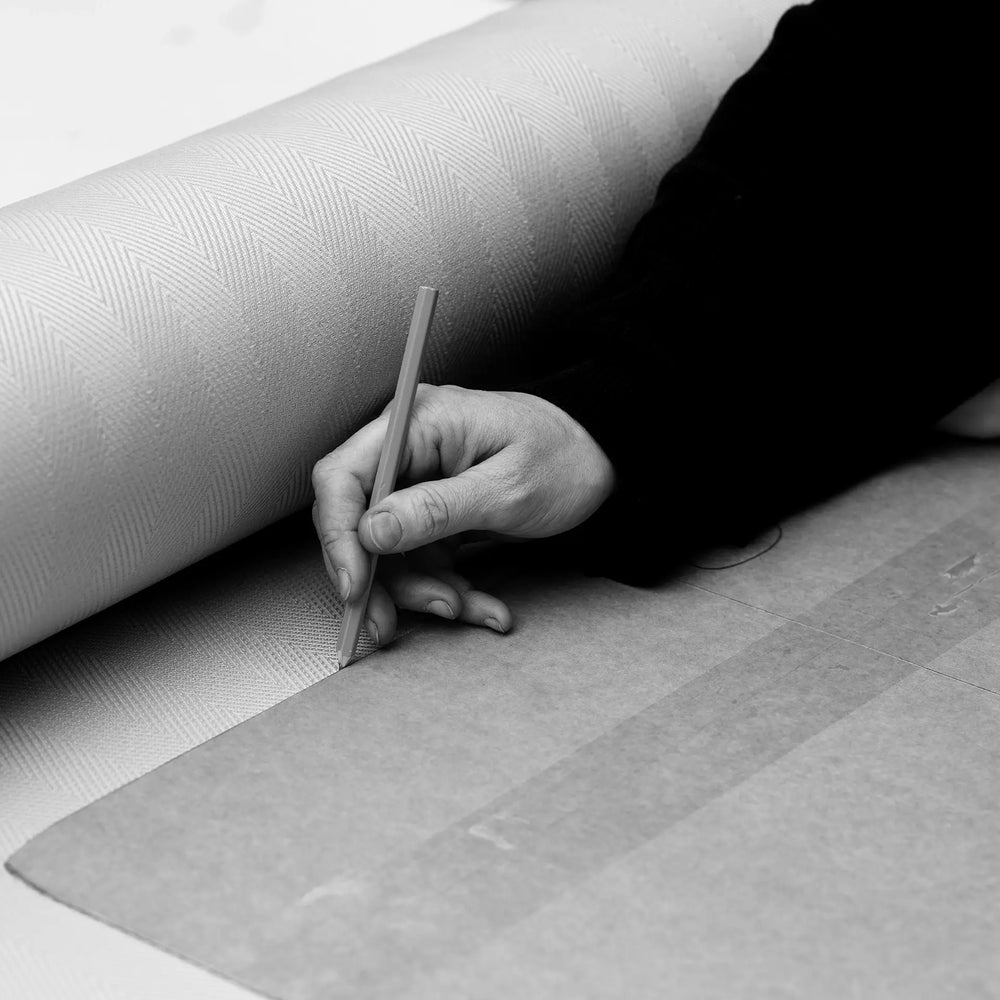
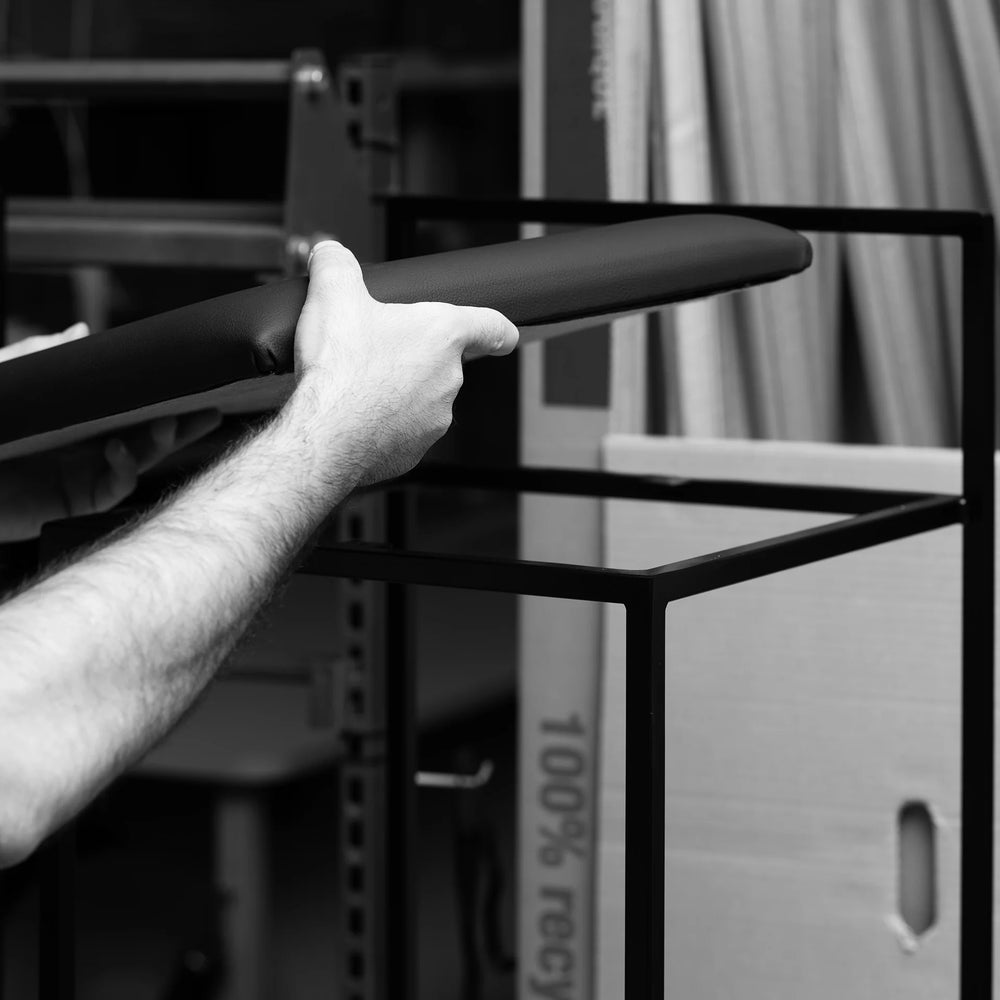
By hand, in the same factory. Each seat starts as a beech plywood core; cold-cure foam at 55 kg/m³ is shaped and fixed to it, and the fabric is cut, fitted and upholstered over the foam.

Black-and-white close-up of a craftsman's hand marking upholstery fabric beside a patterned textile roll, capturing the precision and care of handmade furniture production in Sweden.
Upholstery is cut and fitted by hand.

In our experience, cold-cure foam keeps its shape far longer than the soft foams often used in cheaper stools.

We upholster in three families of fabric, vegan leather, velvet and bouclé, each tested for abrasion and chosen for kitchen use. On Freja and Svea the finished cushion is fixed to the frame with two screws, so it can be replaced years later without replacing the stool. Our upholstery guide compares the fabrics.

How is each stool checked before it leaves?

Every stool is assembled, checked and packed in the factory.

Every stool is checked before it is packed fully assembled.

We check that it stands level, that joints and welds are clean, that the finish is even and undamaged, and that the upholstery is tight and correctly fitted. A stool that does not pass is corrected before it is packed.

Because the stool is delivered fully assembled, the joints you rely on are the ones we made and checked, not ones tightened at home with a key from the box. Our steel stools have also been tested or assessed by RISE, the Research Institutes of Sweden, to EN 16139, the European strength and durability standard for non-domestic seating; see bar stool testing and standards and bar stool weight capacity.

Who designs by Crea bar stools?

Alexandra Pettersson, co-founder and designer of by Crea, an interior architect by training.

Each design is drawn around the same measurements, 66 and 76 cm seats and the 23 to 26 cm legroom rule of thumb, and developed with the factory so that it can be made well, not just drawn well.

The table shows when each bar stool was introduced. Bruno is named after Alexandra's father.

Our bar stools and when they were introduced
ModelIntroducedFrame
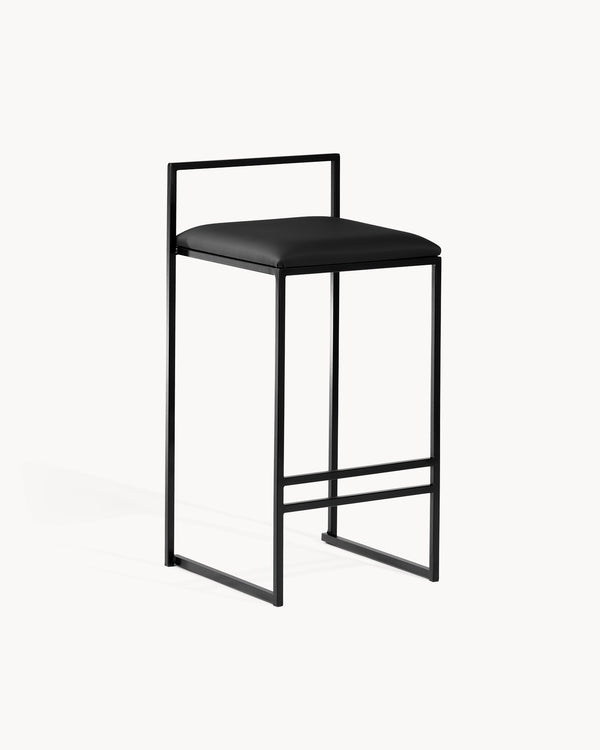
Freja 2017Powder-coated steel
Philip 2018Powder-coated steel
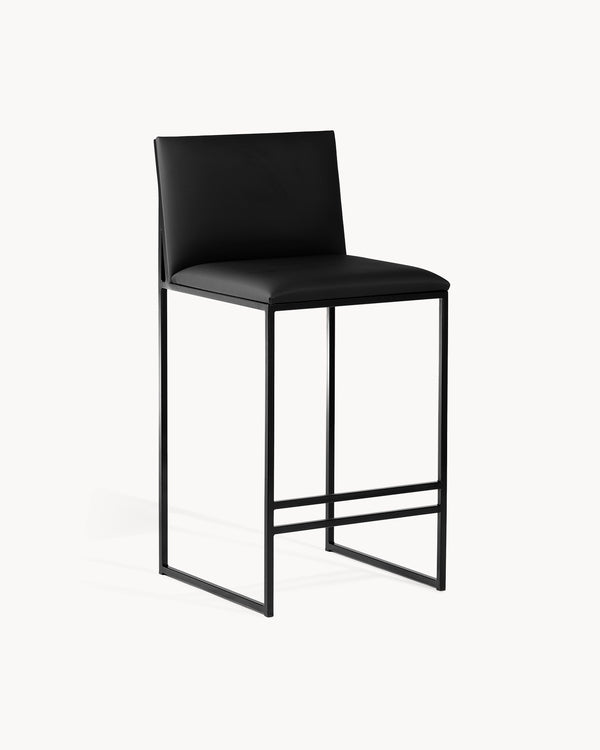
Svea 2018Powder-coated steel
Bruno 2019Powder-coated steel
Eva, Ebba, Ted, Carl2023Solid oak

Why make everything in one factory?

Because the details that decide how long a stool lasts are the ones you cannot inspect in a showroom: the fit of a joint before welding, the thickness of the powder coat, the density of the foam, the tightness of the upholstery.

Making them ourselves is how we control them all.

It also gives customers things a remote supply chain rarely can: seat heights made to fit a specific counter, cushions that can be replaced, spare parts years later, and a single team to talk to if anything is ever wrong. That is what the 10-year warranty rests on. Our guide to whether expensive bar stools are worth it explains what that means for value.

Made in one place, from start to finish

1
Factory, in Malmö, for every step.
By hand
Every seat is upholstered by hand.
10 years
Warranty on every stool.

A by Crea bar stool is cut, bent, welded and powder-coated, or machined, joined and lacquered, then upholstered by hand, checked and delivered fully assembled, all in our own factory in Malmö, Sweden. That is why we can make custom heights, replace cushions, supply spare parts and stand behind every stool with a 200 kg load rating and a 10-year warranty.

Frequently asked questions

Where are your bar stools made?

In our own factory in Malmö, Sweden. Everything after the raw materials arrive, from cutting and welding to upholstery and checks, happens there.

Are your bar stools welded or bolted?

Our steel frames are welded and our oak frames are glued. No frame joint relies on bolts that can loosen.

What steel do you use?

Swedish precision steel tube to EN 10305-5, cut, bent, welded and powder-coated in Malmö.

Do your bar stools need assembling?

No. Every stool is delivered fully assembled, with joints made and checked in the factory.

Who designs your bar stools?

Alexandra Pettersson, co-founder and designer of by Crea. Freja was the first, in 2017.

Can I get spare parts?

Yes. Because we make the frames and seats ourselves, cushions on Freja and Svea, feet and floor pads can be replaced.

Ebba Bar StoolFrom 6.995 kr Shop