Bar Stool Weight Capacity: How Much Weight Can a Bar Stool Hold?
By Alexandra PetterssonReviewed by Alexander TjernströmUpdated
Look for a stated load rating of at least 150 kg (330 lbs) for daily family use, backed by a recognised strength test. Every by Crea bar stool is rated for 200 kg (440 lbs), and our steel models have been tested by RISE to EN 16139, the European standard for seating in non-domestic use. What makes a stool strong is its construction: welded or glued joints, four legs and a bracing footrest.
Weight capacity is the specification most bar stool listings mention and fewest explain. A number on a product page means little unless you know what it measures, whether anyone tested it, and how the stool is built to carry it every day for years. A bar stool is loaded harder than most chairs: people climb onto it, lean back on it, push off the footrest and shift their weight on a small, high seat. This guide explains what a load rating means, how bar stools are strength-tested, what the European standard EN 16139 covers, which construction details make a stool strong, and how to use a stool so it lasts. It also states plainly what our own stools are rated for and how we know.
How much weight can a bar stool hold?
It depends entirely on the stool, which is why a stated rating matters. For daily family use, look for a load rating of at least 150 kg (330 lbs), stated by the maker and backed by a test. Every by Crea bar stool is rated for 200 kg (440 lbs), steel and oak alike.
The table shows what to look for. A stool with no stated rating is not necessarily weak, but it leaves you guessing, and on a seat 66 or 76 cm (26 or 30 in) off the floor, guessing is not what you want.
Reading a bar stool load rating
What you see
What it tells you
No rating stated
Unknown; ask the maker before buying
A rating with no test named
A claim; better than nothing, but not proven
A rating plus a named standard such as EN 16139
Measured to a recognised method
by Crea
200 kg (440 lbs); steel models tested by RISE to EN 16139
What does a load rating mean?
A load rating is the weight a stool is designed to carry in normal use: one person sitting, shifting, leaning and getting on and off. It is not the weight at which the stool breaks; a properly designed stool carries its rated load with a wide safety margin, so everyday movement never approaches its limit.
It is also not an invitation to stand on the seat or to load it sideways: standing, rocking on two legs and sitting on the backrest put forces on a stool that no load rating covers. Used as intended, a stool rated for 200 kg (440 lbs) gives a large margin for every adult in the household.
How are bar stools strength-tested?
In Europe, seating for public and commercial spaces is tested to EN 16139, which applies repeated loads to the seat, the backrest and the footrest, and checks stability against tipping. It is designed to simulate years of heavy use in cafés, offices and hotels, which is harder than a kitchen at home.
The standard has two levels: level 1 for general use and level 2 for extreme use. Our steel stools have been tested by RISE, the Research Institutes of Sweden, to EN 16139 for non-domestic use, and Bruno to level 2. That is why they are also suitable for restaurants and hotels; see our guide to commercial bar stools.
What makes a bar stool strong?
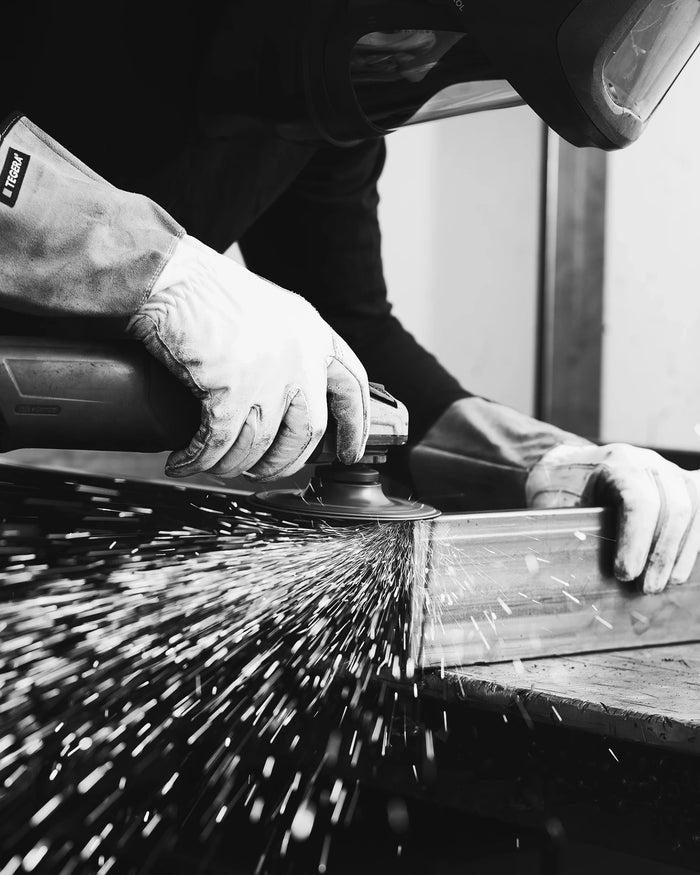
Welded joints have nothing that can loosen under daily loads.
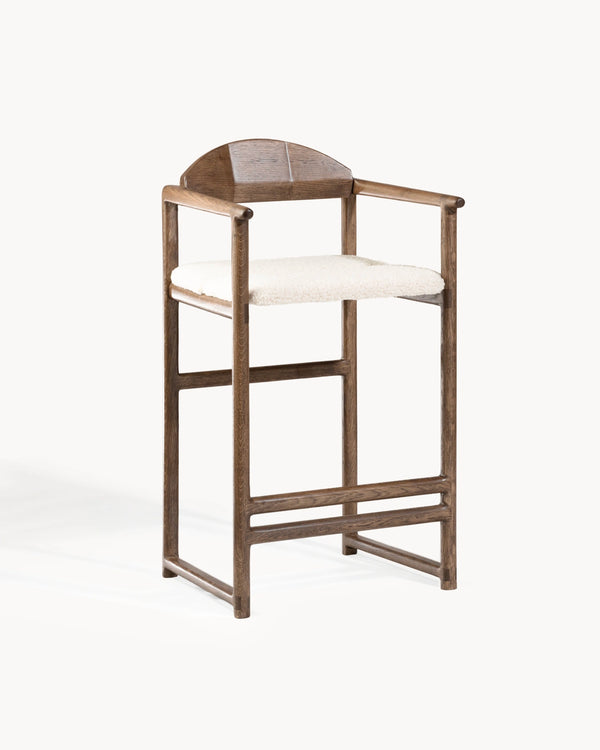
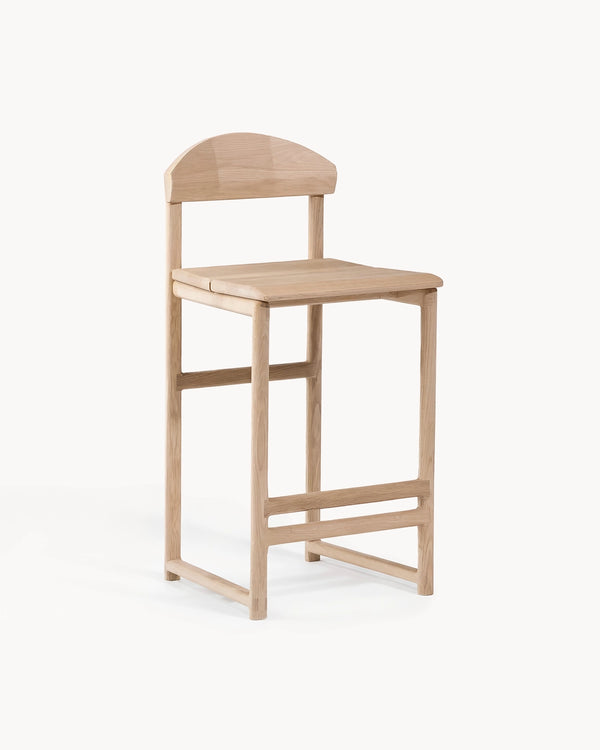
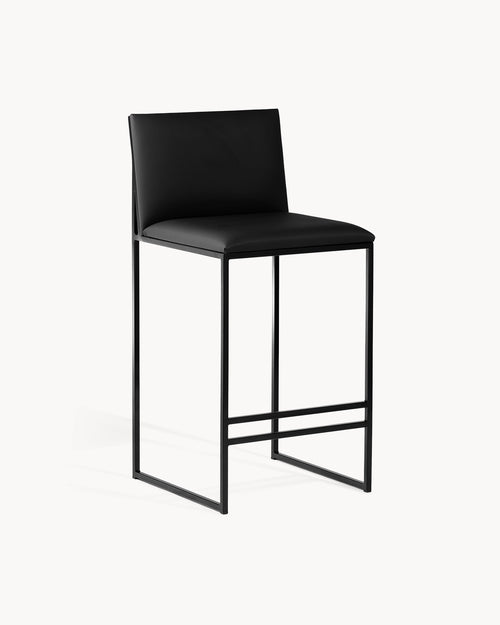
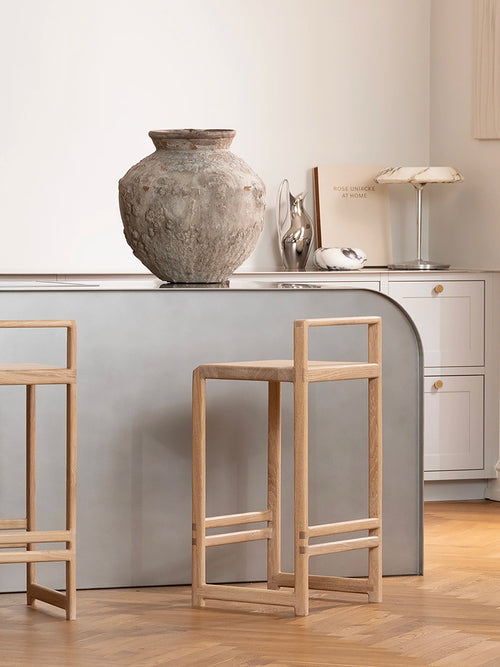
Its joints, more than its material. A welded steel frame or a glued solid-oak frame has no joint that can loosen, while bolted joints work loose under daily loads and are where most stools fail. Four legs joined by a footrest brace each other and resist racking far better than a single column.
Material still matters: our steel frames are made from Swedish precision steel tube to EN 10305-5, and our oak frames from solid FSC-certified European oak. And a stool delivered fully assembled has had its joints made and checked in the factory. Our guide to how our bar stools are made shows each step.
Can leaning back or standing on a bar stool damage it?
Leaning back on a backrest is normal use; rocking the stool onto two legs is not. Tipping a stool back puts the whole load on two legs and the joints above them, and it is the most common way both stools and people get hurt. Standing on the seat is never covered by a load rating.
Children climbing up from the front is normal and is what the footrest is for. A four-legged stool with a footrest and a stated rating handles it without trouble. If a stool already rocks or creaks, check the joints before it gets worse; see how to fix a wobbly bar stool.
Which bar stools suit heavier or taller people?
Carl has the widest seat in our range, 54 cm, with armrests.
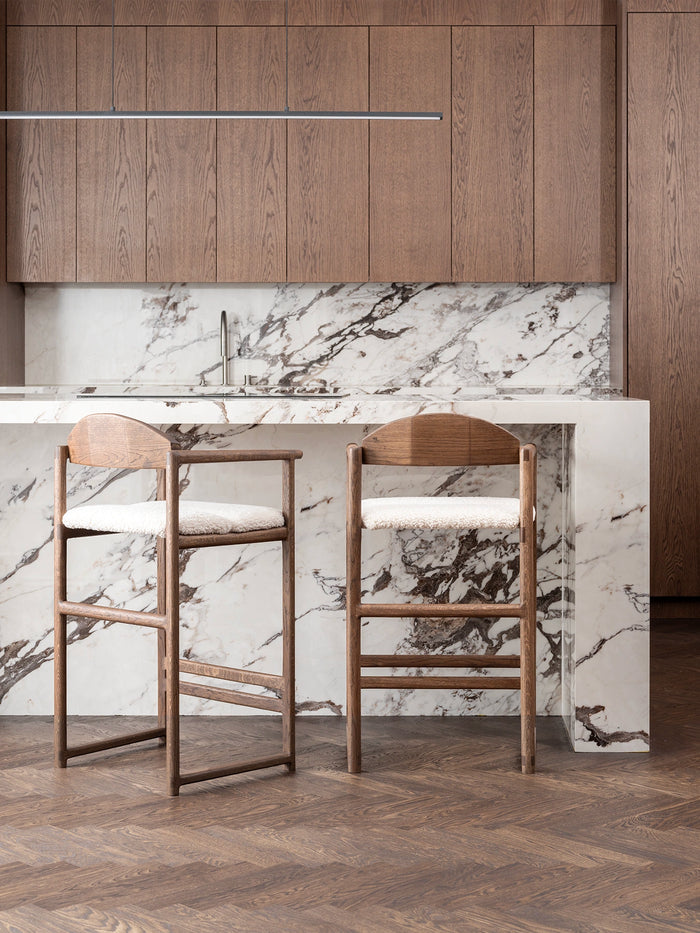
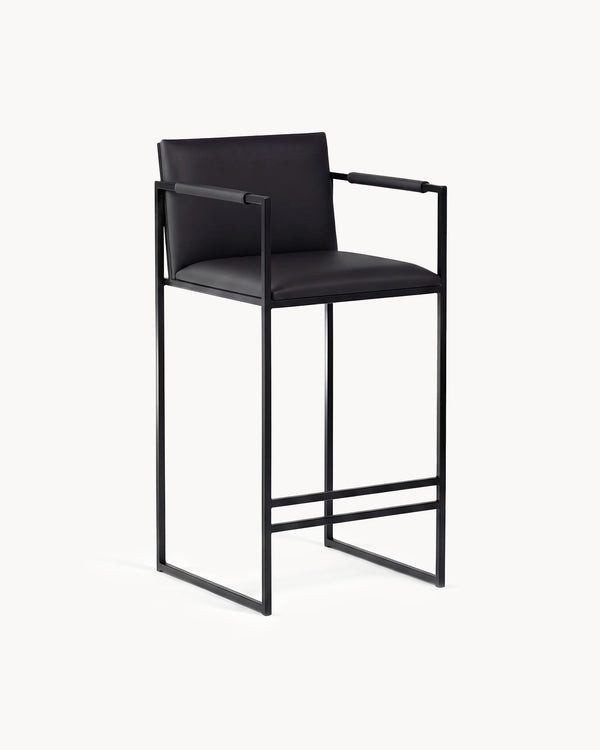
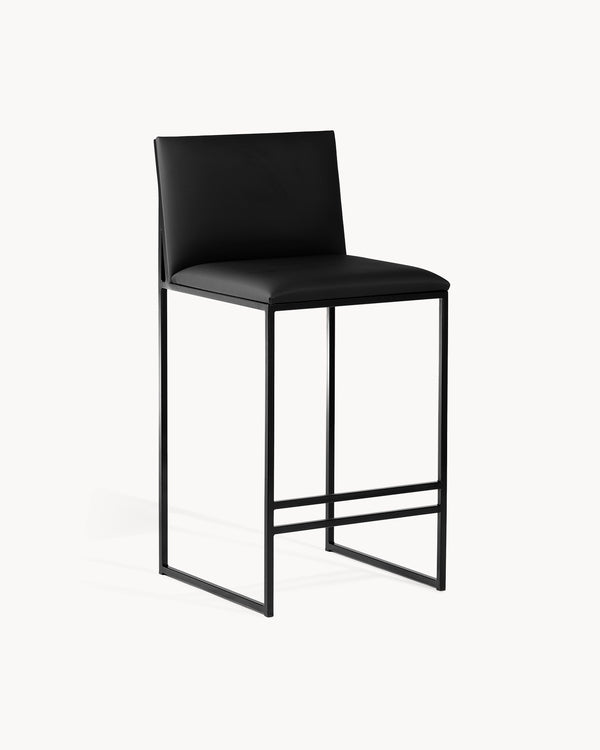
Choose a stool with a stated rating well above your weight, a wide seat and a backrest. A seat of 44 to 54 cm (17.3 to 21.3 in), such as Philip, Bruno, Ted or Carl, is more comfortable than a narrow one, and armrests make getting up easier. Every by Crea model carries the same 200 kg (440 lbs) rating.
For taller people, also check seat height and legroom: a counter that is higher than standard may call for a custom seat height. Our guide to seat width and depth lists every model's dimensions.
Weight capacity in brief
Look for a stated load rating of at least 150 kg (330 lbs), a named test standard such as EN 16139, and welded or glued joints on four braced legs. Use the stool as intended: sit, lean on the backrest, but do not rock it or stand on it. Every by Crea bar stool is rated for 200 kg (440 lbs), our steel models are tested by RISE to EN 16139, and all are made in our own factory in Malmö, Sweden, delivered fully assembled and covered by a 10-year warranty.