Av Alexandra PetterssonFaktagranskad av Alexander TjernströmUppdaterad
Massiv ek är ett av de bästa materialen för en barstol i köket: hårt, formstabilt, vackert med åren och möjligt att renovera i stället för att byta ut. Välj träsits för en ren stol som är lätt att torka av, eller klädd sits för långa middagar. Våra fyra ekstolar, Eva, Ebba, Ted och Carl, tillverkas av FSC-certifierad europeisk ek i vår egen fabrik i Malmö och finns med 66 eller 76 cm (26 eller 30 in) sitthöjd.
Ek har varit det självklara träslaget för stolar i Norden i hundratals år, och det finns goda skäl: den är tät nog att tåla dagliga stötar, formstabil nog att hålla fogarna täta, och ådringen blir vackrare efter år av användning än den var första dagen. En barstol i massiv ek ger dessutom värme åt ett kök fullt av sten, stål och vita luckor. Den här guiden går igenom vad du ska titta efter när du väljer barstol i ek: massivt trä eller faner, hur bekväm en träsits egentligen är under en lång middag, hur ytbehandlingarna skiljer sig, hur du sköter träet och hur våra fyra ekmodeller skiljer sig i storlek och stöd. Alla mått anges i centimeter och tum.
Är barstolar i ek ett bra val till köket?
Ja. Ek är ett hårt träslag med tät ådring som står emot märken från skor och fotstöd, och en lackad yta går lätt att torka av efter spill. En välgjord stol i massiv ek med ordentliga fogar håller i årtionden, och träet kan slipas och behandlas om det någon gång får djupa märken, vilket inte gäller de flesta lackerade eller plastklädda stolar.
Ek ger också köket något som stål och sten inte gör: värme. I ett rum med hårda, svala ytor är det ofta en rad ekstolar som får köksön att kännas som en plats att sitta på snarare än att jobba vid. Priset är vikt och volym: en ekstol är visuellt tyngre än en smal stålstol, vilket märks vid en liten köksö. Väger du mellan de två hittar du en direkt jämförelse i guiden barstol i trä eller metall.
Vad är skillnaden mellan massiv ek och ekfaner?
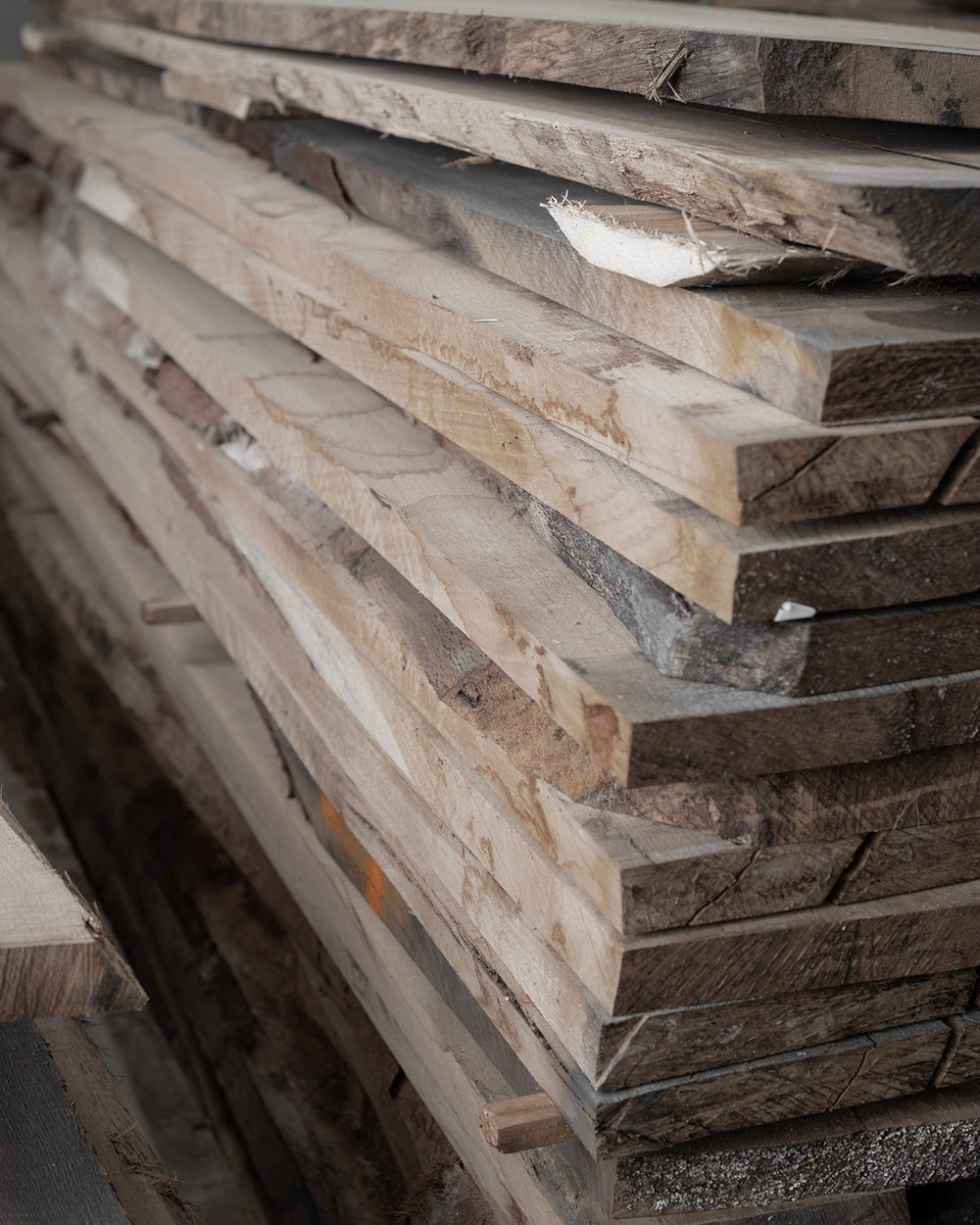
Massiv europeisk ek i vår fabrik i Malmö, innan den sågas och fogas.
Massiv ek är ek rakt igenom; faner är ett tunt lager ek som limmats på ett annat material, oftast spånskiva eller plywood. Massiv ek kan slipas, lagas och ytbehandlas på nytt; faner tål bara en lätt slipning, och en kantstött kant visar kärnan. För en stol som får sparkar och skrapor varje dag är det massivt trä som håller.
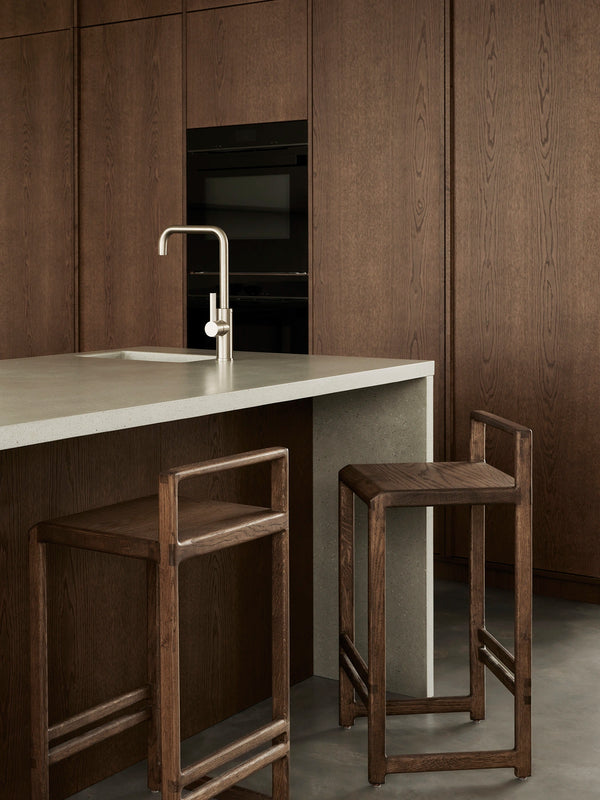
Våra ekstolar tillverkas av massiv europeisk ek, FSC-certifierad, vilket betyder att träet kommer från skog som brukas enligt strikta miljömässiga och sociala krav. Ben, tvärslåar och ryggstöd är massivt trä som fogas och limmas i vår egen fabrik i Malmö och ytbehandlas med en matt lack som skyddar ytan utan att göra den blank. När du jämför priser, kontrollera vilka delar av stolen som är massiva: vissa stolar som säljs som ek har massiva ben och en fanerad sits.
Är barstolar i trä bekväma att sitta länge på?
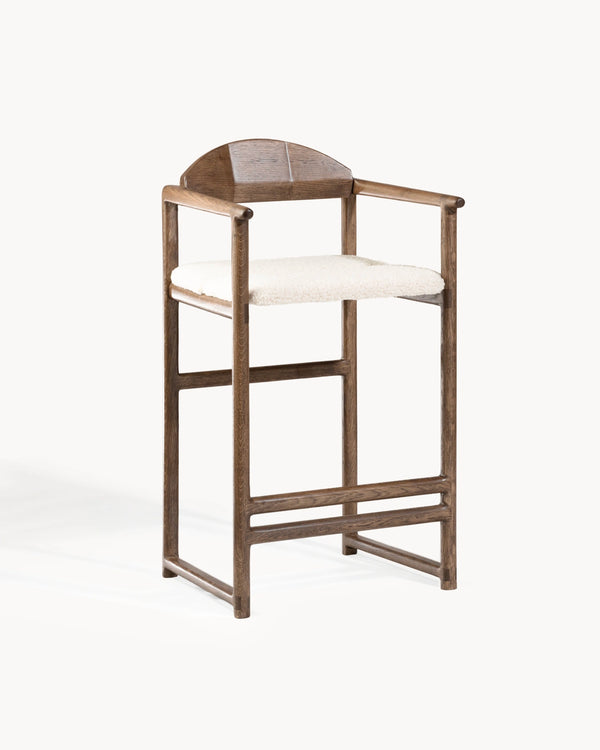
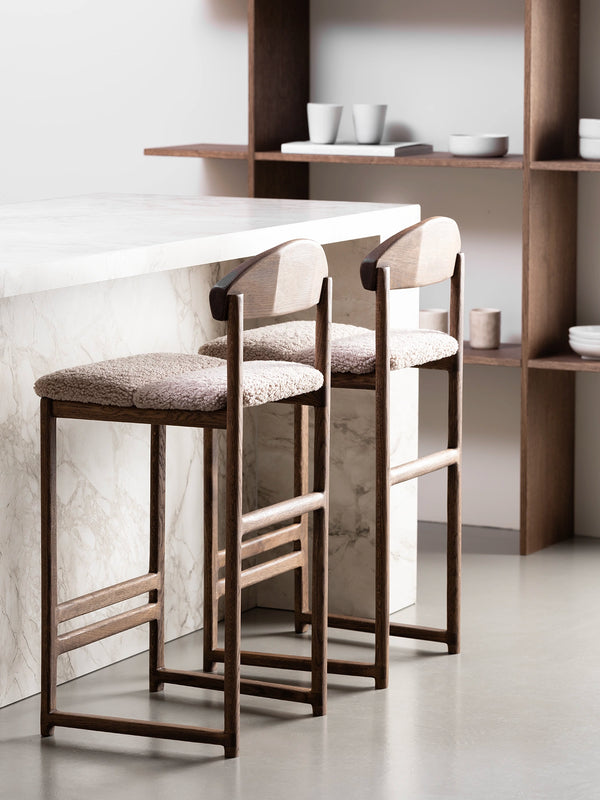
Ted i mörk ek med greige bouclé, för längre måltider.
En formad träsits är bekväm vid måltider upp till ungefär en timme, särskilt med ryggstöd och ett fotstöd på rätt höjd. Sitter du längre är en klädd sits skönare, eftersom den fördelar tyngden. Komforten beror mer på sitsens bredd, ryggstödet och fotstödet än på om sitsen är av trä eller tyg.
En platt träskiva blir jobbig efter tjugo minuter; en sits med en lätt svackning och en rundad framkant avlastar baksidan av låren. Bredden spelar också roll: Teds sits på 45 cm (17,7 in) och Carls på 54 cm (21,3 in) ger utrymme att byta ställning, och det är det som gör att man sitter bekvämt under en lång middag. Vill du ha ekens uttryck med en mjukare sits finns Ted och Carl med bouclé. Guiden till bekväma barstolar går djupare.
Hur hållbar är en barstol i ek?
Mycket hållbar när den är av massiv ek med limmade fogar. Ek är ett av de hårdaste vanliga lövträna i Europa, och en lackad yta skyddar mot vatten, fett och fläckar. Våra ekstolar är belastningsklassade för 200 kg (440 lbs), har 10 års garanti och levereras färdigmonterade, så fogarna görs och kontrolleras i fabriken, inte hemma hos dig.
Det som slits först på en trästol är ytan, inte träet: sitsens framkant och fotstödets ovansida får mest kontakt. En matt lack döljer lätt slitage bra, och filttassar under benen hindrar stolen från att repa golvet eller repas av det. Det viktigaste att undvika är vatten som får stå kvar på ytan i timmar.
Naturek eller mörk ek: vilken ytbehandling ska jag välja?
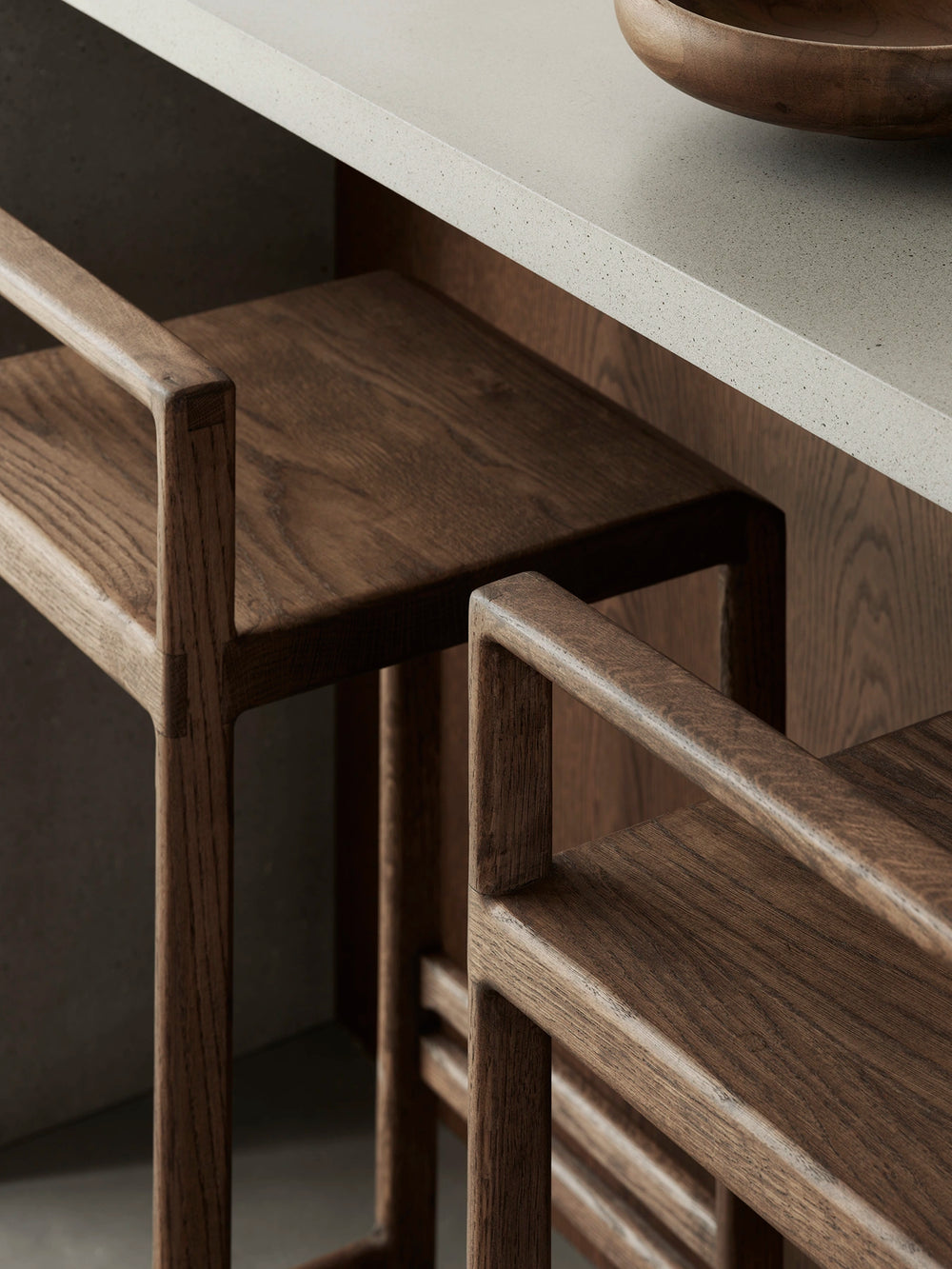
Mörk ek betsas innan den lackeras, så ådringen i det massiva träet syns fortfarande.
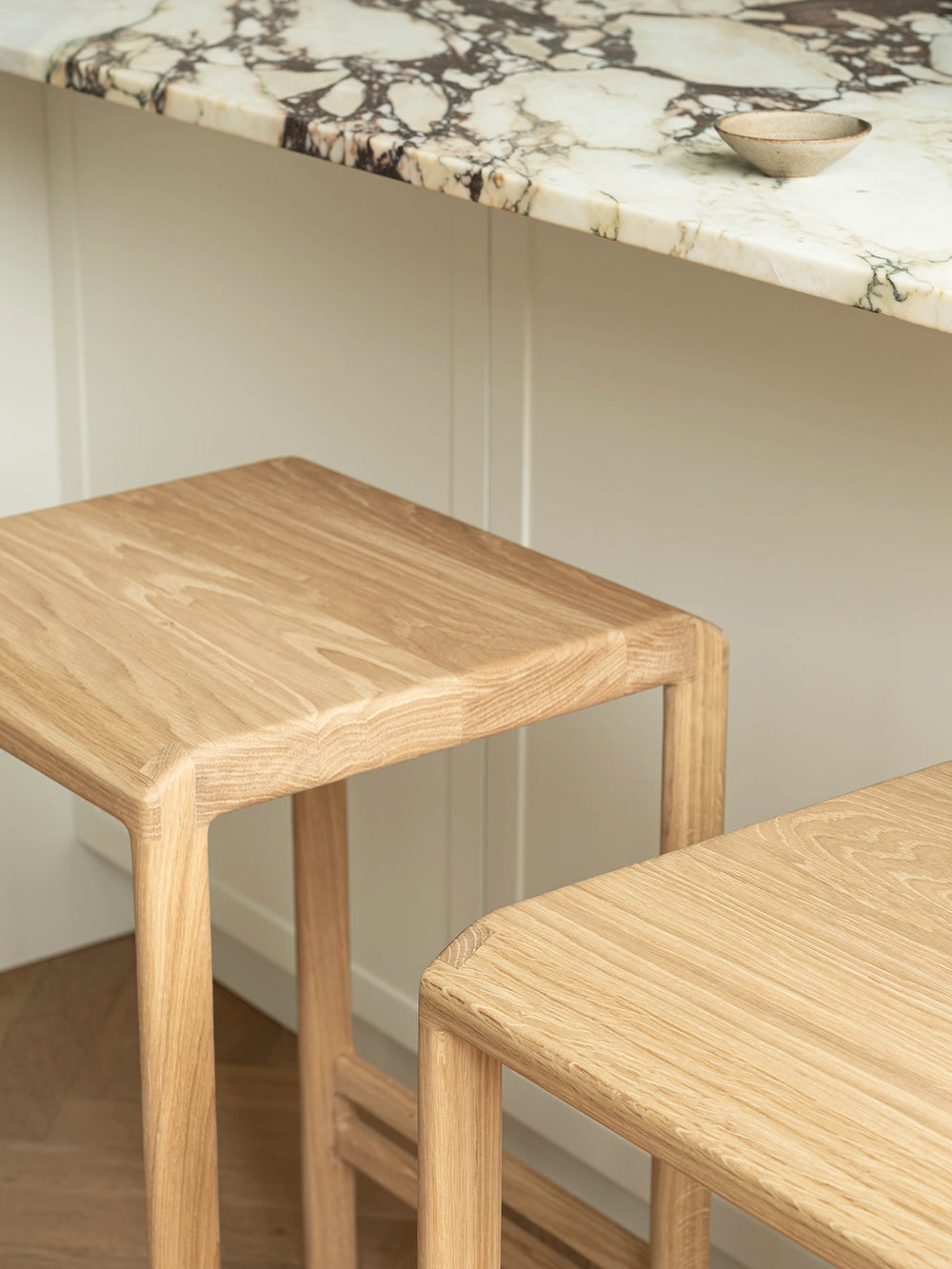
Välj naturek till ett ljust, skandinaviskt kök med vita, grå eller ljusa träytor; välj mörk ek för kontrast mot ljusa luckor, eller för att matcha mörka golv, sten och svarta detaljer. Under ytan är båda samma massiva ek; mörk ek betsas innan den lackeras, så ådringen syns fortfarande.
Naturek blir något varmare i tonen med åren när träet reagerar på ljus, vilket de flesta tycker om. Mörk ek döljer vardagliga märken och smulor bättre, vilket är bra att veta i ett kök med barn. Är du osäker på hur en ton ser ut bredvid din bänkskiva, beställ träprover först; de är små nog att hålla mot en skåplucka och visar den riktiga färgen, vilket ingen skärm gör.
Vilken barstol i ek ska jag välja?
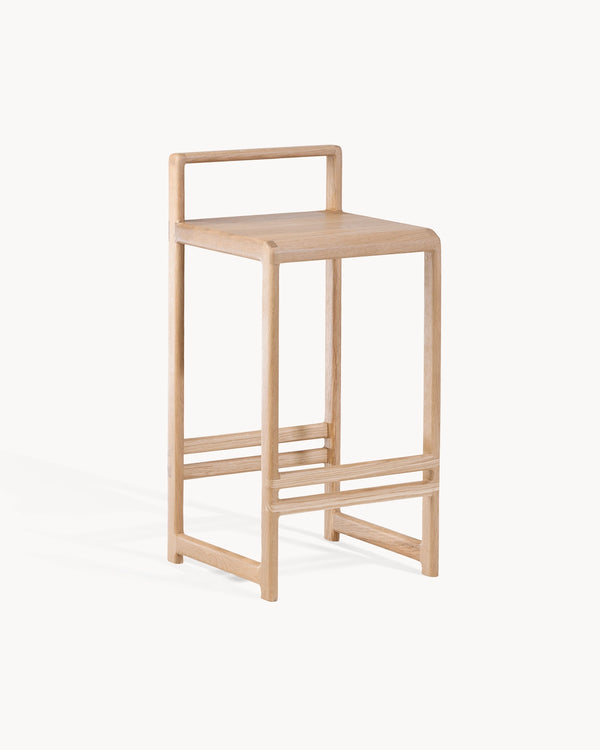
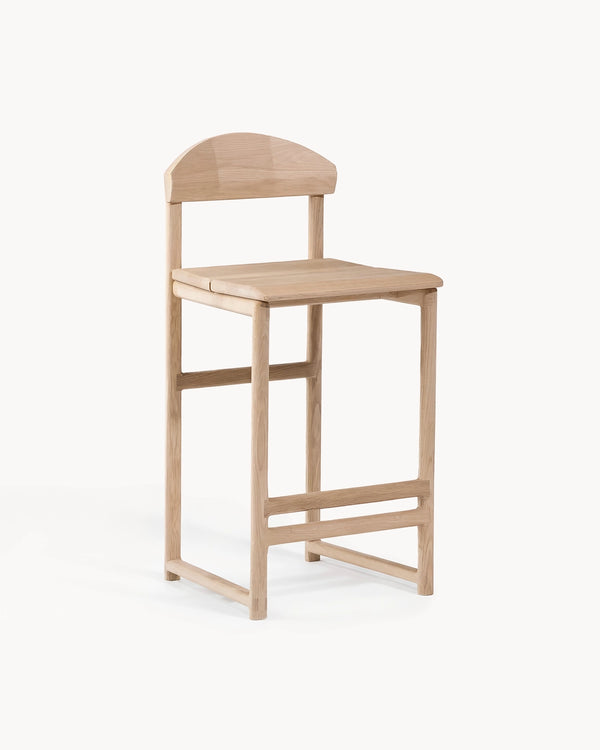
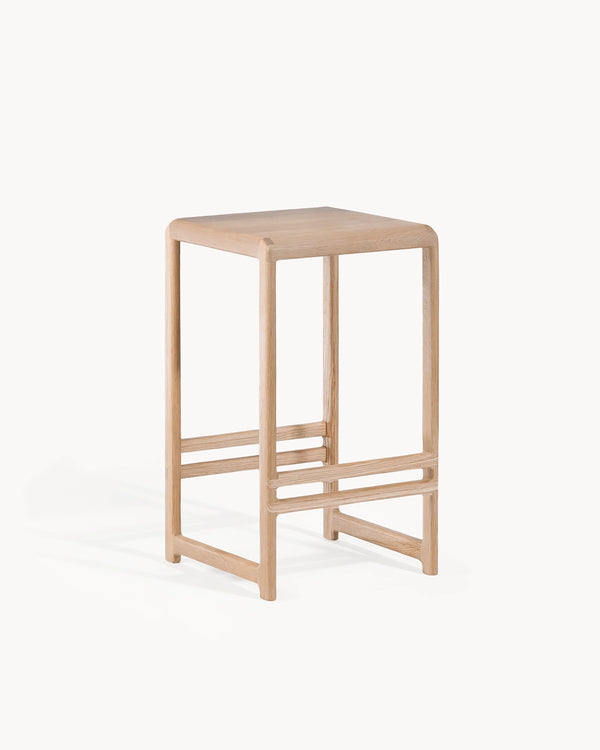
Välj Eva för en barpall utan rygg som går helt in under bänken, Ebba för ett lågt ryggstöd och ett lätt uttryck, Ted för högt ryggstöd och möjlighet till klädd sits, och Carl för armstöd och den bredaste, mest stolsliknande sitsen. Alla fyra finns med 66 cm (26 in) och 76 cm (30 in) sitthöjd.
Tabellen jämför de fyra sida vid sida. Sitsens bredd är måttet att titta på om flera stolar ska stå längs samma köksö: smalare sitsar ger fler platser, bredare sitsar är skönare vid långa middagar. Räkna med 55 cm (21,5 in) bänkkant per stol och 60 cm (23,5 in) för Carl.
Våra fyra barstolar i ek jämförda, 66 cm (26 in) sitthöjd
Modell
Ryggstöd
Sitsens bredd x djup
Total höjd
Sits
Eva
Inget
38 x 38 cm (15 x 15 in)
66 cm (26 in)
Massiv ek
Ebba
Lågt ryggstöd
38 x 38 cm (15 x 15 in)
79 cm (31,1 in)
Massiv ek
Ted
Högt ryggstöd
45 x 40 cm (17,7 x 15,7 in)
93 cm (36,6 in)
Ek eller bouclé
Carl
Högt ryggstöd, armstöd
54 x 43 cm (21,3 x 16,9 in)
93 cm (36,6 in)
Bouclé
Hur sköter jag barstolar i ek?
Torka av ekstolarna med en torr eller lätt fuktad trasa och torka dem direkt efteråt. Undvik silikonpolish, slipsvampar och starka rengöringsmedel, som gör lacken matt eller löser upp den. Torka upp spill snabbt i stället för att låta vatten stå, och sätt filttassar under benen för att skydda både golvet och stolen.
En lackad stol behöver aldrig oljas. Får ytan en djup repa efter många års användning kan den slipas och lackas om, en av fördelarna med massivt trä. Ställ inte stolarna tätt intill element, där mycket torr värme kan öppna små sprickor i allt massivt trä. Vår guide till att rengöra barstolar tar även upp klädsel och stål.
Passar barstolar i ek i ett modernt kök?
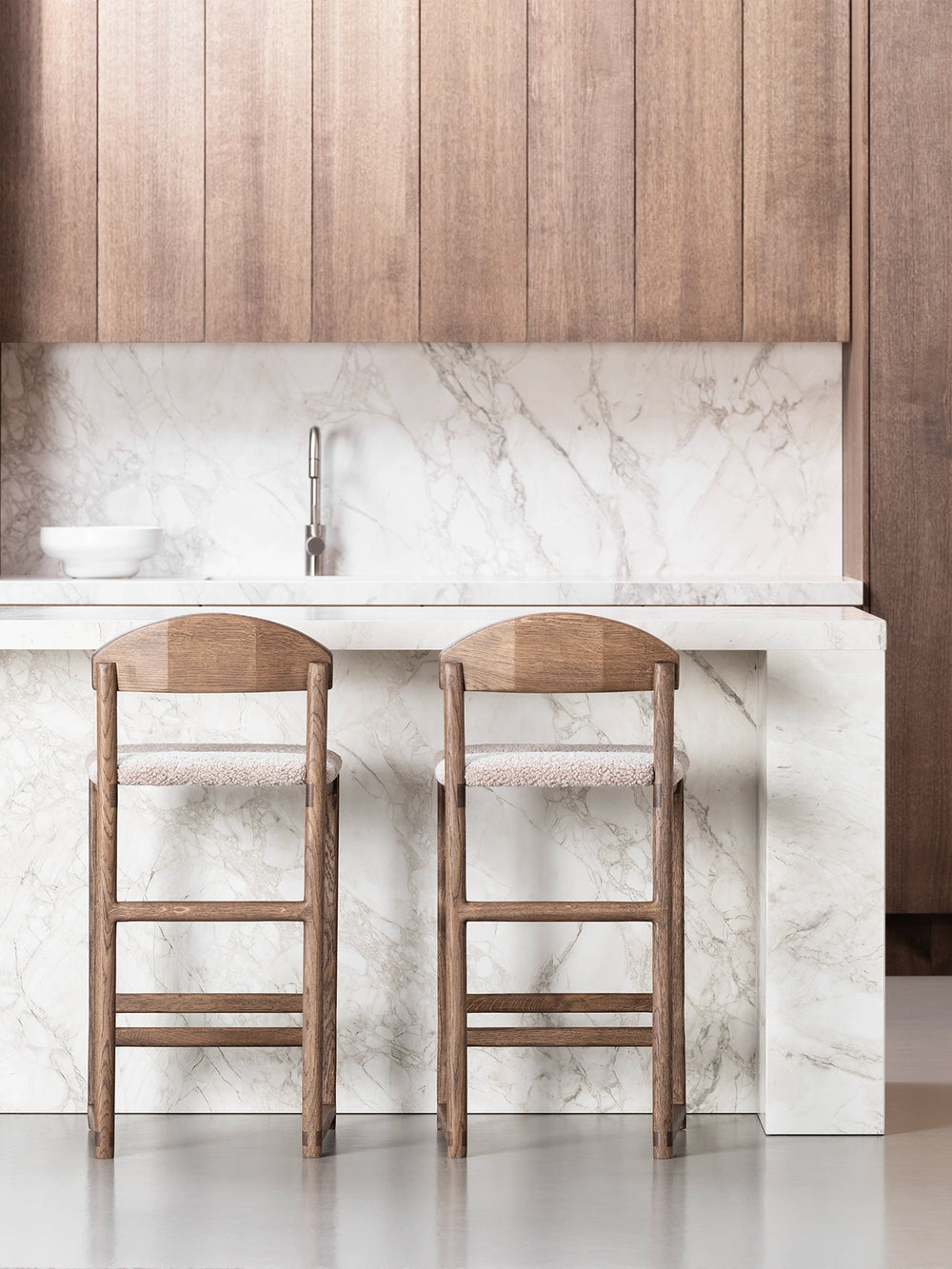
Eva i naturek vid en köksö i marmor: enkla linjer håller eken modern.
Ja, när formen är enkel. Moderna kök med släta luckor, stenskivor och svarta detaljer passar ekstolar med rena linjer och utan snickarglädje, och därför är vår ekserie ritad med raka ben, fyrkantiga sitsar och smala ryggstöd. Då tillför eken värme utan att se rustik ut.
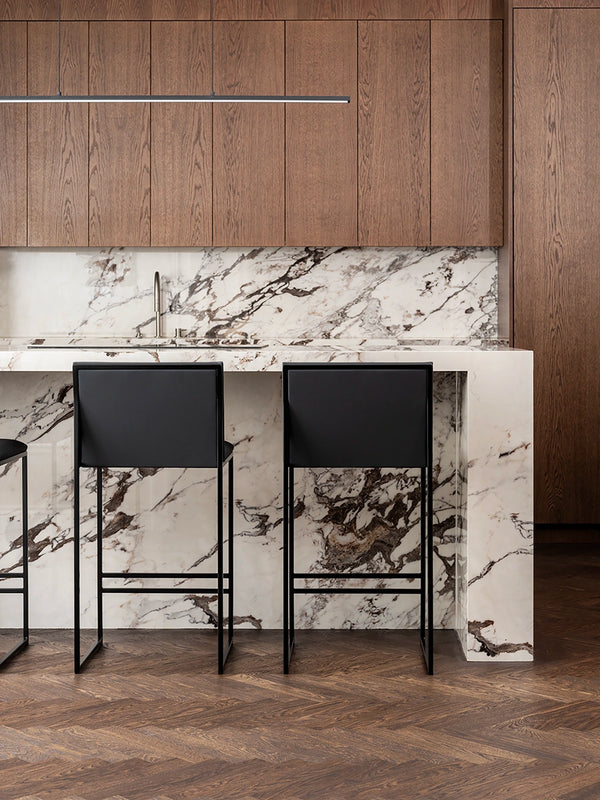
Några kombinationer fungerar extra bra: naturek med vita eller ljusgrå luckor och en ljus stenskiva; mörk ek med marmor, där stolarna tar upp ådringen; och ek i ett kök med svarta ståldetaljer, där träet mjukar upp metallen. Håll stolens ek nära golvets eller bänkskivans ton, inte båda, så att rummet behåller lite kontrast. Fler kombinationer hittar du i guiden till att välja barstolar.
Så väljer du barstol i ek
Välj massiv ek framför faner, en formad sits eller en klädd om du sitter länge, och ett ryggstöd som passar hur ni använder bänken. Välj naturek till ett ljust kök och mörk ek för kontrast och en förlåtande yta. Våra ekstolar Eva, Ebba, Ted och Carl tillverkas av FSC-certifierad europeisk ek i vår egen fabrik i Malmö, levereras färdigmonterade, är belastningsklassade för 200 kg (440 lbs) och har 10 års garanti, med 66 eller 76 cm sitthöjd.
Ja. Ek är ett tätt lövträ som står emot märken, håller fogarna täta och kan slipas och ytbehandlas på nytt. Med lackad yta är den lätt att torka av efter spill, vilket passar ett kök.
Är barstolar i trä bekväma?+
En formad träsits är bekväm vid måltider upp till ungefär en timme, särskilt med ryggstöd och fotstöd. Sitter du längre är en klädd sits skönare, till exempel Ted eller Carl i bouclé.
Är era barstolar i ek av massivt trä?+
Ja. Eva, Ebba, Ted och Carl tillverkas av massiv FSC-certifierad europeisk ek och ytbehandlas med matt lack i vår egen fabrik i Malmö.
Behöver barstolar i ek oljas?+
Inte våra. De är lackade och behöver bara en torr eller lätt fuktad trasa. Undvik silikonpolish och slipande rengöringsmedel.
Vad är skillnaden mellan naturek och mörk ek?+
Båda är samma massiva ek. Mörk ek betsas innan den lackeras, så ådringen syns fortfarande; den ger kontrast mot ljusa luckor och döljer vardagliga märken bra.
Vilka sitthöjder finns era barstolar i ek i?+
66 cm (26 in) för köksbänkar på 89 till 92 cm och 76 cm (30 in) för bardiskar på 99 till 102 cm. Specialhöjder tillverkar vi bara på stålmodellerna.
Att välj ett alternativ leder till en fullständig siduppdatering.












 Barstol i trä eller metall: vilket material passar dig?Välj metall (pulverlackerat stål) för ett smalt, lätt uttryck, flest val av färg och höjd och en stomme som tål dagliga stötar. Välj trä (massiv ek)...
 Bekväma barstolar: ryggstöd, fotstöd och sitsens formEn barstol är bekväm att sitta länge på när fem saker stämmer: sitthöjden lämnar 23 till 26 cm (9 till 10 in) under bänken, sitsen är...
 Så rengör du barstolar: skötsel av stål, ek, läder, sammet och boucléRengör stommar med en torr eller lätt fuktad trasa och torka direkt efteråt; mer behöver pulverlackerat stål och lackerad ek inte. Torka av veganskt läder med...
 Så väljer du barstolar till köket: guide i 6 stegVälj barstolar i den här ordningen: mät bänken till undersidan och välj 66 cm (26 in) eller 76 cm (30 in) sitthöjd; räkna 55 cm (21,5...
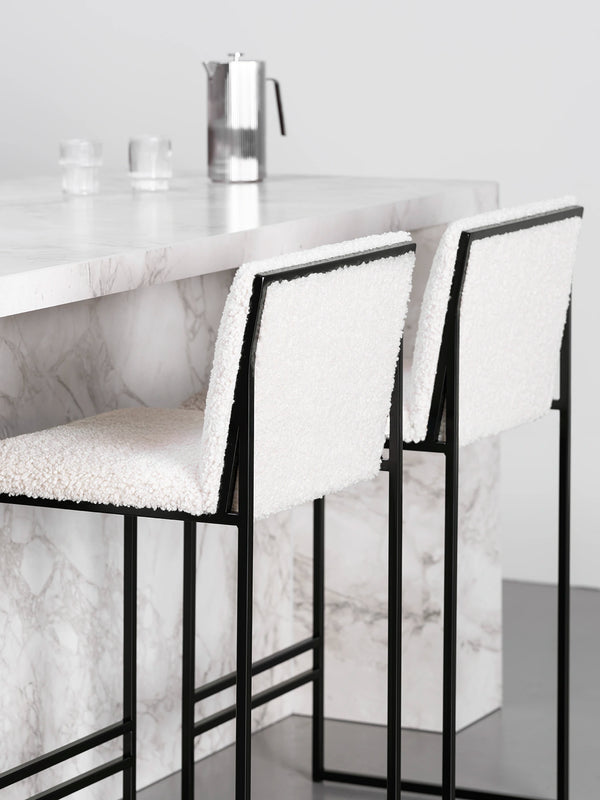 Barstol med eller utan ryggstöd: vilken ska du välja?Välj en barstol med ryggstöd om du sitter vid bänken mer än ungefär 20 minuter åt gången: vid måltider, läxläsning eller jobb. Välj en barstol utan...
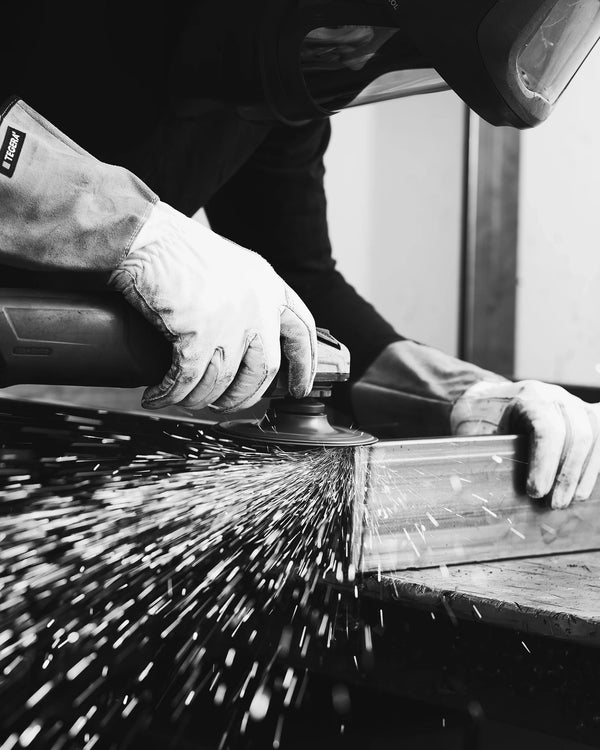 Så tillverkas våra barstolar: inne i fabriken i MalmöVarje barstol från by Crea tillverkas från början till slut i vår egen fabrik i Malmö. Stålstommar kapas, bockas, svetsas och pulverlackeras; ekstommar bearbetas, fogas, limmas...
