Swivel or Fixed Dining Chairs: What a Swivel Base Costs You at the Table
By Alexandra PetterssonReviewed by Alexander TjernströmUpdated
Short answer
Fixed
every by Crea dining chair
0
moving parts to loosen
75 cm
Floor behind each chair, at least
A swivel dining chair turns so you can get in and out, or face the room, without moving it. In return it usually stands on a central column and base, relies on a bearing that can loosen, and turns into its neighbour's space. A fixed chair on four legs is simpler, steadier and has nothing to wear out, and if it is light and glides on pads, it is easy to get in and out of. Every by Crea dining chair is fixed.
Swivel dining chairs are popular for a good reason: you can turn to get up, or to talk to someone behind you, without dragging the chair over the floor. They also bring costs that are easy to miss in a shop: floor taken up under the table, a mechanism that carries your weight every time you turn, and chairs that rarely stand in a straight row. We make only fixed dining chairs, and we explain why below, but this guide sets out both sides fairly. It covers the trade-offs, why people choose swivel, what a swivel base costs at the table, how mechanisms wear, why ours are fixed, how to make a fixed chair easy to get in and out of, and the fixed alternative to a swivel chair with armrests.
Swivel or fixed dining chairs: which is better?
Neither in every home: swivel chairs suit an open-plan room where people turn between the table and a living area, while fixed chairs are usually steadier, take less space and have nothing to wear out.
The difference that matters most at a dining table is what the base does under it. Most swivel dining chairs turn on a central column with a round or star-shaped foot; a fixed chair stands on four legs that sit beside your own.
The chart sets out the trade-offs.
Swivel and fixed dining chairs compared
Point
Swivel
Fixed
Getting in and out
Turn the seat; the chair stays put
Pull the chair back a little
Turning to the room
Easy, without moving the chair
Shift in the seat or turn the chair
Under the table
A wide central foot can meet table legs and feet
Four legs; armless chairs slide fully under
Around the table
Seats come to rest at different angles
Chairs stay in line
Wear
A bearing that can loosen or squeak
No moving parts
Children
Tempting to spin
Steadier to climb onto
Why do people choose swivel dining chairs?
To get in and out without pulling the chair back, and to turn towards the room or a guest; both are real advantages, especially in open-plan rooms and for anyone who finds pulling a chair awkward.
In a kitchen-diner, where the table sits between the kitchen and the sofa, a swivel seat lets you turn to the room without getting up. On a thick rug, where a chair drags, turning is easier than sliding.
If those are your reasons, it is worth checking what else solves them: a lighter chair, pads that glide, armrests to push up from and enough floor behind the chair. The last two sections of this guide cover each one.
What does a swivel base cost you at the table?
Space and flexibility: a swivel chair usually needs more room around it, may not slide as far under the table, and suits fewer tables.
A central column needs a wide foot to stay stable, and that foot sits where a four-legged chair leaves open floor. At a table with a pedestal or a crossed base, the foot of the chair and the base of the table can meet.
A swivel seat also turns into its neighbour's space, so allow more table edge per chair than for a fixed chair, and swivel armrests have to clear the tabletop at every angle. For fixed chairs, as a rule of thumb, we suggest 60 cm of table edge per armless chair and 70 cm with armrests; our guide to dining chairs with arms explains why.
Do swivel dining chairs wear out?
The mechanism can: a swivel bearing carries your full weight every time you sit, turn or lean, and in cheaper chairs it can develop play or start to squeak within a few years.
Good mechanisms last longer, but they remain a moving part, and moving parts wear.
Fixed chairs are not automatically better: a four-legged chair that is only screwed together can work loose too. What matters is the joint. Our guide to choosing quality dining chairs shows what to check, and our guide to swivel and fixed bar stools covers the same question at a kitchen island.
Why are by Crea dining chairs fixed?
Because a fixed frame can be welded or jointed in one piece, with no joint that moves; that is part of what lets us rate every chair for 200 kg and give it a 10-year warranty.
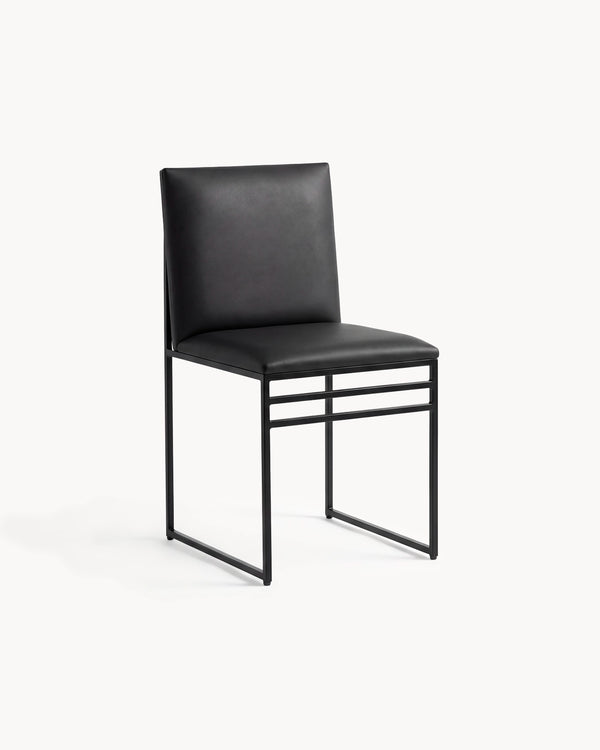
Our Sella, Bella and Isabell are fully welded from raw Swedish steel, and Karin and Erik are made from solid A-grade FSC-certified oak. Sella was assessed by RISE as meeting EN 16139, the European standard for non-domestic seating, at Level 2, and Isabell at Level 1.
It is a choice we make as makers, not a verdict on every home: we would rather make a chair that stays tight for many years than one that turns. Our guide to dining chair weight capacity explains what the 200 kg rating means.
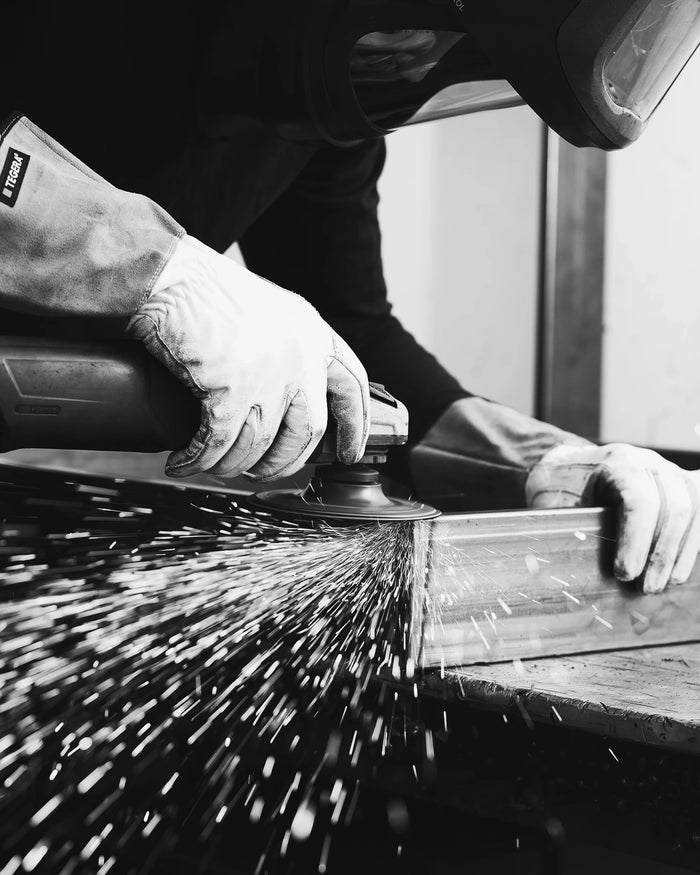
Welding raw Swedish steel in our factory in Sweden.
How do you get in and out of a fixed dining chair easily?
Choose a light chair, put pads under its legs and leave enough floor behind it; armrests help too, because you can push up from them.
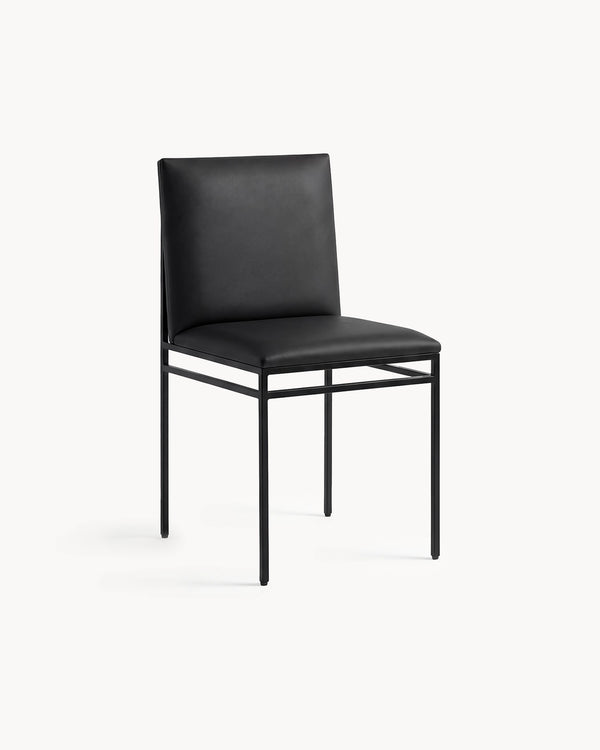
Weight matters more than most people expect, because a light chair can be drawn back with one hand as you sit. Our Bella and Isabell weigh 6 kg, and Bella's four free-standing legs have no connecting rails, so it is easy to pull out and clean under. Furniture pads let a chair glide instead of dragging.
We suggest at least 75 cm of floor behind each chair, 90 cm for comfort, and 110 cm where people walk behind seated guests. Our guide to dining chairs for small spaces has the full measurements.
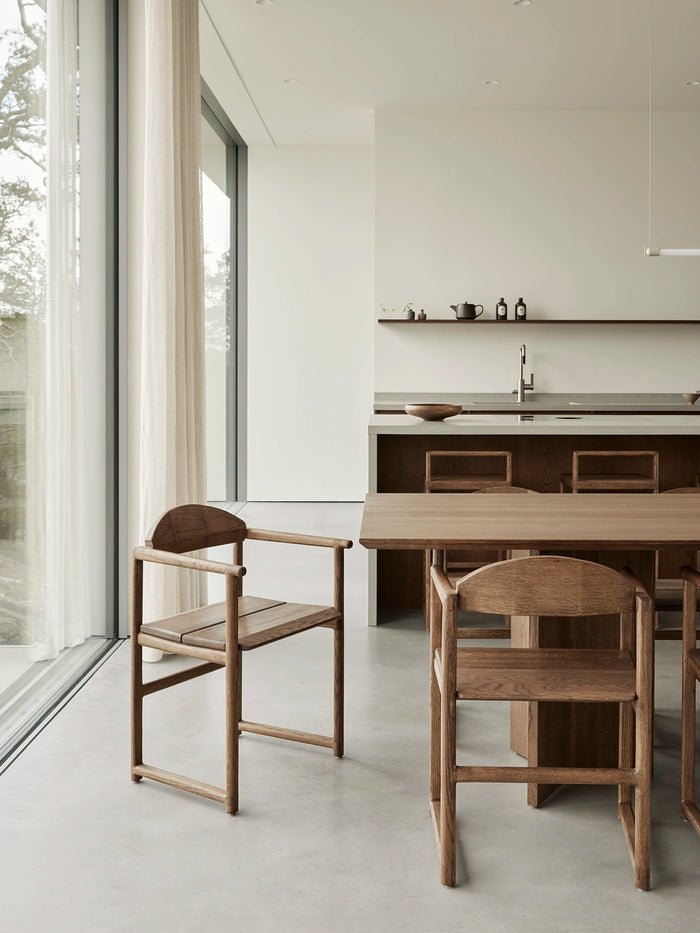
Erik chairs with room to pull out behind them.View Floor
Is there a fixed alternative to a swivel chair with armrests?
Yes: a fixed chair with armrests gives much of the support people look for in a swivel armchair, and the armrests make sitting down and standing up easier.
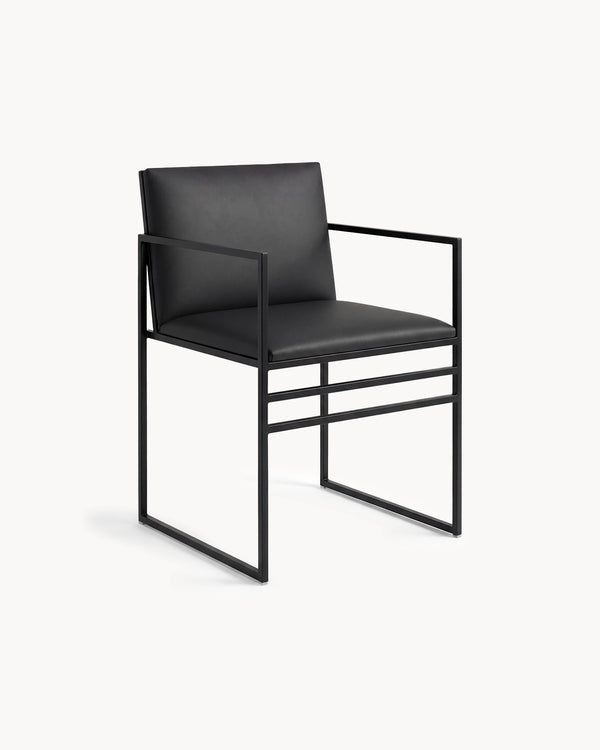
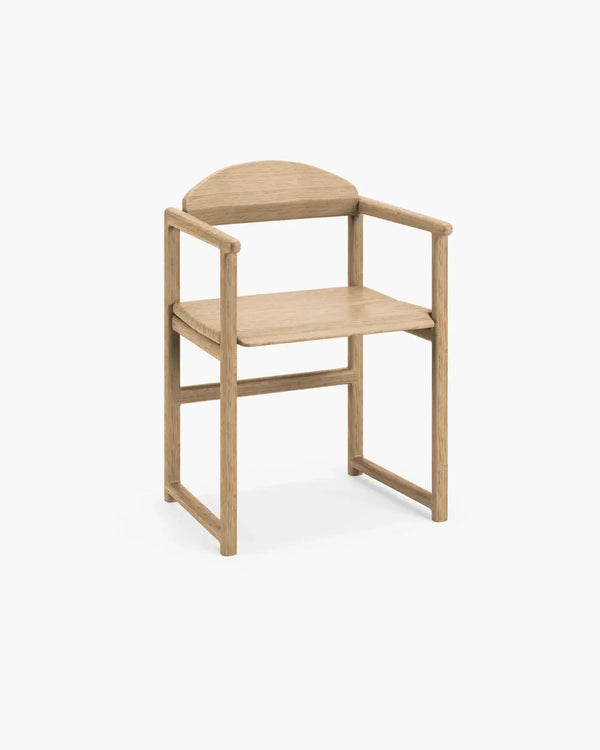
Our Sella is a welded steel chair with armrests at 64 cm, in vegan leather or velvet, and our Erik is solid oak with armrests at 67 cm. Both slide under our dining tables, whose underside is at 73 cm.
If a swivel chair in leather was the plan, our Valencia vegan leather is rated at 300,000 Martindale and carries a 5-year fabric warranty from its maker, Spradling. Our guide to vegan leather and leather compares the two.
Swivel or fixed: the short answer
Swivel
suits open-plan rooms where people turn to the room.
Fixed
steadier, closer in a row, nothing to wear out.
6 kg
Bella and Isabell, light enough to draw back with one hand.
Choose swivel if turning to the room matters most and your table leaves room for a central base. Choose fixed for a steadier chair, a closer row and a frame with nothing to wear out, and make it easy to use with a light chair, pads and enough floor behind it. Every by Crea dining chair is fixed, made in our own factory in Sweden, delivered fully assembled, rated for 200 kg and covered by a 10-year warranty.
Frequently asked questions
Are swivel dining chairs a good idea?
They are useful in open-plan rooms where people turn between the table and a living area. For stability, a closer row and young children, fixed chairs are usually the simpler choice.
Do swivel dining chairs fit under the table?
Often not as far as a fixed chair, because the central column needs a wide foot. Check that the foot clears the table base and, with armrests, that the arms clear the tabletop at every angle.
Do swivel chairs wear out faster?
The bearing is a moving part that can loosen or squeak over time, especially in cheaper mechanisms. A fixed chair with welded or properly jointed joints has nothing that moves.
Do you sell swivel dining chairs?
No. Every by Crea dining chair is fixed: Sella, Bella and Isabell in welded steel, Karin and Erik in solid oak, each rated for 200 kg with a 10-year warranty.
How do I make a fixed chair easier to get in and out of?
Choose a light chair, put pads under the legs so it glides, and leave at least 75 cm of floor behind it. Armrests help you push up.
Are swivel dining chairs good for children?
Usually less so: a seat that turns is tempting to spin and less steady to climb onto. A fixed chair stays where it is.