The Best Reading Chair: What to Look For and How to Set Up a Reading Corner
By Alexandra PetterssonReviewed by Alexander TjernströmUpdated
Short answer
53 cm
Deep seat for curling up
Shoulder
height for the bottom of the lamp shade
45 to 55 cm
Side table beside our armchairs
A good reading chair has a deep seat you can curl up in, a back that supports you to the shoulders and arms low enough to rest a book on. Set it where light falls over your shoulder, from a lamp or a window, add a side table at about arm height, 45 to 55 cm for our armchairs, and keep a throw within reach.
A reading chair is used differently from any other seat in the house. You sit in it for an hour or more, you shift between upright and curled up, you hold a book or a tablet, and you need light in the right place. A chair that is perfect for a quick coffee can be tiring for a long read. This guide explains what makes a good reading chair, how to choose between a lower and a more upright seat, where to put it, how to light it and what to keep beside it. Every figure is in centimetres, with the measurements of our own armchairs, Kent and Einar.
What makes a good reading chair?
A deep seat you can shift around in, a back that supports you to the shoulders, and arms low enough to rest your forearms and a book on.
Reading means sitting still for a long time, so support matters more than softness. A full-height back lets you lean back without your neck taking the weight, and a deep seat lets you tuck your legs up.
The chart below sets out what to look for, and how our armchairs measure up.
What to look for in a reading chair, and how Kent and Einar measure
Feature
What to look for
Kent and Einar
Seat depth
50 to 55 cm
53 cm
Seat height
35 to 45 cm
38 cm
Back
Supports the shoulders
Full-height back cushion
Arms
Low and flat, to rest a book
49 cm from the floor
Should a reading chair be upright or reclined?
Slightly reclined suits most people for long reading: enough to rest against the back, not so much that you have to hold the book above your face.
A fully upright chair tires you, and a recliner makes reading awkward once it tips too far back. A lounge chair whose seat and back are set at a gentle angle sits in between.
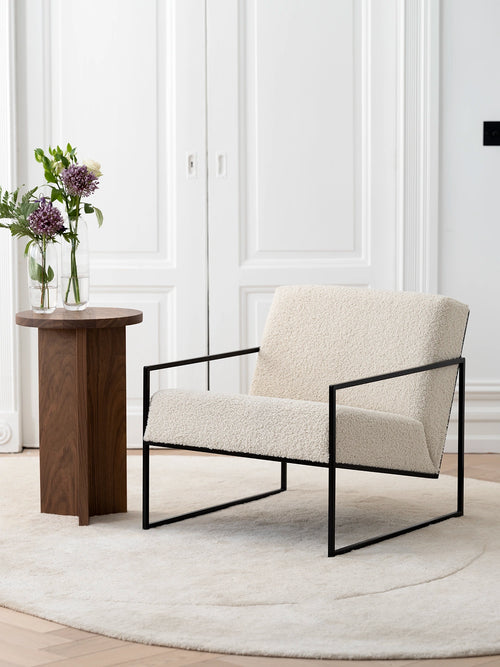
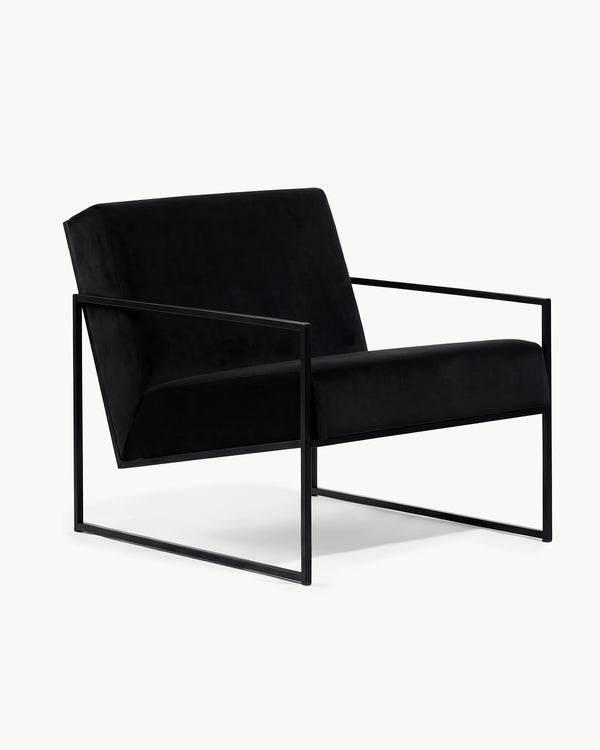
Kent and Einar have a seat that tilts slightly back and a back cushion at a relaxed angle, the position most people settle into for reading. Our guide to what makes an armchair comfortable explains how seat height and depth work together.
Where should you put a reading chair?
Put it where daylight or a lamp falls over your shoulder, away from the main walkway, ideally in a corner or beside a window.
Light from behind and to the side, over your shoulder, reaches the page without glare and without the shadow of your own head.
A corner also gives you two walls of shelter, which is what makes a reading corner feel like a place of its own. Our guide to where to put an armchair covers layouts with a sofa.
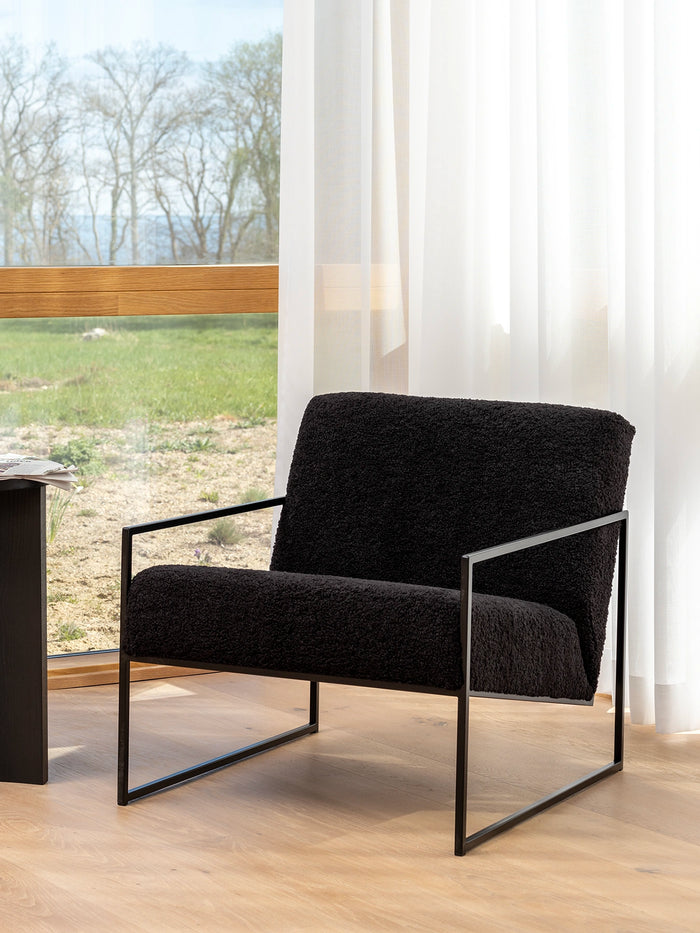
Kent beside a window, with daylight from the side.
What lighting do you need for a reading chair?
As a rule of thumb, a floor or table lamp behind and slightly to the side of the chair, with the bottom of the shade at about shoulder height when you are seated.
That places the light over your shoulder and onto the page. Warm white light suits evening reading; a shade that directs the light down keeps it out of your eyes.
Daylight is best of all by day. A chair angled beside a window, with the light coming from the side rather than straight in front, gives you hours of reading without a lamp.
What should you keep beside a reading chair?
A side table at about arm height, a throw and somewhere to put the book down; a footstool if you like to stretch your legs.
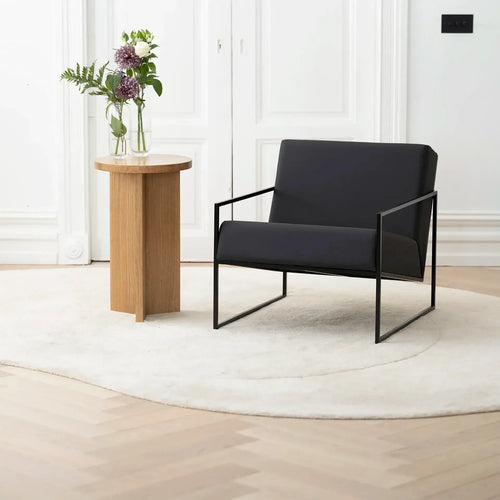
A side table level with the arms, or a little lower, lets you put down a cup without twisting. With arms at 49 cm, a table of 45 to 55 cm suits Kent and Einar.
Keep the table on the side of your free hand, and keep the area uncluttered: a reading corner works because it asks nothing of you. Our coffee tables include low tables that sit in front of a pair of chairs.
Kent with a side table at the height of its arms.
Which fabric is best for a reading chair?
A soft, warm fabric such as bouclé or velvet for comfort against bare arms, or vegan leather if the chair also has to cope with children and snacks.
You spend hours in a reading chair, often in a jumper or with a blanket, so how the fabric feels matters. Bouclé is warm and textured, velvet smooth and deep, vegan leather cool and easy to wipe.
Einar, on solid oak, and Kent, on black steel, both come in bouclé, velvet and vegan leather. Our guide to the best fabric for an armchair compares them in detail.
Reading corner in three steps
Deep
seat, back to the shoulders, low flat arms.
Light
over the shoulder, from a lamp or a window.
45 to 55 cm
A side table at about arm height.
Choose a chair with a deep seat, a back to your shoulders and low, flat arms. Place it where light falls over your shoulder, away from the walkway. Add a side table at about arm height and a throw within reach. Kent and Einar are made in our own factory in Malmö, Sweden, delivered fully assembled and covered by a 10-year warranty.
Frequently asked questions
What is the best type of chair for reading?
A lounge armchair with a deep seat, a back that supports you to the shoulders and low arms, set at a slight recline.
How deep should a reading chair be?
50 to 55 cm of seat depth, enough to lean back and tuck your legs up. Our Kent and Einar are 53 cm deep.
Where should the lamp be for a reading chair?
As a rule of thumb, behind and to the side of the chair, with the bottom of the shade at about shoulder height when seated, so the light falls over your shoulder.
What height should a side table be next to a reading chair?
About the height of the chair's arms or a little lower. For our armchairs, with arms at 49 cm, that is 45 to 55 cm.
Is a recliner good for reading?
Only slightly reclined. Tipped far back, you end up holding the book above your face; a lounge chair's gentle angle is easier on arms and neck.
Can I use an armchair as a reading chair in the bedroom?
Yes, if there is room for the chair and a lamp. Kent, at 67 x 82 cm, fits many bedroom corners.