Mid-Century Modern vs Scandinavian Furniture: The Difference and How to Mix Them
By Alexandra PetterssonReviewed by Alexander TjernströmUpdated
Short answer
1940s
to 1960s: the mid-century period
Teak
and walnut vs oak and ash
2/3
of the room in one style
Mid-century modern is a period: furniture designed from roughly the mid-1940s to the late 1960s, known for teak and walnut, tapered legs and sculpted curves. Scandinavian is a tradition that never stopped: lighter woods such as oak, calm lines and comfort for long evenings indoors. The two overlap in Danish and Swedish design of the 1950s, which is why they mix easily: let one wood tone lead, repeat a few slim lines and give the room one sculptural piece.
Mid-century modern and Scandinavian are often used as if they were the same thing, and in a shop listing they sometimes are. They are not quite. One is a period with a recognisable look; the other is a way of making furniture that has kept changing for a hundred years. They share a great deal, which is good news if you own a teak sideboard and want a new armchair, or love pale oak and want one piece with more character. This guide explains what each style is, where they differ, how to mix them in one room, and which of our pieces fit which side. Our own furniture is contemporary Scandinavian, designed and made in Sweden; we make no reproductions of period designs.
What is mid-century modern furniture?
Furniture designed from about the mid-1940s to the late 1960s, mainly in the United States and Scandinavia: low, light-looking pieces with tapered or splayed legs, organic curves and warm woods such as teak and walnut.
After the war, new techniques such as moulded plywood let designers make lighter, more sculptural furniture for smaller, more open homes. The look is optimistic and graphic: a sideboard on thin legs, a shell chair, a round or oval coffee table.
Today the phrase covers originals, reissues and new furniture made in the style. When a listing says mid-century modern, it usually describes the look, not the date it was made.
What is the difference between mid-century modern and Scandinavian furniture?
Mid-century modern is warmer, darker and more sculptural; Scandinavian is lighter, calmer and built around everyday comfort. Both use real wood and clean lines.
The quickest way to tell them apart is the wood and the legs. Mid-century pieces are mostly teak or walnut on tapered, often angled legs. Scandinavian pieces today are mostly oak, ash or painted wood, on straight legs or slim steel.
The chart below sets out the main differences.
Mid-century modern and Scandinavian furniture compared
Mid-century modern
Scandinavian
What it is
A period, about the mid-1940s to the late 1960s
A living tradition, still evolving
Typical woods
Teak, walnut, rosewood
Oak, ash, birch, pine
Legs
Tapered, often splayed
Straight wood or slim steel
Shapes
Curves, shells, ovals and boomerangs
Simple lines, construction on show
Colours
Warm wood with mustard, olive, rust or teal
Natural wood, white, black and warm neutrals
Mood
Graphic, a little retro
Calm, light and cosy
Is Scandinavian design the same as mid-century modern?
No, but they overlap: much of the furniture now sold as mid-century modern was designed in Denmark, Sweden and Finland in the 1950s and 1960s, often called Danish modern.
The difference is time. Mid-century modern ended with the 1960s; Scandinavian design carried on. Today it is more often pale or dark oak, black steel and bouclé than teak and orange wool.
How do you mix mid-century modern and Scandinavian furniture?
Let one wood tone lead, repeat slim legs and simple lines, and let one or two sculptural pieces carry the mid-century look against a calm Scandinavian base.
A room where every piece is a period statement looks like a film set; a room in pale oak alone can look flat. Mixing works when the pieces share something: a leg shape, a colour or a material.
As a rule of thumb, give about two thirds of the room to one style and a third to the other. Black steel is a good bridge: it sits as easily beside teak as beside oak.
Which armchair suits a mid-century living room?
A low, open lounge chair with a deep seat and visible legs: mid-century lounge chairs sit low and invite you to lean back.
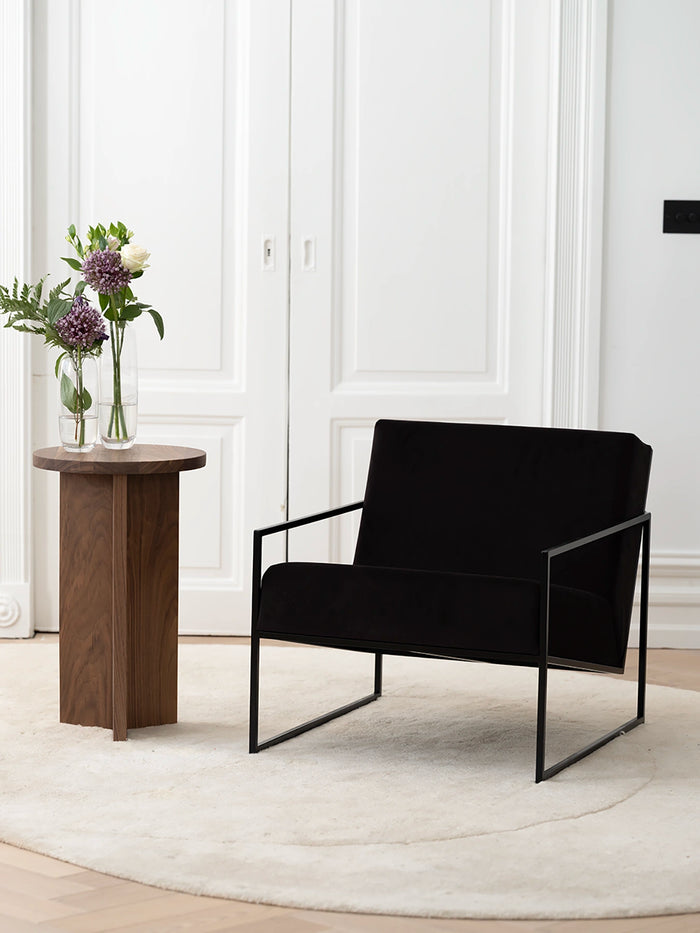
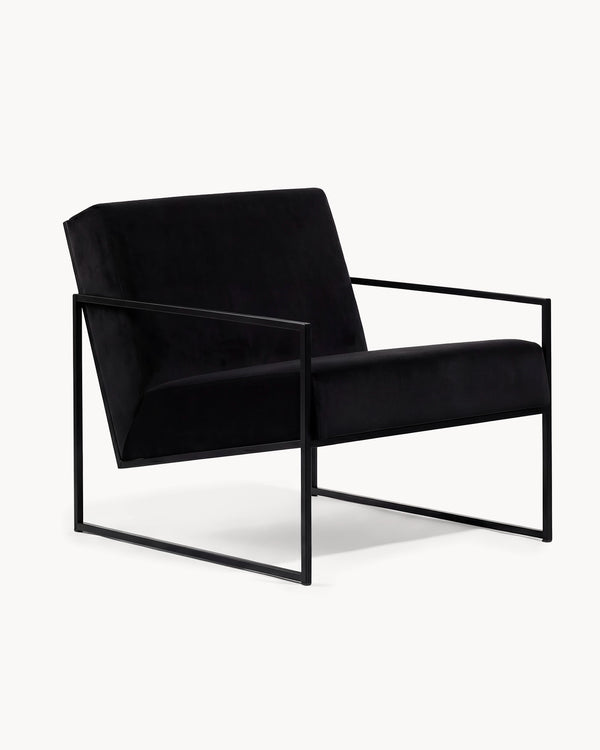
Our Kent has a seat 38 cm high and 53 cm deep inside a slim, welded black steel frame, the open outline that suits a mid-century room. In Jade Black velvet it leans graphic and retro; in Ivory bouclé it leans Scandinavian.
Einar has the same seat in solid oak. Next to teak or walnut, try Dark Oak or Black Oak against your own pieces with our wood samples. Our guide to oak or steel armchairs compares the two frames.
Kent in Jade Black velvet: a low seat inside an open steel frame.
What coffee table goes with mid-century modern furniture?
A low table with a round or soft shape and a light frame; round and oval tops are a mid-century signature.
Our Leo is round, ø70, ø80 or ø95 cm, on a welded steel frame with a Dekton sintered stone top, or solid oak on Design Your Own. Rectangular Anton suits the calmer, Scandinavian side of a room.
A compact table with a drawer, or one hung on the wall to keep the floor clear; mid-century bedside tables (nightstands) are small, simple and practical.
Our Iris is 64 cm high and 40 x 35 cm, with one drawer, a black, white or beige frame and a laminate or Dekton top. Lisa floats on the wall, with a solid oak top and two vegan leather straps for magazines.
For a mid-century room, Lisa in Dark Oak or Iris in black usually sits best beside teak or walnut. Our guide to modern bedside tables compares them in detail.
Teak, walnut or oak: which wood for a mixed room?
Pick one wood to lead and keep the others as accents: two strong browns side by side can look accidental, three look busy.
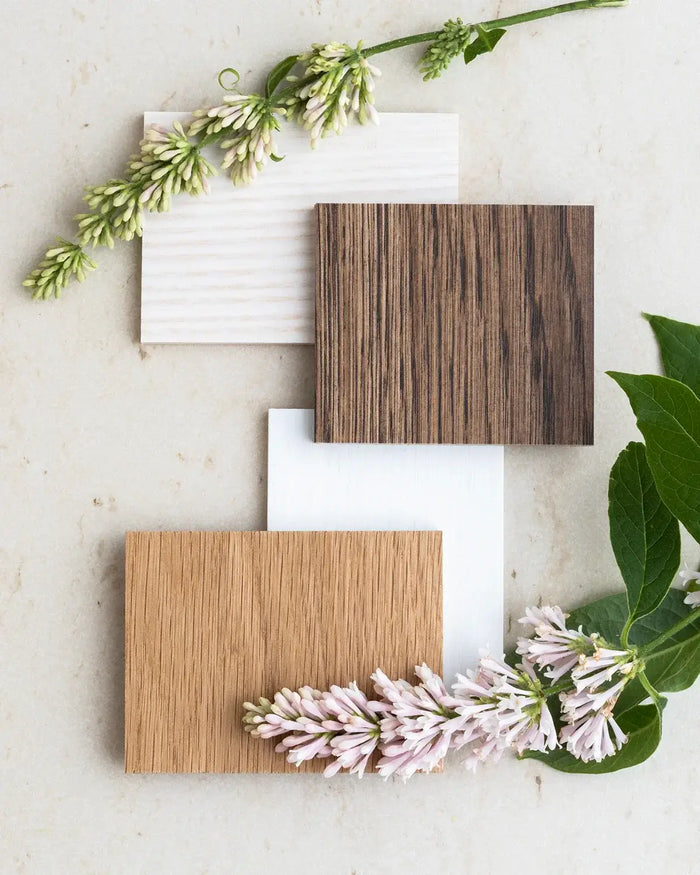
Our indoor wood is solid oak, not teak or walnut, in three finishes: Oak, Dark Oak and Black Oak. If you already own mid-century teak or walnut, black oak or black steel usually sits more easily beside it than a second, slightly different brown.
Our oak in its three finishes: Oak, Dark Oak and Black Oak.
Mid-century and Scandinavian in three points
Period
mid-century modern ended with the 1960s.
Tradition
Scandinavian design is still evolving.
1
wood tone leads, the others are accents.
Mid-century modern is a period of teak, walnut, tapered legs and curves; Scandinavian is a living tradition of oak, calm lines and everyday comfort. Mix them by letting one wood lead, repeating slim lines and giving the room one sculptural piece, with black steel as the bridge. Kent, Einar, Leo and Anton are designed in Sweden, made in our own factory and covered by a 10-year warranty.
Frequently asked questions
What is the difference between mid-century modern and Scandinavian furniture?
Mid-century modern is a period, roughly the mid-1940s to the late 1960s, with teak, walnut, tapered legs and curves. Scandinavian is a continuing tradition: lighter oak, simple lines and comfort for everyday life.
Can you mix mid-century modern and Scandinavian furniture?
Yes, easily. Let one wood tone lead, repeat slim legs or a material, and keep about two thirds of the room in one style. Black steel bridges the two.
What wood is mid-century modern furniture made of?
Mostly teak and walnut, with rosewood and oak in some pieces, often combined with moulded plywood or steel.
Is Danish modern the same as mid-century modern?
Danish modern is the Danish part of mid-century design: furniture made in Denmark in the 1950s and 1960s, now sold under both names.
Does by Crea make mid-century modern furniture?
No reproductions. We design and make contemporary Scandinavian furniture in Sweden, but low, open pieces such as Kent and the round Leo sit well in a mid-century room.
What colours go with mid-century modern furniture?
Warm wood with mustard, olive, rust or teal, balanced with white, black and warm neutrals such as ivory and greige.