Are Expensive Bar Stools Worth It?
The short answer is yes, but only if the price reflects actual build quality rather than brand margin.
Expensive bar stools cost more because of the materials used, the construction method, and the production origin. A solid oak or powder-coated steel frame built to a furniture standard will outlast a welded-wire or MDF frame by a decade or more. Seat construction, upholstery grade, and repairability determine the long-term cost per year of use.
The question is not whether to spend more. It is what the higher price is actually paying for.
Browse the full bar stools range, and see our guides on wooden bar stool comfort and metal bar stool comfort for a material-level breakdown.
The short answer is yes, but only if the price reflects actual build quality rather than brand margin.
Expensive bar stools cost more because of the materials used, the construction method, and the production origin. A solid oak or powder-coated steel frame built to a furniture standard will outlast a welded-wire or MDF frame by a decade or more. Seat construction, upholstery grade, and repairability determine the long-term cost per year of use.
The question is not whether to spend more. It is what the higher price is actually paying for.
Browse the full bar stools range, and see our guides on wooden bar stool comfort and metal bar stool comfort for a material-level breakdown.
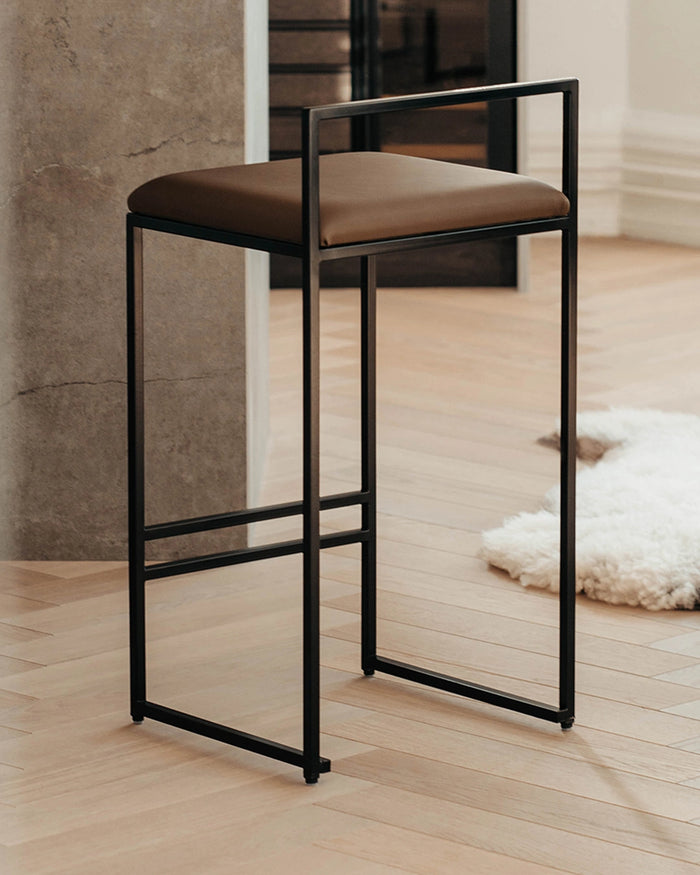
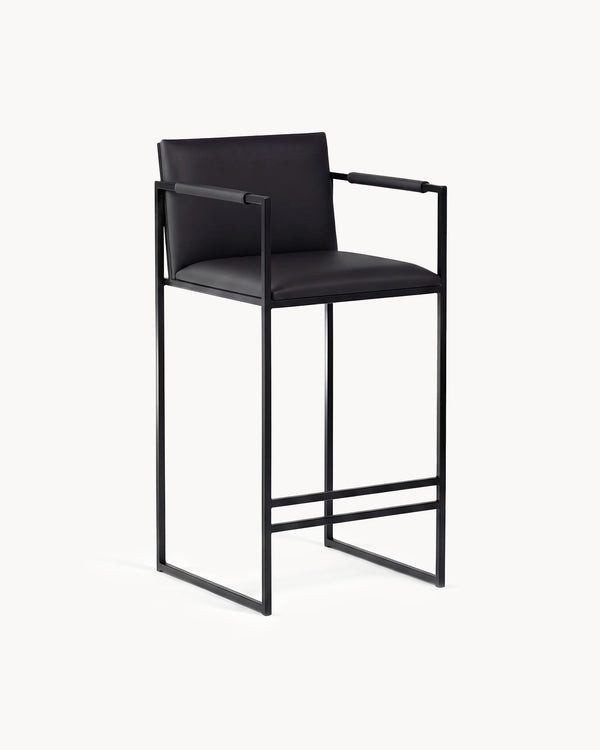
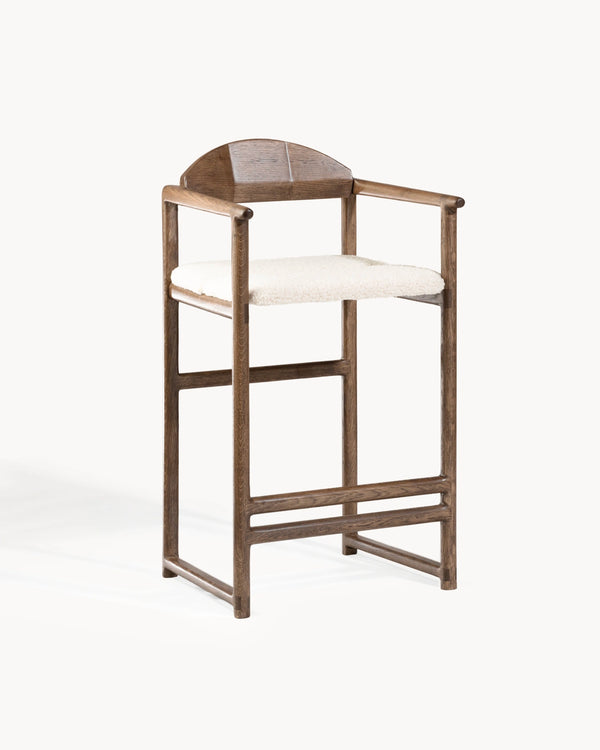
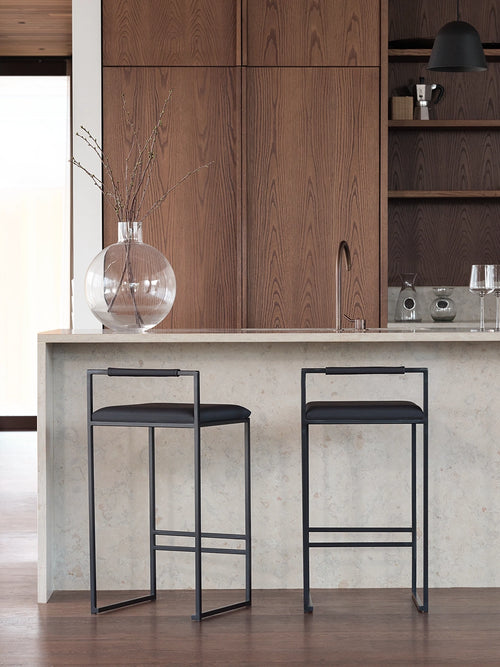
Philip bar stool in a warm wood interior showing the steel frame, upholstered seat, and backrest construction that justify a higher price point through build standard rather than aesthetics alone.
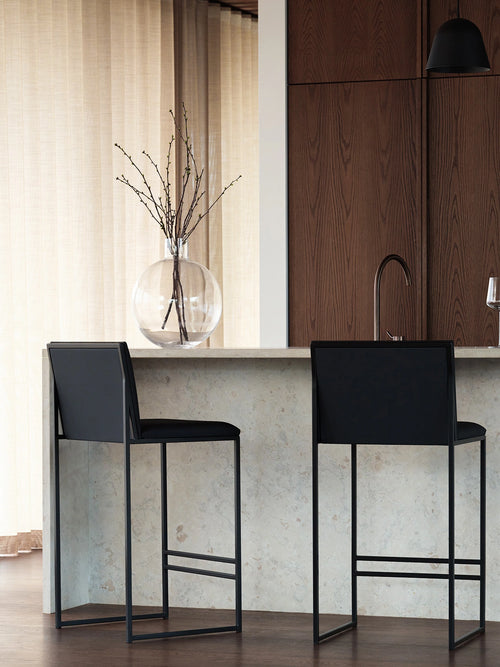
Philip bar stools in a dark wood bar setting, showing how a well-constructed steel frame maintains its surface and structural integrity across years of sustained daily use.
What Makes a Bar Stool Expensive?
Price in bar stools reflects four things: material cost, production location, seat construction, and brand positioning.
Solid FSC-certified oak and powder-coated steel cost more to source and process than MDF, hollow steel tube, or flat-pack components. Production in Europe or Scandinavia carries higher labour costs than production in low-wage manufacturing regions. A cold-cut foam seat rated at 55 kg/m³ costs more to produce than standard foam that compresses within two years.
Brand positioning inflates price without adding substance. A well-known brand name on a poorly made stool costs more than a lesser-known brand on a well-made one. The task when buying at the higher end is to separate material quality from marketing margin.
Price in bar stools reflects four things: material cost, production location, seat construction, and brand positioning.
Solid FSC-certified oak and powder-coated steel cost more to source and process than MDF, hollow steel tube, or flat-pack components. Production in Europe or Scandinavia carries higher labour costs than production in low-wage manufacturing regions. A cold-cut foam seat rated at 55 kg/m³ costs more to produce than standard foam that compresses within two years.
Brand positioning inflates price without adding substance. A well-known brand name on a poorly made stool costs more than a lesser-known brand on a well-made one. The task when buying at the higher end is to separate material quality from marketing margin.
Do More Expensive Bar Stools Last Longer?
Yes, when the price reflects material and construction quality rather than brand margin.
A solid oak or welded steel frame built to a furniture standard will not loosen, crack, or deform under normal household use for fifteen to twenty years. A frame made from thin-gauge steel, MDF, or poorly joined solid wood will show structural degradation within three to five years of daily use.
Seat construction is equally decisive. Cold-cut foam at 55 kg/m³ does not sag or compress over time. Standard foam used in cheaper stools collapses with sustained use, which makes the seat feel worn long before the frame gives way.
Longevity is not a premium feature. It is the point. A stool that lasts twenty years at twice the price of one that lasts five costs less per year of use.
Yes, when the price reflects material and construction quality rather than brand margin.
A solid oak or welded steel frame built to a furniture standard will not loosen, crack, or deform under normal household use for fifteen to twenty years. A frame made from thin-gauge steel, MDF, or poorly joined solid wood will show structural degradation within three to five years of daily use.
Seat construction is equally decisive. Cold-cut foam at 55 kg/m³ does not sag or compress over time. Standard foam used in cheaper stools collapses with sustained use, which makes the seat feel worn long before the frame gives way.
Longevity is not a premium feature. It is the point. A stool that lasts twenty years at twice the price of one that lasts five costs less per year of use.
Freja bar stools in black leather at a marble island, showing a welded steel frame and premium upholstery grade that reflect build quality rather than styling alone.
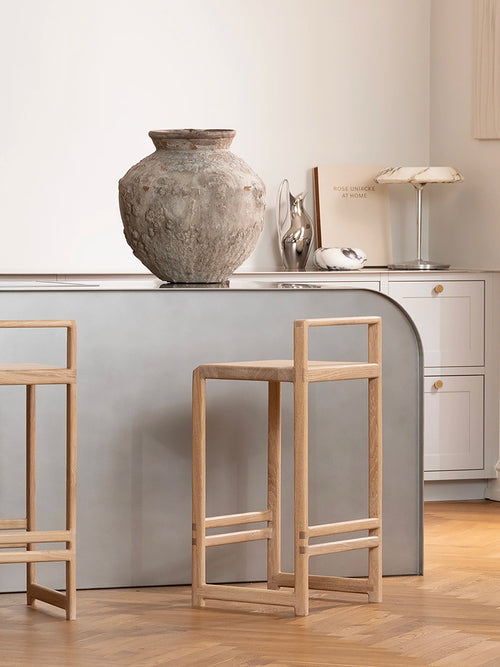
Ebba solid oak bar stools in a pale kitchen, showing FSC-certified solid oak construction that holds its surface and structural integrity without delaminating or cracking over time.
Freja bar stool in jade leather at a kitchen with wood shelving, illustrating the replaceable cushion design that allows the seat fabric to be swapped without replacing the frame.
What Is the Build Quality Difference Between Cheap and Premium Bar Stools?
The differences are visible when you know what to look for. Frame joints on cheap stools are often bolted rather than welded, which introduces play over time and eventually wobble. Premium steel frames are fully welded. Solid wood frames at the premium end are mortise-and-tenon or dowel-jointed with an appropriate adhesive, not stapled or bracket-fastened.
Seat foam density is the second indicator. Cheap stools use foam between 25 and 35 kg/m³, which flattens quickly. Premium foam runs at 50 to 60 kg/m³ and holds its shape across years of daily use.
Upholstery grade is the third. Martindale abrasion ratings tell you how the fabric wears. Home use requires a minimum of 15,000 Martindale. Vegan leather rated at 300,000 Martindale is in a different category entirely. Velvet at 30,000 is acceptable for light use. Cheaper upholstery is rarely rated at all.
The differences are visible when you know what to look for. Frame joints on cheap stools are often bolted rather than welded, which introduces play over time and eventually wobble. Premium steel frames are fully welded. Solid wood frames at the premium end are mortise-and-tenon or dowel-jointed with an appropriate adhesive, not stapled or bracket-fastened.
Seat foam density is the second indicator. Cheap stools use foam between 25 and 35 kg/m³, which flattens quickly. Premium foam runs at 50 to 60 kg/m³ and holds its shape across years of daily use.
Upholstery grade is the third. Martindale abrasion ratings tell you how the fabric wears. Home use requires a minimum of 15,000 Martindale. Vegan leather rated at 300,000 Martindale is in a different category entirely. Velvet at 30,000 is acceptable for light use. Cheaper upholstery is rarely rated at all.
Are Premium Materials Worth the Higher Price?
Solid FSC-certified oak and 300,000 Martindale vegan leather cost more to produce because they perform at a measurably higher standard over time. Oak does not delaminate, swell, or crack under normal household conditions. Cheap engineered wood does. The difference is not aesthetic. It is structural.
The same logic applies to steel. Powder-coated steel with a proper finish is scratch-resistant, moisture-tolerant, and holds its colour without fading. Thin-gauge steel with a spray-paint finish shows wear within two to three years of use.
Upholstery is where the gap is most obvious. Vegan leather at 300,000 Martindale is rated antimicrobial, cold-crack tested to minus 23 degrees Celsius, and UV-resistant. It does not crack or peel. The cheaper faux leathers that crack and peel within a year use the same visual language at a fraction of the material cost.
See our full material breakdown on wooden bar stool comfort and metal bar stool comfort.
Solid FSC-certified oak and 300,000 Martindale vegan leather cost more to produce because they perform at a measurably higher standard over time. Oak does not delaminate, swell, or crack under normal household conditions. Cheap engineered wood does. The difference is not aesthetic. It is structural.
The same logic applies to steel. Powder-coated steel with a proper finish is scratch-resistant, moisture-tolerant, and holds its colour without fading. Thin-gauge steel with a spray-paint finish shows wear within two to three years of use.
Upholstery is where the gap is most obvious. Vegan leather at 300,000 Martindale is rated antimicrobial, cold-crack tested to minus 23 degrees Celsius, and UV-resistant. It does not crack or peel. The cheaper faux leathers that crack and peel within a year use the same visual language at a fraction of the material cost.
See our full material breakdown on wooden bar stool comfort and metal bar stool comfort.
Can You Repair an Expensive Bar Stool? Does That Change the Value?
On well-made stools, yes. This is one of the clearest separators between genuinely premium furniture and expensive-looking furniture that is not built for repair.
Models like the Freja, Svea, and Carl use a replaceable cushion system. The seat detaches with two screws. When the fabric wears, the seat is replaced rather than the whole stool. The frame, which carries most of the material cost, remains in use. This extends the functional life of the stool by years and reduces the long-term cost significantly.
On fixed-upholstery models, a professional reupholsterer can extend the life if the frame is worth keeping. On cheap stools, the frame is typically not worth the cost of reupholstering.
Repairability is not a niche consideration. It is the reason by Crea stools carry a meaningful long-term advantage over stools that look similar at first glance but are built to be replaced rather than maintained.
On well-made stools, yes. This is one of the clearest separators between genuinely premium furniture and expensive-looking furniture that is not built for repair.
Models like the Freja, Svea, and Carl use a replaceable cushion system. The seat detaches with two screws. When the fabric wears, the seat is replaced rather than the whole stool. The frame, which carries most of the material cost, remains in use. This extends the functional life of the stool by years and reduces the long-term cost significantly.
On fixed-upholstery models, a professional reupholsterer can extend the life if the frame is worth keeping. On cheap stools, the frame is typically not worth the cost of reupholstering.
Repairability is not a niche consideration. It is the reason by Crea stools carry a meaningful long-term advantage over stools that look similar at first glance but are built to be replaced rather than maintained.
Freja bar stools at a wide marble island showing consistent frame finish, aligned upholstery, and stable seated proportion that reflect controlled production tolerances.
Freja jade leather bar stools at a concrete kitchen island, representing the mid-premium price and build standard that delivers the best long-term cost per year of use.
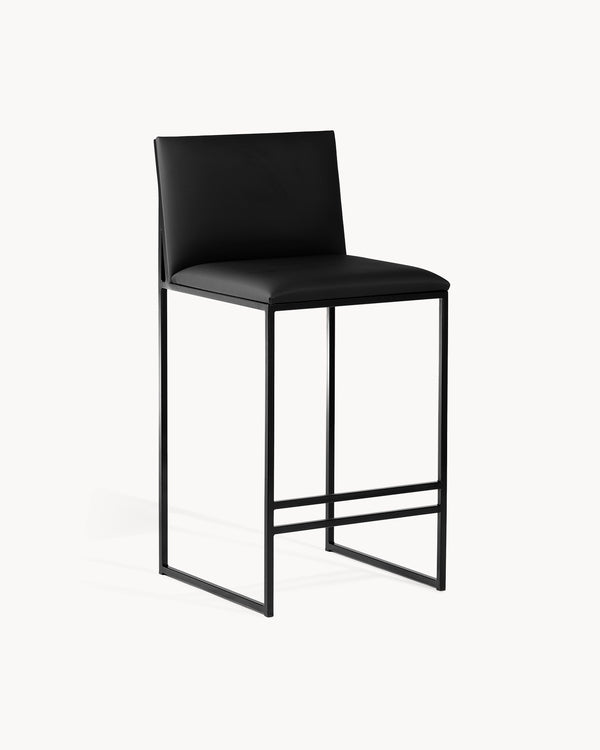
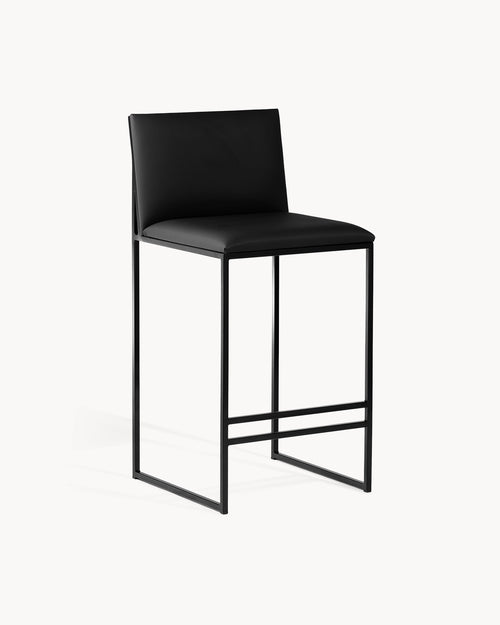
Philip bar stool in a warm wood interior showing the frame, backrest height, and seat proportions that a buyer should assess when evaluating build quality at the premium end.
What Do Expensive Bar Stools Get Right That Cheap Ones Get Wrong?
The most consistent differences at the premium end are consistent dimensions, proper weight, and finish quality that holds.
Cheap bar stools often arrive with visible variation between units in the same order. The seat height differs by a centimetre or two, the finish colour varies between stools, or the frame wobbles on one unit but not another. At the premium end, tolerances are tighter because the production process is more controlled.
Weight is an indicator most buyers overlook. A solid oak or steel stool that weighs 8 to 10 kg feels stable and planted on the floor. A lightweight stool at 4 to 5 kg tips more easily and moves when you shift your weight.
Finish quality at the premium end means the powder coat does not chip at first contact, the oak surface is uniformly oiled, and the upholstery is pulled taut and aligned. These are process standards that cannot be faked at a cheaper price point. See our care and maintenance guide for how to maintain finish quality over time.
The most consistent differences at the premium end are consistent dimensions, proper weight, and finish quality that holds.
Cheap bar stools often arrive with visible variation between units in the same order. The seat height differs by a centimetre or two, the finish colour varies between stools, or the frame wobbles on one unit but not another. At the premium end, tolerances are tighter because the production process is more controlled.
Weight is an indicator most buyers overlook. A solid oak or steel stool that weighs 8 to 10 kg feels stable and planted on the floor. A lightweight stool at 4 to 5 kg tips more easily and moves when you shift your weight.
Finish quality at the premium end means the powder coat does not chip at first contact, the oak surface is uniformly oiled, and the upholstery is pulled taut and aligned. These are process standards that cannot be faked at a cheaper price point. See our care and maintenance guide for how to maintain finish quality over time.
How Much Should You Spend on a Bar Stool?
For a household bar stool used daily at a kitchen island, the realistic range for a well-made piece is 200 to 500 GBP per stool. Below this, compromises in frame gauge, foam density, or upholstery grade become increasingly common.
Above 500 GBP per stool, you are typically paying for heritage brand positioning or limited production runs rather than proportionally better materials. The best value sits in the 250 to 400 GBP range, where mid-premium brands with in-house production can deliver solid oak or welded steel frames with quality upholstery without the brand margin of the luxury segment.
For occasional use, the lower end of the range is defensible. For a kitchen island used three meals a day by a family, the cost-per-use calculation shifts strongly toward buying once at the right level.
For a household bar stool used daily at a kitchen island, the realistic range for a well-made piece is 200 to 500 GBP per stool. Below this, compromises in frame gauge, foam density, or upholstery grade become increasingly common.
Above 500 GBP per stool, you are typically paying for heritage brand positioning or limited production runs rather than proportionally better materials. The best value sits in the 250 to 400 GBP range, where mid-premium brands with in-house production can deliver solid oak or welded steel frames with quality upholstery without the brand margin of the luxury segment.
For occasional use, the lower end of the range is defensible. For a kitchen island used three meals a day by a family, the cost-per-use calculation shifts strongly toward buying once at the right level.
What Should You Look for When Buying a Premium Bar Stool?
Five things separate a genuinely well-made bar stool from an expensively marketed one.
Frame construction: fully welded steel or mortise-and-tenon solid wood, not bolted or bracket-fastened.
Foam density: ask for it. 50 to 60 kg/m³ for long-term use. Anything below 35 kg/m³ will compress noticeably within two years.
Upholstery Martindale rating: 15,000 minimum for home use. 30,000 for families. 75,000 and above for the kind of durability that outlasts the frame.
Repairability: can the cushion be replaced? Are spare parts available? Is there a warranty on the frame separate from the upholstery?
Production transparency: where is it made, and by whom? A brand that can answer this question specifically is more likely to back it up than one that cannot. See our guide on backrest height and comfort and footrest ergonomics for what the seat specification should deliver.
Five things separate a genuinely well-made bar stool from an expensively marketed one.
Frame construction: fully welded steel or mortise-and-tenon solid wood, not bolted or bracket-fastened.
Foam density: ask for it. 50 to 60 kg/m³ for long-term use. Anything below 35 kg/m³ will compress noticeably within two years.
Upholstery Martindale rating: 15,000 minimum for home use. 30,000 for families. 75,000 and above for the kind of durability that outlasts the frame.
Repairability: can the cushion be replaced? Are spare parts available? Is there a warranty on the frame separate from the upholstery?
Production transparency: where is it made, and by whom? A brand that can answer this question specifically is more likely to back it up than one that cannot. See our guide on backrest height and comfort and footrest ergonomics for what the seat specification should deliver.
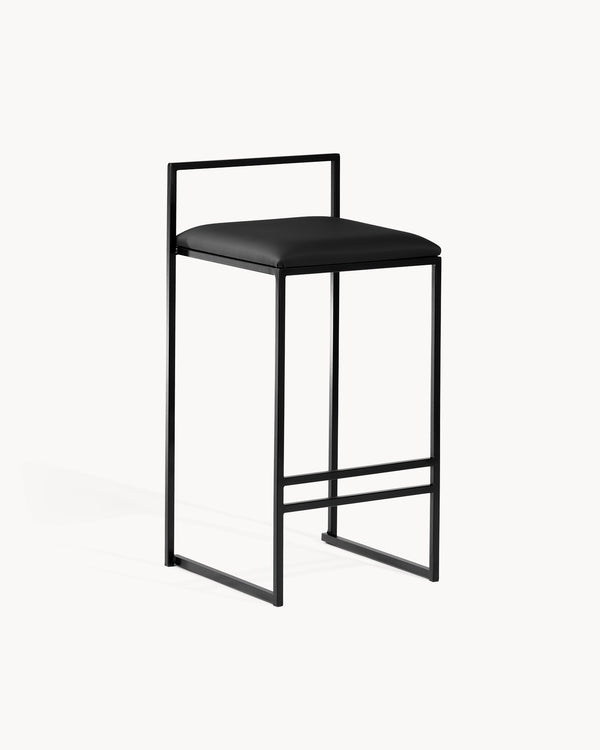
Philip bar stool in powder-coated steel in a dark wood bar setting, representing the build standard and production origin that make a premium bar stool worth the investment over time.
The Right Bar Stool Costs More Once. A Cheap One Costs More Over Time.
A premium bar stool is worth the money when it is built from solid materials, produced with controlled tolerances, and designed so that worn parts can be replaced rather than requiring the whole stool to be discarded.
At 300 GBP per stool over fifteen years of daily use, the cost is 20 GBP per year. At 80 GBP per stool replaced every four years, the cost is the same. Worse ergonomics, worse finish quality, and two sets of waste.
All by Crea bar stools are designed and handmade in our own factory in Malmö, Sweden. The frame, foam, and upholstery specifications are chosen for long-term use, not short-term appearance.
Related guides
Are Wooden Bar Stools Comfortable Long Term?
Are Metal Bar Stools Comfortable?
Bar Stool Height Guide: 66 cm vs 76 cm vs Custom
Browse bar stools
A premium bar stool is worth the money when it is built from solid materials, produced with controlled tolerances, and designed so that worn parts can be replaced rather than requiring the whole stool to be discarded.
At 300 GBP per stool over fifteen years of daily use, the cost is 20 GBP per year. At 80 GBP per stool replaced every four years, the cost is the same. Worse ergonomics, worse finish quality, and two sets of waste.
All by Crea bar stools are designed and handmade in our own factory in Malmö, Sweden. The frame, foam, and upholstery specifications are chosen for long-term use, not short-term appearance.
Related guides
Are Wooden Bar Stools Comfortable Long Term?
Are Metal Bar Stools Comfortable?
Bar Stool Height Guide: 66 cm vs 76 cm vs Custom
Browse bar stools
FAQ
Are expensive bar stools worth the money? +
Yes, when the price reflects material and construction quality rather than brand margin. A solid oak or welded steel frame built to a proper furniture standard will last fifteen to twenty years of daily use. A cheap stool at a quarter of the price typically needs replacing within four to five years. Over a fifteen-year period, the premium stool costs less per year of use.
What is the difference between cheap and expensive bar stools? +
Frame construction, foam density, and upholstery grade. Cheap stools use bolted or bracket-fastened frames that develop wobble over time, low-density foam that compresses quickly, and unrated upholstery fabrics that crack or peel.
Premium stools use fully welded steel frames or properly jointed solid wood, foam at 50 to 60 kg/m³ that holds its shape, and upholstery rated to 15,000 Martindale or above for home use.
How much should I spend on bar stools? +
For daily household use at a kitchen island, the realistic range for a well-made bar stool is 200 to 500 GBP. The best value sits between 250 and 400 GBP, where mid-premium manufacturers with in-house production can deliver solid materials without the brand margin of the luxury segment. Below 200 GBP, compromises in frame gauge, foam, or upholstery become increasingly common.
What foam density should a good bar stool have? +
50 to 60 kg/m³ for long-term daily use. This is cold-cut foam that does not compress or sag over time. Standard foam used in cheaper stools runs between 25 and 35 kg/m³ and will feel noticeably flat within two years of use. By Crea uses Swedish cold-cut foam at 55 kg/m³ across all upholstered models.
Can expensive bar stools be repaired? +
Well-made bar stools are designed for repair. Models with replaceable cushion systems, like the Freja, Svea, and Carl, allow the seat fabric to be swapped with two screws when it wears, extending the life of the frame by years. On fixed-upholstery models, professional reupholstering is an option if the frame is worth keeping. Cheap stools are rarely worth the cost of repair.
What Martindale rating should bar stool upholstery have? +
A minimum of 15,000 Martindale for home use. For families with children or pets, 30,000 Martindale is a more appropriate baseline. Vegan leather rated at 300,000 Martindale, such as Valencia by Spradling used in by Crea stools, represents a commercial-grade durability standard and will outlast any other upholstery option in a household context.