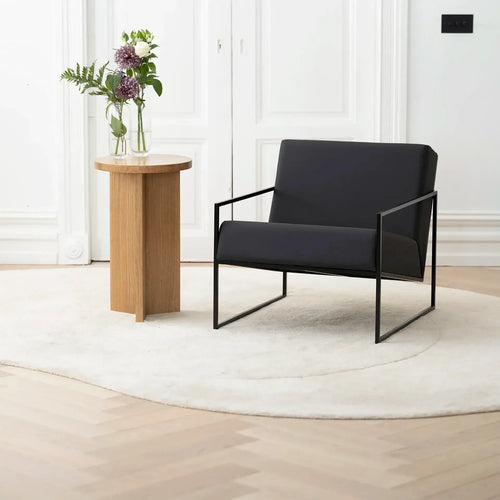
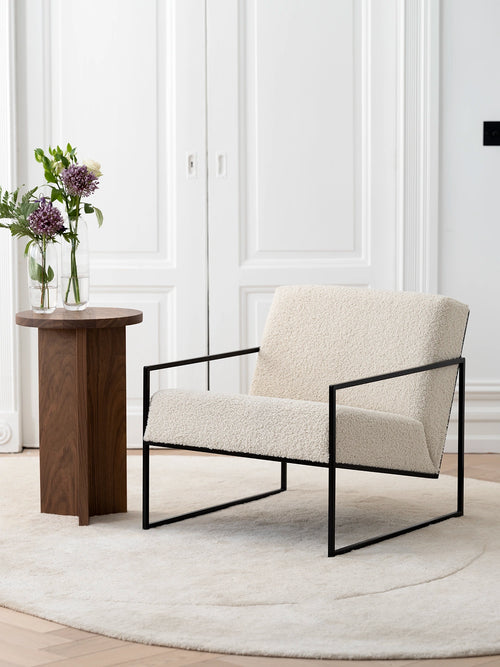
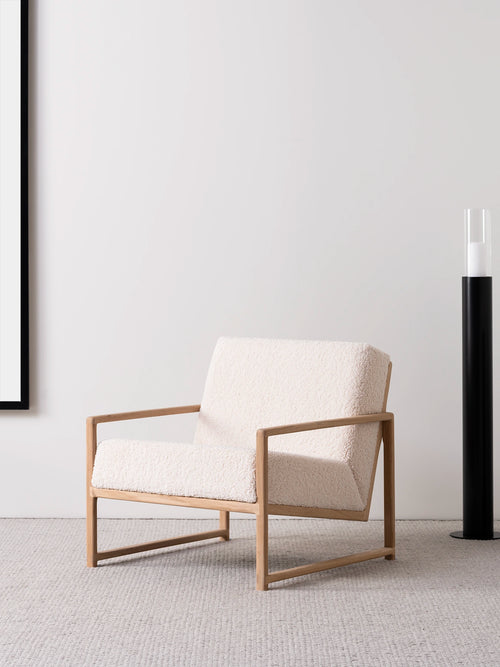
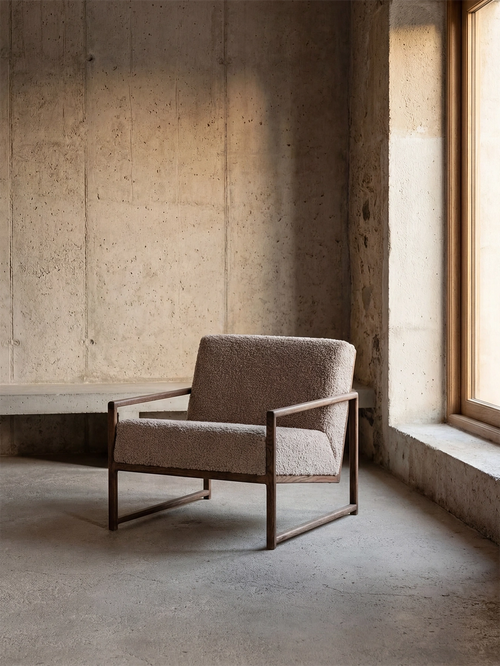
Scandinavian design is one of the most copied looks in furniture, and a bar stool is where it shows most clearly: a small object seen every day, from every side, in the busiest room of the home. The style is easy to recognise and easy to imitate badly. A pale colour and a pair of tapered legs do not on their own make a stool Scandinavian; the materials, the proportions and how well it is built matter more. This guide explains what really makes a bar stool Scandinavian, which materials and colours belong to the style, how to style the stools at a kitchen island, and how to tell a well-made Scandinavian stool from a lookalike. It is written from our own factory in Sweden, where every by Crea stool is made.
What makes a bar stool Scandinavian?
Above all, three things: natural materials used honestly, simple lines where every part has a job, and quiet, light-reflecting colours.
A Scandinavian stool typically shows its oak grain or its slim steel frame rather than hiding them, has no carving or ornament, and is shaped around how people actually sit at a counter.
Behind the look is a practical idea: furniture should be comfortable, durable and made to last, so that it earns its place in the home for decades. That is why the style favours solid wood over veneer, joints that stay tight, and seats that can be refreshed rather than thrown away. A stool that looks Scandinavian but wobbles within a year misses the point of the style entirely.
Which materials suit a Scandinavian bar stool?
Most often solid oak, then slim powder-coated steel, with seats in textured bouclé, soft velvet or vegan leather.
Oak brings warmth and visible grain; steel keeps the outline light; the upholstery adds softness and texture against stone and white cabinets.
The table sums up how each material fits the style. Whatever the mix, the usual Scandinavian approach is the same: fewer materials, each of them good. A stool that combines oak, steel and two fabrics usually looks busy; one wood with one fabric, or one steel colour with one fabric, looks calm.
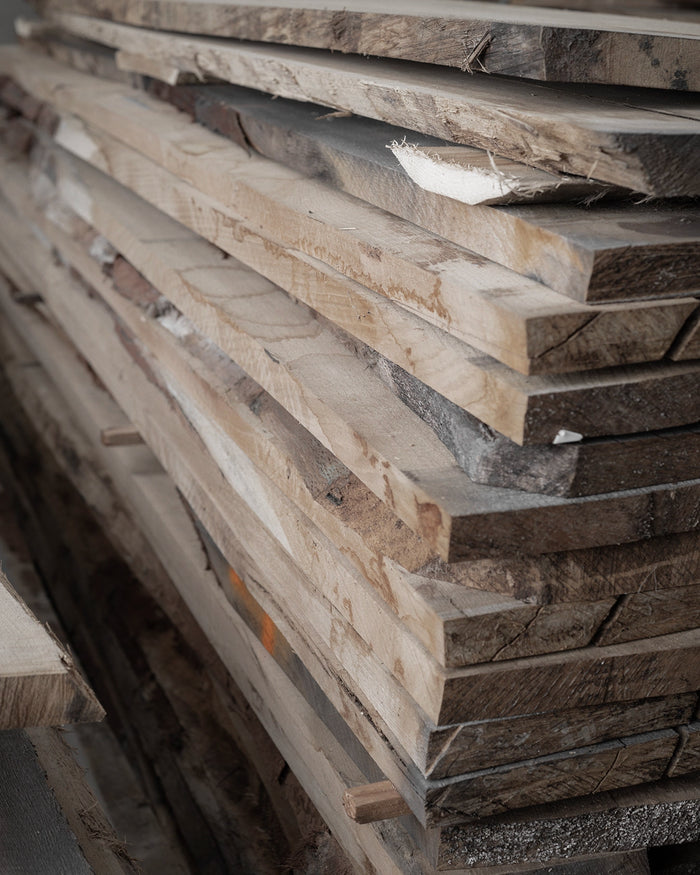
Solid European oak in our factory in Sweden.
Materials in a Scandinavian bar stool
Material
What it brings
Our stools
Solid natural oak
Warmth, light colour, visible grain
Eva, Ebba, Ted, Carl
Solid dark oak
Contrast, with the grain still showing
Eva, Ebba, Ted, Carl
Powder-coated steel
A slim, light outline
Freja, Philip, Svea, Bruno
Bouclé
Soft texture, light tones
Ivory and greige
Velvet or vegan leather
Depth of colour, easy care
Freja, Philip, Svea, Bruno
Which colours are typical of Scandinavian bar stools?
Light, muted and natural: natural oak, ivory and greige bouclé, sand and taupe velvet, latte vegan leather, and black or soft neutral frames.
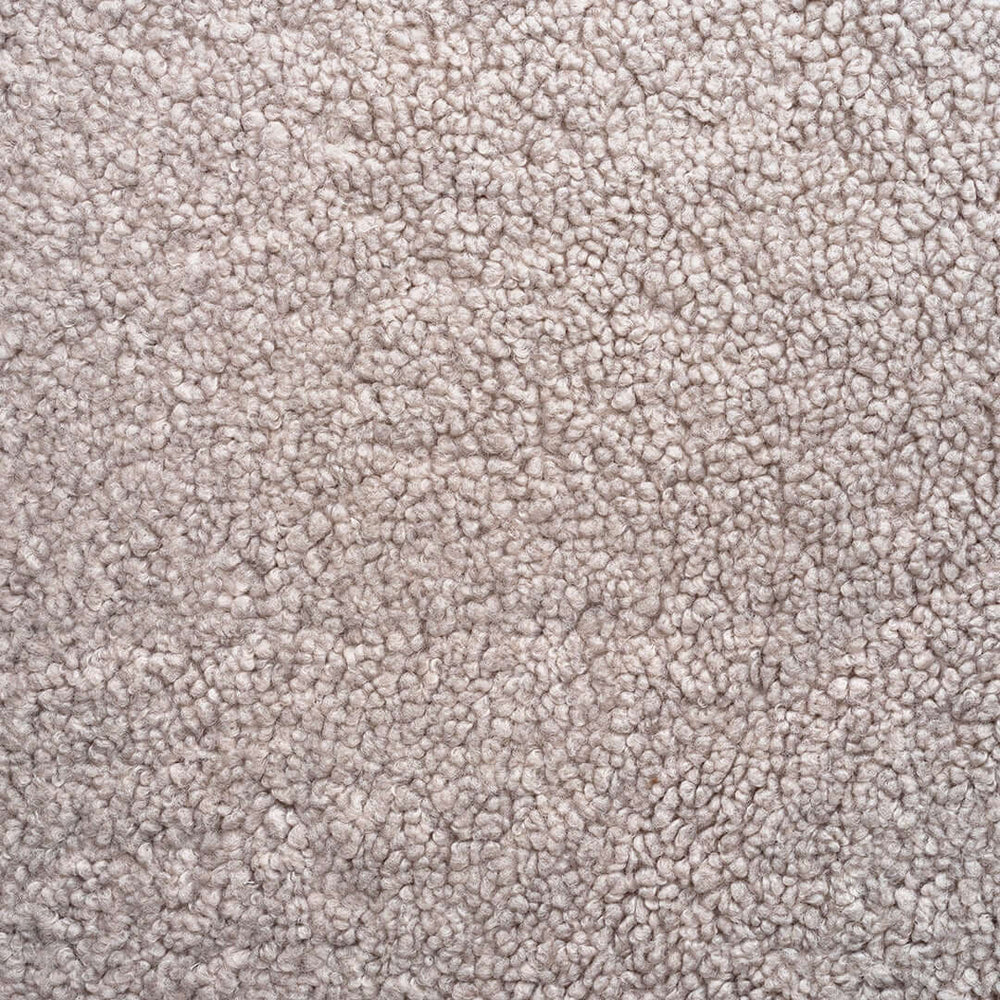
Greige bouclé: soft texture in a quiet tone.
Scandinavian interiors are often planned around daylight, which is scarce for much of the year, so the palette tends to reflect light and keep rooms calm.
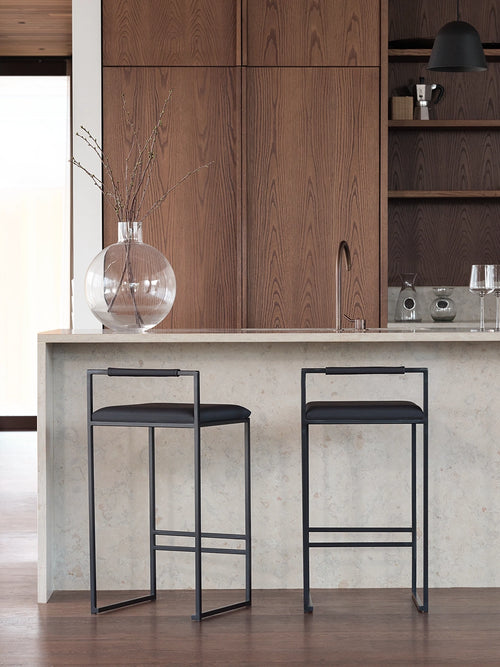
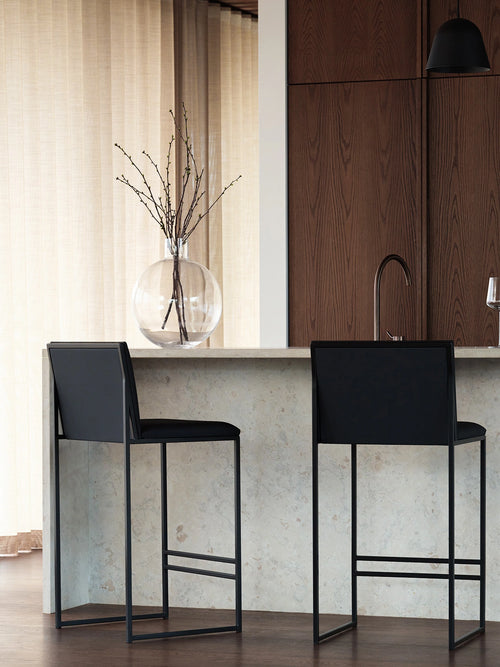
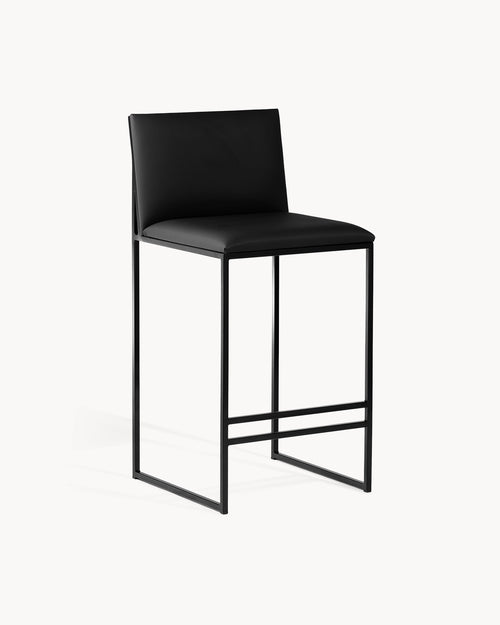
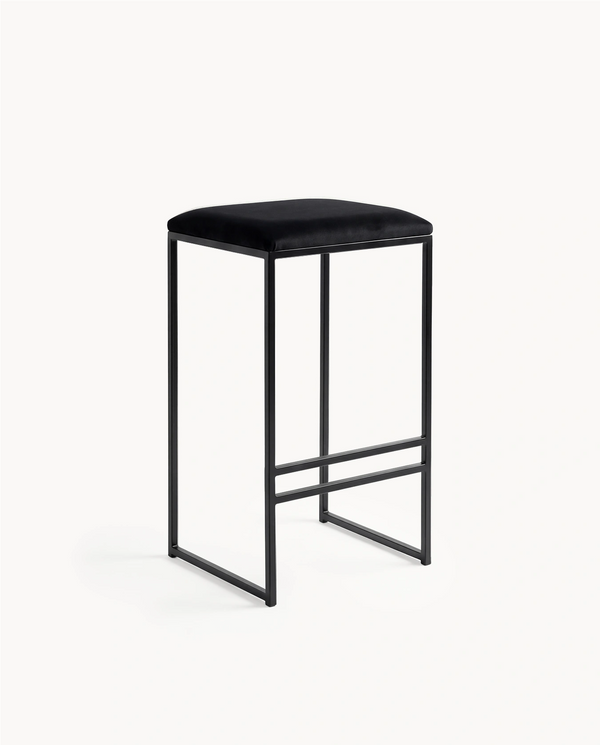
Black is part of the style too, used as a line rather than a mass: a slim black steel frame with a light seat is one of the most typical Scandinavian combinations. Selected steel models are also available with white, beige or taupe frames, which disappear against pale cabinets. To see how a colour behaves in your own light, order fabric or frame samples before you choose; see black bar stools for darker combinations.
How do I style Scandinavian bar stools at a kitchen island?
A good starting point is to match one material in the stools to one material already in the kitchen: the oak of the floor, the white of the cabinets or the black of the taps.
Then keep the row simple: stools of the same model, the same height and the same finish, spaced evenly along the island.
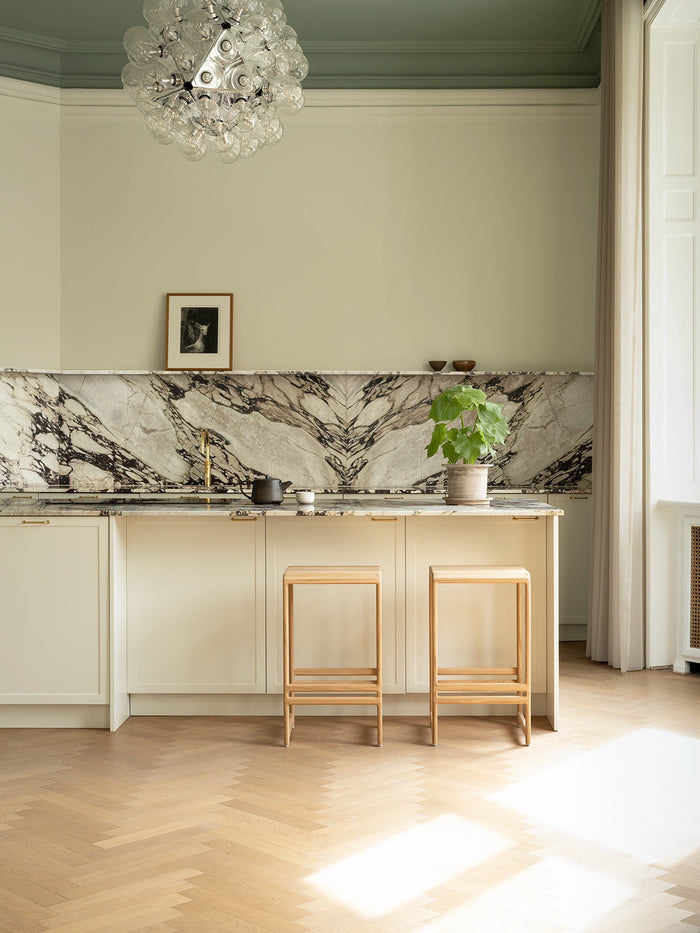
In a white kitchen, natural oak or a light bouclé seat on a black frame adds warmth without clutter. With a marble or light stone island, ivory bouclé echoes the stone. With dark fronts, dark oak or greige keeps the room soft. As a rule of thumb, leave 55 cm per stool, or 50 cm for slim stools, so the row breathes; our guide to kitchen island seating covers spacing and counts.
Which by Crea stools are the most Scandinavian?
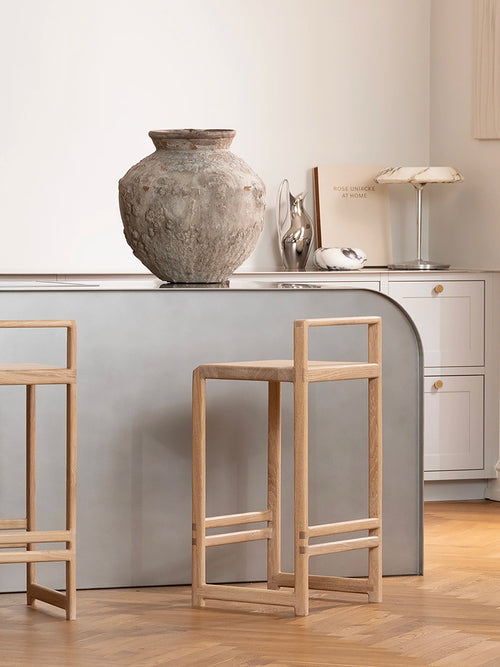
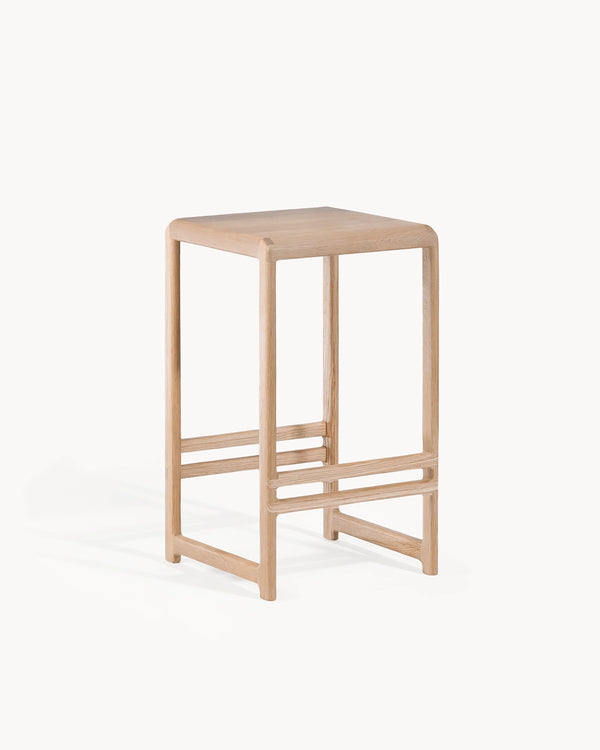
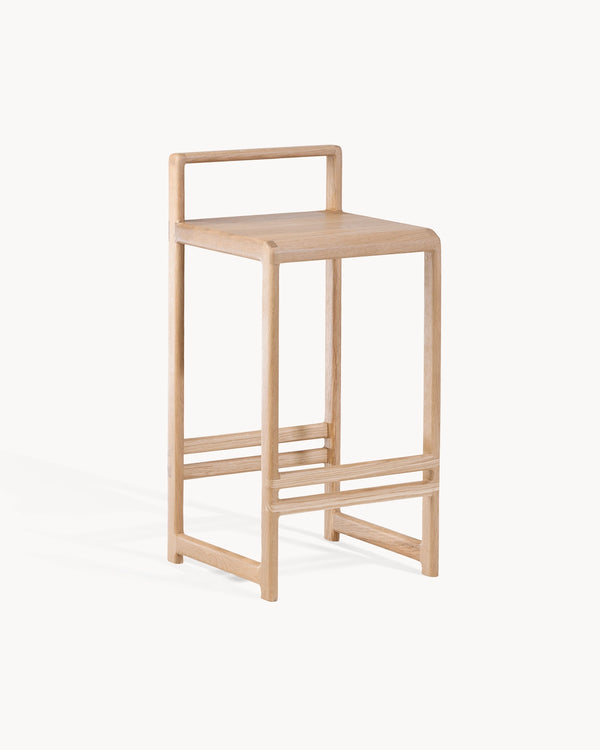
In our view, Eva and Ebba in natural oak are the purest expression of the style: solid oak, straight lines, nothing extra.
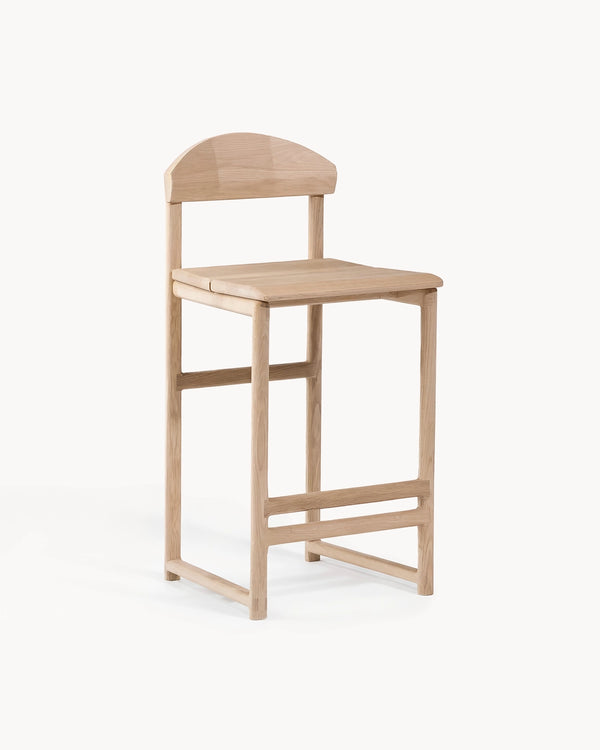
Ted adds a full backrest and a bouclé option; Carl adds armrests for long meals. In steel, Svea and Freja with a bouclé or velvet seat bring the same calm with a slimmer line.
All of them are designed and made in our own factory in Sweden, in 66 cm and 76 cm seat heights. Choose Eva if you want the stools to disappear under the counter, Ebba or Ted if you want a backrest, and a steel model if the island is small and you want the lightest possible outline. Our oak bar stools guide compares the oak models in detail.
Eva in natural oak: solid wood, straight lines, nothing extra.
How can I tell a well-made Scandinavian stool from a lookalike?
Check what it is made of and how it is joined.
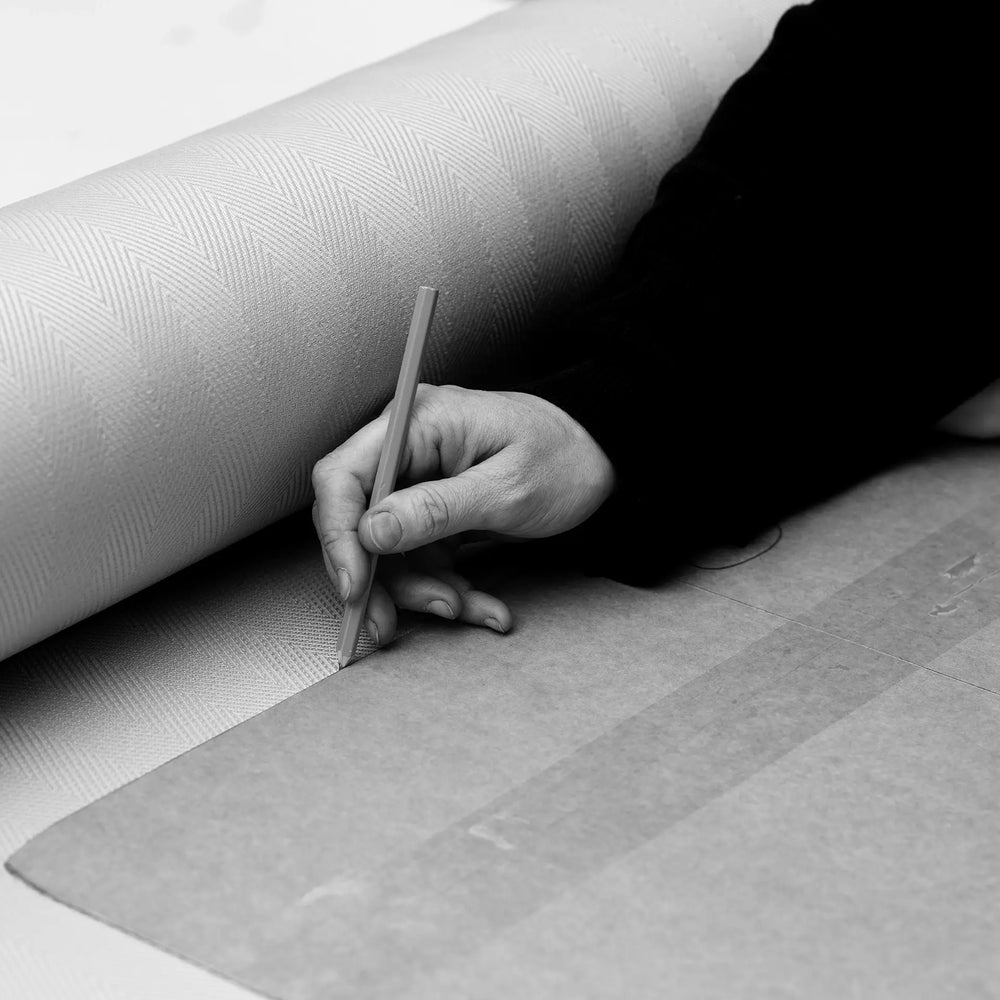
Upholstery work in our own factory in Sweden.
A well-made stool uses solid wood rather than veneer or printed foil, glued joints or welded steel rather than screws that loosen, and upholstery with a stated abrasion rating. It comes with a clear load rating and a warranty measured in years.
The style is easy to copy on a photo and hard to copy in use. In our experience, a lookalike often has a veneered seat, bolted legs that need tightening every few months, and a fabric that pills within a year. Our stools are rated for 200 kg, delivered fully assembled and covered by a 10-year warranty. Our guide to whether expensive bar stools are worth it lists the checks in detail.
Choosing Scandinavian bar stools
Oak
Solid, FSC-certified, natural or dark.
Bouclé
Soft texture in ivory or greige.
Sweden
Designed and made in our own factory.
Choose natural materials used honestly, simple lines and quiet colours, and match one material in the stools to one already in your kitchen. Look past the look to the build: solid oak or welded steel, tight joints, rated upholstery and a real warranty. Our stools are designed and made in our own factory in Sweden, from FSC-certified European oak and steel, delivered fully assembled, rated for 200 kg and covered by a 10-year warranty.
Frequently asked questions
What is a Scandinavian bar stool?
Typically, a bar stool built from natural materials such as oak, with simple lines, quiet colours and no decoration it does not need, made to be used daily for many years.
Which wood is typical of Scandinavian bar stools?
Oak, usually in a natural or light finish. Solid oak is hard, stable and ages well; dark oak is used for contrast.
What colours are Scandinavian bar stools?
Light and muted: natural oak, ivory or greige bouclé, sand or taupe velvet, latte vegan leather, and black or soft neutral frames.
Are your bar stools made in Scandinavia?
Yes. Every by Crea bar stool is designed and made in our own factory in Sweden.
Do Scandinavian bar stools suit a white kitchen?
Usually very well. Natural oak or a light bouclé seat on a black frame adds warmth to a white kitchen without cluttering it.
Are Scandinavian and minimalist bar stools the same?
Almost, in a kitchen. Minimalist means a slim outline, no decoration and as few materials as possible. Scandinavian adds natural oak, quiet colour and a build meant to last, not only the look. Start with Eva or Svea if you want that slim line.