Bar Stools With Backs vs Backless: Which Should You Choose?

Short answer

20 min
a rule of thumb: sit longer, choose a backrest
79 cm
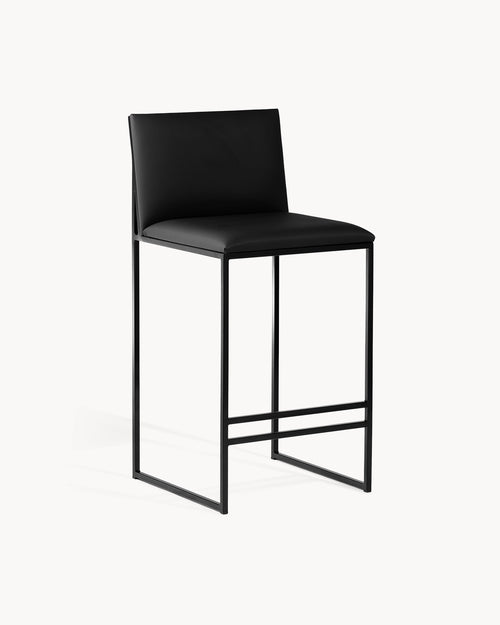
A low back that stays below the counter

A backrest if you usually sit for more than about 20 minutes; backless for quick breakfasts and small kitchens.

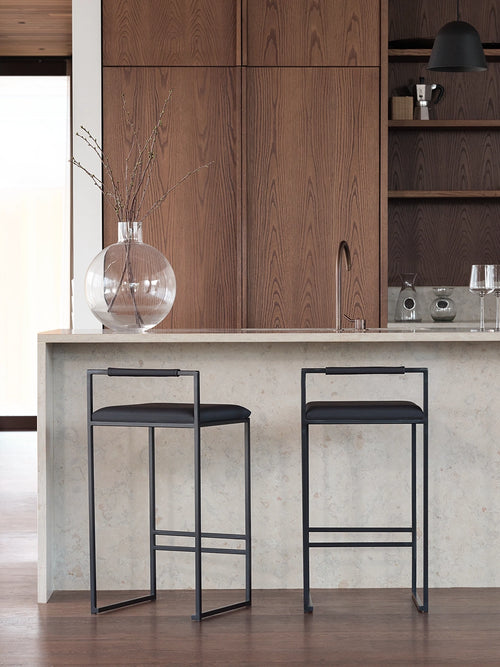
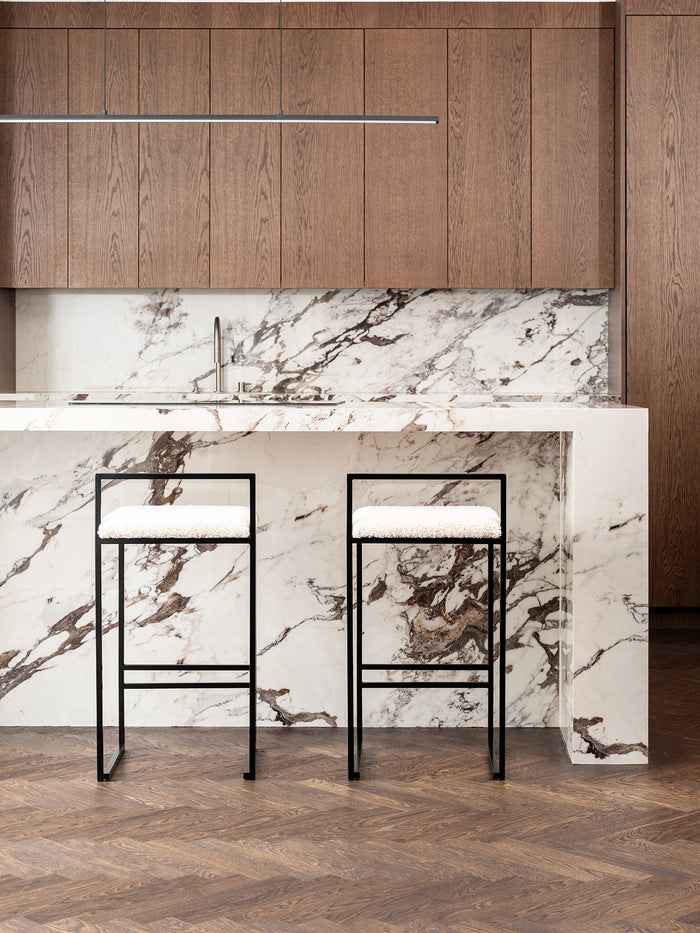
Bar Stool Philip with black frame and ivory bouclé cushion at a kitchen island.
Philip Bar Stool · from 7.495 kr

Backrest or no backrest is the first thing most people decide about a bar stool, and it shapes both comfort and how the kitchen looks. A backrest gives you something to lean against, which is why a stool with a back still feels comfortable at the end of a long dinner. A backless stool is lighter to the eye, easier to slide in and out and takes up no space above the counter. The right answer depends on how long you sit, how much room you have and who uses the stools. This guide compares the options, including the difference between a low and a full backrest and when armrests are worth the extra width, and shows how each by Crea model fits.

Should I choose a bar stool with a back or without?

We recommend a stool with a back if the counter is where you eat full meals, work on a laptop or sit for longer than about 20 minutes.

Choose backless stools if the counter is mostly for quick breakfasts and coffee, if the kitchen is small, or if you want the stools to vanish under the worktop when nobody is sitting.

Many households use a kitchen island for more than they plan to. A counter bought for quick breakfasts often ends up as the homework desk and the place guests sit while dinner is cooked, and that is when a backless stool starts to feel tiring. If you are unsure, a low backrest covers both uses. The table sums up the choice.
Which backrest suits which use
How you use the counterBest choiceby Crea models
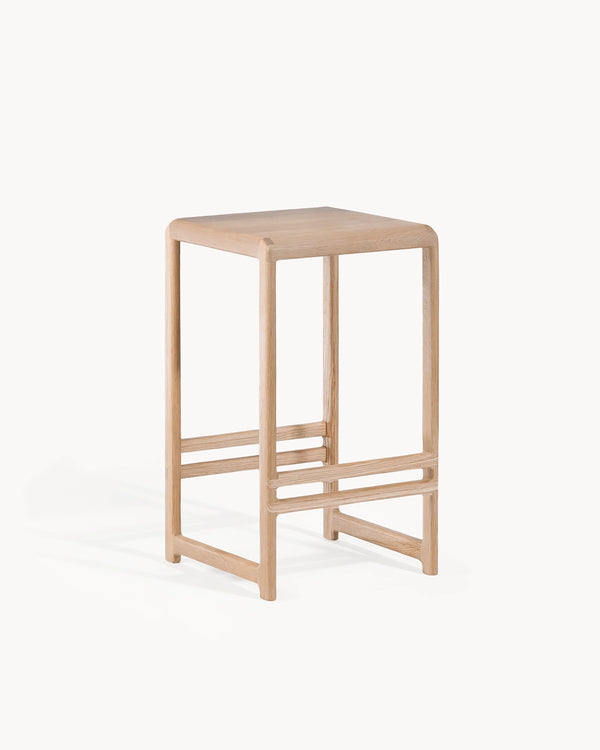
Quick breakfasts and coffee, under 20 minutesBacklessEva, Svea
Everyday meals, a clean look above the counterLow backrestFreja, Ebba
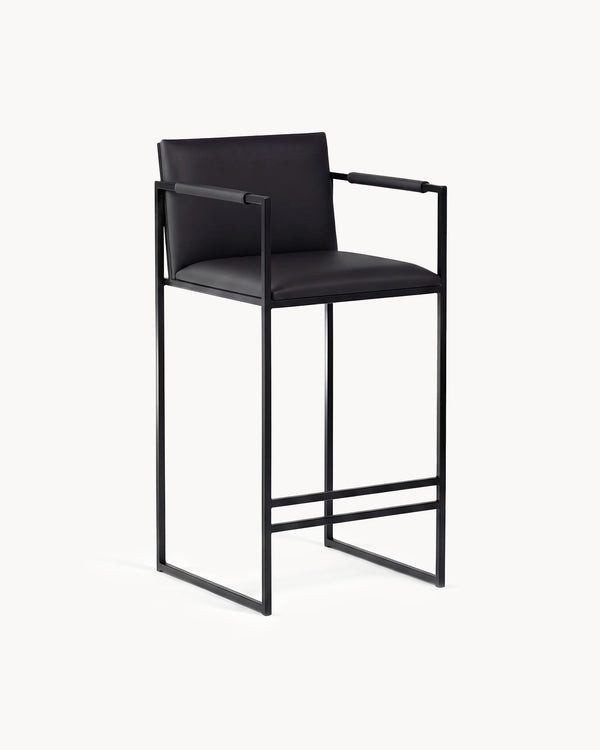
Long dinners, homework, working from homeFull backrestPhilip, Ted
Long sitting, easy getting up, older usersBackrest and armrestsBruno, Carl

Are bar stools with backs more comfortable?

Yes, for anything longer than a short sit. A backrest lets you lean back and relax, while on a backless stool you hold yourself upright the whole time, which most people find tiring over a long meal.

For most people the difference is small over ten minutes and large over an hour, which is why stools with backs tend to be the ones people keep sitting on after the meal ends.

Comfort also depends on the seat and the footrest. A padded seat spreads your weight, and a footrest at the right height takes pressure off the back of the thighs. A backrest adds most when those two are right. Our guide to comfortable bar stools looks at all three together.

Low backrest or full backrest: which is better?

A full backrest gives the most support, reaching up to the shoulder blades, and suits long meals and working at the counter.

A low backrest supports the lower back only, but it stays below the counter edge, so the island looks clean from the room. For most kitchens where people eat daily but rarely linger for hours, a low backrest is enough.

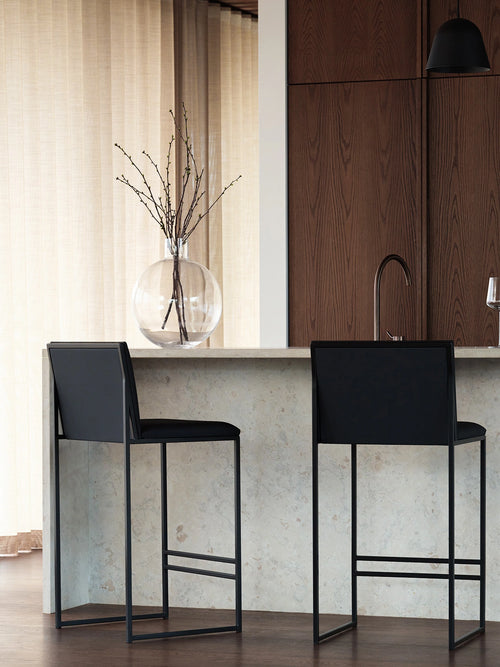
The measurement that matters is where the backrest ends. On a 66 cm seat, Freja's and Ebba's backrests end at 79 cm, about 10 cm below a standard 89 to 92 cm counter, so they sit out of sight from the far side. Philip's and Ted's full backrests end at 93 cm, just above the counter, and remain visible. The table lists every model.

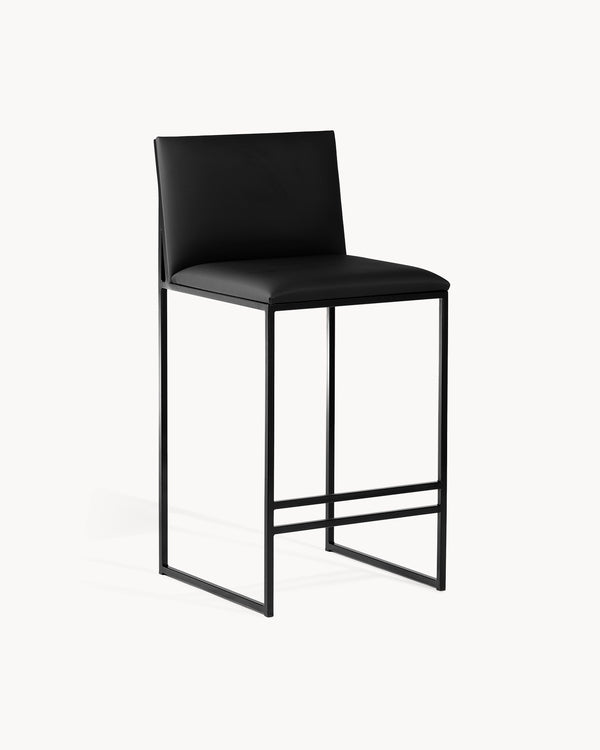
Breakfast Bar Stool Freja with black frame and ivory bouclé cushion in modern kitchen setting.
Freja's low backrest supports the lower back and ends below the counter edge.
Backrest type and overall height with a 66 cm seat
ModelBackrestOverall heightAbove a 90 cm counter?
Eva None66 cmNo, tucks fully under
Svea None67 cmNo, tucks fully under
Freja Low, supports the lower back79 cmNo
Ebba Low backrest bar79 cmNo
Philip Full, upholstered93 cmYes, by 3 cm
Ted Full, solid oak93 cmYes, by 3 cm
Bruno Full, with armrests93 cmYes, by 3 cm
Carl Full, with armrests93 cmYes, by 3 cm

When is a backless bar stool the better choice?

A backless stool is usually the better choice for small kitchens, narrow walkways and islands used mainly for short sits.

It slides completely under the worktop, which frees the floor behind the island, and it can be approached from any side, which makes it quick to get on and off.

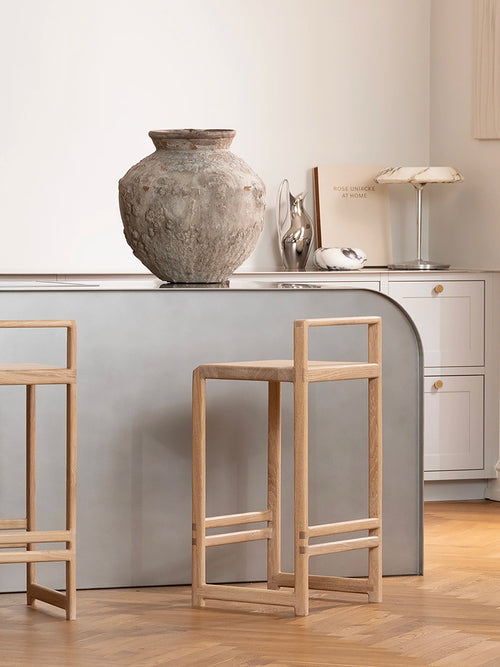
Backless stools also suit an island that is seen from a living room: with the stools pushed in, the island reads as one clean block. Eva, in solid oak, and Svea, with an upholstered seat on a steel frame, are both designed to disappear under a standard counter. They are in our backless bar stools. If your clearance behind the island is under 90 cm, backless is often the only option that keeps the walkway open. See the best bar stools for small kitchen islands for more on tight spaces.

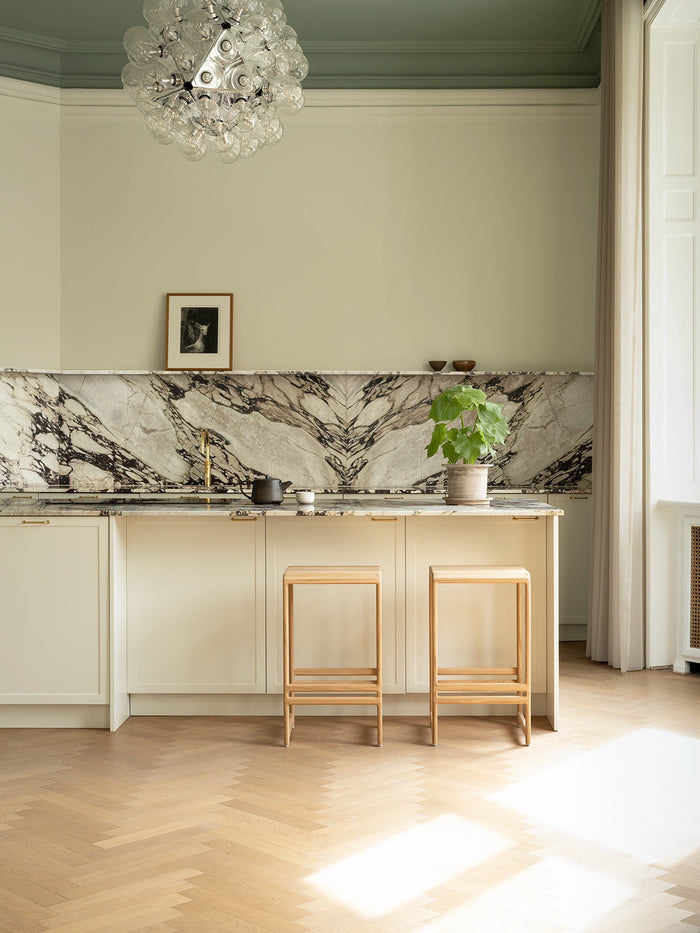
Solid oak bar stools placed in a refined Danish design kitchen with Scandinavian materials and minimalist styling.
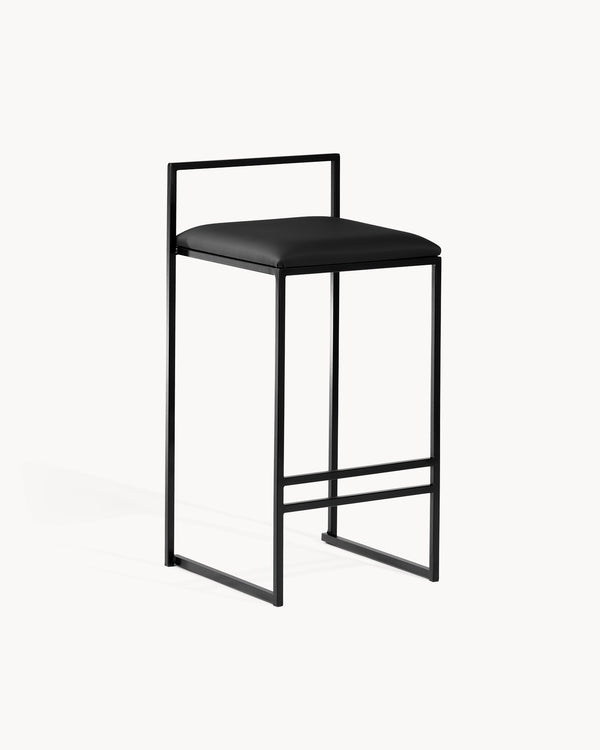
Eva in solid oak: a backless stool that slides completely under the worktop.

Do stools with backs fit under the counter?

Partly. Any stool can slide in until its seat or its backrest meets the counter or the cabinets.

Backless and low-back stools go in until the seat touches the cabinet front, which with a normal overhang hides most of the stool. Full-back stools stop when the backrest reaches the counter edge, so they stay out in the room.

That matters in two places: a narrow kitchen, where the stools must be pushed in to walk past, and an open-plan room, where the island is seen from the sofa. In both, a low backrest gives most of the comfort of a backrest with most of the tidiness of a backless stool. If you choose full backs, plan the full 90 cm of clearance behind the island.

Are bar stools with armrests worth it?

Armrests are worth it if you sit for long periods or find it hard to get up from a high seat: they give your arms somewhere to rest and something to push against.

The cost is width, but only on a wide stool: for Carl, 54 cm across the armrests, we recommend about 60 cm of counter instead of 55 cm, while Bruno fits at the standard 55 cm.

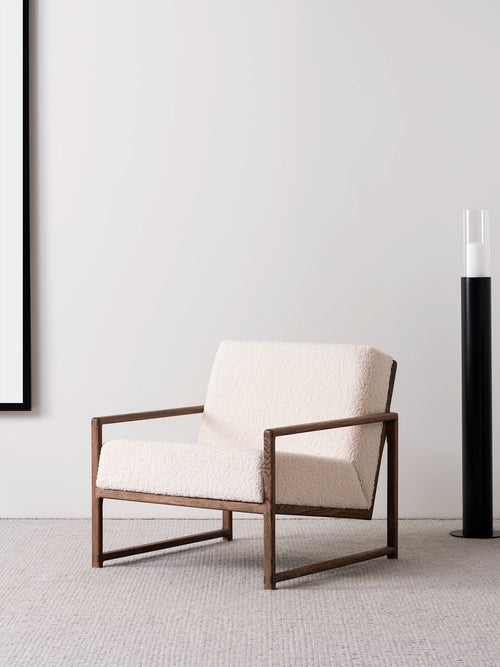
Armrests must also pass under the counter edge. On Bruno, the armrest tops sit at 86 cm on the 66 cm seat, below a standard counter, so the stool still tucks in. Carl, our oak stool with armrests, is our widest stool, 54 cm across the armrests, and the most chair-like of all our stools. Both are in our bar stools with arms and suit a household where the island is the main dining table.

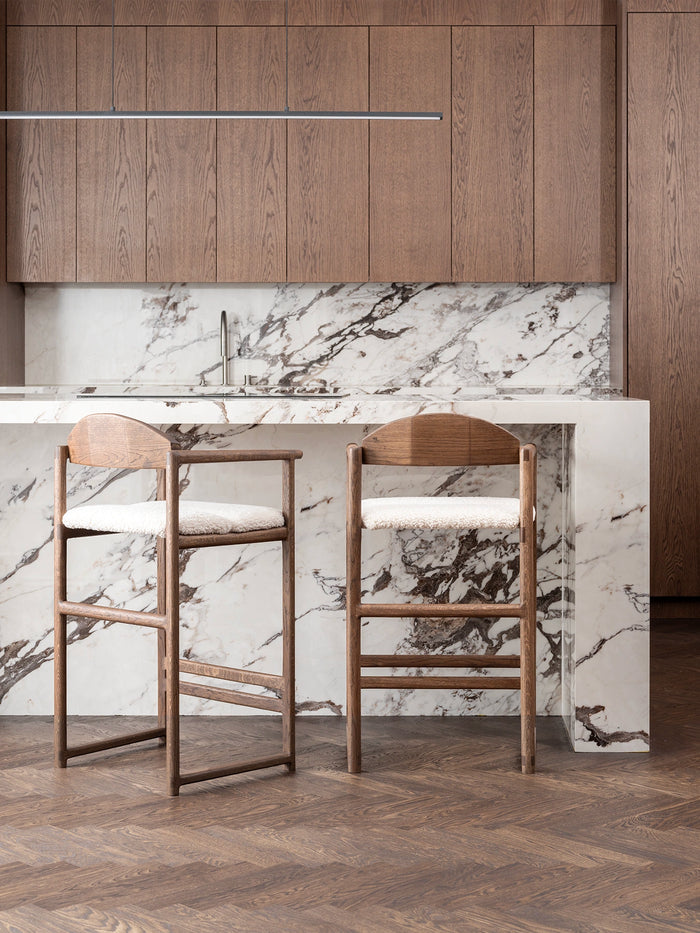
Oak Bar Stool Carl in dark oak with ivory bouclé near a marble kitchen counter
Carl in dark oak with ivory bouclé, our oak stool with armrests and the widest stool in the range.

Which backrest is best for children and older people?

For older people and anyone who needs a little help sitting down, a full backrest with armrests is usually the easiest to sit on and get up from, because the arms give support on the way down and up.

For young children, a stool with a backrest and a footrest feels more secure than a backless one, and a solid frame that does not tip is what matters most.

All our stools stand on four legs with a footrest, a stable base when a child climbs up the front, and we rate every one for 200 kg. What changes between models is how much support the upper body gets. If the stools will be used by several generations, it can be worth mixing: backed stools in the middle of the island and a backless one at the end for quick visits.

Back or backless: the short version

Backless
Quick sits, small kitchens, out of sight.
Low back
Daily meals; stays below the counter edge.
Full back
Long meals, homework and work.

As a rule of thumb, if you sit longer than about 20 minutes, you want a backrest: low if you care about a clean island, full if you care most about support, with armrests if getting up is hard. Sit briefly, have a small kitchen or want the stools out of sight, and backless is usually the better choice. Every by Crea stool comes in 66 and 76 cm seat heights, is made in our own factory in Malmö, Sweden, and is delivered fully assembled with a 10-year warranty. If you are unsure, start with a single test stool: within 14 days of delivery you can return it free of charge if the comfort or build does not suit you.

Frequently asked questions

Are backless bar stools uncomfortable?

Not for short sits. For coffee or a quick breakfast a padded backless stool is comfortable. For most people, a backless stool becomes more tiring after about 20 minutes because there is nothing to lean against, so we recommend a backrest for meals and work.

What is the difference between a low back and a high back bar stool?

A low back supports the lower back and ends below the counter edge; on Freja it ends at 79 cm. A high back reaches the shoulder blades and ends above the counter; on Philip it ends at 93 cm.

Do bar stools with backs take up more space?

Only above the counter and behind it. The seat footprint is the same, but a full-back stool cannot slide fully under the worktop, so plan at least 90 cm of floor behind the island.

Which bar stools have armrests?

In our range, Bruno in powder-coated steel and Carl in solid oak. Allow 55 cm of counter per stool for Bruno and 60 cm for Carl, our widest stool.

Are backless stools better for small kitchens?

Usually, yes. They slide completely under the counter and free the walkway. Eva and Svea tuck fully under a standard 90 cm counter.

Can I mix bar stools with and without backs?

Yes. It usually works best when they share a frame colour and seat height. A common layout is backed stools along the middle of the island and a backless stool at the end.

Freja Bar StoolFrom 5.995 kr Shop