Oak Bar Stools: A Guide to Solid Oak Stools for Modern Kitchens
By Alexandra PetterssonReviewed by Alexander TjernströmUpdated
Solid oak is one of the best materials for a kitchen bar stool: it is hard, stable, ages well and can be repaired rather than replaced. Choose a wood seat for a clean, easy-to-wipe stool, or an upholstered seat for long meals. Our four oak stools, Eva, Ebba, Ted and Carl, are made from FSC-certified European oak in our own factory in Malmö and come with 66 or 76 cm (26 or 30 in) seats.
Oak has been the wood of choice for chairs in northern Europe for centuries, and for good reason: it is dense enough to take daily knocks, stable enough to keep its joints tight, and its grain looks better after years of use than on the day it arrives. A solid oak bar stool also brings warmth to a kitchen full of stone, steel and white cabinets. This guide explains what to look for in an oak bar stool: solid wood versus veneer, how comfortable a wooden seat really is over a long dinner, how the finishes differ, how to look after the wood, and how our four oak models compare in size and support. Every measurement is given in centimetres and inches.
Are oak bar stools a good choice for a kitchen?
Yes. Oak is a hardwood with tight grain that resists dents from shoes and footrests, and a lacquered surface wipes clean after spills. A well-made solid oak stool with proper joints lasts for decades, and the wood can be sanded and refinished if it is ever badly marked, which is not true of most painted or plastic stools.
Oak also gives a kitchen something that steel and stone do not: warmth. In a room of hard, cool surfaces, a row of oak stools is often what makes an island feel like a place to sit rather than a place to work. The trade-off is weight and bulk: an oak stool is visually heavier than a slim steel one, which matters on a small island. If you are weighing the two, our guide to wood vs metal bar stools compares them directly.
What is the difference between solid oak and oak veneer?
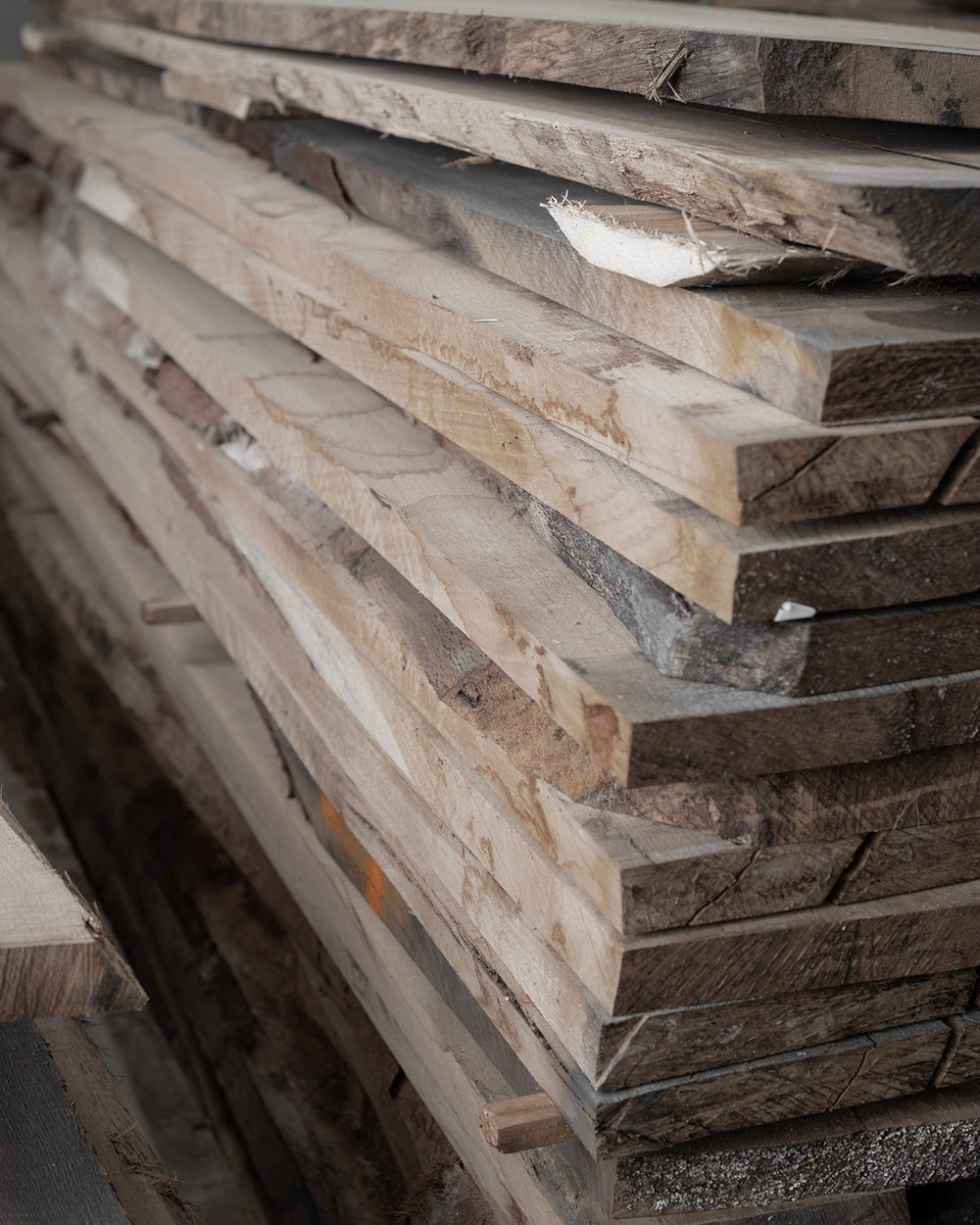
Solid European oak in our factory in Malmö, before it is cut and joined.
Solid oak is oak all the way through; veneer is a thin layer of oak glued over another material, usually particleboard or plywood. Solid oak can be sanded, repaired and refinished; veneer cannot be sanded more than lightly, and a chipped edge shows the core. For a stool that takes kicks and scrapes every day, solid wood is the one that lasts.
Our oak stools are made from solid European oak, FSC-certified, which means it comes from forests managed to strict environmental and social standards. The legs, rails and backrests are solid timber, joined and glued in our own factory in Malmö, Sweden, and finished with a matt lacquer that seals the surface without making it glossy. When you compare prices, check which parts of a stool are solid: some stools advertised as oak have solid legs and a veneered seat.
Are wooden bar stools comfortable for long sitting?
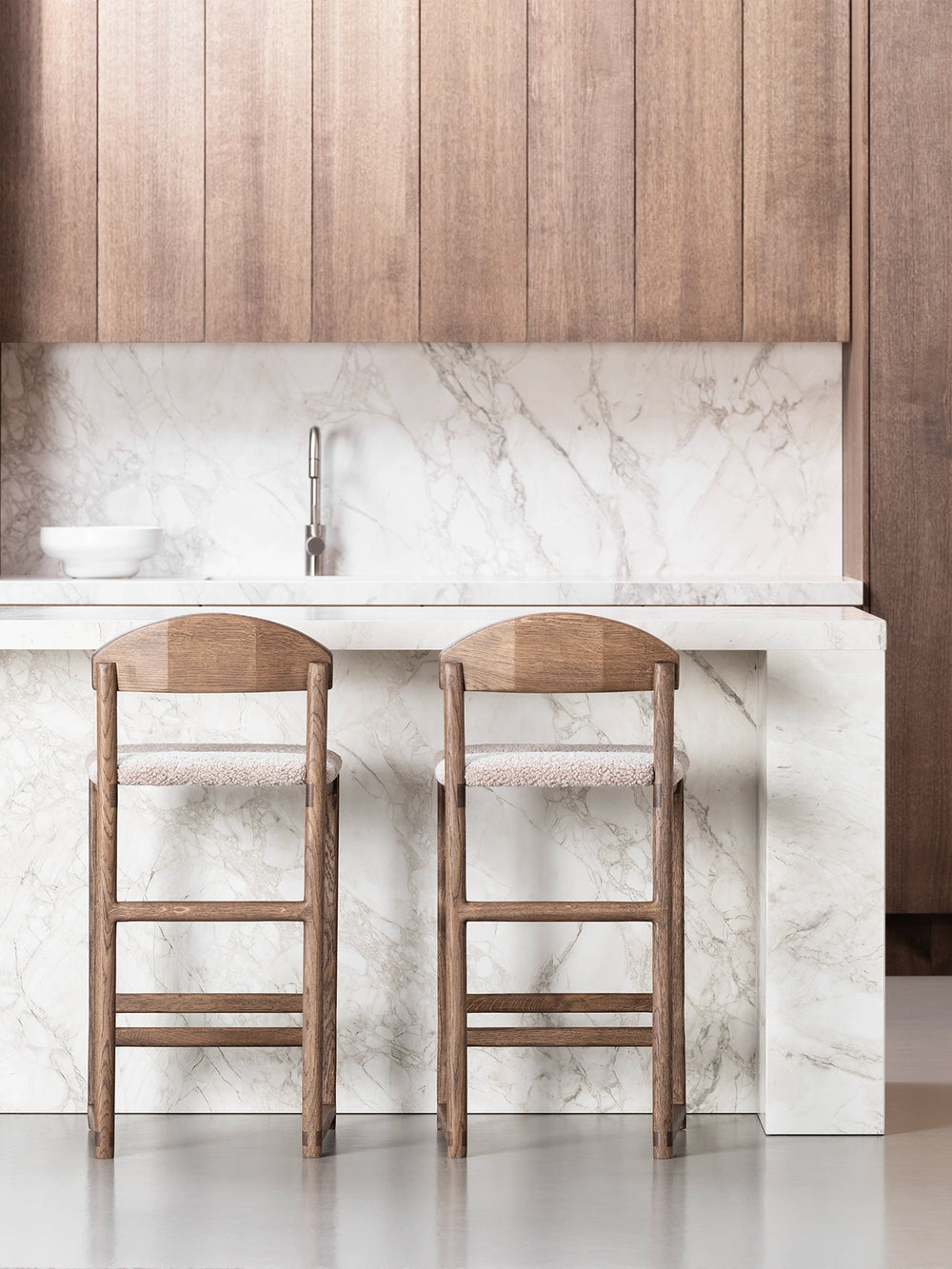
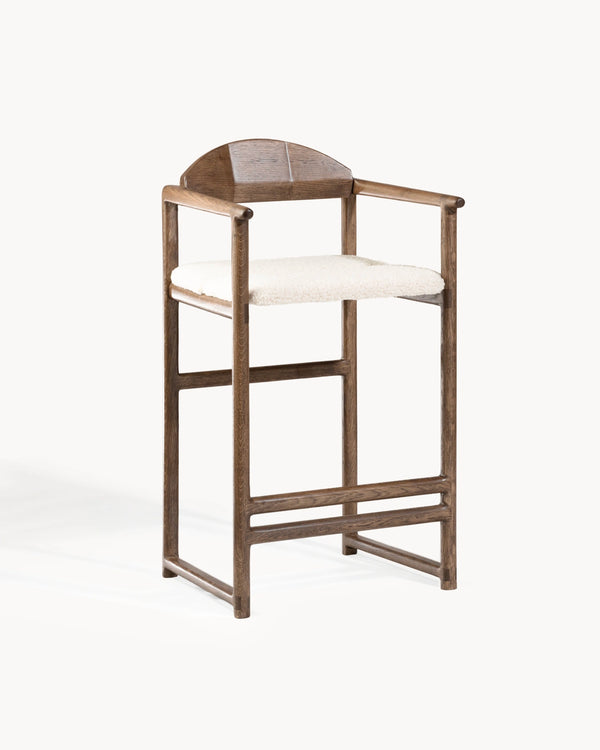
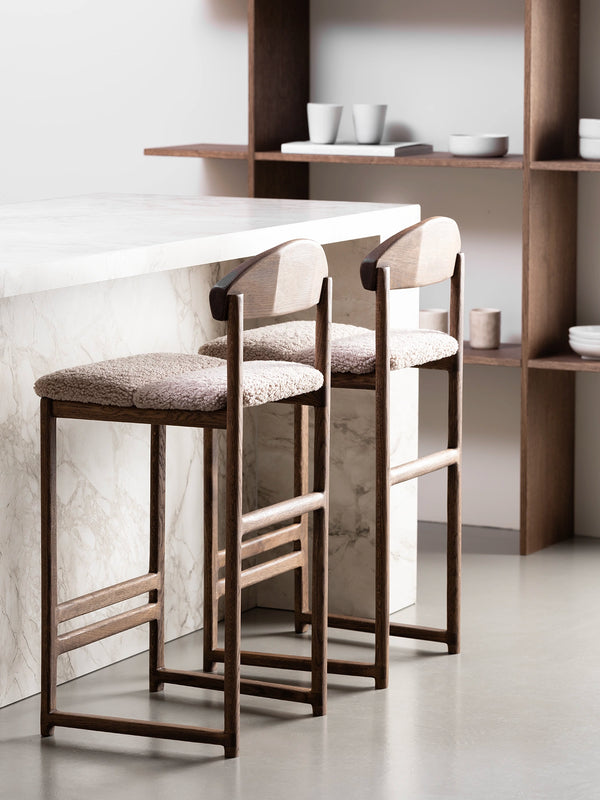
Ted in dark oak with a greige bouclé seat, for longer meals.
A shaped wooden seat is comfortable for meals of up to about an hour, especially with a backrest and a footrest at the right height. For longer sitting, an upholstered seat is more comfortable because it spreads your weight. Comfort depends more on seat width, backrest and footrest than on whether the seat is wood or fabric.
A flat wooden board is hard work after twenty minutes; a seat with a slight dish and rounded front edge takes the pressure off the backs of the thighs. Seat width matters too: Ted's 45 cm (17.7 in) seat and Carl's 54 cm (21.3 in) seat leave room to shift position, which is what keeps you comfortable over a long dinner. If you want the look of oak with a softer seat, Ted and Carl come with bouclé upholstery. Our guide to comfortable bar stools goes deeper.
How durable is an oak bar stool?
Very durable when it is solid oak with glued joints. Oak is one of the hardest common European hardwoods, and a lacquered surface protects it from water, grease and stains. Our oak stools carry a 200 kg (440 lbs) load rating and a 10-year warranty, and they are delivered fully assembled, so the joints are made and checked in the factory, not at home.
What wears first on any wooden stool is the finish, not the wood: the front of the seat and the top of the footrest see the most contact. A matt lacquer hides light wear well, and felt pads under the feet stop the stool from scratching the floor or being scratched by it. Water left standing on the surface for hours is the main thing to avoid.
Natural oak or dark oak: which finish should I choose?
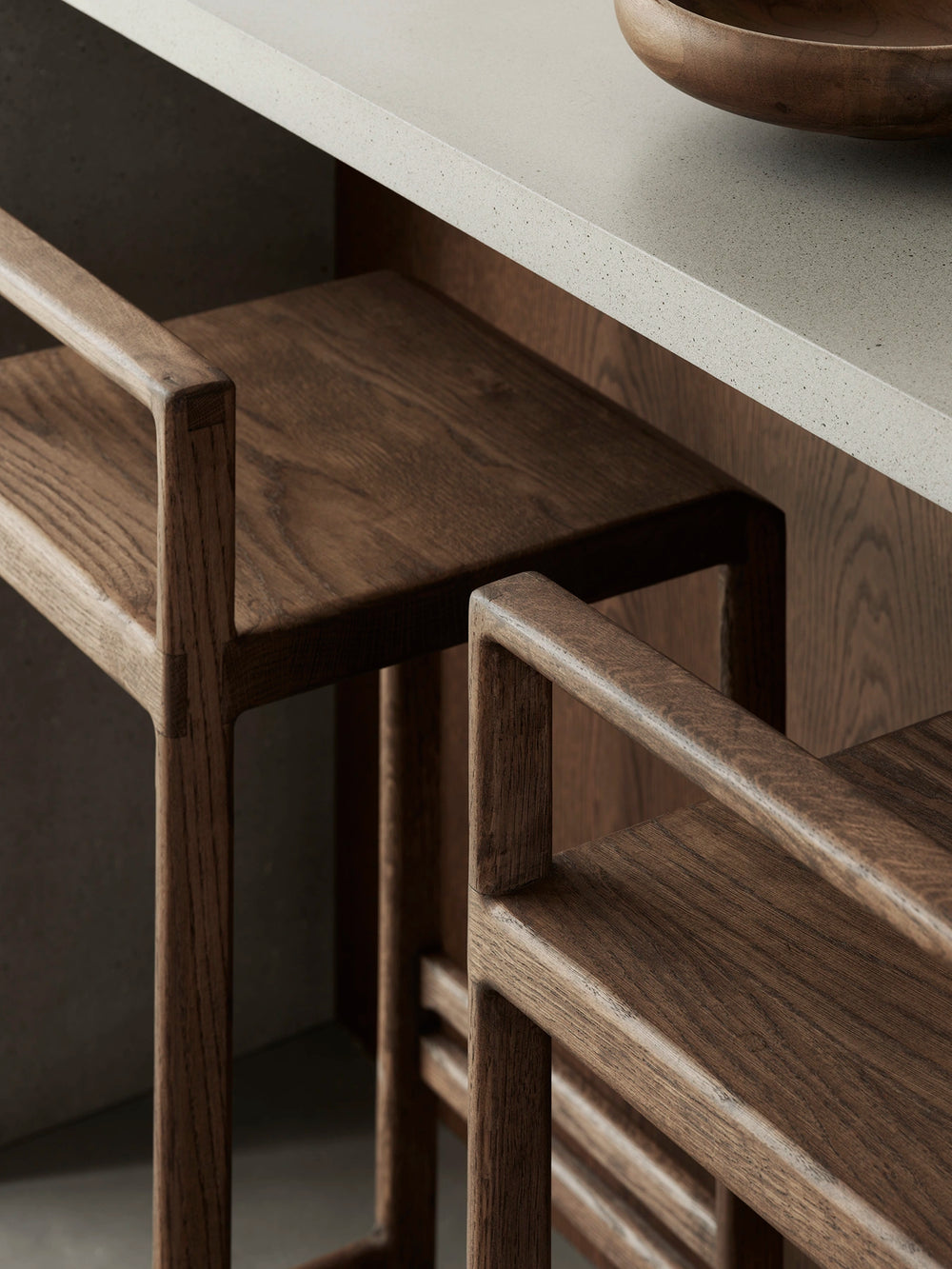
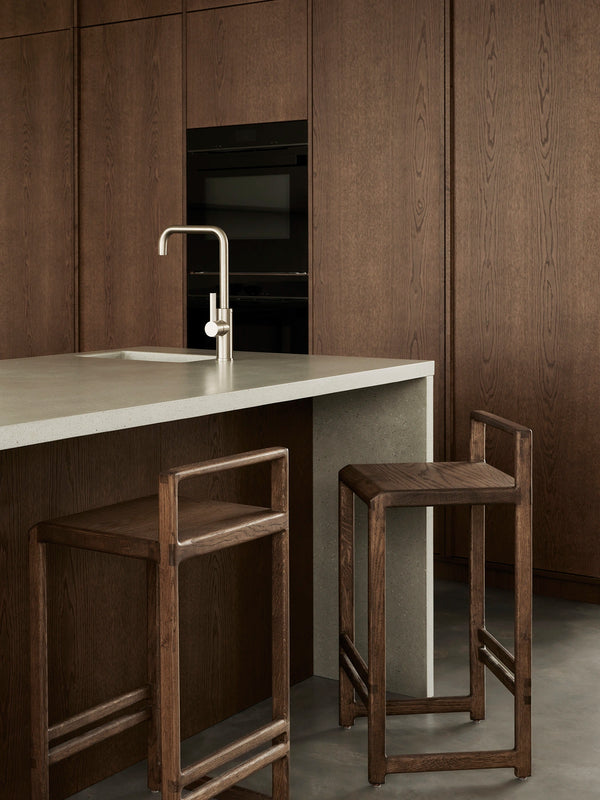
Dark oak is stained before lacquering, so the grain of the solid wood still shows.
Choose natural oak for a light, Scandinavian kitchen with white, grey or pale wood surfaces; choose dark oak for contrast against light cabinets, or to match dark floors, stone and black fittings. Both are the same solid oak underneath; dark oak is stained before it is lacquered, so the grain still shows through.
Natural oak warms slightly over the years as the wood reacts to light, which most people like. Dark oak hides everyday marks and crumbs better, which is worth knowing in a family kitchen. If you are unsure how a finish will look next to your worktop, order wood samples first; they are small enough to hold against a cabinet door and show the real colour, which no screen does.
Which oak bar stool should I choose?
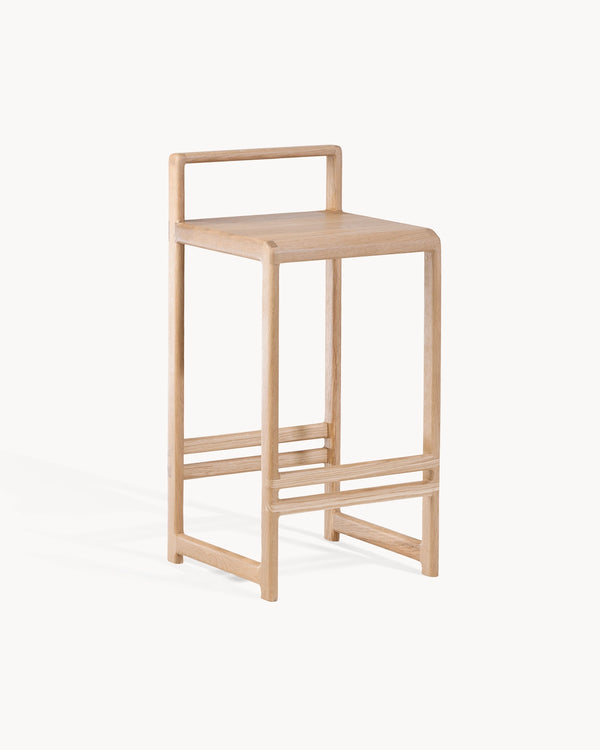
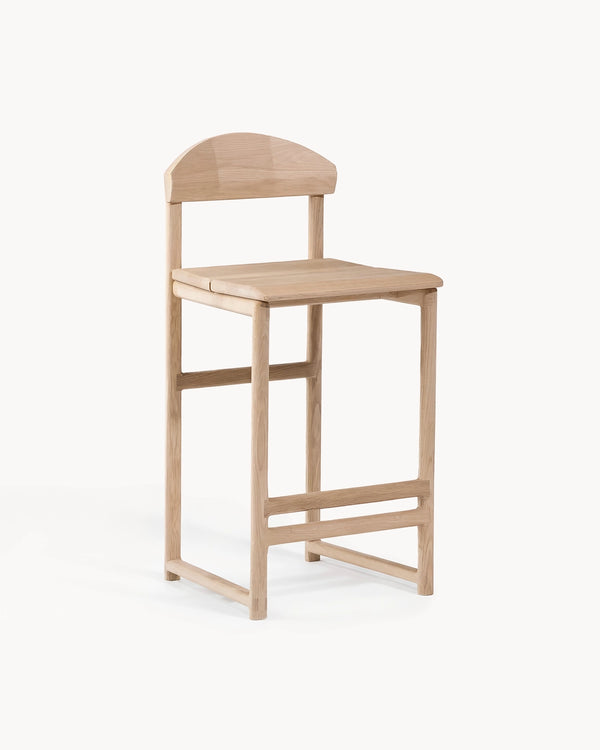
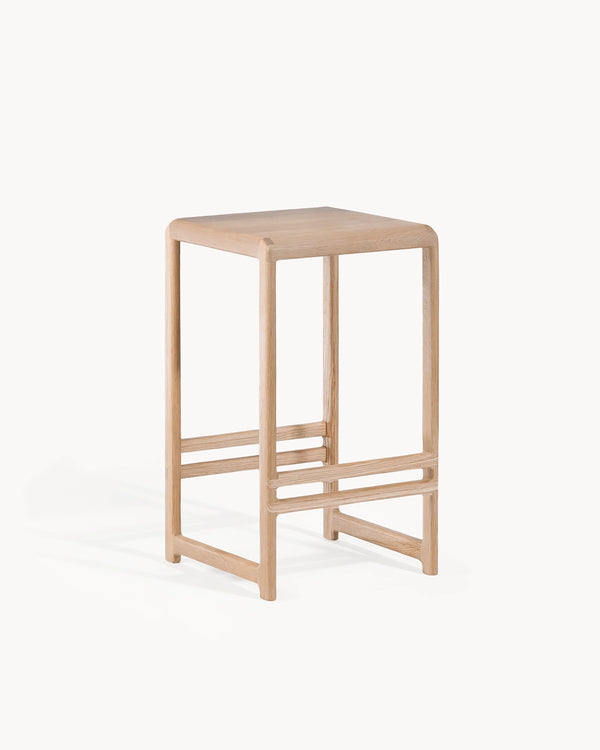
Choose Eva for a backless stool that slides completely under the counter, Ebba for a low backrest and a light look, Ted for a full backrest and the option of an upholstered seat, and Carl for armrests and the widest, most chair-like seat. All four come in 66 cm (26 in) and 76 cm (30 in) seat heights.
The table compares the four side by side. Seat width is the figure to check if you are fitting several stools along one island: narrower seats fit more stools, wider seats are more comfortable for long meals. Allow 55 cm (21.5 in) of counter per stool, and 60 cm (23.5 in) for Carl.
Our four oak bar stools compared, 66 cm (26 in) seat
Model
Backrest
Seat width x depth
Overall height
Seat
Eva
None
38 x 38 cm (15 x 15 in)
66 cm (26 in)
Solid oak
Ebba
Low backrest bar
38 x 38 cm (15 x 15 in)
79 cm (31.1 in)
Solid oak
Ted
Full backrest
45 x 40 cm (17.7 x 15.7 in)
93 cm (36.6 in)
Oak or bouclé
Carl
Full backrest, armrests
54 x 43 cm (21.3 x 16.9 in)
93 cm (36.6 in)
Bouclé
How do I care for oak bar stools?
Wipe oak stools with a dry or lightly damp cloth and dry them straight away. Avoid silicone polishes, abrasive pads and strong cleaners, which dull or strip the lacquer. Wipe up spills quickly rather than letting water stand, and fit felt pads under the feet to protect both the floor and the stool.
A lacquered stool never needs oiling. If the surface gets a deep scratch after years of use, it can be sanded and lacquered again, one of the advantages of solid wood. Keep stools out of direct contact with radiators, where very dry heat can open small cracks in any solid timber. Our bar stool care guide covers upholstery and steel as well.
Do oak bar stools suit a modern kitchen?
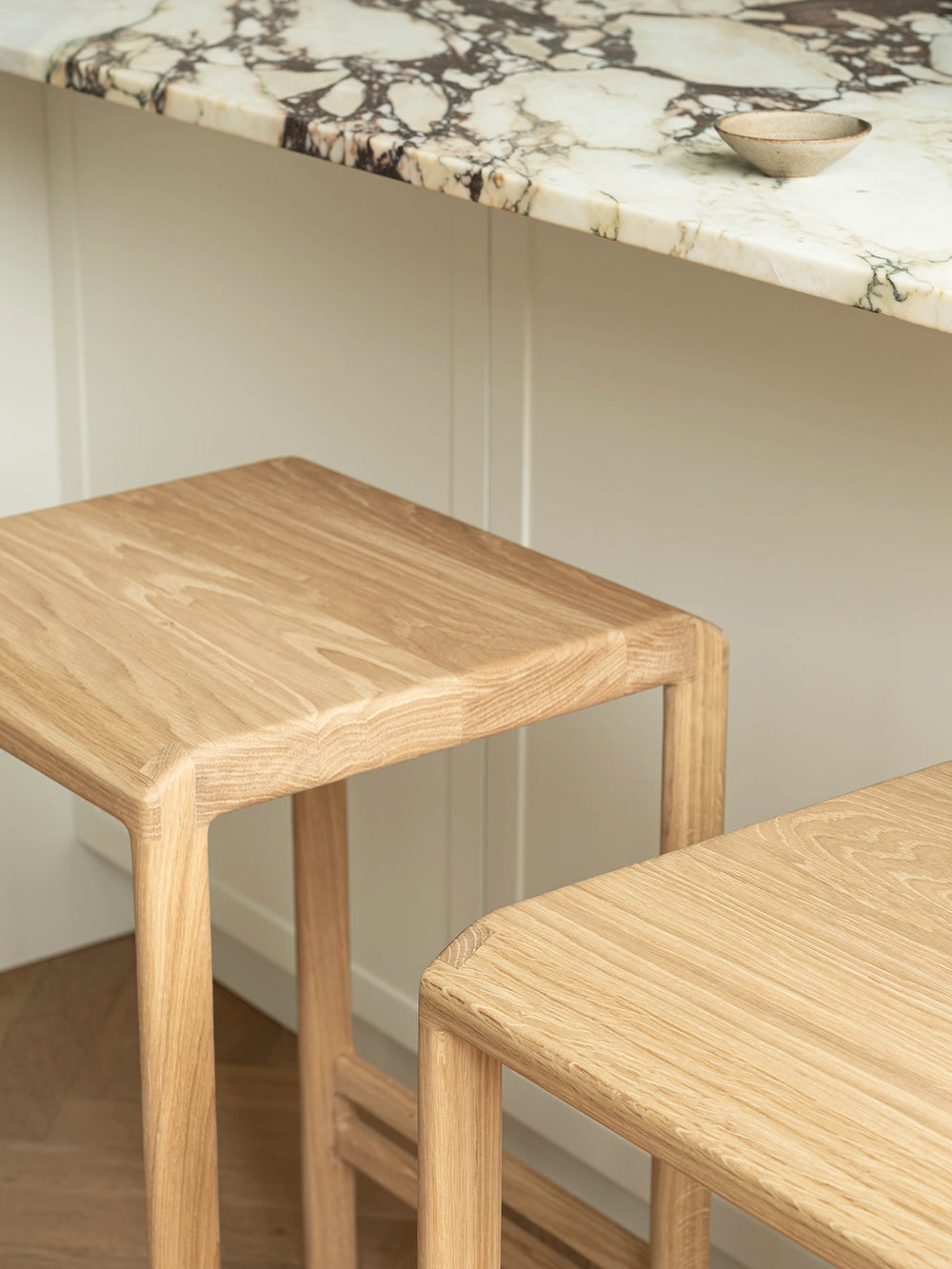
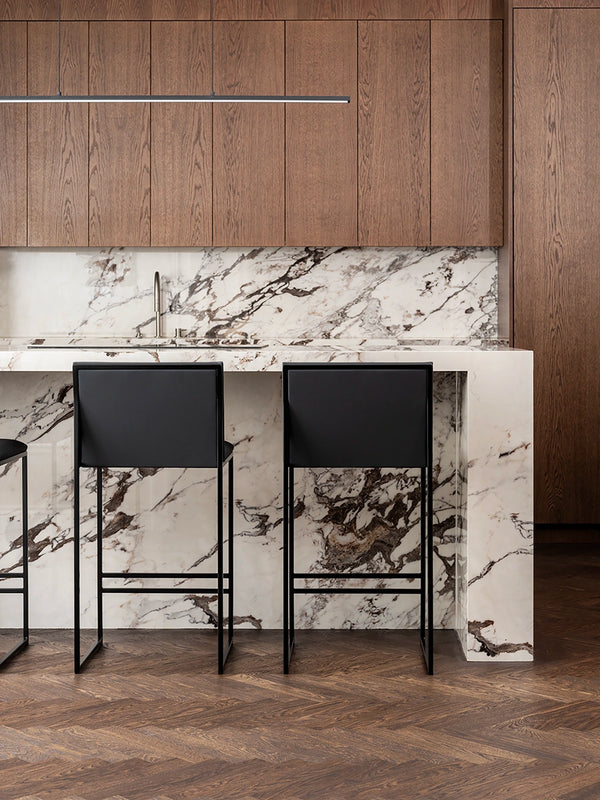
Eva in natural oak beside a marble island: simple lines keep oak modern.
Yes, when the design is simple. Modern kitchens with flat fronts, stone worktops and black fittings suit oak stools with clean lines and no carving, which is why our oak range is drawn with straight legs, square seats and slim backrests. The oak then adds warmth without looking rustic.
A few combinations work especially well: natural oak with white or pale grey cabinets and a light stone top; dark oak with marble, where the stools echo the veining; and oak with a black steel kitchen, where the wood softens the metal. Keep the stool's oak close in tone to the floor or the worktop, not to both, so the room keeps some contrast. See more combinations in how to choose bar stools for your kitchen.
Choosing an oak bar stool
Look for solid oak rather than veneer, a shaped seat or an upholstered one if you sit long, and a backrest that matches how you use the counter. Pick natural oak for a light kitchen and dark oak for contrast and a forgiving surface. Our oak stools, Eva, Ebba, Ted and Carl, are made from FSC-certified European oak in our own factory in Malmö, Sweden, delivered fully assembled, rated for 200 kg (440 lbs) and covered by a 10-year warranty, in 66 and 76 cm seat heights.
Yes. Oak is a dense hardwood that resists dents, keeps its joints tight and can be sanded and refinished. With a lacquered finish it wipes clean after spills, which suits a kitchen.
Are wooden bar stools comfortable?+
A shaped wooden seat is comfortable for meals up to about an hour, especially with a backrest and footrest. For longer sitting, an upholstered seat such as Ted or Carl in bouclé is more comfortable.
Are your oak bar stools solid wood?+
Yes. Eva, Ebba, Ted and Carl are made from solid FSC-certified European oak, finished with a matt lacquer in our own factory in Malmö, Sweden.
Do oak bar stools need oiling?+
Not ours. They are lacquered, so they need only a dry or lightly damp cloth. Avoid silicone polishes and abrasive cleaners.
What is the difference between natural oak and dark oak?+
Both are the same solid oak. Dark oak is stained before lacquering, so the grain still shows; it contrasts with light cabinets and hides everyday marks well.
What heights do your oak bar stools come in?+
66 cm (26 in) for kitchen counters of 89 to 92 cm, and 76 cm (30 in) for bar counters of 99 to 102 cm. Custom heights are made on our steel models only.
Choosing a selection results in a full page refresh.












 Wood vs Metal Bar Stools: Which Material Is Right for You?Choose metal (powder-coated steel) for a slim, light look, the most colour and height options and a frame that shrugs off daily knocks. Choose wood (solid...
 Comfortable Bar Stools: Backrest, Footrest and Seat Shape ExplainedA bar stool is comfortable for long sitting when five things are right: the seat height leaves 23 to 26 cm (9 to 10 in) under...
 How to Clean Bar Stools: Care for Steel, Oak, Leather, Velvet and BoucléClean frames with a dry or lightly damp cloth and dry them straight away; that is all powder-coated steel and lacquered oak need. Wipe vegan leather...
 How to Choose Bar Stools for Your Kitchen: A 6-Step GuideChoose kitchen bar stools in this order: measure the counter to its underside and pick a 66 cm (26 in) or 76 cm (30 in) seat;...
 Bar Stools With Backs vs Backless: Which Should You Choose?Choose a bar stool with a back if you sit at the counter for more than about 20 minutes at a time: for meals, homework or...
 How Our Bar Stools Are Made: Inside the Factory in MalmöEvery by Crea bar stool is made from start to finish in our own factory in Malmö, Sweden. Steel frames are cut, bent, welded and powder-coated;...
