How Much Legroom Do Bar Stools Need?
Bar stools need 23–26 cm (9–10 inches) of knee clearance between the seat surface and the underside of the counter. This vertical gap, referred to as bar stool legroom or bar stool clearance, is the measurement that determines whether you can sit comfortably without your thighs pressing into the worktop.
The calculation is simple: counter underside height minus stool seat height equals legroom. A 90 cm kitchen island with a 66 cm stool gives 24 cm. A 100–110 cm breakfast bar with a 76 cm stool gives 24–34 cm. Counter stools and bar stools follow the same clearance target; only the seat height changes between counter types.
Legroom and overhang are two separate measurements. Both determine comfort at a kitchen island. For the full height picture, see our bar stool height guide and seat height vs counter height guide.
Bar stools need 23–26 cm (9–10 inches) of knee clearance between the seat surface and the underside of the counter. This vertical gap, referred to as bar stool legroom or bar stool clearance, is the measurement that determines whether you can sit comfortably without your thighs pressing into the worktop.
The calculation is simple: counter underside height minus stool seat height equals legroom. A 90 cm kitchen island with a 66 cm stool gives 24 cm. A 100–110 cm breakfast bar with a 76 cm stool gives 24–34 cm. Counter stools and bar stools follow the same clearance target; only the seat height changes between counter types.
Legroom and overhang are two separate measurements. Both determine comfort at a kitchen island. For the full height picture, see our bar stool height guide and seat height vs counter height guide.
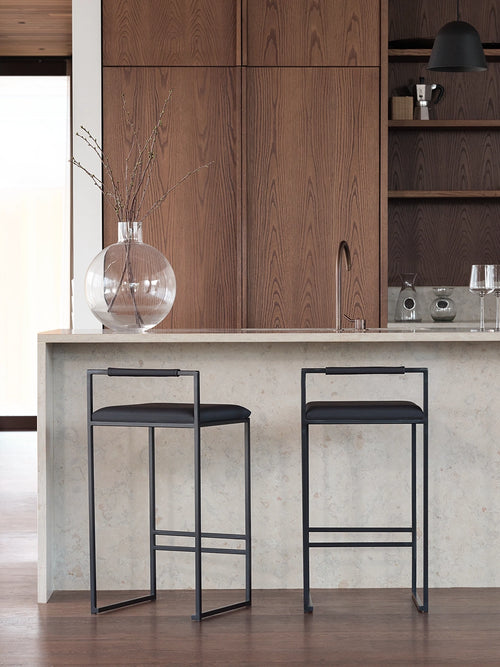
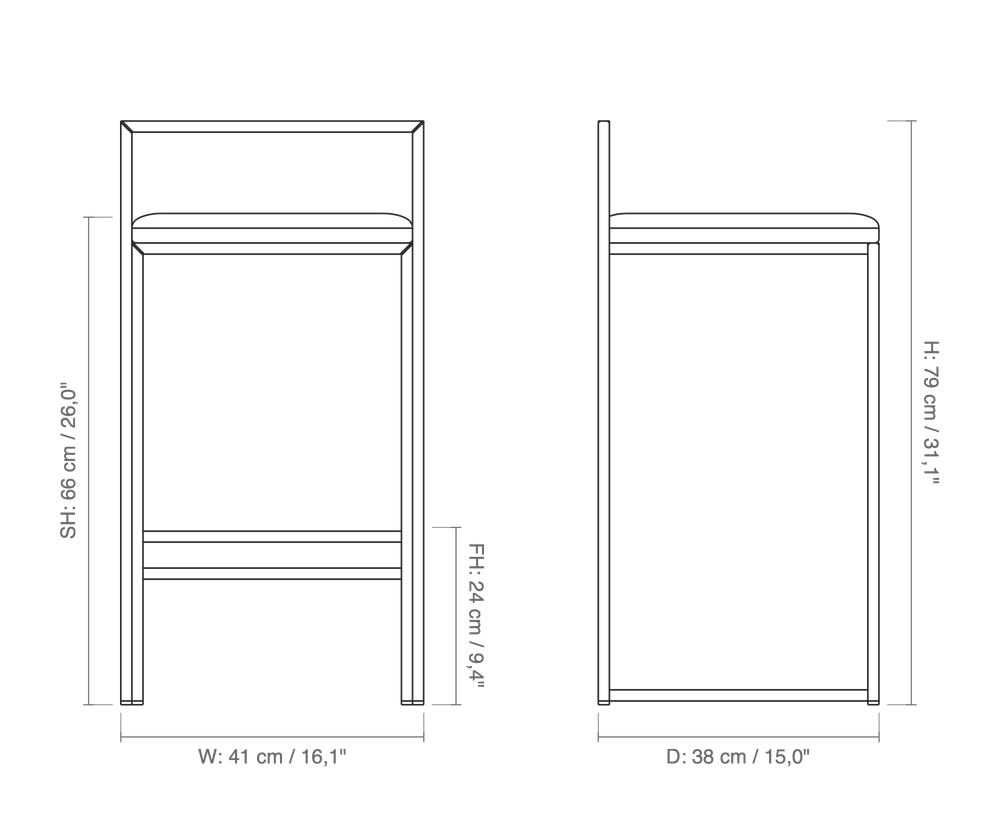
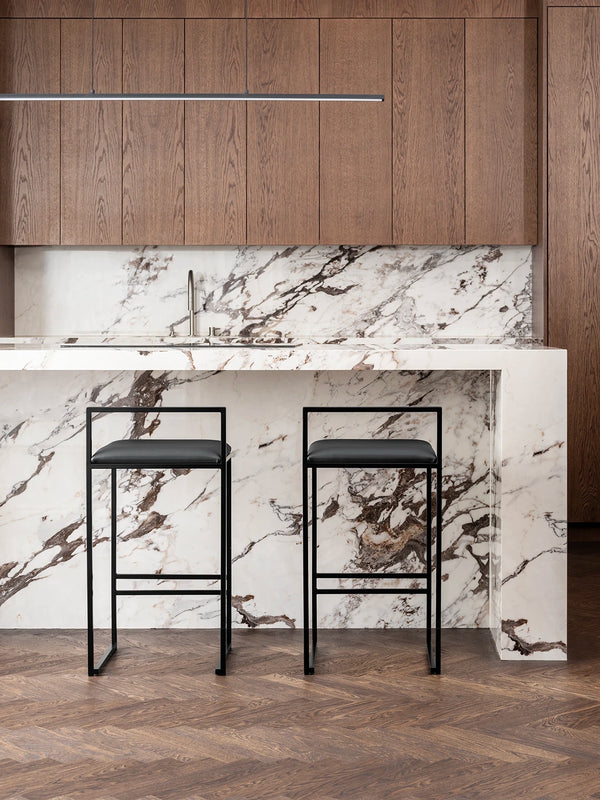
A 66cm (26") Freja bar stool positioned at a kitchen island measuring 90cm from floor to top of counter with an illustration of leg room space difference.
Measurement diagram showing the 23–26 cm vertical clearance between a bar stool seat and the kitchen island underside, with the recommended range marked.
What Does Legroom Mean for a Bar Stool?
Legroom, in the context of bar stool seating, is the vertical gap between the top of the seat surface and the underside of the counter above it. It is the space your thighs occupy when seated upright: the clearance that allows you to sit without your legs pressing into the surface above.
Unlike seat-to-floor height, which tells you whether a stool is the right size for your counter, legroom tells you whether the seated position will be physically comfortable once you are there. This measurement matters most at kitchen islands, where the counter overhang creates a fixed ceiling directly above the seated position.
Legroom, in the context of bar stool seating, is the vertical gap between the top of the seat surface and the underside of the counter above it. It is the space your thighs occupy when seated upright: the clearance that allows you to sit without your legs pressing into the surface above.
Unlike seat-to-floor height, which tells you whether a stool is the right size for your counter, legroom tells you whether the seated position will be physically comfortable once you are there. This measurement matters most at kitchen islands, where the counter overhang creates a fixed ceiling directly above the seated position.
What Is the Correct Bar Stool Knee Clearance?
The correct bar stool knee clearance is 23–26 cm (9–10 inches), measured from the seat surface to the underside of the counter. This is the kitchen island clearance target across residential and commercial seating design. Within this range, the thighs stay below the counter surface and the feet rest naturally on a footrest without strain.
Below 20 cm (8 inches), the space becomes restrictive: most adults will feel their thighs contact the counter underside when seated. Above 30 cm (12 inches), the worktop sits higher than the natural arm resting height and shoulder tension develops during longer use.
The 20–30 cm outer range is acceptable for most adult proportions. The 23–26 cm target fits the majority of adults without compromise.
The correct bar stool knee clearance is 23–26 cm (9–10 inches), measured from the seat surface to the underside of the counter. This is the kitchen island clearance target across residential and commercial seating design. Within this range, the thighs stay below the counter surface and the feet rest naturally on a footrest without strain.
Below 20 cm (8 inches), the space becomes restrictive: most adults will feel their thighs contact the counter underside when seated. Above 30 cm (12 inches), the worktop sits higher than the natural arm resting height and shoulder tension develops during longer use.
The 20–30 cm outer range is acceptable for most adult proportions. The 23–26 cm target fits the majority of adults without compromise.
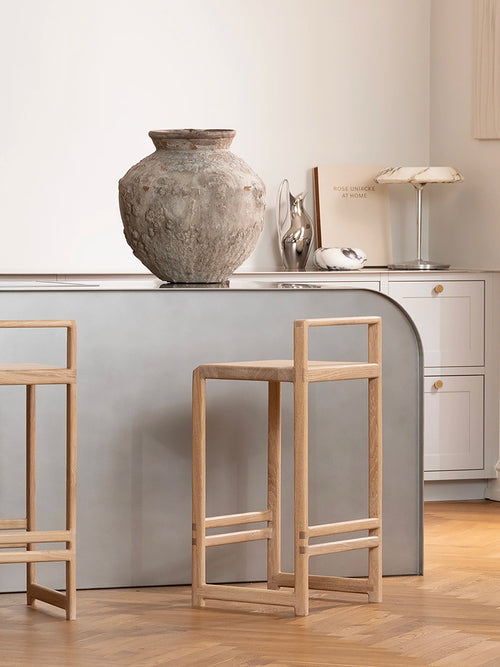
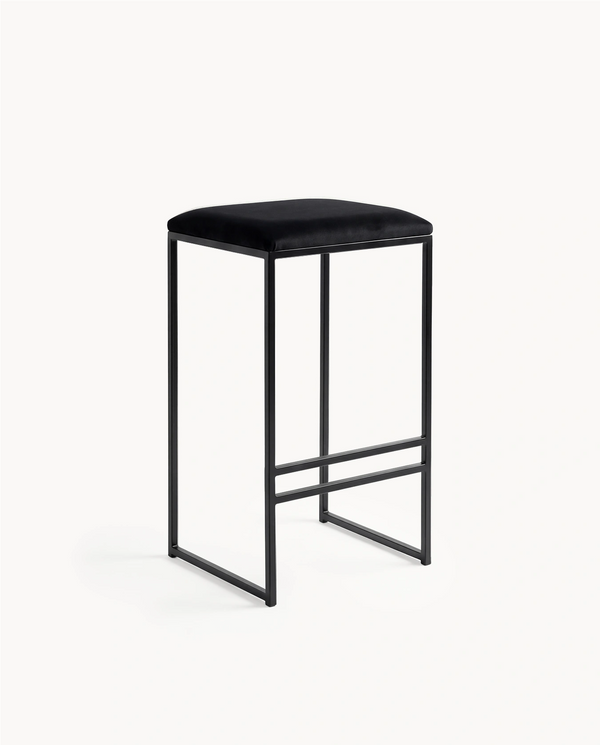
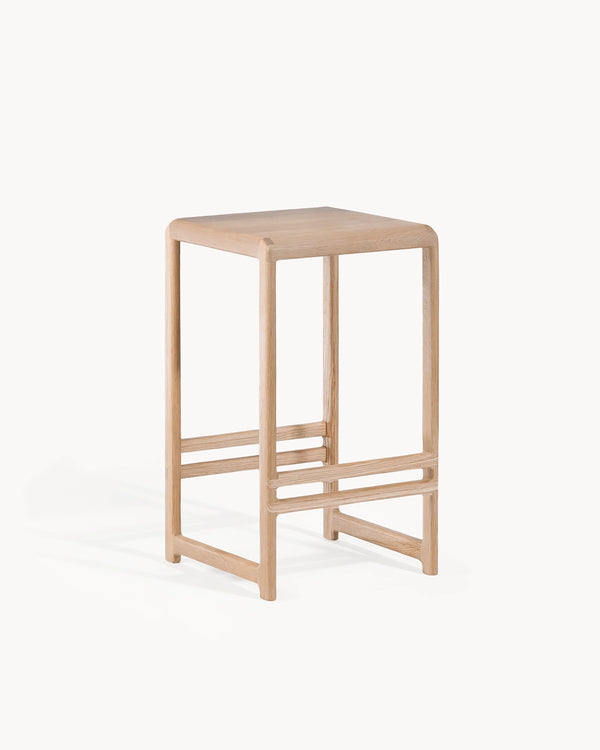
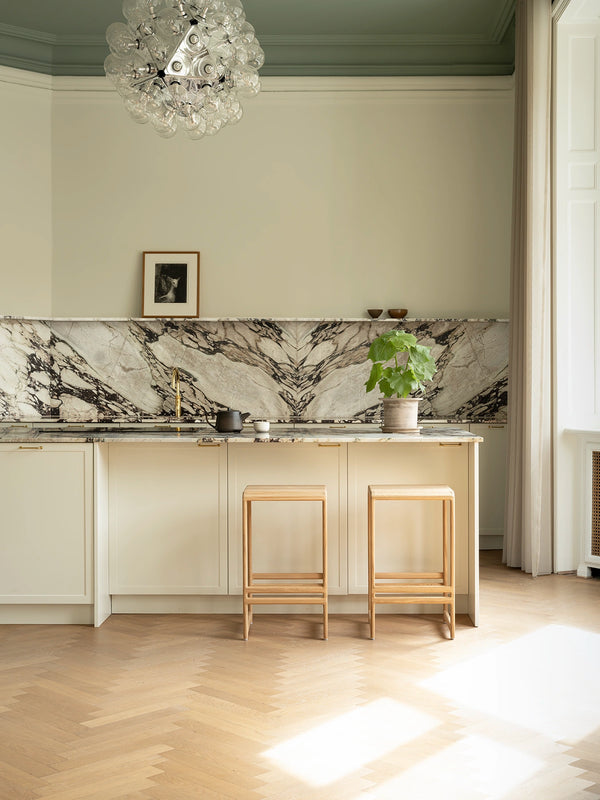
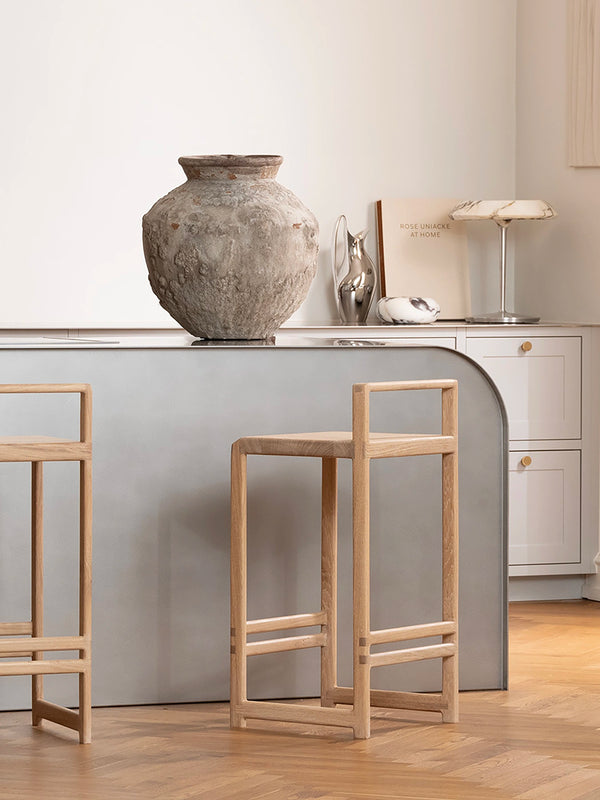
Our Ebba bar stools in oak by a 90 cm counter heigh kitchen island, 66 cm stool seat height, and the resulting 24 cm legroom gap for a standard kitchen island.
How Do You Measure Bar Stool Legroom?
To measure bar stool legroom, place a tape measure on the floor and take a vertical reading to the underside of your counter — not the top surface. The underside is the ceiling for the seated position and the number that determines knee clearance.
Subtract the stool seat height from this measurement. For a 90 cm kitchen island, a 66 cm stool gives 24 cm of clearance. For a 100–110 cm breakfast bar, a 76 cm stool gives 24–34 cm. Both fall within the acceptable range.
The outer acceptable range is 20–30 cm (8–12 inches). For a full counter-to-stool height reference table, see our bar stool vs counter stool height guide.
To measure bar stool legroom, place a tape measure on the floor and take a vertical reading to the underside of your counter — not the top surface. The underside is the ceiling for the seated position and the number that determines knee clearance.
Subtract the stool seat height from this measurement. For a 90 cm kitchen island, a 66 cm stool gives 24 cm of clearance. For a 100–110 cm breakfast bar, a 76 cm stool gives 24–34 cm. Both fall within the acceptable range.
The outer acceptable range is 20–30 cm (8–12 inches). For a full counter-to-stool height reference table, see our bar stool vs counter stool height guide.
What Happens If Bar Stool Legroom Is Too Small?
Too little legroom causes immediate physical discomfort. Your thighs contact the counter underside, pushing your legs outward and forcing an unnatural seated position. Below 18 cm (7 inches), most adults cannot seat themselves comfortably at all. Over daily use, restricted legroom leads to lower back tension and a tendency to perch on the edge of the seat rather than sit fully into it. Too much legroom presents a different problem. Above 32 cm (12.5 inches), the worktop sits above the natural resting height for your arms. You end up reaching upward, which strains the shoulders over longer meals. Both problems are avoidable with a correct measurement taken before purchase.
Does Counter Overhang Affect Kitchen Island Stool Clearance?
Counter legroom and counter overhang are different measurements. Both determine whether kitchen island stool clearance is adequate for comfortable seated use.
Legroom is vertical: the gap from seat surface to counter underside that gives the knees room above. Overhang is horizontal: the distance the counter extends past the cabinet base, giving the knees room to sit underneath without contacting the cabinet face.
A counter can have correct vertical clearance but insufficient overhang: the thighs clear the surface above but the knees press against the cabinet below. The minimum overhang for comfortable kitchen island seating is 38 cm (15 inches). Standard overhangs range from 30–40 cm (12–16 inches). Below 30 cm (12 inches), the seated position will feel restricted regardless of stool height. Measure both before ordering.
Counter legroom and counter overhang are different measurements. Both determine whether kitchen island stool clearance is adequate for comfortable seated use.
Legroom is vertical: the gap from seat surface to counter underside that gives the knees room above. Overhang is horizontal: the distance the counter extends past the cabinet base, giving the knees room to sit underneath without contacting the cabinet face.
A counter can have correct vertical clearance but insufficient overhang: the thighs clear the surface above but the knees press against the cabinet below. The minimum overhang for comfortable kitchen island seating is 38 cm (15 inches). Standard overhangs range from 30–40 cm (12–16 inches). Below 30 cm (12 inches), the seated position will feel restricted regardless of stool height. Measure both before ordering.
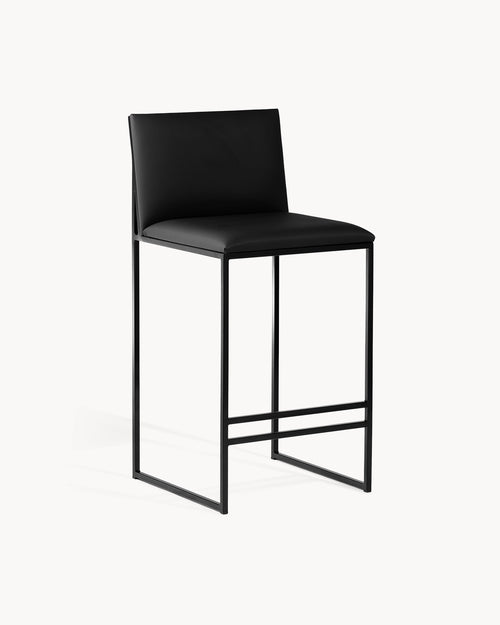
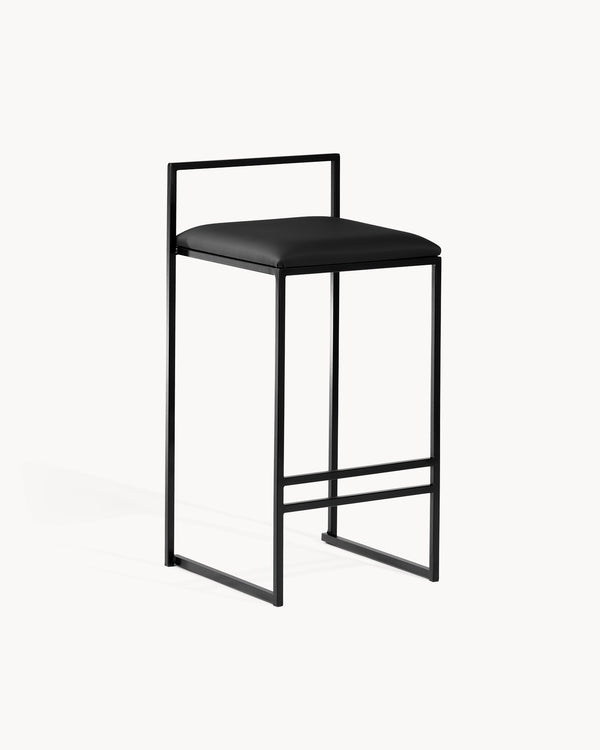
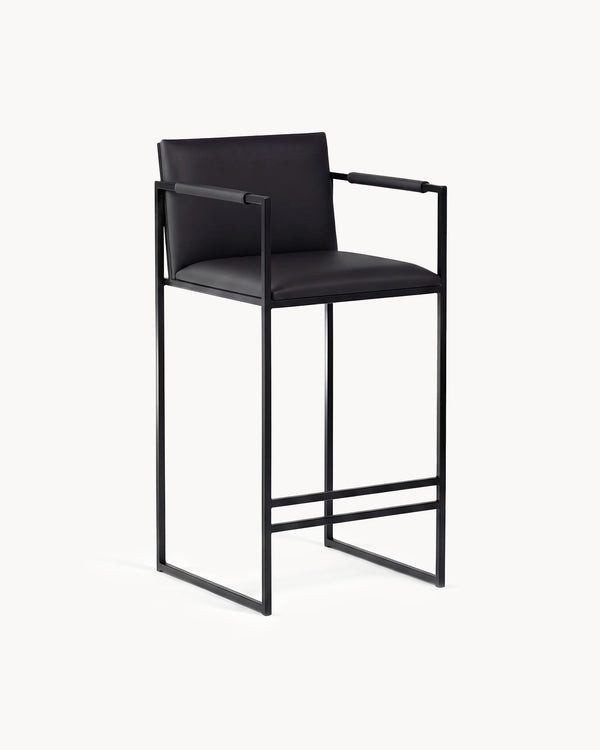
Freja bar stool showing the integrated footrest positioned approximately 25–30 cm below the seat surface, providing correct leg support during extended sitting at a kitchen island.
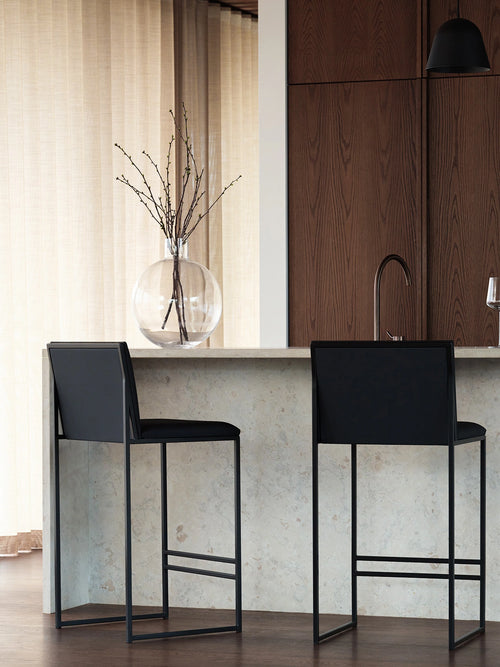
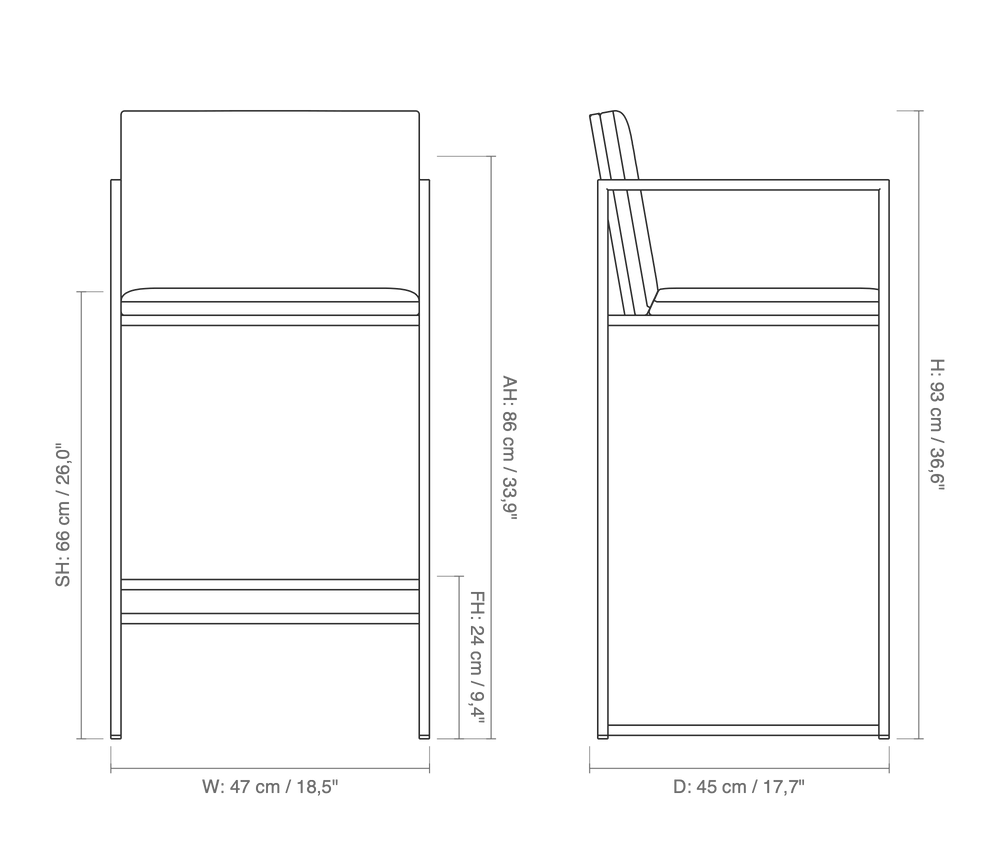
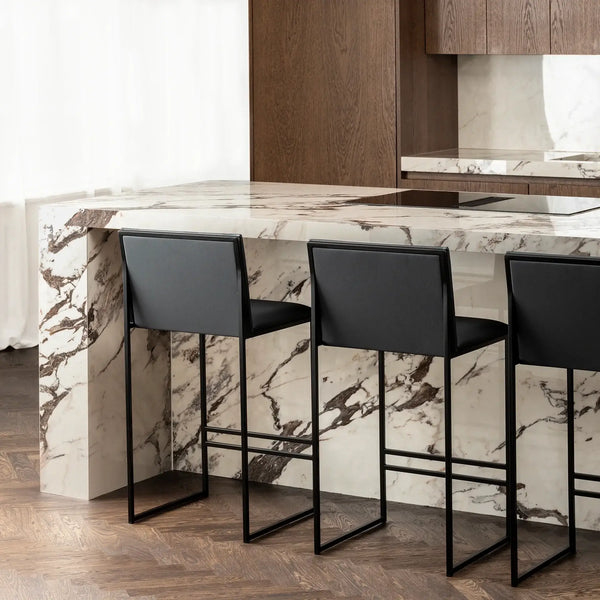
Philip bar stool with full backrest at a kitchen island, showing how the upright seated posture positions the thighs lower and reduces contact with the counter underside.
How Does a Footrest Affect Legroom Comfort?
A stool without a footrest makes legroom feel larger than it is. When feet have no support, legs hang freely and pull the lower back into a curved position. Pressure builds behind the knees and discomfort develops gradually across a sitting session. A footrest positioned 25–30 cm (10–12 inches) below the seat surface gives legs a rest point, supports the thigh angle, and reduces fatigue. Correct legroom above and a well-positioned footrest below work together as a system. Correct vertical clearance without foot support below still produces a poor sitting experience over time. For the full ergonomics picture, see our footrest height and ergonomics guide.
Do Bar Stools with a Back Need More Legroom?
A bar stool with a back does not require more legroom than a backless model. But it changes how the available space is used. A backrest encourages upright seated posture: the thighs move forward and downward, placing more leg mass below the counter and reducing the sense of compression against the surface above.
A backless bar stool allows more positional freedom. You can perch on the edge, angle the legs outward, or sit facing away from the island. When legroom is borderline, around 20–22 cm (8–9 inches), a bar stool with a back will generally perform better, because unsupported posture tends to narrow the effective gap.
For the full comparison, see our bar stools with back vs backless guide.
A bar stool with a back does not require more legroom than a backless model. But it changes how the available space is used. A backrest encourages upright seated posture: the thighs move forward and downward, placing more leg mass below the counter and reducing the sense of compression against the surface above.
A backless bar stool allows more positional freedom. You can perch on the edge, angle the legs outward, or sit facing away from the island. When legroom is borderline, around 20–22 cm (8–9 inches), a bar stool with a back will generally perform better, because unsupported posture tends to narrow the effective gap.
For the full comparison, see our bar stools with back vs backless guide.
Does Stool Size Affect Available Legroom in Practice?
Legroom is a vertical measurement, but seat dimensions affect the overall sense of space at an island. A deep seat, over 44 cm (17 inches), pushes you further from the counter when seated upright. The worktop becomes harder to reach even when the vertical gap is correct. The standard seat depth of 38–42 cm (15–16.5 inches) keeps you close enough to use the surface naturally. Seat width also matters: wider stools reduce the elbow space between guests at a shared island. When checking legroom, place the stool in position under the counter before confirming the fit. Dimensions measured free-standing can mislead. For seat depth guidance in full, see our bar stool seat depth guide.
Legroom Is the One Measurement Worth Checking Before You
The 23–26 cm (9–10 inch) legroom gap is the most important number in bar stool selection. Most seating problems at kitchen islands trace back to one of two things: insufficient vertical clearance above the seat, or insufficient overhang in front of it. Both are preventable with measurements taken before purchase.
To check: measure from the floor to the underside of your counter. Subtract the seat height of the stool you are considering. The result should fall between 23 and 26 cm (9 and 10 inches). Below 20 cm (8 inches), the stool is too tall for that counter. Above 30 cm (12 inches), the seat height is too low.
All by Crea bar stools are available at 66 cm (26") and 76 cm (30"), the two seat heights that fit the most common kitchen island and breakfast bar heights. Both arrive fully assembled.
Related guides
- Bar stool height guide: 66 cm vs 76 cm vs custom
- Seat height vs counter height guide
- Footrest height and ergonomics guide
- Bar stools with back vs backless
- Bar stool seat depth guide
- Full bar stool knowledge hub
Browse bar stools
The 23–26 cm (9–10 inch) legroom gap is the most important number in bar stool selection. Most seating problems at kitchen islands trace back to one of two things: insufficient vertical clearance above the seat, or insufficient overhang in front of it. Both are preventable with measurements taken before purchase.
To check: measure from the floor to the underside of your counter. Subtract the seat height of the stool you are considering. The result should fall between 23 and 26 cm (9 and 10 inches). Below 20 cm (8 inches), the stool is too tall for that counter. Above 30 cm (12 inches), the seat height is too low.
All by Crea bar stools are available at 66 cm (26") and 76 cm (30"), the two seat heights that fit the most common kitchen island and breakfast bar heights. Both arrive fully assembled.
Related guides
- Bar stool height guide: 66 cm vs 76 cm vs custom
- Seat height vs counter height guide
- Footrest height and ergonomics guide
- Bar stools with back vs backless
- Bar stool seat depth guide
- Full bar stool knowledge hub
Browse bar stools
FAQ
What is bar stool legroom? +
Bar stool legroom is the vertical gap between the top of the stool seat and the underside of the counter above it. This is the knee clearance, also called bar stool clearance, that allows you to sit without your thighs pressing against the counter surface. It is measured from seat surface to counter underside — not from floor to counter top.
How much legroom do bar stools need? +
Bar stools need 23 to 26 cm (9 to 10 inches) of legroom. This is measured from the seat surface to the underside of the counter. The acceptable outer range is 20 to 30 cm (8 to 12 inches). Below 20 cm, the space is restrictive for most adults. Above 30 cm, the worktop sits too high for natural arm positioning.
What is the correct bar stool knee clearance? +
The correct bar stool knee clearance is 23 to 26 cm (9 to 10 inches), measured from the seat surface to the underside of the counter. This clearance target is the same for counter stools and bar stools across all counter types. Below 20 cm (8 inches), the space becomes uncomfortable for most adults. Below 18 cm (7 inches), most adults cannot sit at the counter comfortably at all.
How do you measure bar stool legroom? +
Measure from the floor to the underside of your counter — not the top surface. Subtract the seat height of the stool you are considering. The result is your legroom gap. For a 90 cm kitchen island with a 66 cm stool, the result is 24 cm. For a 106 cm bar with a 76 cm stool, the result is 30 cm. Both fall within the acceptable range of 20 to 30 cm.
What is the minimum clearance for a bar stool? +
The minimum clearance for comfortable bar stool seating is 20 cm (8 inches). Below 18 cm (7 inches), most adults cannot sit at the counter without their thighs contacting the surface above. The correct target is 23 to 26 cm (9 to 10 inches). If your calculated gap falls below 20 cm, the stool seat height is too tall for that counter.
What is the correct legroom for a kitchen island? +
Kitchen island legroom follows the same rule as any counter: 23 to 26 cm (9 to 10 inches) between the seat surface and the underside of the island top. A 90 cm kitchen island works with a 66 cm stool, giving 24 cm of clearance. Also check the horizontal overhang: the island top should extend at least 38 cm (15 inches) beyond the cabinet base so knees can sit underneath comfortably.