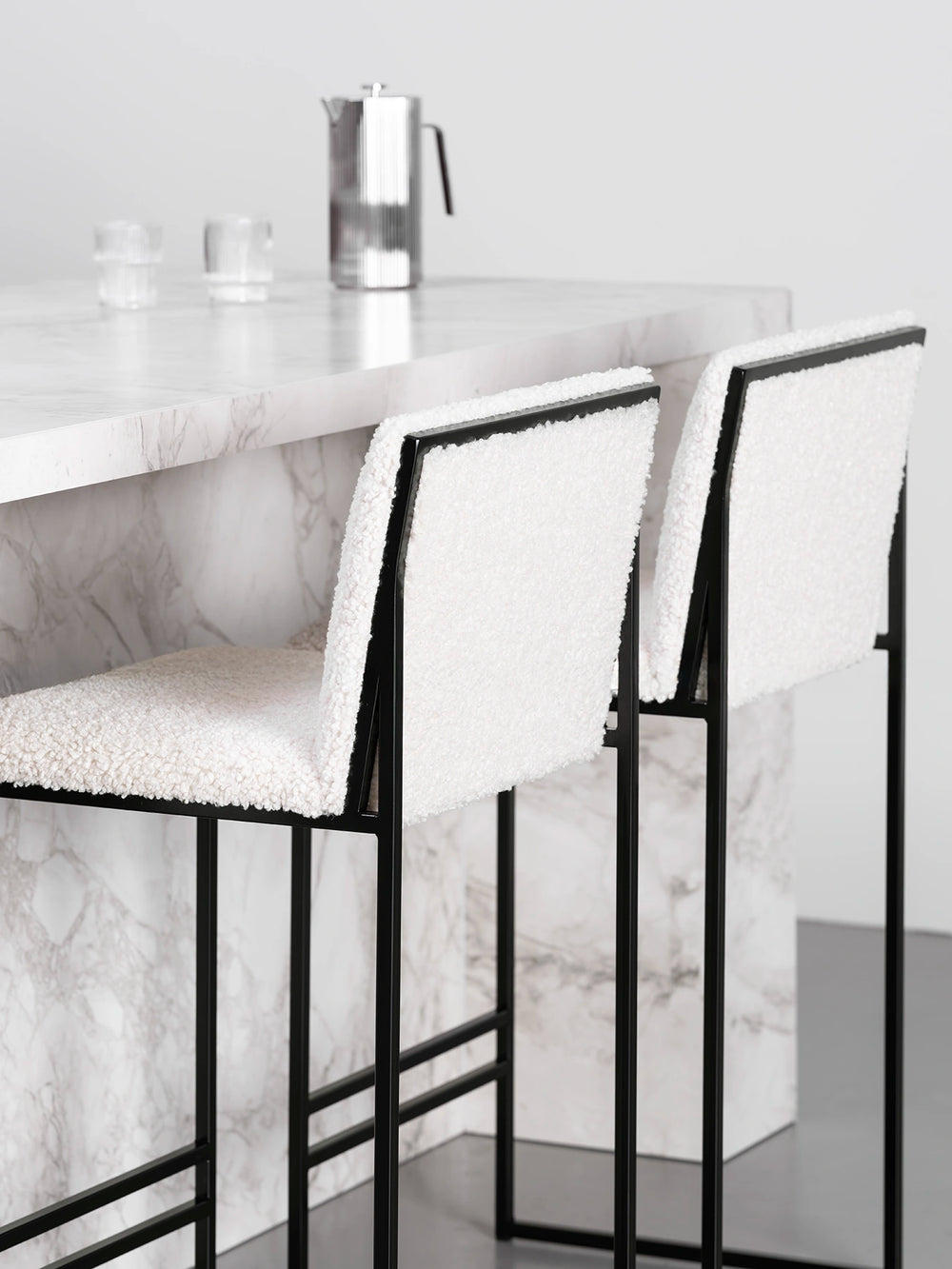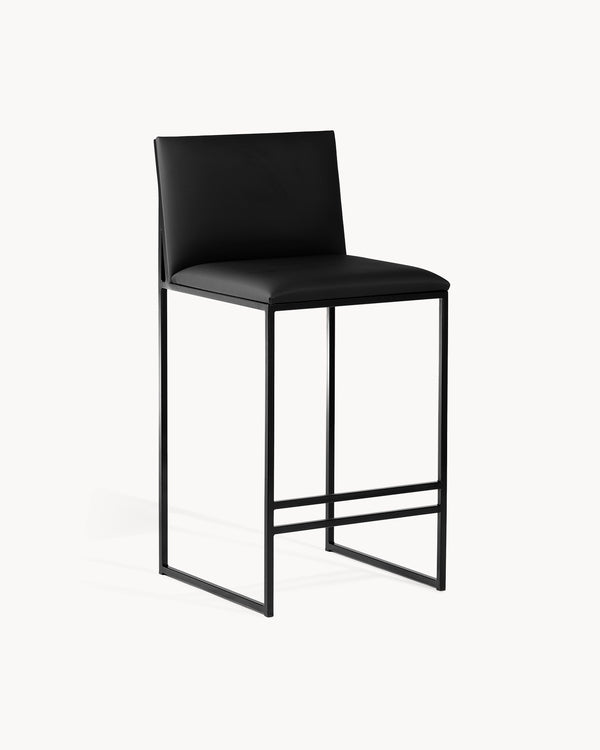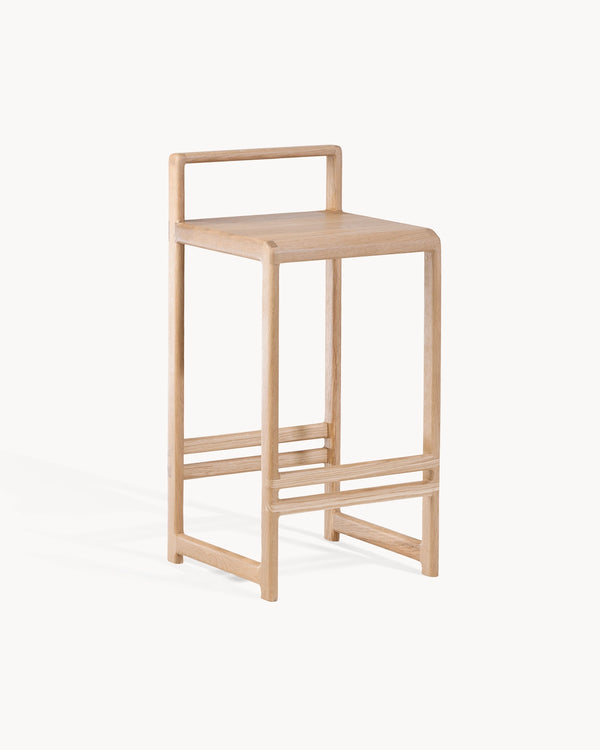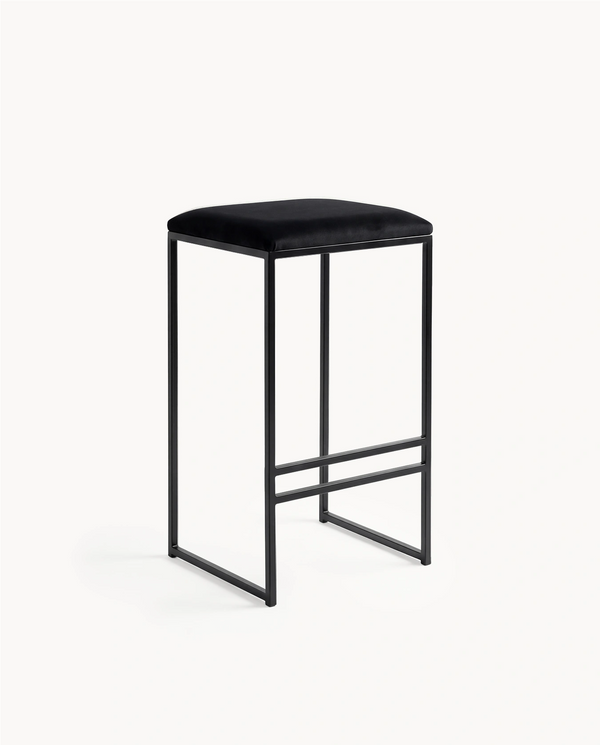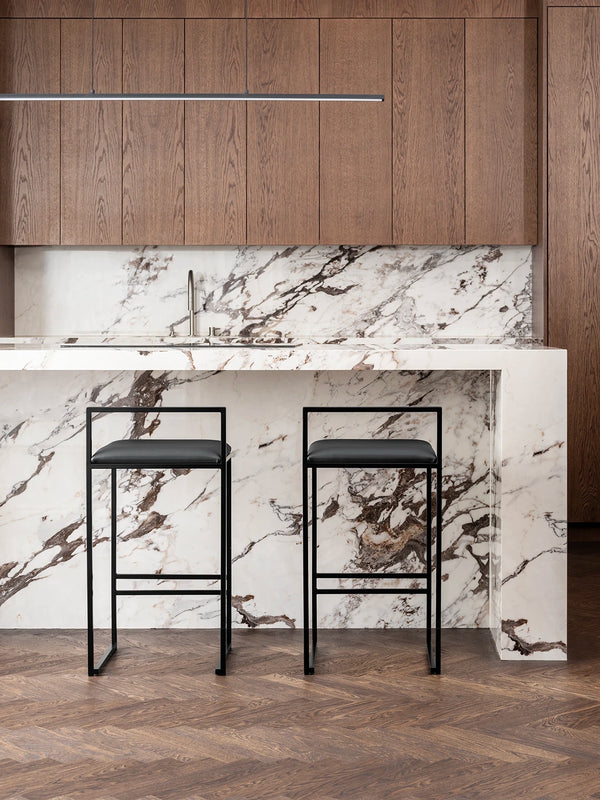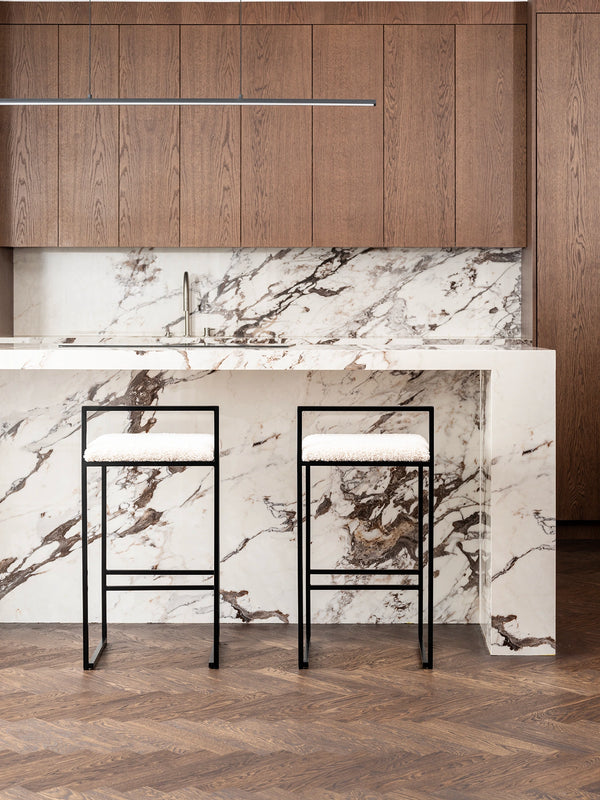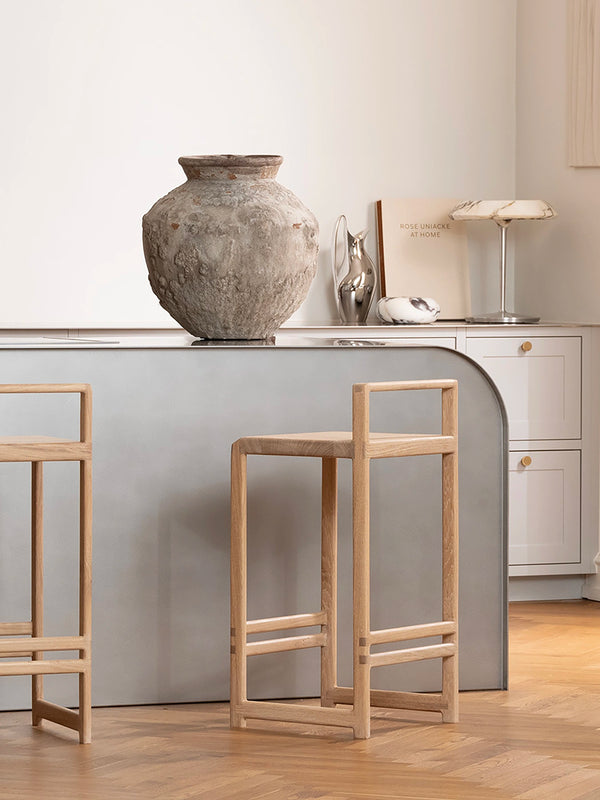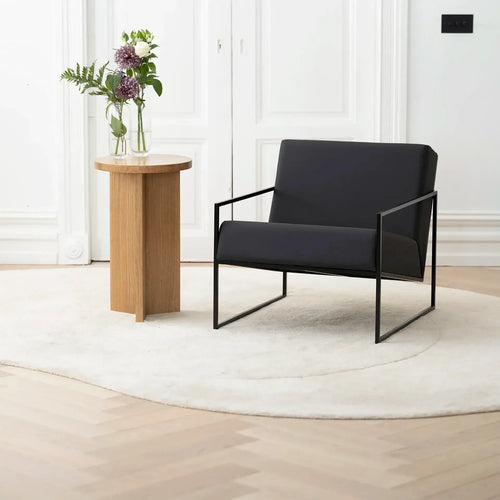
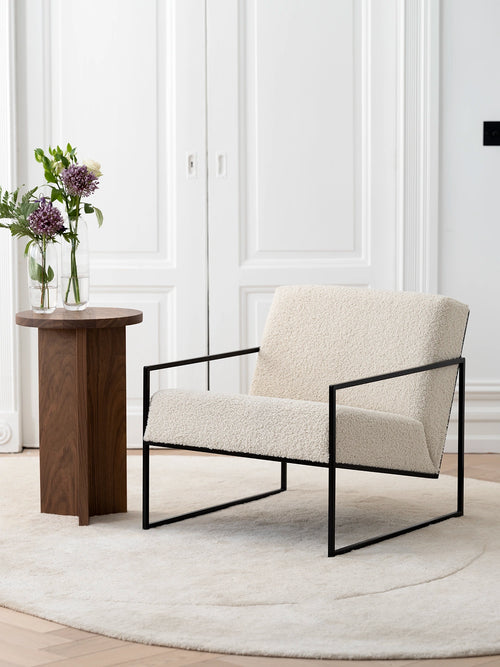
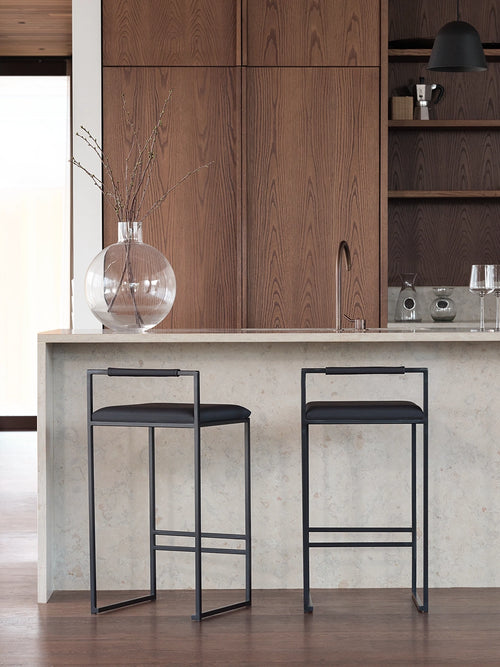
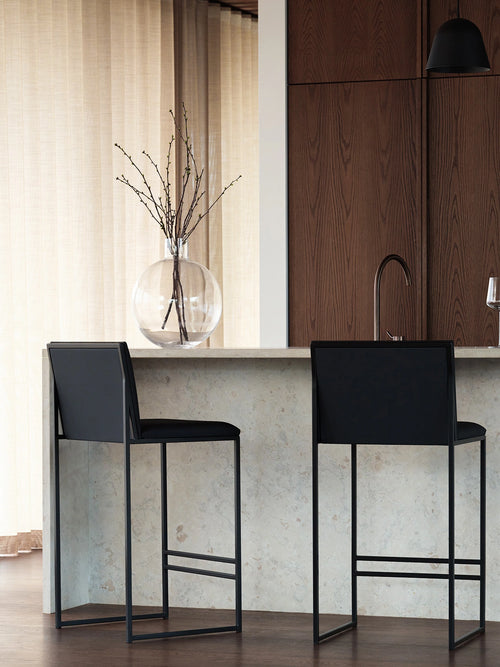
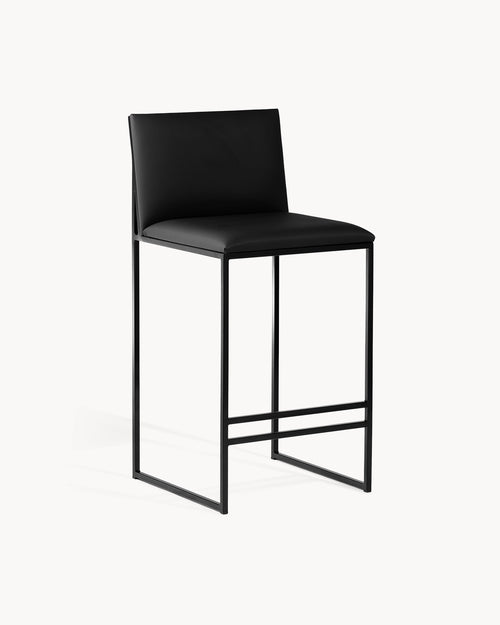
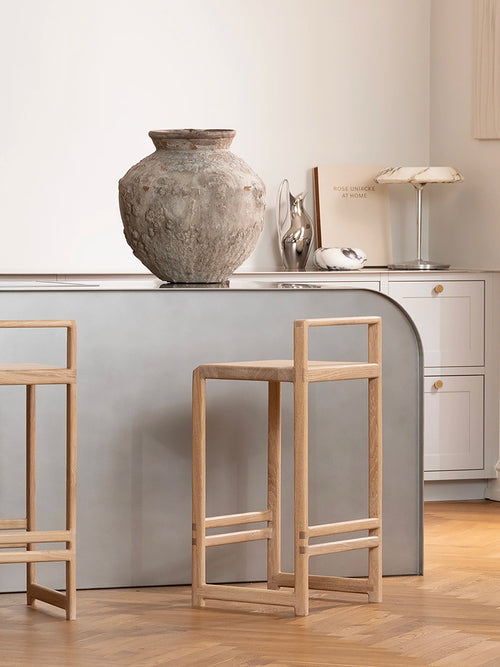
This image shows 10 Ebba barstools from by Crea in dark stained oak in a Dark oak minimalistic kitchen with contemporary light stone marble top.
Image Link

Choosing the correct seating height affects comfort, posture, and how well furniture works with your space. Seat height and counter height are often confused, but they serve different functions and correspond to specific surface heights.

This guide explains the differences clearly, using standard measurements and practical rules.

Choosing the correct seating height affects comfort, posture, and how well furniture works with your space. Seat height and counter height are often confused, but they serve different functions and correspond to specific surface heights.

This guide explains the differences clearly, using standard measurements and practical rules.

What Is Seat Height?

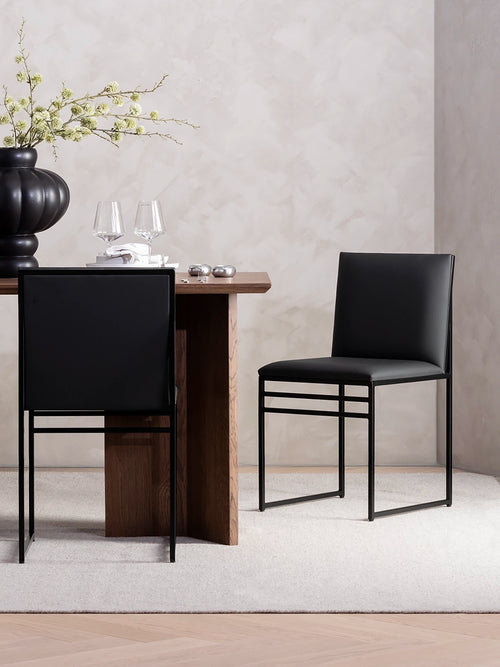
Seat height is the distance from the floor to the top surface of the seat. It determines how your legs rest, how easily you sit or stand, and whether seating aligns properly with a table or desk.

  • Dining chairs: 18–20 inches (45–50 cm)
  • Office chairs: Adjustable to desk height
  • Lounge chairs: Often lower for a more relaxed posture

These dimensions are designed to pair with tables that are approximately 28–30 inches high.

Seat height is the distance from the floor to the top surface of the seat. It determines how your legs rest, how easily you sit or stand, and whether seating aligns properly with a table or desk.

  • Dining chairs: 18–20 inches (45–50 cm)
  • Office chairs: Adjustable to desk height
  • Lounge chairs: Often lower for a more relaxed posture

These dimensions are designed to pair with tables that are approximately 28–30 inches high.

See more See more
Bar Stool Svea in black with ivory bouclé fabric beside a modern marble kitchen island. Bar Stool Svea in black with ivory bouclé fabric beside a modern marble kitchen island.

What Is Counter Height?

Counter height seating is designed for kitchen counters and islands rather than standard tables.

  • Typical counter height: approximately 36 inches (91 cm)
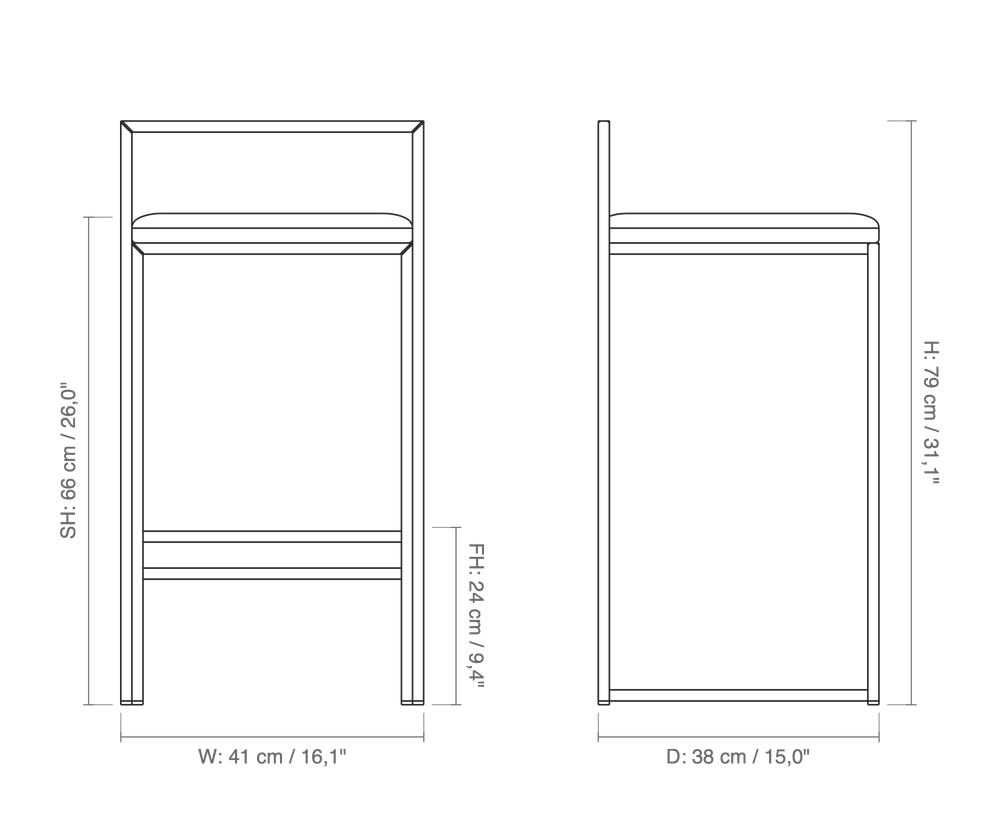
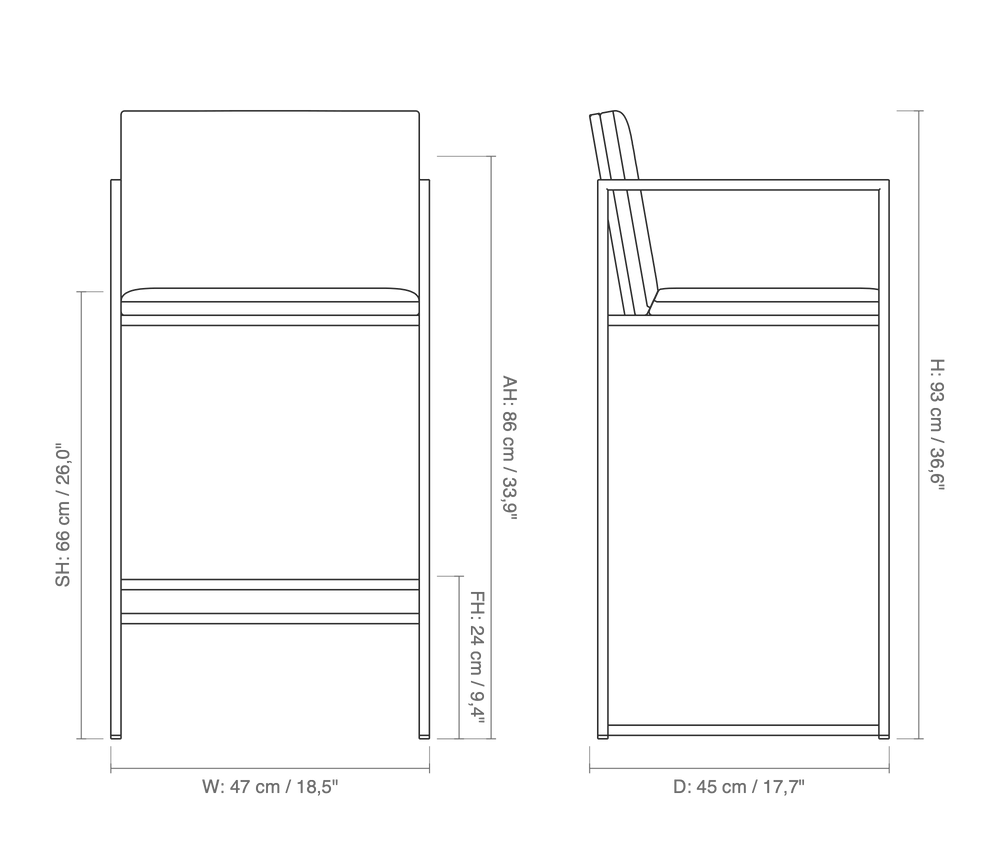
  • Counter stool seat height: 24–27 inches (61–69 cm)

This height range provides sufficient leg clearance while aligning the seated position with food preparation and casual dining surfaces.

Counter height seating is designed for kitchen counters and islands rather than standard tables.

  • Typical counter height: approximately 36 inches (91 cm)
  • Counter stool seat height: 24–27 inches (61–69 cm)

This height range provides sufficient leg clearance while aligning the seated position with food preparation and casual dining surfaces.

See furniture See furniture

Seat Height Comparison

Understanding the full height range helps avoid mismatched seating.

  • Dining chairs: 18–20 inch seat height, for 28–30 inch tables
  • Counter stools: 24–27 inch seat height, for 36 inch counters
  • Bar stools: 28–32 inch seat height, for 40–42 inch bars

Using the wrong height can result in poor posture, limited legroom, or reduced comfort.

Understanding the full height range helps avoid mismatched seating.

  • Dining chairs: 18–20 inch seat height, for 28–30 inch tables
  • Counter stools: 24–27 inch seat height, for 36 inch counters
  • Bar stools: 28–32 inch seat height, for 40–42 inch bars

Using the wrong height can result in poor posture, limited legroom, or reduced comfort.

Explore Counter Stools Explore Counter Stools
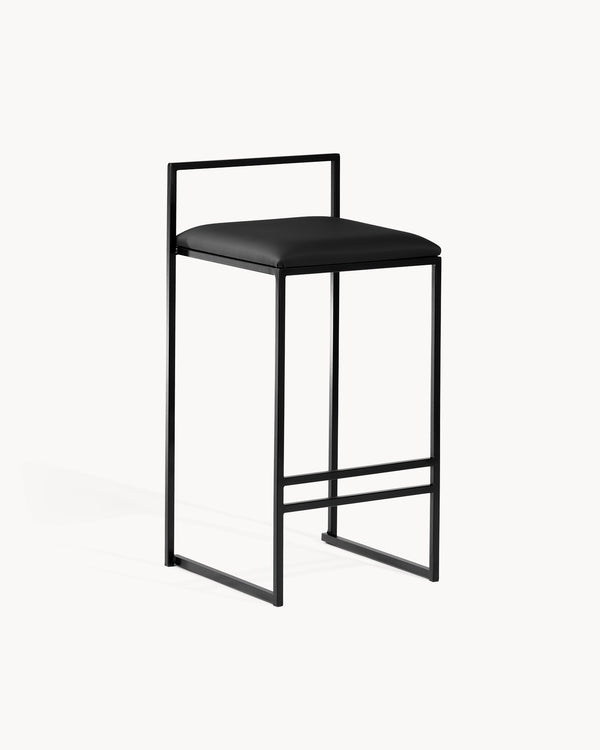
Freja bar stool by by Crea, black frame and black leather seat, Scandinavian kitchen island seating in a minimalist home. Ebba Bar Stools in dark oak with minimal Scandinavian design, placed at a statement kitchen island in dramatic veined marble, complemented by rich wood cabinetry and herringbone oak flooring.

Bar Stool Height vs Counter Height

The most common mistake is confusing bar stools with counter stools.

  • Bar stools are designed for surfaces 40–42 inches high
  • Counter stools are designed for surfaces around 36 inches high

A difference of just a few inches can significantly affect comfort and usability.

The most common mistake is confusing bar stools with counter stools.

  • Bar stools are designed for surfaces 40–42 inches high
  • Counter stools are designed for surfaces around 36 inches high

A difference of just a few inches can significantly affect comfort and usability.

Explore Bar Stools Explore Bar Stools
Eva Bar stools in black oak at a modern kitchen island with marble countertop, showcasing clean lines and a slim profile. Svea bar stools with black frame and latte leather seat, minimalistic design for modern kitchen or dining area.

How to Choose the Right Height

  1. Measure the height of the table, counter, or island
  2. Subtract 9–13 inches to determine the ideal seat height
  3. Confirm sufficient legroom and foot support
  • 36 inch counter → 24–27 inch seat height
  • 30 inch table → 18–20 inch seat height
  1. Measure the height of the table, counter, or island
  2. Subtract 9–13 inches to determine the ideal seat height
  3. Confirm sufficient legroom and foot support
  • 36 inch counter → 24–27 inch seat height
  • 30 inch table → 18–20 inch seat height
Explore Freja Counter Stool Explore Freja Counter Stool

Measuring Tips

  • Measure from floor to surface top
  • Account for aprons or overhangs under counters
  • Allow 9–13 inches between seat and underside
  • Check footrest height for longer sitting comfort
  • Measure from floor to surface top
  • Account for aprons or overhangs under counters
  • Allow 9–13 inches between seat and underside
  • Check footrest height for longer sitting comfort
Bar Stool Freja in black frame, black leather cushion, and brown backrest at a modern kitchen island. Bar Stool Freja in black frame, black leather cushion, and brown backrest at a modern kitchen island.

Common Mistakes to Avoid

  • Buying stools without measuring surface height
  • Choosing bar stools for standard kitchen counters
  • Ignoring leg clearance and foot support
  • Buying stools without measuring surface height
  • Choosing bar stools for standard kitchen counters
  • Ignoring leg clearance and foot support
Learn about our materials Learn about our materials

Seat Height Rule of Thumb

A reliable rule of thumb is to allow between 9 and 13 inches (23–33 cm) of clearance between the seat height and the underside of the table or counter.

This range provides enough space for leg movement while maintaining a comfortable seated posture.

  • 36 inch (91 cm) counter → 24–27 inch (61–69 cm) seat height
  • 30 inch (76 cm) table → 18–20 inch (46–51 cm) seat height

A reliable rule of thumb is to allow between 9 and 13 inches (23–33 cm) of clearance between the seat height and the underside of the table or counter.

This range provides enough space for leg movement while maintaining a comfortable seated posture.

  • 36 inch (91 cm) counter → 24–27 inch (61–69 cm) seat height
  • 30 inch (76 cm) table → 18–20 inch (46–51 cm) seat height
About us About us
Oak Bar Stool Carl in dark oak with ivory bouclé in a modern kitchen setting with marble countertops. Oak Bar Stool Carl in dark oak with ivory bouclé in a modern kitchen setting with marble countertops.

Quick Seat Height Measurement Checklist

  • Measure the height of the table or counter from floor to top surface
  • Measure the underside clearance if the surface has an apron
  • Subtract 9–13 inches (23–33 cm) to find the correct seat height
  • Confirm footrest height for stools used longer than short seating periods

This checklist helps avoid ordering seating that looks correct but feels uncomfortable once in use.

  • Measure the height of the table or counter from floor to top surface
  • Measure the underside clearance if the surface has an apron
  • Subtract 9–13 inches (23–33 cm) to find the correct seat height
  • Confirm footrest height for stools used longer than short seating periods

This checklist helps avoid ordering seating that looks correct but feels uncomfortable once in use.

Explore Counter Stools Explore Counter Stools

Conclusion

Seat height and counter height are not interchangeable. Each is designed for a specific surface height and use case.

Measuring carefully and matching seating to the surface ensures proper posture, comfort, and long-term usability.

Seat height and counter height are not interchangeable. Each is designed for a specific surface height and use case.

Measuring carefully and matching seating to the surface ensures proper posture, comfort, and long-term usability.

Counter stools & Bar stools FAQ

What seat height works best for a 36 inch counter?

A 36 inch counter works best with a seat height between 24 and 27 inches (61–69 cm). This range provides adequate leg clearance and a comfortable seated position.

What is the difference between counter height and bar height seating?

Counter height seating typically has a seat height of 24–27 inches (61–69 cm) and is used with 36 inch counters. Bar height seating is taller, with seat heights of 28–32 inches (71–81 cm), and is used with 40–42 inch bars.

What happens if the seat height is too high or too low?

If the seat height is too high, legs may not rest comfortably and posture can suffer. If the seat height is too low, knees may sit too high and leg clearance becomes restricted.

Is seat height measured including the seat cushion?

Yes. Seat height is measured from the floor to the top of the compressed seat surface, including any fixed seat cushion.

Can counter height stools be used at a standard dining table?

No. Counter height stools are designed for surfaces around 36 inches high and are too tall for standard dining tables, which are typically 28–30 inches high.

How much space should there be between the seat and the table or counter?

There should be between 9 and 13 inches (23–33 cm) of space between the seat height and the underside of the table or counter. This clearance allows comfortable leg movement.