Tabouret de comptoir ou tabouret de bar : quelle différence ?
Par Alexandra PetterssonRelu par Alexander TjernströmMis à jour le
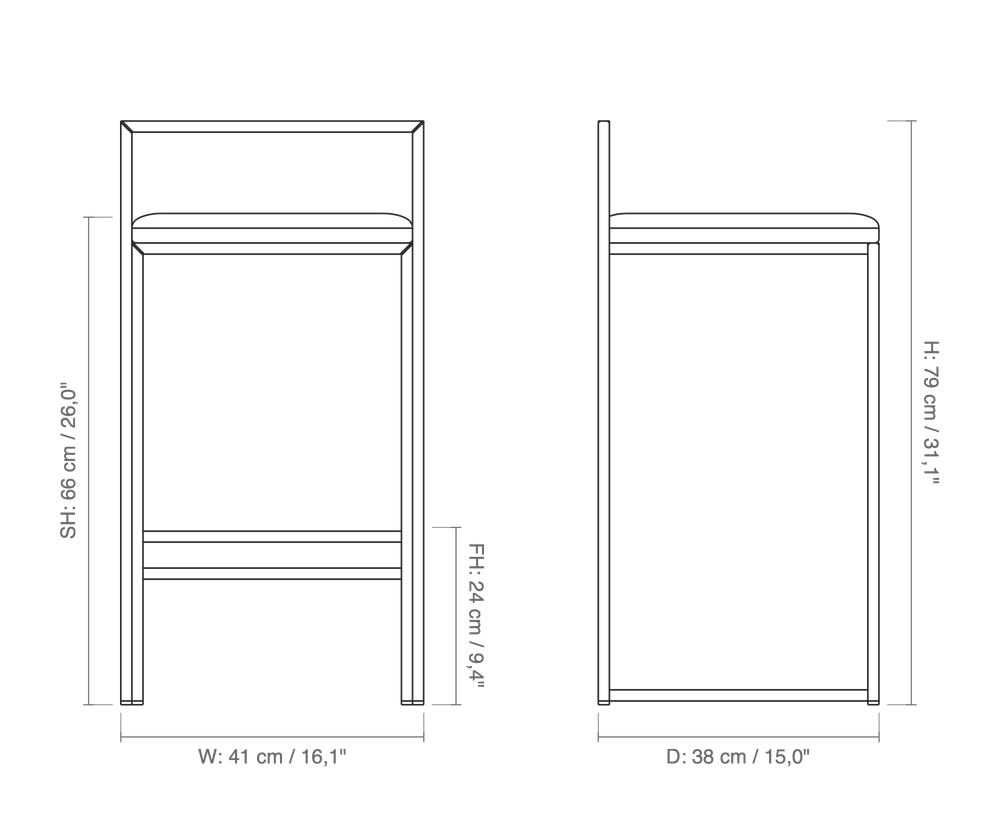
La différence, c’est la hauteur. Un tabouret de comptoir a une assise d’environ 66 cm (26 in) et convient à un plan de travail ou un îlot de 89 à 92 cm (35 à 36 in). Un tabouret de bar a une assise d’environ 76 cm (30 in) et convient à un comptoir de bar de 99 à 102 cm (39 à 40 in). La plupart des îlots sont à hauteur de plan de travail : la plupart des cuisines ont donc besoin d’une assise de 66 cm.
En français, on parle de tabouret de bar, de chaise de bar ou de chaise haute pour désigner à peu près tous les sièges hauts, si bien qu’on croit volontiers que tous les tabourets de bar ont la même hauteur. Ce n’est pas le cas : il existe deux hauteurs standard séparées d’environ 10 cm (4 in), et se tromper, c’est soit avoir les genoux sous le plan, soit être assis trop bas pour manger. Beaucoup cherchent un tabouret de bar de 65 cm ou de 75 cm : ce sont en pratique les deux mêmes hauteurs que nos 66 et 76 cm. Aux États-Unis, les deux portent même des noms différents, counter stool et bar stool. Ce guide donne la différence en centimètres et en pouces, la hauteur dont votre cuisine a besoin, et la marche à suivre si votre plan se situe entre les deux.
Quelle différence entre un tabouret de comptoir et un tabouret de bar ?
Freja avec une assise de 66 cm (26 in) : hauteur comptoir.
Un tabouret de comptoir a une assise d’environ 66 cm (26 in) et se destine aux plans de travail et îlots de 89 à 92 cm (35 à 36 in). Un tabouret de bar a une assise d’environ 76 cm (30 in) et est conçu pour les comptoirs de bar de 99 à 102 cm (39 à 40 in). Tout le reste, du dossier au matériau, peut être identique.
Les deux hauteurs suivent la même règle : l’assise se trouve 23 à 26 cm (9 à 10 in) sous le dessous du plan, ce qui laisse de la place aux cuisses sans éloigner le plan. Les deux types sont donc séparés d’exactement une hauteur de comptoir. Chez by Crea, chaque modèle existe dans les deux hauteurs : vous choisissez d’abord le tabouret, puis la hauteur.
Tabouret de comptoir et tabouret de bar comparés
Critère
Tabouret de comptoir
Tabouret de bar
Hauteur d’assise
66 cm (26 in)
76 cm (30 in)
Nom aux États-Unis
Counter stool, 24 à 27 in
Bar stool, 28 à 32 in
Plan adapté
89 à 92 cm (35 à 36 in)
99 à 102 cm (39 à 40 in)
Usage typique
Plan de travail, îlot central
Bar à la maison, partie surélevée d’un îlot, comptoir
Part des cuisines
La plupart
Une minorité
Quelle est la hauteur d’un tabouret de comptoir ?
Un tabouret de comptoir a une hauteur d’assise d’environ 66 cm (26 in) ; on lit souvent 65 cm dans le commerce, c’est le même standard. Il est pensé pour le plan de travail courant de 89 à 92 cm (35 à 36 in), mesuré sous le plateau, et laisse 23 à 26 cm (9 à 10 in) pour les jambes.
La hauteur de plan de travail est la norme dans les cuisines françaises et européennes : c’est donc celle dont la plupart des foyers ont besoin. Elle est aussi plus facile d’accès, ce qui compte pour les enfants et les invités âgés. Notre guide des hauteurs de tabouret de bar propose un calculateur pour vérifier votre propre plan.
Quelle est la hauteur d’un tabouret de bar ?
Le même Freja avec une assise de 76 cm (30 in) : hauteur bar.
Un tabouret de bar a une hauteur d’assise d’environ 76 cm (30 in) ; 75 cm correspond au même standard. Il est pensé pour un comptoir de bar de 99 à 102 cm (39 à 40 in), mesuré sous le plateau, et laisse les mêmes 23 à 26 cm (9 à 10 in) qu’un tabouret de comptoir devant un plan de travail.
La hauteur bar se rencontre dans les bars à la maison, les restaurants et sur les parties surélevées des îlots, où un rebord plus haut masque le côté cuisson depuis le séjour. À cette hauteur, un tabouret à dossier haut dépasse le mètre au total, 103 cm (40,6 in) sur nos modèles : vérifiez-le face à une étagère basse ou une fenêtre derrière le comptoir.
Tabouret de comptoir ou tabouret de bar pour un îlot central ?
Philip devant un îlot à hauteur de plan de travail, la hauteur dont ont besoin la plupart des cuisines.
Un tabouret de comptoir, dans la plupart des cuisines. Un îlot central standard est à hauteur de plan de travail, 89 à 92 cm (35 à 36 in), et demande une assise de 66 cm (26 in). Ne choisissez un tabouret de bar que si l’îlot comporte une partie bar surélevée de 99 à 102 cm (39 à 40 in), et mesurez cette partie à part.
Les îlots à deux niveaux sont fréquents dans les cuisines ouvertes : un côté travail à hauteur de plan et un rebord surélevé côté séjour. Les tabourets suivent toujours la surface devant laquelle on s’assoit ; un îlot à deux niveaux demande donc généralement des tabourets de bar côté surélevé. Pour tout le reste, voir le guide du tabouret pour îlot central.
Quelle hauteur pour un bar de cuisine ou un comptoir petit déjeuner ?
Mesurez-le, car un bar de cuisine peut avoir l’une ou l’autre hauteur. S’il prolonge le plan de travail, il est généralement à hauteur de plan, autour de 90 cm (35,5 in), et demande une assise de 66 cm (26 in) malgré le mot bar. Un bar surélevé sur une péninsule mesure souvent 100 à 105 cm (39,5 à 41,5 in) et demande 76 cm (30 in) ou une hauteur spéciale.
Le nom de la surface ne dit rien ; c’est le mètre qui décide. C’est dans ce cas que l’on achète le plus souvent des tabourets à la mauvaise hauteur : on lit bar et l’on prend le plus haut. Mesurez toujours sous le plateau, là où iront les genoux.
Peut-on utiliser un tabouret de bar devant un plan de travail ?
Non. Un tabouret de 76 cm (30 in) devant un plan de 90 cm (35,5 in) ne laisse que 14 cm (5,5 in) entre l’assise et le dessous du plateau : les cuisses appuient contre le plan. L’inverse est tout aussi inconfortable : un tabouret de 66 cm devant un comptoir de 100 cm laisse 34 cm (13,4 in), et l’on doit lever les bras pour manger.
Quelques centimètres d’écart ne posent aucun problème, c’est à cela que sert la plage de 23 à 26 cm. Dix centimètres, si, et ni coussin ni repose-pieds ne rattrapent cet écart. Si vous remplacez des tabourets qui semblaient mal adaptés, c’est très probablement la raison.
Les mots ont-ils le même sens partout ?
Non, et c’est là que commencent beaucoup d’erreurs d’achat. Aux États-Unis, counter stool et bar stool désignent deux produits de deux hauteurs. Au Royaume-Uni, bar stool vaut pour les deux, et breakfast bar stool désigne le plus souvent la hauteur de plan de travail. En France, en Suède et en Allemagne, un seul mot couvre les deux : tabouret de bar, barstol, Barhocker. Chaise de bar et chaise haute sont d’usage courant en français, mais ne disent rien de la hauteur.
Quand vous achetez à l’étranger ou lisez des avis d’un autre pays, oubliez le mot et lisez la hauteur d’assise en centimètres. Le même tabouret by Crea s’appelle counter stool aux États-Unis et tabouret de bar en France ; ce qui ne change pas, c’est l’assise de 66 ou 76 cm.
Que faire si mon plan se situe entre les deux hauteurs ?
Choisissez une hauteur spéciale. Les plans de 93 à 98 cm (36,5 à 38,5 in) se situent entre les deux standards : un tabouret de 66 cm laisse trop d’espace pour les jambes, un tabouret de 76 cm pas assez. La bonne assise se calcule en retirant 23 à 26 cm à la hauteur du plan, par exemple 70 cm (27,5 in) pour un plan de 95 cm.
Nous fabriquons des hauteurs spéciales sur nos tabourets en acier Freja, Philip, Bruno et Svea. Ils sont soudés à la commande dans notre atelier de Malmö, avec la même garantie de 10 ans et la même charge de 200 kg (440 lbs) que les hauteurs standard. Plus de détails sur les tabourets de bar en hauteur spéciale.
Comptoir ou bar : la réponse courte
Mesurez votre plan jusqu’au dessous du plateau. De 89 à 92 cm (35 à 36 in), il vous faut un tabouret de comptoir avec une assise de 66 cm (26 in) ; de 99 à 102 cm (39 à 40 in), un tabouret de bar avec une assise de 76 cm (30 in) ; entre les deux, une hauteur spéciale. Chaque tabouret by Crea existe dans les deux hauteurs standard, est fabriqué dans notre propre atelier à Malmö, en Suède, et livré entièrement monté avec une garantie de 10 ans.
Un tabouret de comptoir est-il plus bas qu’un tabouret de bar ?+
Oui, d’environ 10 cm (4 in). Un tabouret de comptoir a une assise d’environ 66 cm (26 in), un tabouret de bar d’environ 76 cm (30 in).
Quelle différence entre hauteur de plan de travail et hauteur de bar ?+
La hauteur de plan de travail correspond à une surface de 89 à 92 cm (35 à 36 in), le plan de cuisine courant. La hauteur de bar se situe vers 99 à 102 cm (39 à 40 in) ou plus, comme un bar à la maison.
Un tabouret de bar de 65 cm, est-ce la même chose que 66 cm ?+
En pratique, oui. Les deux correspondent à la hauteur standard pour un plan d’environ 90 cm. Le centimètre d’écart reste largement dans la plage de 23 à 26 cm pour les jambes.
Quelle hauteur d’assise pour un plan de 90 cm ?+
66 cm (26 in). Un plan de 90 cm mesuré sous le plateau laisse alors 24 cm (9,4 in) pour les jambes, au milieu de la plage confortable.
Quelle hauteur d’assise pour un comptoir de 100 cm ?+
76 cm (30 in). Cela laisse 24 cm (9,4 in) entre l’assise et le dessous du comptoir.
Vos tabourets existent-ils en hauteur comptoir et hauteur bar ?+
Oui. Chaque modèle by Crea existe avec une assise de 66 cm (26 in) ou de 76 cm (30 in), et nos modèles en acier peuvent être fabriqués à une hauteur spéciale.
Le choix d'une sélection entraîne l'actualisation d'une page entière.














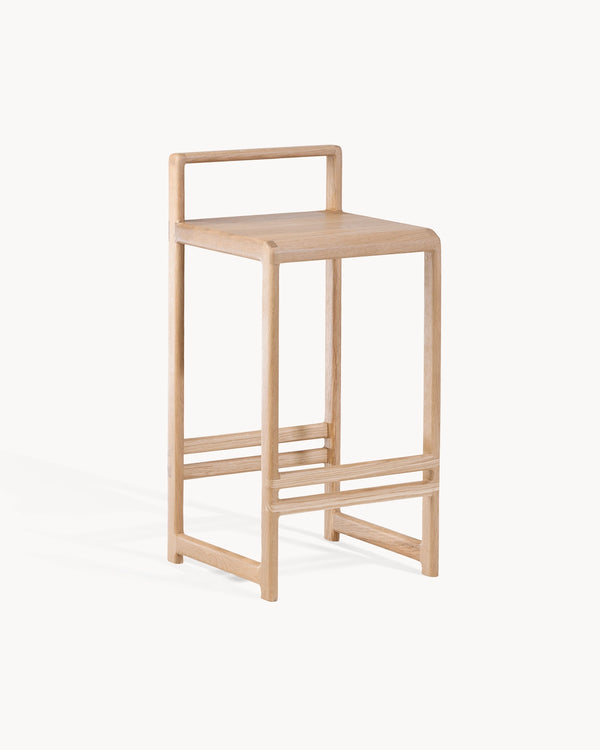
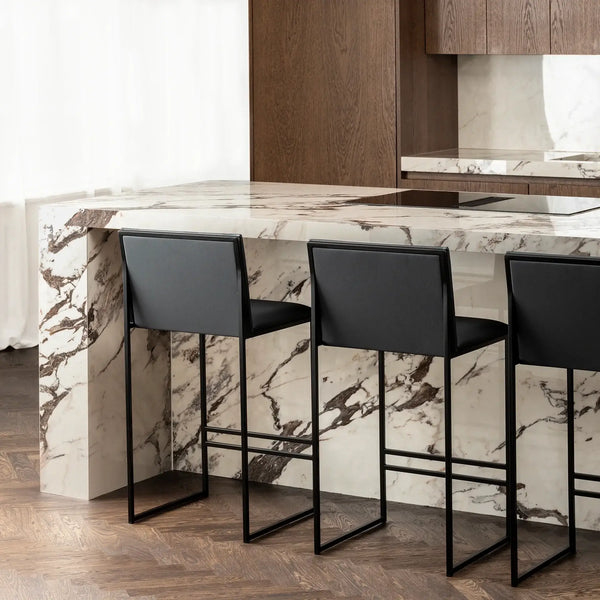 Hauteur de tabouret de bar : quelle hauteur d’assise choisir ?Choisissez une assise de 66 cm (26 in) pour un plan de travail ou un îlot central de 89 à 92 cm (35 à 36 in),...
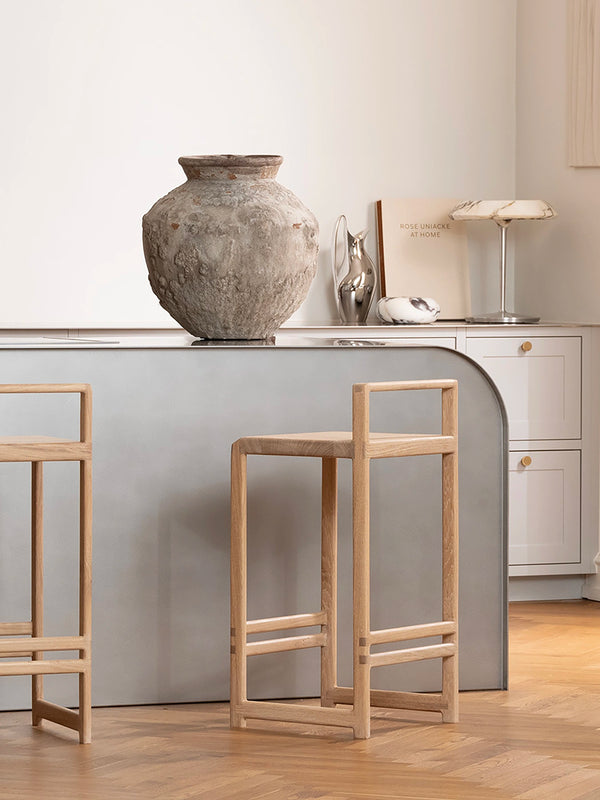 Tabouret pour îlot central : bien prévoir les places assisesPour un îlot central à la hauteur standard de 89 à 92 cm (35 à 36 in), choisissez des tabourets avec une assise de 66 cm...
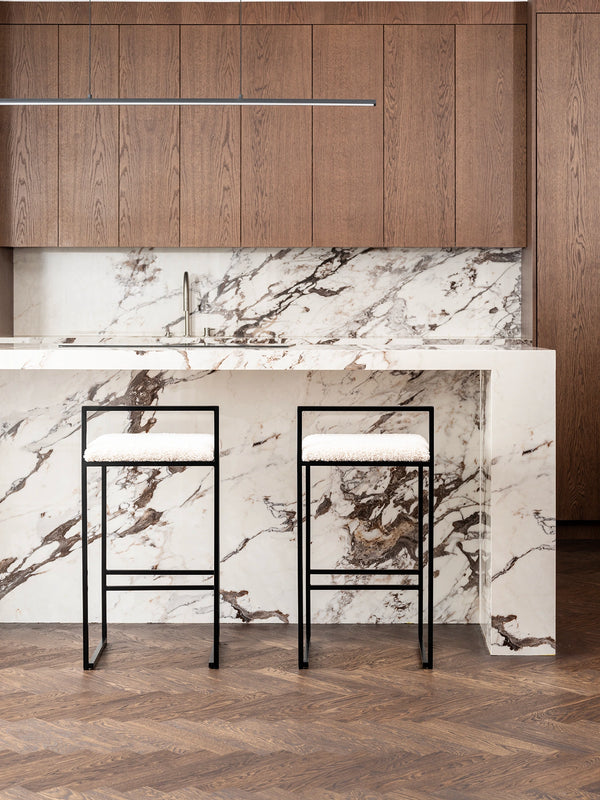 Quel espace pour les jambes sous un tabouret de bar ?Laissez 23 à 26 cm (9 à 10 in) entre le dessus de l’assise et le dessous du plan : c’est l’espace vertical pour les jambes....
 Comment choisir un tabouret de bar pour la cuisine en 6 étapesChoisissez vos tabourets de bar dans cet ordre : mesurez le plan jusqu’au dessous et prenez une assise de 66 cm (26 in) ou de 76...
 Débord d’îlot central pour s’asseoir : combien prévoir ?Pour des places confortables, un îlot central a besoin d’un débord de 30 à 40 cm (12 à 16 in) côté assises : la partie du...
