Dining Chairs With Arms or Without: Which Should You Choose?
By Alexandra PetterssonReviewed by Alexander TjernströmUpdated
Short answer
70 cm
Table per chair with arms
60 cm
Without arms
73 cm
To the underside of our tables
Choose dining chairs with arms for comfort through long dinners and support when you stand up; choose armless chairs for small rooms and round tables. As a rule of thumb, chairs with arms need 70 cm of table edge each, against 60 cm without, and the armrests must sit below the underside of the table to slide in. A classic mix is two chairs with arms at the ends and armless chairs along the sides.
Armrests change a dining chair more than any other detail. They make it easier to lean back at the end of a meal and to get up from the table, and they give a room a more formal, settled look. They also take more space, and they only slide under the table if the measurements allow it. This guide explains when chairs with arms are the better choice, how much room they need, how to check that they fit under your table, what a carver or host chair is, and how to combine chairs with and without arms around one table. Every figure is in centimetres, with the measurements of each by Crea dining chair.
Are dining chairs with arms better than armless chairs?
Dining chairs with arms are more comfortable for long meals and easier to get up from; armless chairs take less space and slide fully under the table.
Armrests carry the weight of your forearms and shoulders, which is what makes a chair with arms the one people stay in after the plates are cleared. They also give you something to push against when you stand.
Armless chairs win where space is short. They fit closer together, suit round tables and small rooms, and disappear under the table between meals. For most homes the choice is not either-or: it is where the chairs with arms go.
How much space do dining chairs with arms need?
As a rule of thumb, allow 70 cm of table edge for each chair with arms, against 60 cm for armless chairs.
That extra 10 cm per chair is what lets armrests pass each other as people pull in and out. Over a whole table it adds up: a 180 cm table seats six armless chairs but four with arms.
The chart below gives the width, arm height and table edge needed for each of our dining chairs.
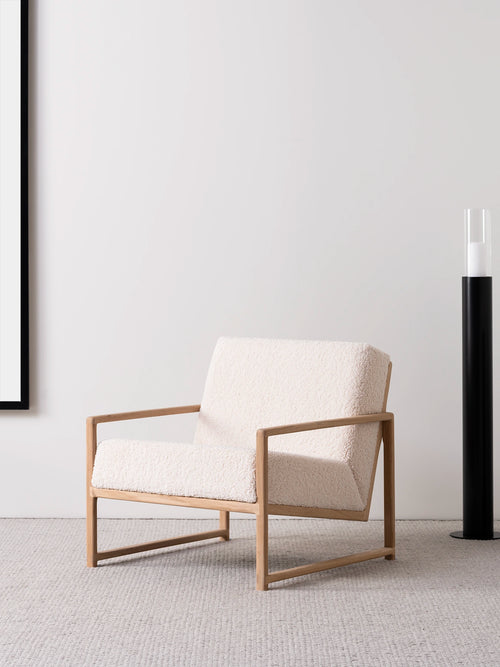
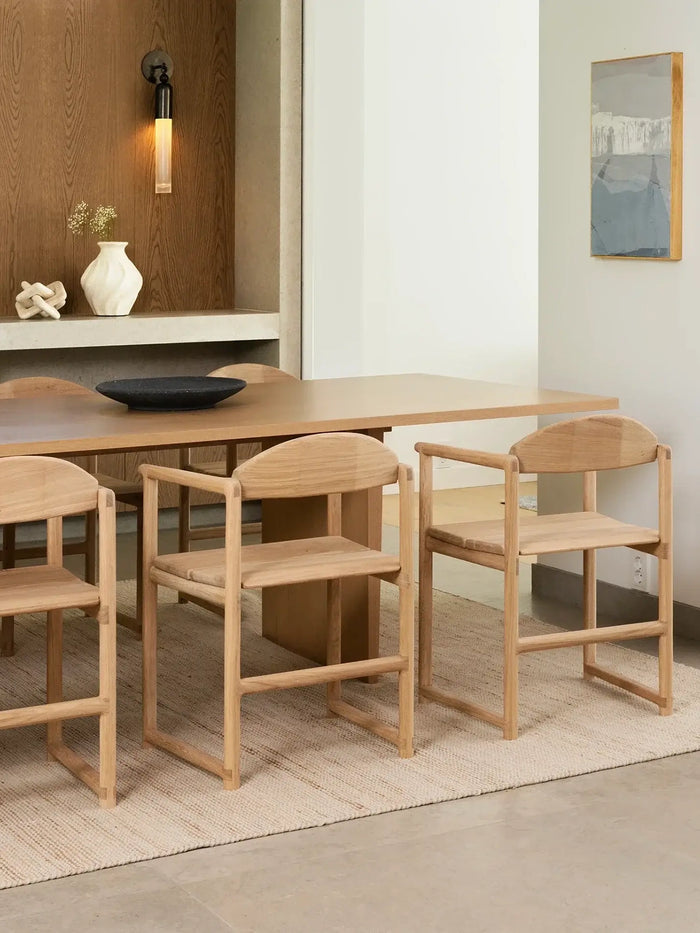
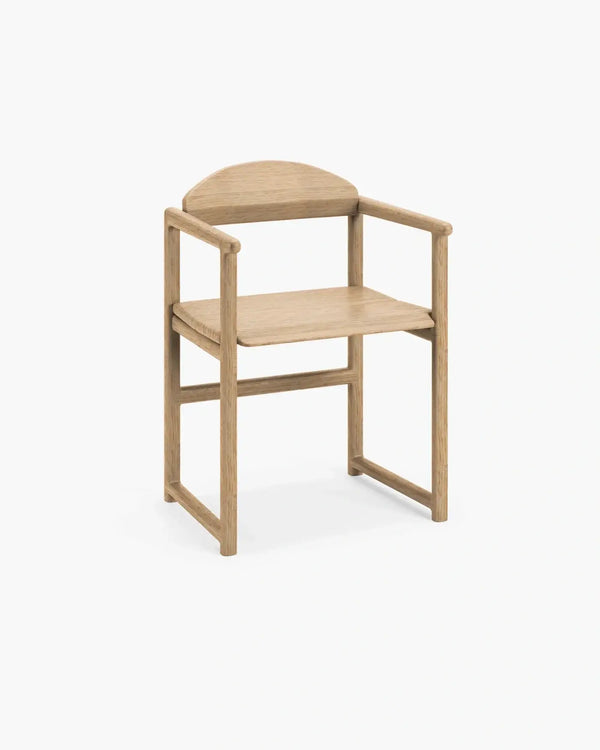
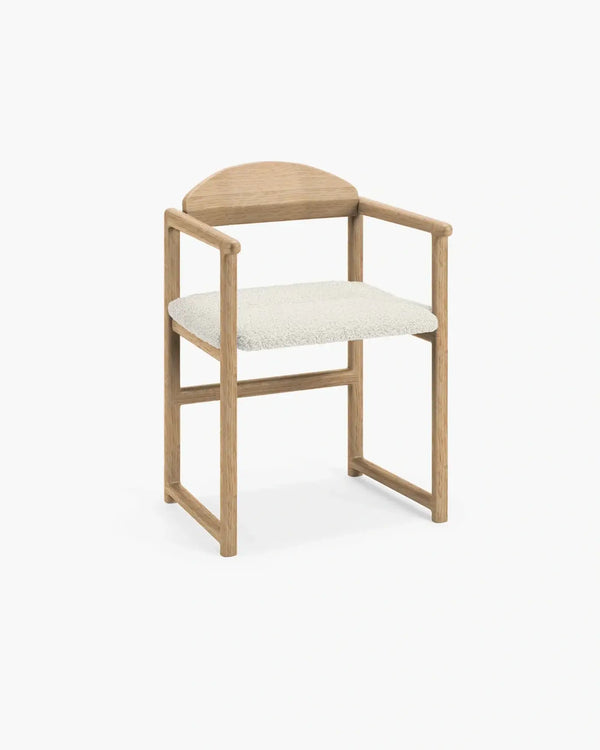
Erik chairs with armrests around a solid oak dining table.
Width, arm height and table edge per chair, by Crea dining chairs
They fit when the armrests are lower than the underside of the tabletop or apron, ideally with a few centimetres to spare.
Measure from the floor to the lowest point under the edge of the table, where your thighs and the armrests will go. Then compare it with the arm height of the chair.
Our dining tables are 76 cm high with the underside at 73 cm, which leaves 9 cm above Sella's armrests and 6 cm above Erik's. A table with a deep apron can bring the underside down to 65 cm or less; there, chairs with arms stop at the edge of the table. The dining chair height guide covers the other measurements to take.
What is a carver chair?
A carver is the British name for a dining chair with arms, traditionally placed at the ends of the table; in the US the same chair is usually called a host chair or an armchair.
Traditional dining sets came with two carvers and four or six side chairs, the carvers for the host and the guest of honour.
The idea still works as a way to give a long table a head and a foot, and as a way to add comfort without giving up the seats along the sides. Today it is just as common to use chairs with arms all round, where the table is long enough to allow 70 cm each.
Can you mix dining chairs with and without arms?
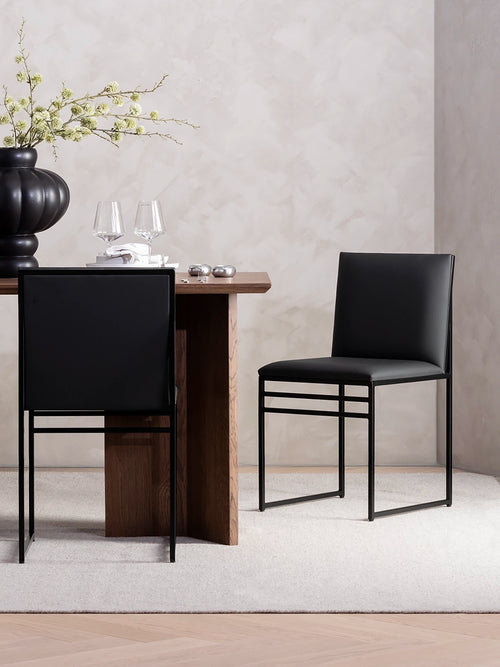
Yes: the classic arrangement is chairs with arms at the two ends and armless chairs along the sides, from the same family so the frame and fabric match.
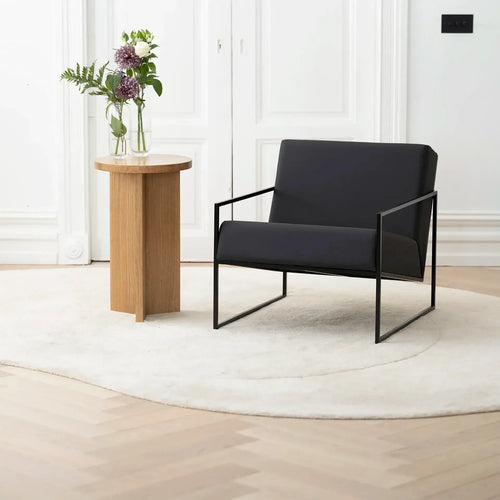
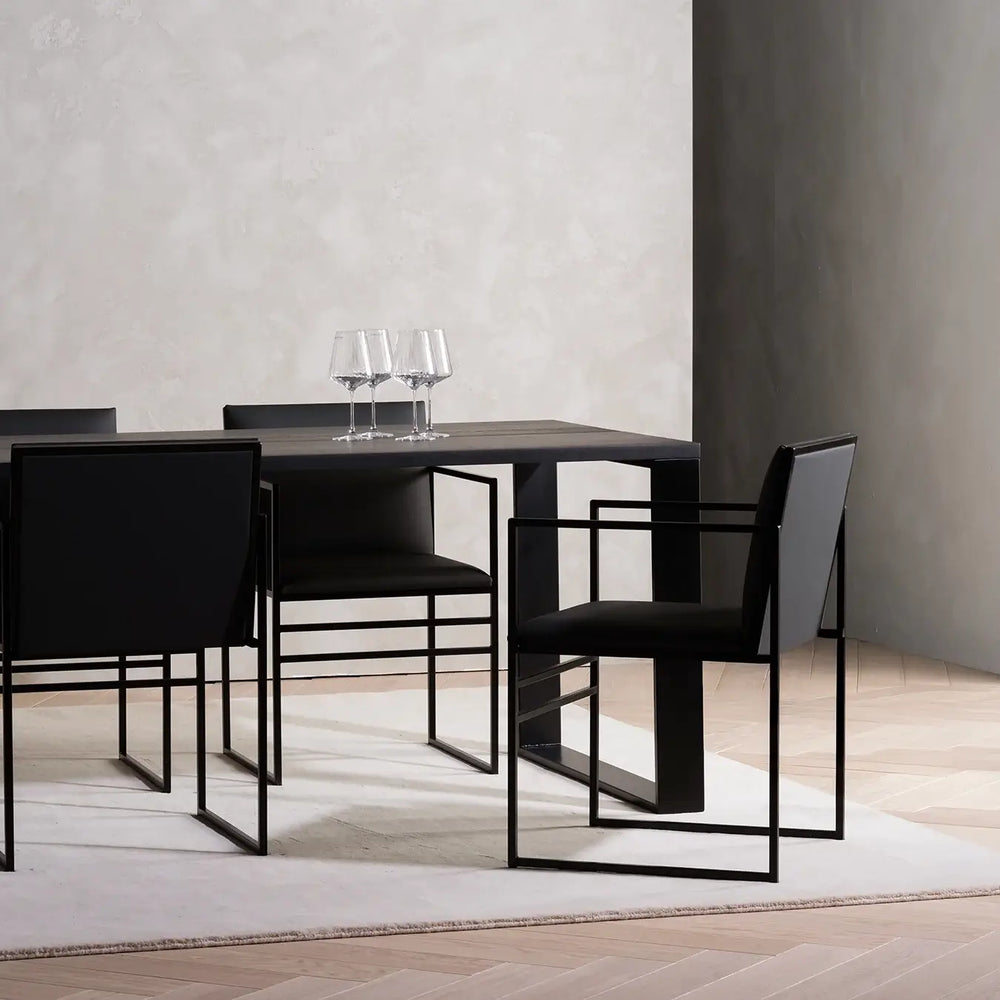
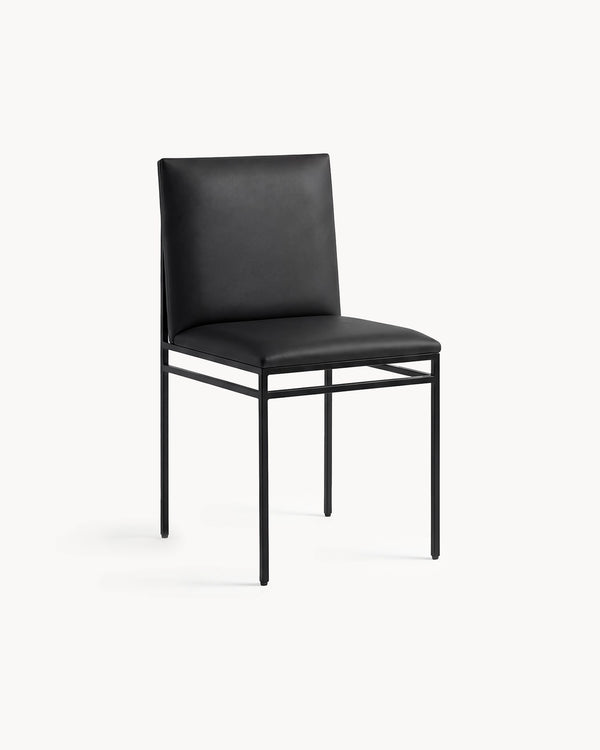
Sella chairs with armrests around a black oak dining table.
A good rule of thumb is to keep one thing constant, the material, the colour or the silhouette, and let the armrests be the difference.
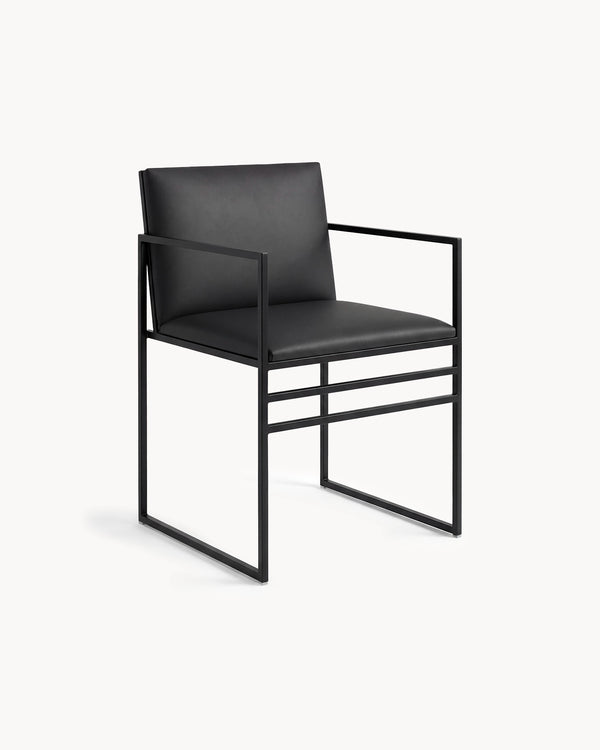
Our chairs are designed to pair this way. Sella, with armrests, shares its black steel frame and fabrics with the armless Bella and Isabell. Erik, with armrests, shares its solid oak, finishes and two-piece seat with the armless Karin. Our guide to mixing and matching dining chairs covers combinations across families.
Are dining chairs with arms better for older people?
Yes: armrests give something to push against when standing up and to lower yourself onto when sitting down, which usually makes them the better choice for anyone with stiff knees or hips.
Seat height matters as much. A seat at the upper end of the standard range, 47 to 48 cm, is usually easier to rise from than a low one, as long as it still suits the table.
Erik combines armrests at 67 cm with a 48 cm seat, and Sella armrests at 64 cm with a 46 cm seat. Both are rated for 200 kg per seat. Our guide to dining chair weight capacity explains what that rating means.
Arms or no arms in three numbers
70 cm
Table edge per chair with arms; 60 cm without.
64 cm
Arm height on Sella; 67 cm on Erik.
2
chairs with arms at the ends, armless chairs along the sides.
As a rule of thumb, allow 70 cm of table edge per chair with arms and 60 cm without. Check that the armrests sit below the underside of the table: ours is 73 cm, against arm heights of 64 cm on Sella and 67 cm on Erik. Put chairs with arms at the ends and armless chairs from the same family along the sides. Every by Crea dining chair is made in our own factory in Malmö, Sweden, delivered fully assembled and covered by a 10-year warranty.
Frequently asked questions
Should dining chairs have arms?
Choose arms for comfort through long dinners and help standing up; choose armless chairs for small rooms, round tables and seating more people at one table.
Do dining chairs with arms fit under a table?
Yes, if the armrests are lower than the underside of the tabletop or apron. Measure from the floor to the lowest point under the edge and compare it with the arm height.
How much space does a dining chair with arms need?
About 70 cm of table edge, 10 cm more than an armless chair, so a 180 cm table seats four chairs with arms instead of six.
What is the difference between a carver and a dining chair?
A carver is a dining chair with arms, traditionally placed at the ends of the table. The side chairs along the table have no arms.
Can I put chairs with arms at the ends of the table only?
Yes. Chairs with arms at the ends and armless chairs along the sides is the classic arrangement, and works best when both come from the same family.
How high are the armrests on by Crea dining chairs?
64 cm on Sella and 67 cm on Erik. Both slide under our dining tables, whose underside is at 73 cm.