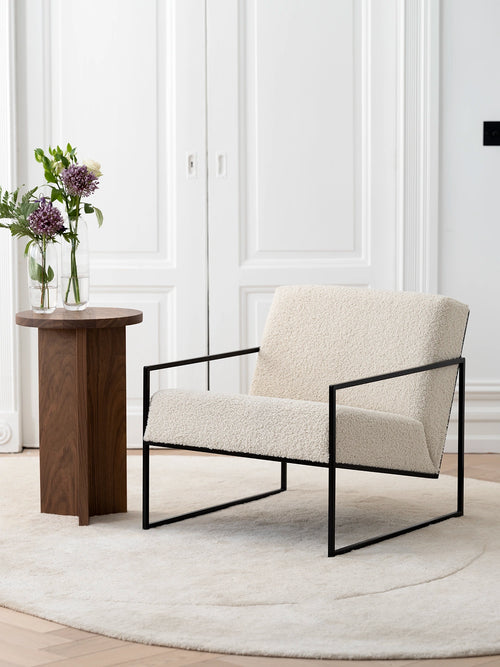
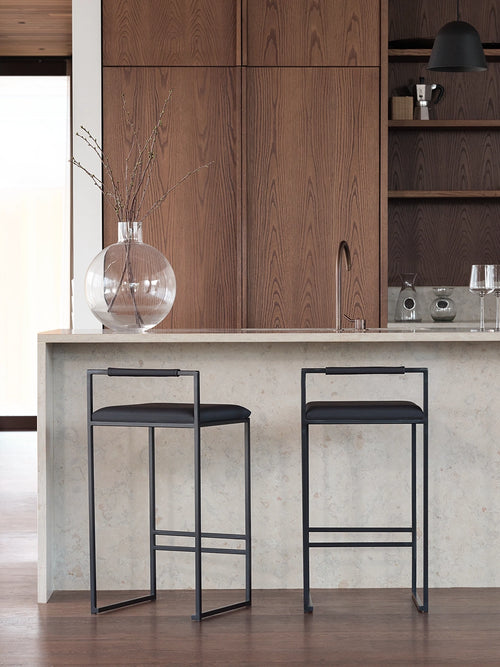
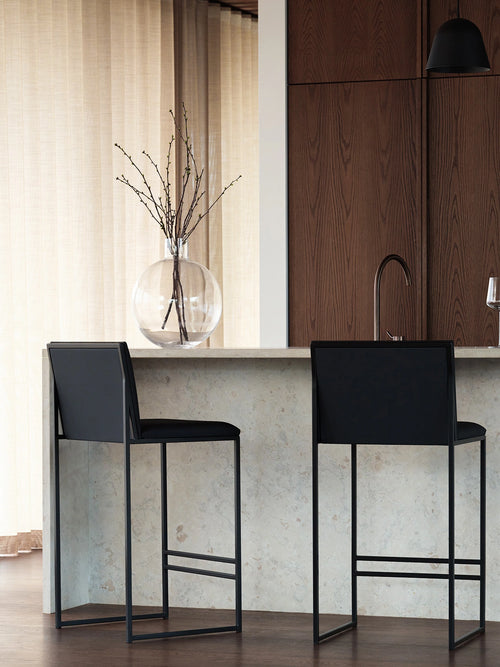
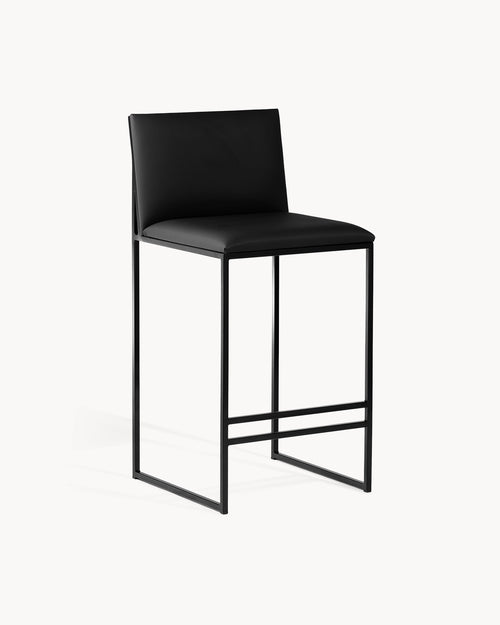
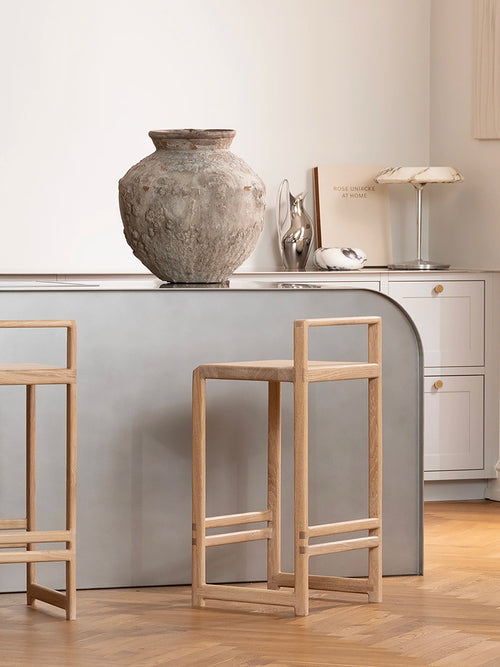
This image shows 10 Ebba barstools from by Crea in dark stained oak in a Dark oak minimalistic kitchen with contemporary light stone marble top.
Image Link

Weight capacity explained in bar stools and counter stools

Weight capacity is a structural limit, not a comfort feature.It defines how much load a stool can safely carry over time.This page explains how weight capacity works, how to read capacity figures, and what matters for home kitchens and commercial environments.

Weight capacity is a structural limit, not a comfort feature.It defines how much load a stool can safely carry over time.This page explains how weight capacity works, how to read capacity figures, and what matters for home kitchens and commercial environments.

What weight capacity means on a stool

Weight capacity is the maximum load a stool is designed to carry safely.It includes static weight and dynamic movement.Dynamic movement includes shifting, leaning, and repeated sitting.A stool can feel stable initially and still fail over time if capacity is exceeded.

Weight capacity is the maximum load a stool is designed to carry safely.It includes static weight and dynamic movement.Dynamic movement includes shifting, leaning, and repeated sitting.A stool can feel stable initially and still fail over time if capacity is exceeded.

See more See more
Bar Stool Svea in black with ivory bouclé fabric beside a modern marble kitchen island. Bar Stool Svea in black with ivory bouclé fabric beside a modern marble kitchen island.

Why weight capacity matters for daily use

Each sit-down creates short peak loads above body weight.Low-capacity stools fatigue faster under repeated use.This leads to frame flex, joint loosening, or permanent deformation.Correct weight capacity ensures long-term stability for daily kitchens and hospitality use.

Each sit-down creates short peak loads above body weight.Low-capacity stools fatigue faster under repeated use.This leads to frame flex, joint loosening, or permanent deformation.Correct weight capacity ensures long-term stability for daily kitchens and hospitality use.

See furniture See furniture

Typical weight capacity ranges explained

Not all stools are built for the same use level.Typical capacity ranges:✓ Light residential stools: 90–110 kg (198–243 lb)✓ Standard home stools: 110–130 kg (243–287 lb)✓ Heavy-duty and commercial stools: 130–150 kg (287–331 lb)

Not all stools are built for the same use level.Typical capacity ranges:✓ Light residential stools: 90–110 kg (198–243 lb)✓ Standard home stools: 110–130 kg (243–287 lb)✓ Heavy-duty and commercial stools: 130–150 kg (287–331 lb)

Explore Counter Stools Explore Counter Stools
Freja bar stool by by Crea, black frame and black leather seat, Scandinavian kitchen island seating in a minimalist home. Ebba Bar Stools in dark oak with minimal Scandinavian design, placed at a statement kitchen island in dramatic veined marble, complemented by rich wood cabinetry and herringbone oak flooring.

Steel vs wood stools and load behaviour

Steel frames distribute load evenly through welded joints.They resist flex under dynamic movement.Solid wood frames rely on joint integrity and grain direction.Both materials perform well when correctly dimensioned.

Steel frames distribute load evenly through welded joints.They resist flex under dynamic movement.Solid wood frames rely on joint integrity and grain direction.Both materials perform well when correctly dimensioned.

Explore Bar Stools Explore Bar Stools
Eva Bar stools in black oak at a modern kitchen island with marble countertop, showcasing clean lines and a slim profile. Svea bar stools with black frame and latte leather seat, minimalistic design for modern kitchen or dining area.

Weight capacity and counter vs bar height stools

Seat height affects leverage forces on the frame.Counter stools:✓ Typical seat height: 65–66 cm (25.5–26 in)✓ Lower leverage on legs and jointsBar stools:✓ Typical seat height: 75–76 cm (29.5–30 in)✓ Higher leverage during sitting and leaning

Seat height affects leverage forces on the frame.Counter stools:✓ Typical seat height: 65–66 cm (25.5–26 in)✓ Lower leverage on legs and jointsBar stools:✓ Typical seat height: 75–76 cm (29.5–30 in)✓ Higher leverage during sitting and leaning

Explore Freja Counter Stool Explore Freja Counter Stool

Common mistakes when evaluating weight capacity

Most problems come from misinterpreting capacity figures.✓ Assuming average adult use is sufficient✓ Ignoring dynamic movement loads✓ Using residential stools in public spaces✓ Choosing by appearance instead of structure

Most problems come from misinterpreting capacity figures.✓ Assuming average adult use is sufficient✓ Ignoring dynamic movement loads✓ Using residential stools in public spaces✓ Choosing by appearance instead of structure

Bar Stool Freja in black frame, black leather cushion, and brown backrest at a modern kitchen island. Bar Stool Freja in black frame, black leather cushion, and brown backrest at a modern kitchen island.

Home use vs hospitality use requirements

Home kitchens have predictable usage patterns.Hospitality environments require higher safety margins.✓ Recommended capacity for public use: at least 130 kg (287 lb)

Home kitchens have predictable usage patterns.Hospitality environments require higher safety margins.✓ Recommended capacity for public use: at least 130 kg (287 lb)

Learn about our materials Learn about our materials

The weight capacity principle

A stool must support the highest realistic load, including dynamic movement.If expected use approaches the stated limit, the stool is underspecified.Correct capacity always includes a safety margin.

A stool must support the highest realistic load, including dynamic movement.If expected use approaches the stated limit, the stool is underspecified.Correct capacity always includes a safety margin.

About us About us
Oak Bar Stool Carl in dark oak with ivory bouclé in a modern kitchen setting with marble countertops. Oak Bar Stool Carl in dark oak with ivory bouclé in a modern kitchen setting with marble countertops.

Weight capacity checklist

✓ Identify residential or commercial use✓ Confirm stated maximum load✓ Account for dynamic movement✓ Match capacity to stool height✓ Choose higher capacity when uncertain

✓ Identify residential or commercial use✓ Confirm stated maximum load✓ Account for dynamic movement✓ Match capacity to stool height✓ Choose higher capacity when uncertain

Explore Counter Stools Explore Counter Stools

Conclusion

Weight capacity defines safety, durability, and lifespan.It is determined by structure, not cushions or visual thickness.Correct capacity prevents instability and long-term damage.

Weight capacity defines safety, durability, and lifespan.It is determined by structure, not cushions or visual thickness.Correct capacity prevents instability and long-term damage.

Counter stools & Bar stools FAQ

What weight capacity should a kitchen counter stool have?

For daily home use, a counter stool should support at least 110–130 kg (243–287 lb).

Do commercial stools require higher weight ratings?

Yes.Public environments require higher safety margins and stronger construction.

Is weight capacity higher for stools with backrests?

Not automatically.Backrests add leverage and require reinforced frames to increase capacity.

Can a stool fail if the limit is exceeded slightly?

Yes.Repeated small overloads cause material fatigue over time.

Does cushion thickness affect weight capacity?

No.Weight capacity is determined by the frame, not cushioning.

Are metal bar stools stronger than wooden ones?

Steel frames generally handle dynamic loads better and resist joint loosening.Well-built wooden stools also perform well when joints are reinforced.